Day 17 Lesson: Photograph in Direct Sunlight
Direct sunlight can be a difficult situation in which to get a good image. Oftentimes your subject might be underexposed while the background is vastly overexposed. There might be unflattering shadows or contrast that is too harsh as well. However, if done in the right way, shooting in direct sunlight can result in an image that is quite stunning.

Our challenge for you today is to harness the power of the sun and make a photograph using direct sunlight. Let’s explore a few ways that you can do that!
Go for Silhouettes

Likely the easiest way to work with direct sunlight is to shoot directly into it. The result can be a very nice silhouette shot in which your primary subject is cast in darkness, but the rest of the image is bright, as was done in the image above. Silhouettes not only negate the deleterious effects of direct sunlight, but they also give an image mood, mystery, and emotion, all of which make for a much more impactful shot. And getting a nice silhouette is relatively easy. Just ensure your subject is in front of the sun (as in the sunset image above) and set your exposure to the brightest part of the background. This will ensure that your subject is in deep shadow, if not completely black, which will contrast nicely with the bright sunshine in the background.
Redirect Light or Use Fill Light
Part of the issue when shooting in direct sunlight is that your subject can be quite dark, as in silhouettes. However, if you aren’t aiming to create a silhouette, you can redirect light or use fill light to brighten your subject, even when shooting towards the sun.
 To redirect light, you simply need a reflector. This can be a pre-made reflector made for photography uses, or you can create your own reflector using shiny white, silver, or gold material. You can even use a white wall, the reflection off a window, or shiny surfaces like aluminum foil if you find yourself in a bind.
 Using a reflector is quite simple – set your camera up such that it is shooting towards your subject and the sun. Place a reflector in front of the subject that way light from the sun is reflected onto the front of the subject, as was done in the image above.
 Fill flash works much in the same way as a reflector, but instead of redirecting the sunlight onto your subject you use a flash (or several) to illuminate your subject. In the image above, a fill flash would have been used to compensate for the sunlight entering the scene from above and behind the man. Without it, the man would have been in shadow and would have been underexposed.
Whether you use a reflector or fill flash, the result will hopefully be the same – a backlit image but with a subject that is illuminated as well.
Mind Your Settings

When shooting in direct sunlight it’s important to be aware of how your camera will react. Oftentimes the autofocus on DSLRs will struggle when direct sunlight is present, so shooting in manual focus mode is usually the best choice.
Another thing to keep in mind is the need to shoot in RAW. Really, you should shoot all your photos in RAW, not just those that involve direct sunlight. However, shooting in RAW is particularly important for brightly lit situations because white balance and color can be greatly impacted by bright sunlight. If you shoot in RAW, you can easily make adjustments to correct for these occurrences in post-processing.
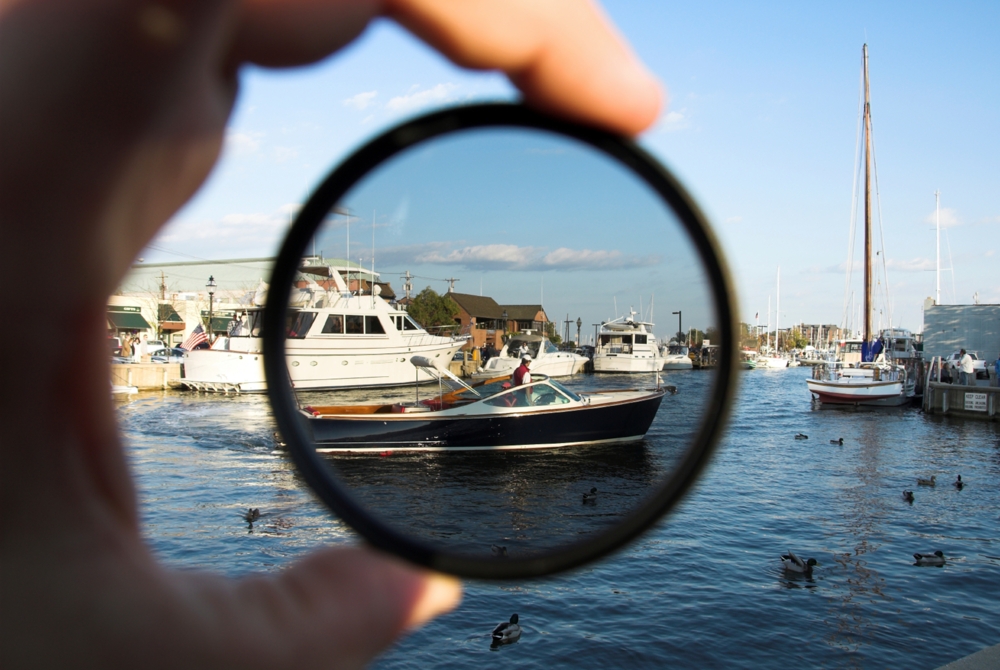 And while adding a filter to your lens isn’t technically a setting, it’s an important addition to your gear in order to protect it. As with our eyes, long-term exposure to direct sunlight can cause damage to your camera’s sensor. Adding a neutral density filter or a polarizer will help protect your sensor from damage.
Practice and Participate!
Now it’s your turn to take what you’ve learned about overcoming the negative effects of shooting in the direct sunlight and create engaging images that highlight your subject. For a quick and easy fix, create a silhouetted image. For a more detailed approach, use a reflector or a fill flash to bring your subject out of the shadows. Regardless of the approach you take, mind your camera settings and shoot your images in RAW and with manual focus. Your images will be the better for it! Also don’t forget to use a filter to help prevent damage to your camera sensor.
Once you’ve gotten an image and have processed it to your liking, add it to the forum for today’s challenge. Your image could provide another Photography Talk user with the precise inspiration they need to participate as well!