


Some cameras are designed to impress on a spec sheet. Others are designed to earn trust when the pressure is on. The Canon EOS R3 falls firmly into the second category. It isn’t chasing extreme resolution or trying to be the smallest mirrorless body on the market. Instead, it focuses on speed, reliability, and consistency: the traits working photographers rely on when moments can’t be repeated.
When Canon introduced the R3, it quietly reshaped expectations for professional mirrorless cameras. This wasn’t just another incremental update or a mirrorless version of an existing DSLR. It was Canon’s statement that mirrorless had matured enough to replace its most demanding professional tools. For photographers who grew up with 1-series bodies, the design philosophy will feel familiar, even if the technology underneath is entirely new.
That raises an important question: who actually benefits from this kind of camera? The EOS R3 is powerful, capable, and expensive—but also highly specialized. Understanding whether it fits your work, your shooting style, and your long-term goals is far more important than admiring its headline features.
Table of Contents
Where the EOS R3 Fits in Canon’s Lineup

Canon’s mirrorless lineup has grown quickly, and it’s easy to assume that higher model numbers simply mean “better.” The reality is more nuanced. The EOS R3 sits alongside cameras like the R5 and R6, but it serves a different purpose entirely. Where the R5 emphasizes resolution and versatility, the R3 emphasizes speed, durability, and responsiveness.
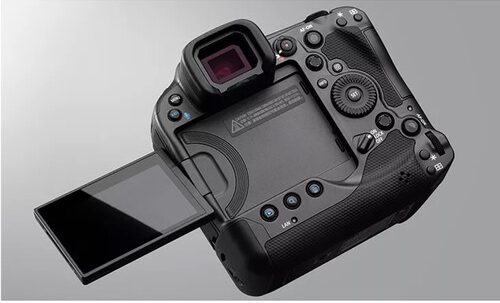
This camera effectively fills the role once held by the EOS-1D X series. It is the spiritual successor to Canon’s flagship DSLRs, reimagined for a mirrorless world. The integrated grip, robust weather sealing, and familiar control layout signal that Canon built this body for professionals who shoot long days in unpredictable conditions.
Rather than competing directly with the R5 on megapixels, the EOS R3 prioritizes performance under pressure. It’s a camera designed for photographers who need confidence more than flexibility—those who measure success by keepers delivered, not specs compared.
Core Performance Philosophy: Speed, Precision, and Consistency

The heart of the EOS R3 is its stacked full-frame sensor paired with the DIGIC X processor. This combination allows for extremely fast readout speeds, which translates into reduced rolling shutter and exceptionally responsive shooting. In practice, this means the camera feels immediate, almost anticipatory, when capturing fast-moving subjects.
High burst rates are part of that experience, but they aren’t the whole story. The real advantage is how the camera maintains autofocus accuracy, exposure consistency, and subject tracking even at high frame rates. The R3 isn’t just fast; it’s controlled, which matters far more in real-world use.
Over time, that consistency becomes the defining trait. Photographers who shoot action or events often talk about cameras that “get out of the way.” That’s exactly how the EOS R3 behaves. It allows you to focus on timing and composition rather than managing limitations.
Who the EOS R3 Is For
Sports and action photographers are the most obvious audience. The EOS R3 excels at tracking unpredictable movement, whether it’s athletes changing direction or motorsports at high speed. The blackout-free electronic viewfinder helps maintain situational awareness, which is something DSLR users often worry about when switching to mirrorless.
Wildlife photographers also benefit significantly. Animal detection autofocus, strong low-light performance, and effective in-body stabilization make it easier to work handheld with long lenses. For photographers who spend hours waiting for brief moments of action, reliability matters more than resolution.
Photojournalists and event professionals will appreciate the camera’s durability and workflow tools. Ethernet connectivity, GPS tagging, and voice memo support aren’t flashy features, but they matter when speed and accuracy are part of the job. Having used similar tools on assignment-style cameras, they quickly become non-negotiable.
Hybrid shooters who prioritize photography but need capable video will also find value here. While it isn’t designed as a cinema-first body, the EOS R3 offers strong video performance as a complement to its stills capabilities.
Who the EOS R3 Is Not For

Despite its strengths, the EOS R3 isn’t a universal solution. Landscape photographers who prioritize extreme resolution for large prints or heavy cropping may find more value in higher-megapixel options. The R3’s files are flexible, but they aren’t designed for that specific workflow.
It’s also not an ideal choice for casual shooters or hobbyists who don’t regularly push their equipment. The size, cost, and feature set are optimized for demanding use, and much of that capability would go unused for everyday photography.
Video creators focused on cinematic production may prefer bodies with more specialized video tools. While the R3 is capable, it’s clearly designed with photographers first in mind.
Handling, Ergonomics, and the Professional Shooting Experience

One of the most immediately noticeable aspects of the EOS R3 is how it feels in hand. The integrated grip balances well with large telephoto lenses and provides consistent ergonomics in both orientations. For photographers accustomed to flagship DSLRs, the transition feels natural.
The control layout emphasizes muscle memory. Dedicated buttons, dual controllers, and intuitive menus reduce the need to dive into settings during critical moments. This is a camera designed to be operated by feel as much as sight.
Eye Control AF adds another layer to that experience. While it may not suit every shooter, those who adapt to it often find it surprisingly effective in fast-paced situations. It’s one of those features that doesn’t photograph well on a spec sheet but makes sense once used in the field.
Buying the EOS R3 Used: A Smart Professional Choice

Flagship cameras like the EOS R3 are built for longevity. They’re designed to withstand heavy use, which makes them excellent candidates for the used market. For many photographers, buying used is a practical way to access professional tools without paying full retail pricing.
MPB has become a trusted source for used camera gear because of its thorough inspection and grading process. Every item is evaluated individually, so buyers know exactly what condition to expect. Their large inventory often includes EOS R3 bodies, RF and EF lenses, and essential accessories.
Additional peace of mind comes from MPB’s seven-day return policy and six-month warranty on most items. Having purchased used gear myself, that level of support makes a meaningful difference. It allows photographers to invest confidently and build a complete system without unnecessary risk.
Final Verdict: Is the EOS R3 the Right Camera for You?

The EOS R3 is not about excess; it’s about intention. Canon built this camera for photographers who demand reliability, speed, and precision under pressure. If your work depends on capturing moments that can’t be repeated, those qualities matter more than any single specification.
For the right user, the R3 feels less like a tool and more like a partner. It rewards familiarity and trust, and it excels when used as intended. Buying used through a reputable source like MPB can make that experience more accessible without compromise.
Ultimately, the Canon EOS R3 is best judged not by what it can do on paper, but by how confidently it performs when it matters most.
FAQ
Is the Canon EOS R3 still worth buying today?
Yes. The EOS R3 remains highly relevant thanks to its stacked sensor, autofocus performance, and professional build quality.
Is the EOS R3 better than the Canon R5 for sports?
For sports and action, the EOS R3 is generally the better choice due to its speed, blackout-free shooting, and autofocus consistency.
Does the EOS R3 replace Canon’s 1D X series?
Effectively, yes. The EOS R3 serves as Canon’s flagship mirrorless replacement for the 1D X DSLR line.
Is buying a used EOS R3 safe?
Buying used can be very safe when purchasing from a trusted retailer like MPB that offers inspections, returns, and a warranty.
Who should skip the EOS R3?
Photographers who prioritize extreme resolution, casual shooters, and cinema-focused video creators may find better options elsewhere.
A quick heads-up: If you snag something through our affiliate links or check out our sponsored content, we might earn a commission at no extra cost to you. But fear not, we’re all about recommending stuff we’re truly stoked about!
Learn More:
Hero Photo by DANIEL HAY on Unsplash (license)

