Day 20 Lesson: Photograph Something While Panning
Panning is one of those fun photography techniques that can result in incredible images full of movement. But getting those awesome results takes a bit of practice, and maybe a bit of luck too!

Essentially, panning is all about keeping pace with a subject such that they are in focus to the greatest extent possible, but the background has those great lines of motion blur, as in the image above. Today’s challenge focuses on the techniques you can use to get awesome panning results!
Find a Good Position
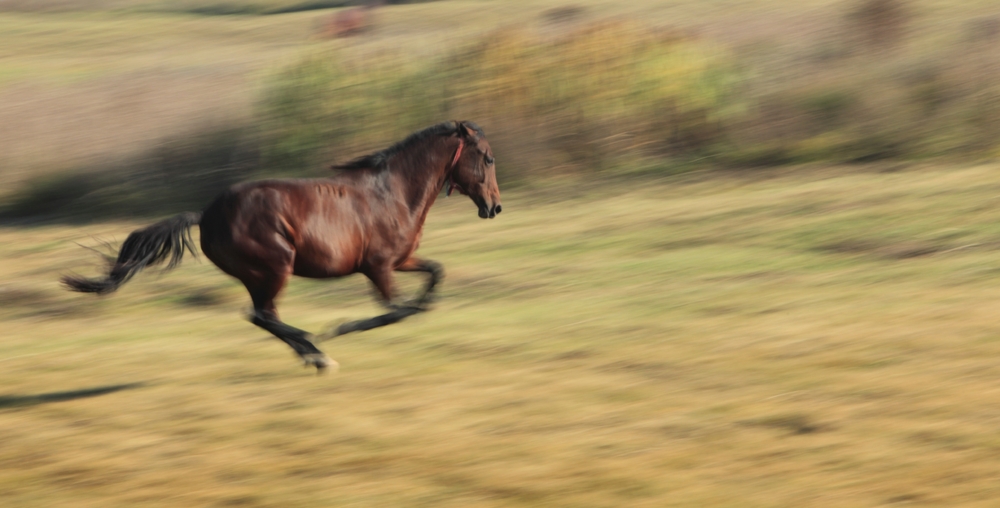
Obviously, you will need to select a shoot location in which you have an unobstructed view of your subject. But you also need to be mindful of the background. Even though the background will be heavily blurred, those with crazy colors or shapes will still be distracting to the viewer’s eye. If possible, find a background that is relatively plain so that your subject stands out that much more.
 Good positioning also usually means being parallel to the path of your subject. This will help you retain proper focus because you won’t need to worry as much about the subject being farther away or nearer to you at different points of their track through the frame of the shot.
Pan Through the Shot

Perhaps the trickiest aspect of photographing something while panning is actually getting the panning itself down pat. Panning can be done either while holding the camera or by placing the camera on a tripod. Holding the camera makes camera shake more likely, but many photographers that haven’t tackled panning before feel more comfortable in their ability to pan smoothly while holding the camera. An easy trick to increase your stability when holding your camera is to tuck your elbows in at your sides for a little extra support.
Whether you decide to hold your camera or use a tripod, take a few practice images to get the feel of the shot and to ensure you’ve got the smoothest motion possible. An easy way to get some practice is to head to a nearby highway and pan with the passing cars. There will be a nearly endless supply of subjects, and you will be able to get a lot of practice in over a very short period of time.
Another part of making the shot smooth is getting into the mindset of very gently pressing the shutter release button. Slamming down on the shutter release button will make it more likely that your camera will shake, so taking it easy will get you the best results.

When panning, it’s also critically important to continue to pan through the shot, even after you’ve heard the click of the shutter. Continue tracking your subject for a second or two so that you get smooth motion blur from the beginning to the end of the shot.
Determine the Best Shutter Speed
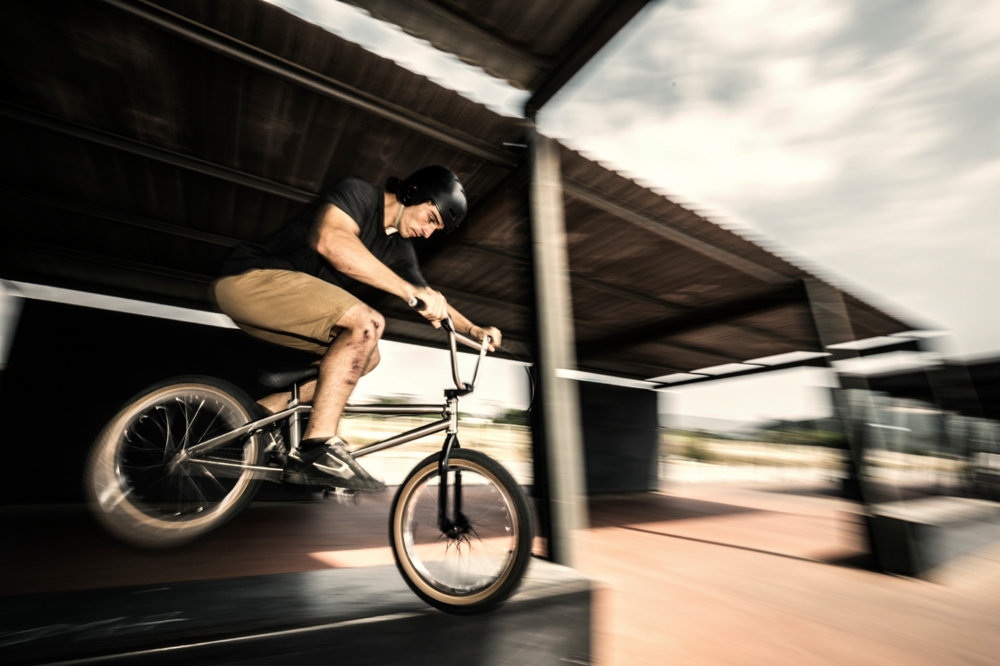
A good rule of thumb is that you will need a shutter speed of 1/200s or slower. Use 1/200s if you’ve got a really quick subject, like a train or a car passing by you. For slower subjects, say, a bicyclist riding by, 1/40s would be a better option.
There will be some trial-and-error here, so be ready to take a number of shots before you find the right shutter speed. It’s important to bear in mind that the faster the shutter speed, the more likely you are to keep your subject in better focus. At the start, strive to keep your shutter speed faster rather than slower. This will keep your subject in focus while allowing you to avoid camera shake as you work on perfecting the art of panning. Once you’ve got the hang of it, then you can start to slow the shutter down to get more pronounced motion.
Practice and Participate!
Whether you’re brand new to photography or you’re a seasoned enthusiast, panning can be a little tricky to learn. But with practice and patience, you will be able to create truly stunning pan images like those we’ve included in this article. Take inspiration from these photos, apply the techniques you’ve learned, and create fun images that display your ability to pan and capture motion.
Remember that there is a Photography Talk forum dedicated to today’s challenge. If you need more inspiration, go check out what other people have created. And, of course, we encourage you to share your work as well!