Day 27 Lesson: Bokeh
Bokeh is most often associated with aperture-shaped light circles, like those in the image above. However, bokeh is actually a wide-ranging term that refers to any area of a photograph that is out of focus.
Like all things in photography, bokeh can look amazing or it can look absolutely terrible. Today’s challenge is all about learning how to get amazing bokeh.
Use the Appropriate Camera Settings
Bokeh is all about aperture control, so put your camera in either manual mode, or, even better, aperture priority mode. This allows you to control the aperture value, and the camera will determine the best shutter speed to get a properly exposed image.
Minimize Depth of Field

Bokeh is dependent upon a shallow depth of field, which is achieved by opening up your camera’s aperture to the smallest f-number. Many kit lenses might have a maximum aperture of f/4 whereas faster, better quality lenses might have a maximum aperture in the f/2.8-f/1.4 range. Whatever your camera’s widest aperture, use it to your advantage.
Get Up Close to Your Subject

The closer you are to your subject, the blurrier the background will be. Every lens has a different minimum focusing distance, so the type and quality of your gear will determine just how close you can get while keeping your subject in sharp focus.
Obviously, if you have a macro lens, you can get very, very close. But if you’re working with a zoom lens, you will need to give yourself more distance between your lens and the subject. Whatever type of lens you’re using, get as close as possible to your subject (while retaining sharp focus on it, of course) to get more blur in the background.
If you’re as close as you can be to your subject but you still aren’t getting the bokeh you want, simply put more space between your subject and the background. The farther away the background is, the blurrier it will be.
Find the Light
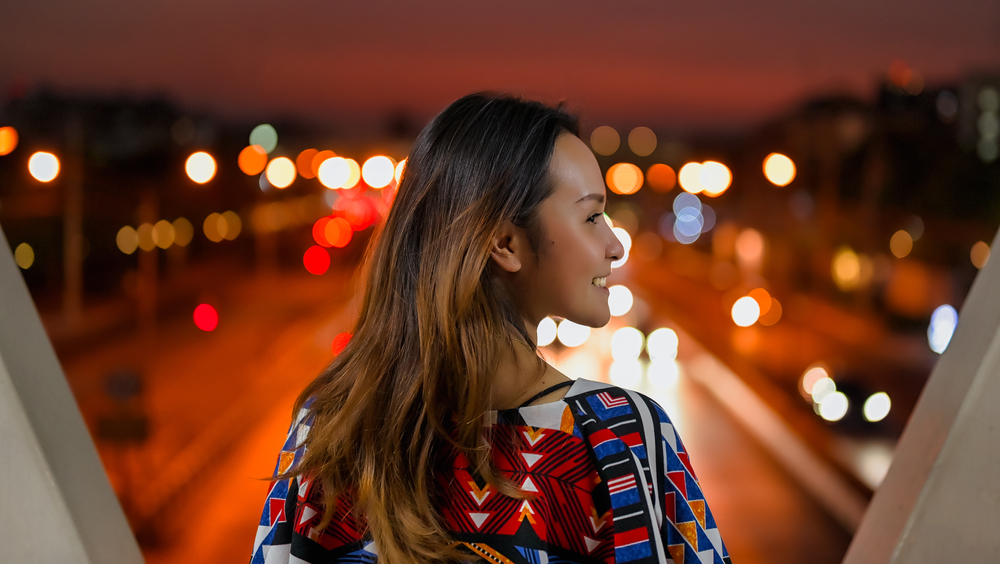
Bokeh is most often achieved when there is light coming into the scene. This might be the lighting in a cityscape during a night shoot or it might be sunlight peeking through tree branches in the park at noon. Whatever the case, you will need some variation of lighting to get the best bokeh effect.
Practice and Participate!
Bokeh is a simple technique you can use to give a little more interest to the background of your shots while maintaining focus on your central subject. Getting good bokeh can be a little challenging at first, but using the tips we’ve outlined here will help you be successful in your bokeh endeavors.
Don’t forget to set your camera to manual or aperture priority mode so you can select the largest aperture to minimize depth of field. Move as physically close to your subject as your lens will allow while still maintaining sharp focus, or, if that doesn’t work well enough, move your subject farther away from the background. Look for scenes in which there are variations in the amount of light in the background as well. This will help you maximize the bokeh effect in your image.
Now that you’re more informed about bokeh, it’s your turn to give it a try! Grab your gear, find your subject, and shoot away! Once you’ve selected your best image, get it up on the forum for today’s challenge and share your newfound talent with the rest of the Photography Talk community.