Day 5 Lesson: Photograph a Building
Some photographers, especially beginners and enthusiasts, mistakenly believe that photographing a building is simple and straightforward. It’s a static subject, likely with all kinds of visual interest…how hard can it be?
It can actually be a much more difficult task than one might think. But armed with a few simple pointers, you too can create images of buildings that wow your audience. This installment of our 30-Day Challenge gives you those quick tips you need to take your architecture photography to the next level.
Utilize Leading Lines
You often hear about “leading lines” in landscape photography. But leading lines are equally important when photographing buildings. Not only do the serve the function of drawing the eye inward, in buildings, leading lines can also move the eye around the scene or toward a specific point in the frame.
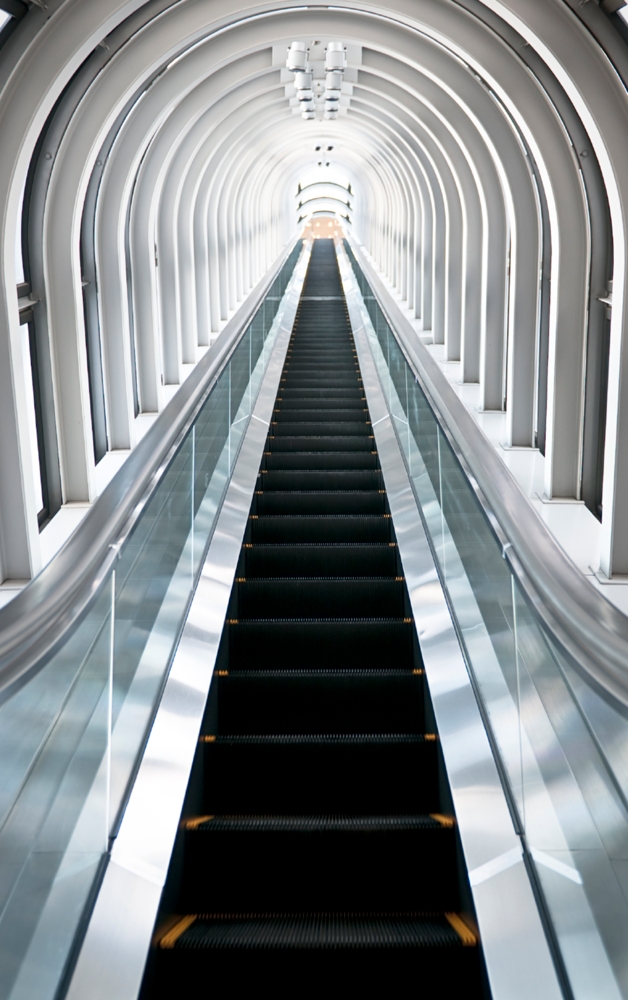
Take the image above as an example of this concept. The strong lines created by the escalator take the viewer’s eye deeper into the shot toward the eventual terminus of the escalator and the exit at the top of the image. The escalator also provides a stunning visual contrast to the archways above it, both in terms of shape and color.
Strive for Symmetry…Or Not!
Some buildings are delightfully symmetrical. Others are not. Both situations afford you excellent opportunities for visually stunning images.
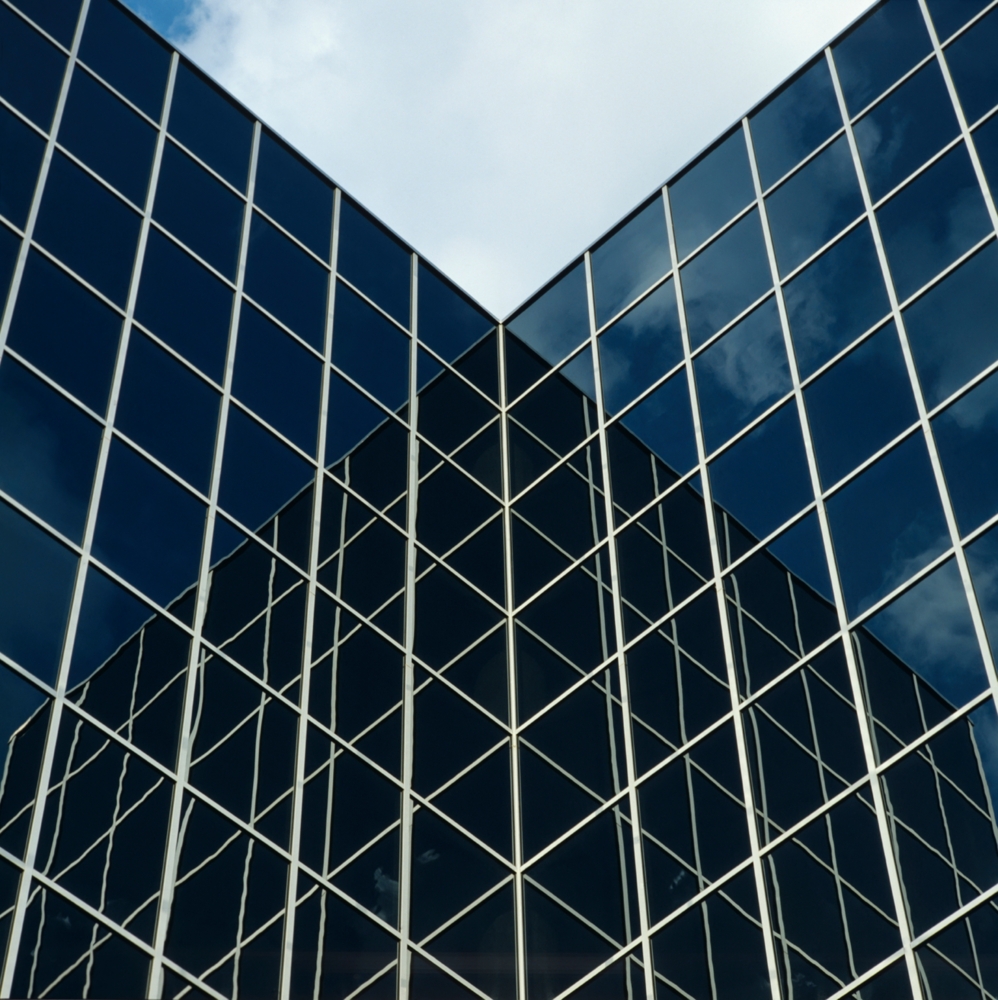
Symmetrical buildings are the more difficult of the two to photograph, because if your composition and framing aren’t absolutely perfect, the symmetry of the image will be completely off. An easy way to ensure your positioning is perfect is to use the focus points in your camera’s viewfinder line up your image, as we’ve done in the image above.
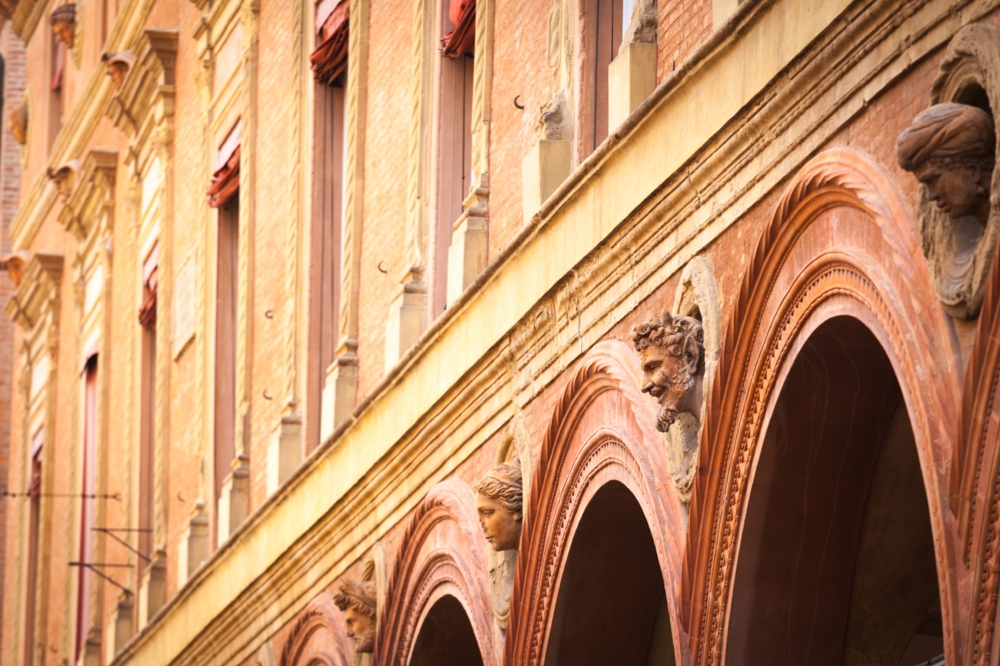
Conversely, for buildings that don’t have a symmetrical façade, look at the details of the building to determine what aspects of its architecture you could highlight. There might be a pattern, an interesting window, columns, or other structural details that will bring some interest into the image. Gargoyles and other figures can be especially interesting, as seen in the image above.
Buildings Have Interiors Too!
It may be more difficult (or in some cases, impossible) to access the interior of a building to take some photos. But if you can get inside, there are all kinds of opportunities for creative compositions.
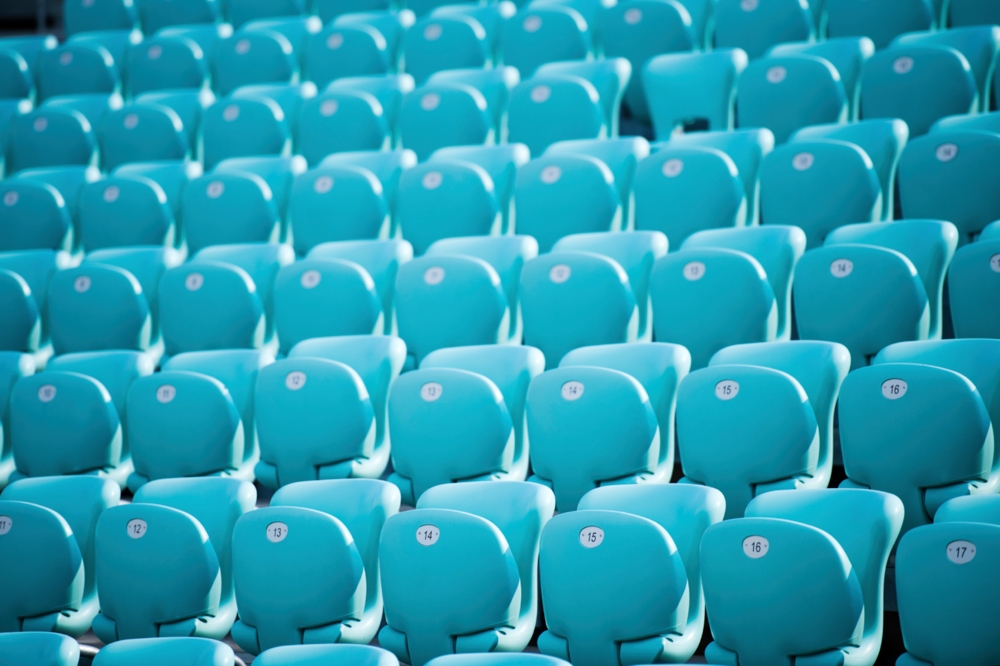
As the saying goes, the devil is in the details, and that couldn’t be more truthful when photographing a building’s interior. In the image above, the blue seats become the star of the show in an otherwise ugly arena. The pop of color is quite nice as well, as is the highly linear organization of the seats.
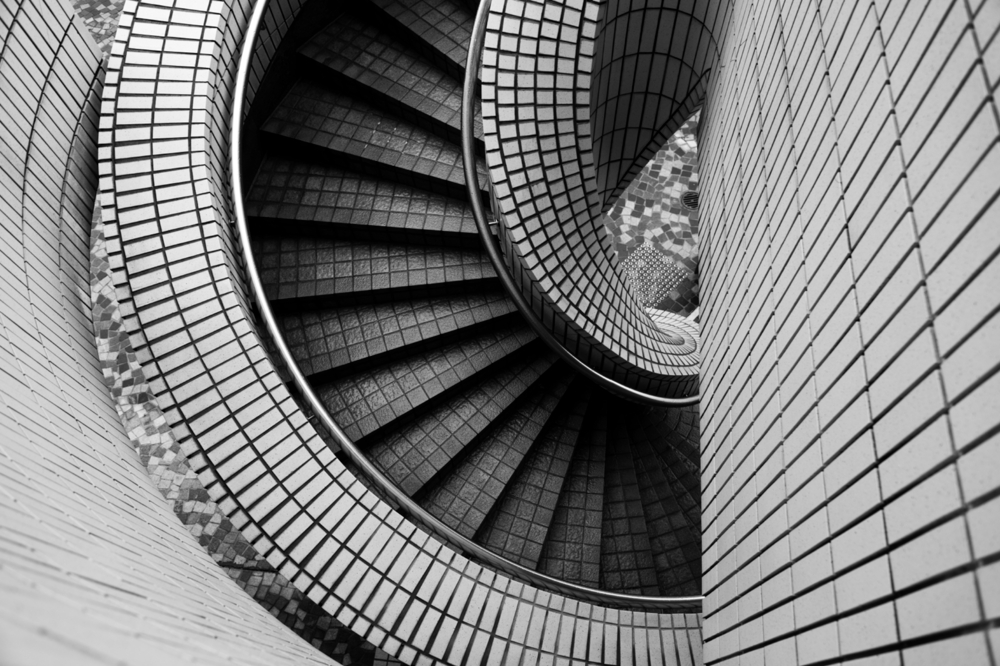
Not all building interiors provide the same linear details found in the image of the stadium seats, however. The spiral staircase in the image above instead provides a bit of unexpected curvature, which gives the shot a bit of whimsy as well.
When photographing the interior of a building, try to find these unique features, but resist the urge to shoot a wide shot. Instead, try filling the frame. This serves two important functions. First, much architectural photography focuses on the bigger picture, so by taking a micro approach you get a more creative shot. Second, zooming in on a small area of a building allows you to remove any unwanted context. Perhaps just outside the frame of stadium seats above is an ugly sign pointing patrons to the restroom, yet, that isn’t an issue by framing the image tightly on the seats.
Practice and Participate!
Photographing buildings is a pretty hefty assignment because there are so many directions you can take. You can look for symmetry both inside and out, or find leading lines or small details to add interest to the shot.
When you tackle this challenge, strive to stay aware of your surroundings. Look up and down, left and right. Examine the larger building for smaller details. Pay attention to the way light bounces off a building’s exterior or the way it floods into an interior space. Look for contrasts as well, both in terms of colors and areas of lights and darks.
Utilize these few quick ideas to get your creative juices flowing and show us your creativity when it comes to photographing buildings. Don’t forget to participate in the forum thread for this specific challenge so you can show off your work and check out the work of others as well!