Day 3 Lesson: Getting the Perfect Lens
In the last lesson, we explored several options for a good camera body for landscape photography. Now it’s on to an even more important topic – lenses.
While having a nice, new camera body certainly won’t hurt your landscape images, in terms of gear, the single most important piece of equipment you have is your lens. If you spend good money on anything, it should be on your glass.
Why?
As with all things, you get what you pay for. But that mantra is especially true when it comes to lenses. For high-quality, super sharp landscape images, you’ll need a lens beyond a plastic barrel kit lens that comes with many cameras. While the kit lenses are generally sharp lenses for most photography, you can improve sharpness, ruggedness, and features by upgrading.
Upgrading your glass will do wonders for your images, much more so than upgrading your camera body. In fact, you’ll be able to create far better images with an old camera body and a new lens than you will if you buy a new camera and attach an old, low-grade lens to it.
With that in mind, let’s explore a few top lens options for landscape photography.
Wide-Angle Zooms
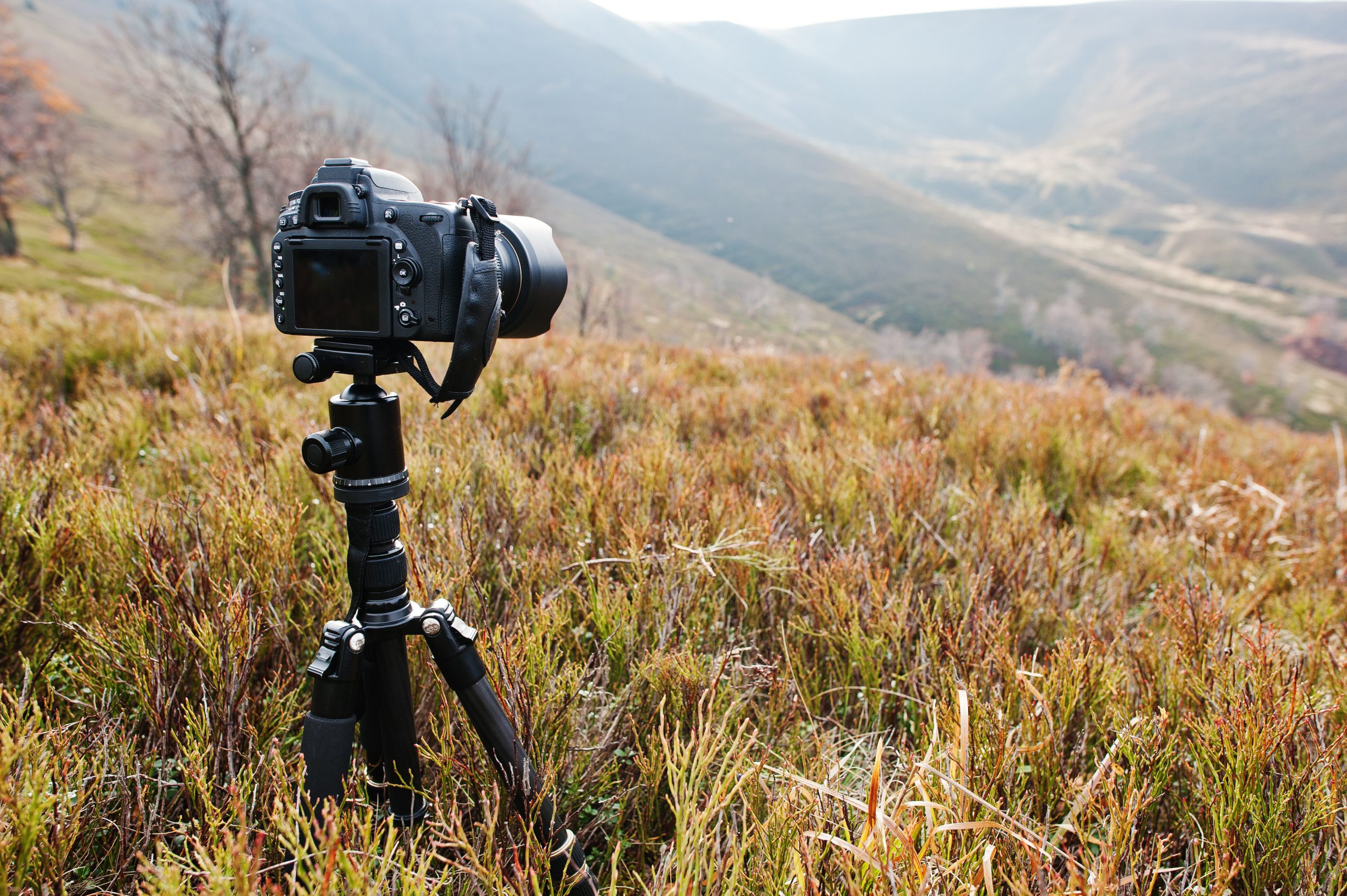
If ever there were a grand champion landscape lens, the wide-angle zoom would be it. These lenses, which on a full frame body range from about 16mm to 40mm, are available from 8mm to 28mm on APS-C cameras, and in the 7mm to 18mm range on micro four thirds systems.
Regardless of the type of camera system you have, a wide-angle zoom gives you all sorts of flexibility in terms of the type of shot you frame up. Zoom in to get the finer details of the scene, zoom out to get a wider view, as seen below.
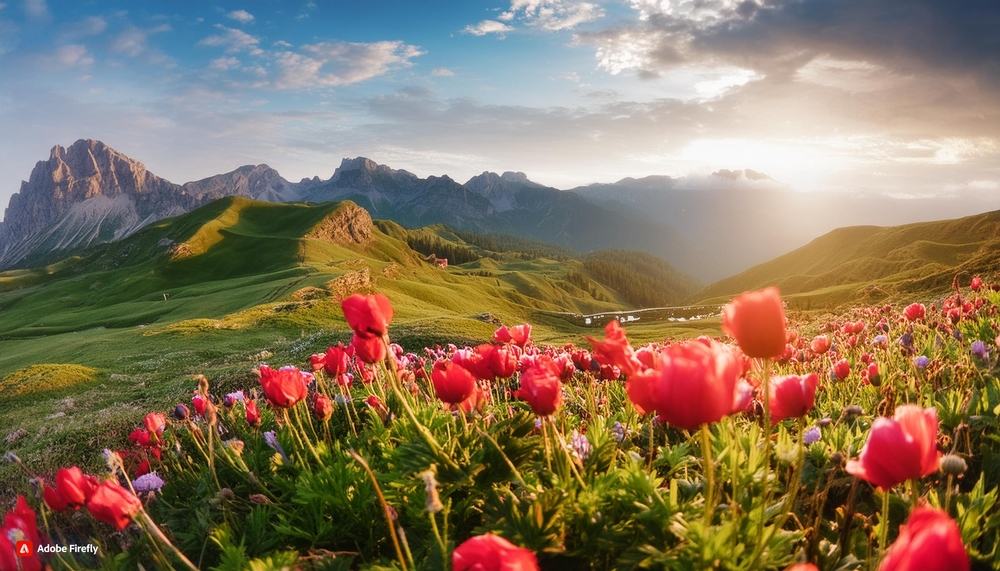
In addition to the flexibility zoom lenses provide in terms of framing, they are also incredibly convenient – shoot varied landscapes without having to change lenses. This means more time to spend actually photographing landscapes and less time that the delicate parts inside your camera are exposed to the elements during lens changes.
Zoom lenses are constructed with multiple elements that reduce aberrations like distortion. The glass elements inside a zoom lens are arranged in groups, so when you zoom in and out, the groups change positioning in relation to one another. These groups of glass work in concert with microprocessors and the lens or camera focus motor to move smoothly and efficiently from one focal length to the next.
However, because their construction is more intricate, zoom lenses can be more expensive than their fixed lens counterparts. Also, zoom lenses often have a smaller maximum aperture compared to fixed focal length prime lenses. Faster zoom lenses will also increase the price range.
Pros of Wide-Angle Zoom Lenses
- The focal length flexibility is extremely convenient. Pack one lens instead of two or three.
- Small, lightweight construction (compared to multiple prime lenses).
- Excellent close-up capabilities.
Cons of Wide-Angle Zoom Lenses
- Sharpness is not as good as fixed focal length lenses.
- When shooting in wide-angle, objects in the distance can appear to be quite small.
- Zooms can be pricier because of their more complex construction.
- Faster aperture zooms will be larger, heavier, and more expensive.
Critical Factor to Consider When Buying a Zoom Lens:
The Type of Aperture. Zooms have one of two types of apertures: constant or variable. A constant aperture means that the zoom lens has the same maximum aperture regardless of the focal length being used. For example, an f/2.8 zoom will have a max aperture of f/2.8 whether you’re shooting at 16mm or 35mm. Conversely, a variable aperture means that the maximum aperture changes with the focal length, so a 12-24mm f/4.5-5.6 zoom will have a maximum aperture of f/4.5 when shooting at 12mm and a maximum aperture of f/5.6 when shooting at 24mm.
Standard Lenses
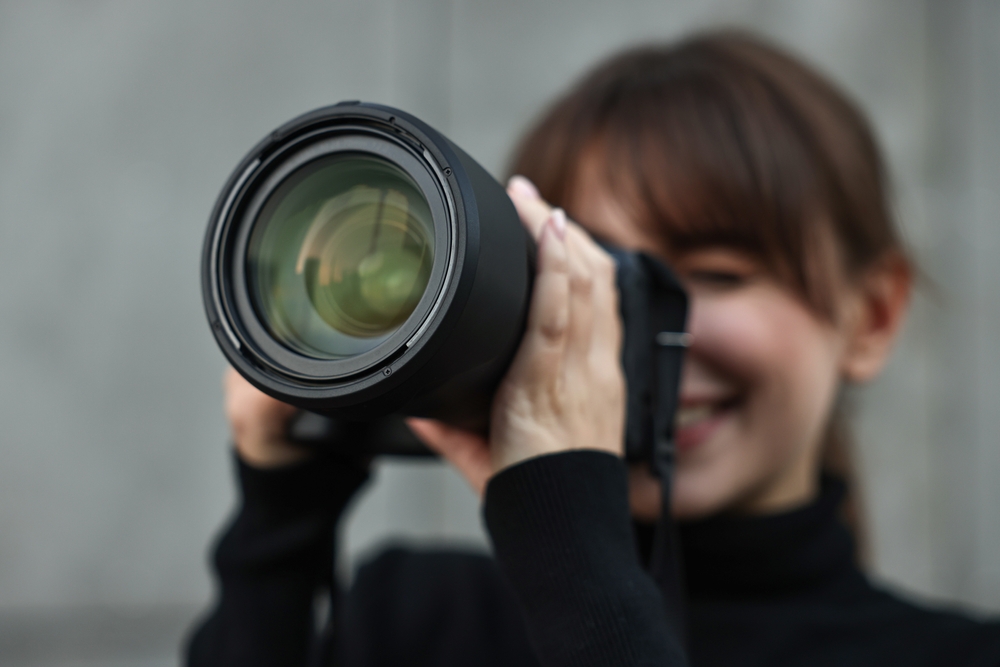
Many landscape photographers prefer to capture their scenes with a standard-length lens because it has an angle of view that closely matches the human eye. This gives landscapes a very familiar look and a natural feel. Standard lenses are available for the full frame, APS-C, and micro 4/3rds systems discussed in lesson one of this course.
The focal length of each is slightly different, given the size of the sensor in each camera system. On a full frame camera, a 50mm is considered a standard length; on an APS-C camera with a 1.5X crop factor, a standard lens would be shorter, in the 35mm range; on a mirrorless system with a micro four thirds sensor, a standard focal length would be even shorter, in the 25mm range.
Standard lenses are typically quite fast, which, as noted earlier, refers to the lens’s maximum aperture. Many standard lenses are as fast as f/2.8, and others go to f/1.4, making them an excellent choice for low-light shooting. With newer mirrorless systems, some lenses are even faster, f/1.2, f/1.0, and even f/0.95 are now available! Those super-fast lenses are very large and heavy and quite expensive.
Because standard lenses tend to be of a fixed focal length (they cannot zoom), they can be much more affordable than their zoom lens counterparts. Additionally, because standard lenses do not have all the optical elements that one finds in a zoom lens, the quality and sharpness of the images are much better.
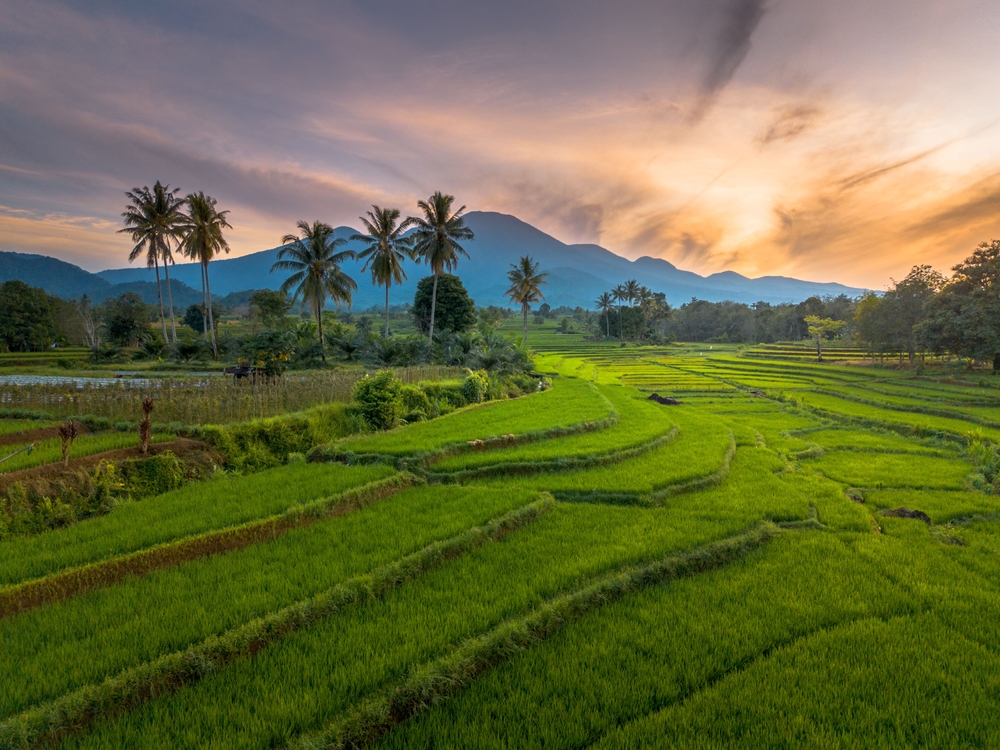
What’s more, standard focal length lenses allow you to still get a nice wide view of the landscape, but without the distortion and vignetting that can occur when shooting at the wide end of a zoom lens. You can also get close to elements in the scene, like an object of foreground interest, and convey its relationship to its surroundings with the inclusion of the surrounding landscape.
At the same time, standard lenses allow you to compress the foreground to background space more so than you can at the wide end of a zoom lens, giving you an opportunity to focus more on the details of the scene rather than the larger, wider view.
Pros of Standard Lenses
- Sharp results with low-light shooting capabilities.
- Natural reproduction of the scene that mimics the perception of the human eye.
- Can be less expensive than zoom and telephoto lenses.
- Can be used for other types of photography, namely portraiture.
Cons of Standard Lenses
- Less flexibility than a zoom lens, given the fixed focal length.
- Top-notch and ultra-fast standard lenses are extremely expensive.
- You would need multiple standard lenses to cover the same focal range as a single zoom.
Critical Factor to Consider When Buying a Standard Lens:
Compositional Choices: Since standard lenses do not have the ability to zoom, they require you to think more purposefully about changes in the composition. Rather than remaining in the same place and simply changing the focal length of a zoom, a standard lens necessitates that you move around and physically change the distance between you and your subject. If you aren’t keen on trekking around to change the composition, a standard lens might not be the best choice for you.
Telephoto Lenses

Many landscape photographers would hesitate to consider purchasing a telephoto lens because it isn’t a traditional choice. Yet, telephoto lenses do have a place in landscape photography, if only for their ability to get you closer to elements in a landscape that would otherwise be out of reach. A waterfall or cliffside that presents a precarious, if not dangerous trek, might be more safely photographed from afar with a telephoto lens.
That’s not to speak of the capability of a telephoto lens to allow you to take highly detailed shots of small vignettes in a larger landscape. In this regard, a telephoto lens shares a similar versatility to a wide-angle zoom, although at a much different focal length. The longer length of a telephoto, which ranges from 135mm and up on a full frame camera and approximately 85mm and up on an APS-C camera, means that the scenes it captures are compressed.
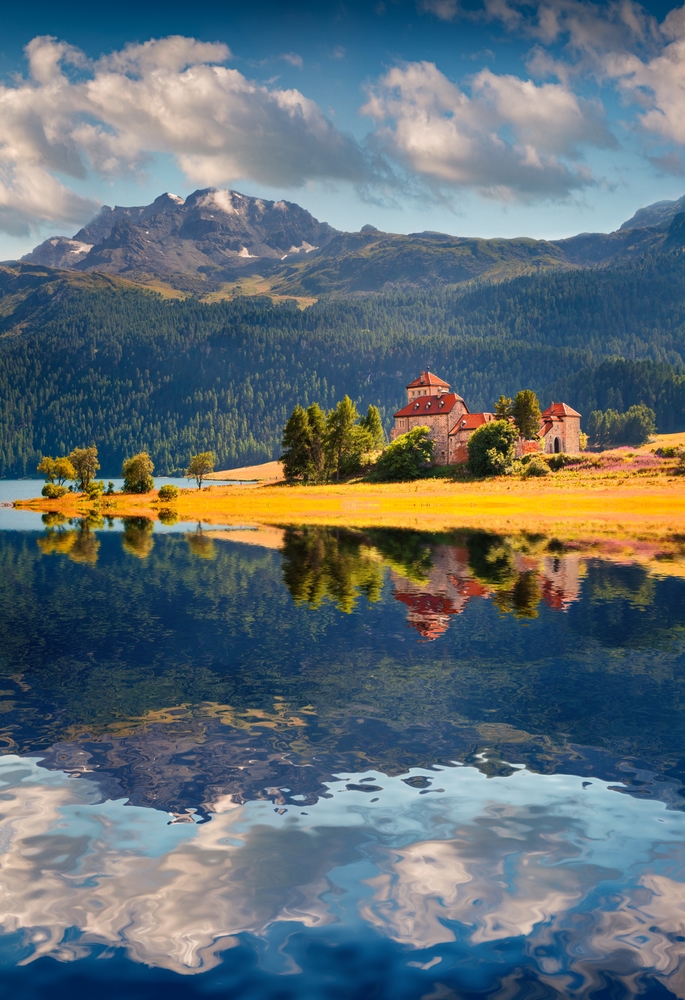
That is, rather than having the greater depth of field associated with a wide-angle lens, a telephoto lens decreases the perceived distance between objects. Therefore, when shooting a landscape, the background elements will appear larger and much closer than they actually are. This opens up many avenues for creative compositions, such as selective framing to isolate a specific element in a larger landscape.
Pros of Standard Lenses
- Gets you up close to distant subjects.
- Compression makes elements in the landscape appear to have a closer spatial relationship.
- Ability to isolate individual elements in the landscape for highly detailed shots.
Cons of Standard Lenses
- Very large, cumbersome, and heavy compared to standard and wide-angle zoom lenses.
- More difficult to manipulate, particularly for beginner and intermediate photographers.
- Very long and very fast versions can be extremely expensive.
Critical Factor to Consider When Buying a Telephoto Lens:
Need for Support: Although it is possible to get clear, sharp images while holding a telephoto lens in your hand, they often require a tripod, monopod, or another form of support. Tripods and monopods can be found for little money; however, as discussed in the next lesson, cheap materials are not recommended. Expect to spend hundreds of dollars on a high-quality tripod, which will only add to the expense of purchasing a telephoto lens.
Final Thoughts

The lens (or lenses) you purchase and use for your landscape photography will largely be a matter of personal preference. On the one hand, if sweeping landscapes with a generous depth of field is your style, a wide-angle zoom is a good choice. On the other hand, if you intend to photograph far-off landscapes and want to have the ability to isolate subjects in space, a telephoto lens is more appropriate.
Ultimately, for most beginning and intermediate landscape photographers, a wide-angle zoom is a great first lens, while standard and telephoto options are good additions later down the road. However, if you’ve got some photography experience under your belt, opting instead for a standard or telephoto lens straight out of the gate might be a better option.
A note about lenses for mirrorless system cameras: While mirrorless camera bodies are smaller and lighter than DSLRs for the most part, the same doesn’t always hold true for the lenses. Especially in Full Frame format, some lenses may be larger than their counterparts for DSLR cameras. At times, this may result in a slightly imbalanced center of gravity if the camera body is small and light compared to the lens. This isn’t a bug or flaw in the mirrorless concept, simply something to be aware of.
Regardless of the type of lens you choose, consider the following before making a purchase:
- Your camera – When choosing a lens, it’s essential to select one that’s designed for your camera’s sensor. You can put a lens for a full frame camera on an APS-C camera, but the wide-angle effect will be lost because of the crop factor of the APS-C sensor. Before buying any lenses, verify that they were built to work with your camera.
- Lens speed – The larger the maximum aperture, the faster the lens. Faster lenses are ideal for low-light shooting. Faster lenses also allow you to use a faster shutter speed without worrying as much about blurry images as a result of camera shake.
- Minimum focusing distance – Many landscape photographers like to get up close to a foreground element to exaggerate its size while using a zoom’s wide-angle capabilities to show the surrounding environment. The smaller a lens’s minimum focusing distance, the more exaggerated this effect will be. Many zooms can focus to within a foot.
Actionable Steps
- Think about the types of landscapes you most enjoy. Are they wide vistas or close-up shots? Use this information to help you determine the type of lens that might be best for you.
- If you already have one of the lenses discussed in this lesson, review the pros and cons of the other two lenses to decide which is the best fit for your next lens. Having multiple lenses will give you greater flexibility in terms of the images you create. In fact, having a wide-angle, standard, and telephoto option in your camera bag would be ideal.
Homework
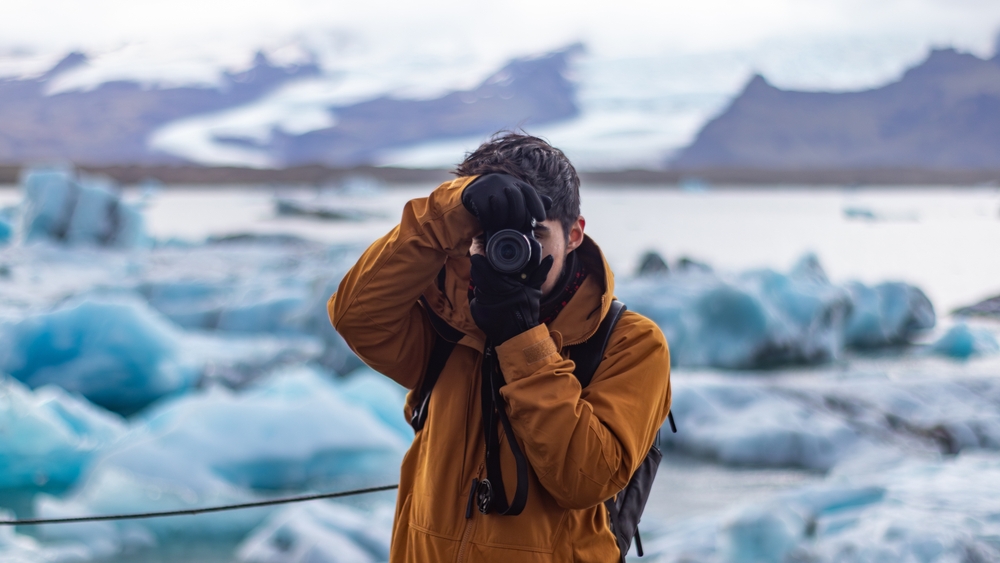
Once you’ve decided on the type of lens that is best for your needs, explore different options online, keeping in mind that the lens needs to be compatible with your camera’s format (full frame, crop sensor, mirrorless, etc.) as well as the manufacturer.
Some photographers prefer to purchase lenses from the same manufacturer as their camera, although this is not a requirement. Many third-party companies, like Tamron and Sigma, make excellent optics for a wide range of cameras, so keep your options open.
If possible, rent a lens like the one you’d like to buy so you have a chance to work with it. You might find that your top choice actually performs worse than the second or even third option on your list.