


The shift to mirrorless has reshaped the camera world, and few models have generated as much anticipation as the Nikon Z9. As Nikon’s first mirrorless flagship, it arrived with the kind of bold engineering move that signals a new era, including a shutterless design, high-speed stacked sensor, and cinema-ready video capabilities. For photographers and filmmakers who depend on rugged, reliable gear, this camera promises a combination of speed and power designed for demanding environments.
But extraordinary specs alone don’t make a professional camera. What matters is real-world performance: how a camera behaves when a wild animal bolts into frame, when the light drops at dusk, or when the pressure is on to deliver clean, crisp 8K footage without overheating or slowing down. The Nikon Z9 takes on these challenges with a set of tools built for speed, consistency, and longevity.
Whether you’re shooting wildlife, sports, landscapes, portraits, or commercial video, the Nikon Z9 aims to serve as the all-in-one body you can rely on. This review breaks down its capabilities in-depth, focusing on how its technology affects real shooting scenarios. If you’ve been considering a leap into Nikon’s professional mirrorless ecosystem, this comprehensive review will help you understand what this powerhouse brings to the table.
Table of Contents
- The Heart of the System: Sensor and Processing Power
- Speed That Changes the Game
- Autofocus Performance on the Nikon Z9
- A True Hybrid Flagship: Video Performance
- User Experience, Viewfinder, and Handling
- Stabilization, Connectivity, and Workflow Tools
- Who the Nikon Z9 Is For
- Pros and Cons
- Value Considerations: Buying the Nikon Z9 Used
- Final Verdict
- FAQ
The Heart of the System: Sensor and Processing Power
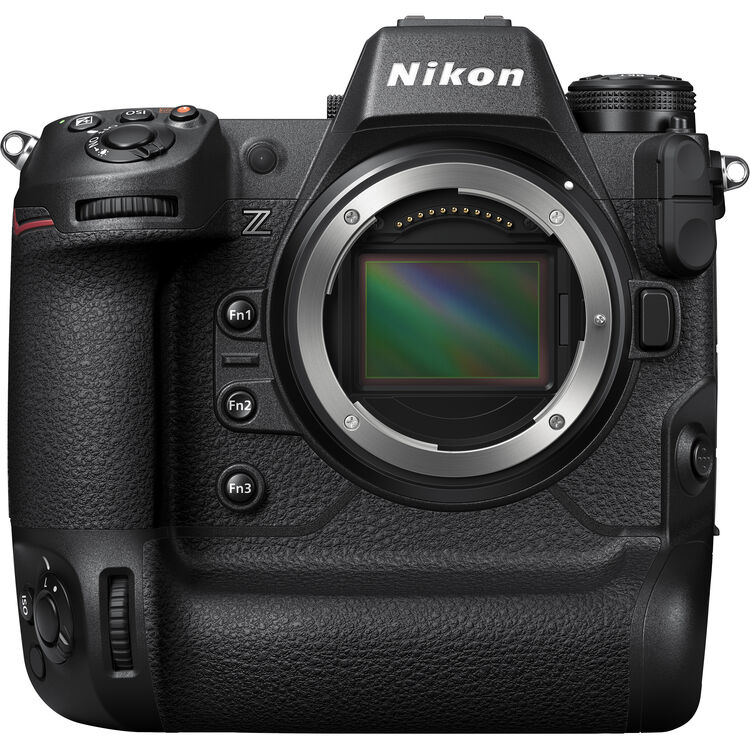
At the core of the Nikon Z9 is a 45.7MP stacked backside-illuminated sensor paired with a high-speed architecture that significantly cuts down on rolling shutter. This design is crucial because it enables the camera to operate entirely without a mechanical shutter, relying solely on its electronic readout. For photographers capturing fast action or working in bright light, the ability to shoot at shutter speeds up to 1/32,000 sec opens the door to creative possibilities with wide apertures and crisp precision. The sensor also offers excellent color depth and a native ISO range well-suited for landscapes, portrait work, and high-resolution commercial shoots.
Backing this sensor is the EXPEED 7 processor, which dramatically increases the camera’s overall responsiveness. From writing large RAW sequences to powering its advanced autofocus algorithms, the processor is at the center of what makes the Nikon Z9 such a fluid and capable tool. This generation of processing delivers speeds roughly ten times faster than previous high-end Nikon mirrorless bodies, which means both better performance and improved power efficiency.
Together, the stacked sensor and processor unlock performance that feels seamless in the field. The camera wakes up quickly, responds instantly to input, and handles heavy data loads without hesitation. Large RAW files process and buffer with ease, and both still shooters and filmmakers benefit from the reduced lag and improved intelligence in every corner of the system. For creators moving between photo and video, this pairing ensures the Nikon Z9 maintains its pace even during long or demanding sessions.
Another advantage of this hardware combination is its contribution to image quality. Files show rich tonal depth, impressive dynamic range, and excellent detail retention, even when shadows are lifted or highlights pushed during editing. Whether you’re shooting golden-hour landscapes or fast-paced action, the sensor delivers consistent, clean results.
Speed That Changes the Game

Speed is one of the calling cards of the Nikon Z9, which delivers some of the fastest continuous shooting rates available in any full-frame camera. Photographers can shoot 20 fps in RAW, 30 fps in JPEG, and an impressive 120 fps at 11MP resolution. These speeds are paired with full autofocus and auto exposure, meaning the camera doesn’t simply shoot fast—it shoots fast while maintaining accuracy. For wildlife and sports photographers, the ability to capture split-second moments consistently is a major advantage.
Just as important as burst speed is buffer depth. The Nikon Z9 can sustain over 1,000 RAW frames in a burst, something that is practically unheard of in mirrorless bodies. During real-world use, this means the camera keeps firing long after many others would choke or slow down. It removes the stress of timing your bursts and instead lets you focus entirely on the action in front of you.
The Pre-Release Capture feature further enhances the camera’s ability to freeze decisive moments. With the shutter half-pressed, the camera continuously records frames and stores up to a second of images before the shutter button is fully pressed. For birds taking flight or athletes hitting peak movement, this tool is invaluable. It compensates for human reaction time and ensures you’re less likely to miss a perfect moment.
Finally, the shutterless design is worth emphasizing. The Nikon Z9’s electronic shutter allows silent operation, eliminates mechanical wear, and helps reduce distortion thanks to the fast readout. Combined with the remarkable burst capabilities, this makes the camera not only fast but durable and reliable for long-term professional use.
Autofocus Performance on the Nikon Z9

The autofocus system in the Nikon Z9 is one of the most advanced Nikon has ever created, with 493 phase-detection points covering the full width and height of the sensor. This broad coverage ensures consistent edge-to-edge performance, which is critical for unpredictable subjects such as wildlife, children, or athletes who don’t stay near the center of the frame. The camera is capable of focusing in extremely low light, with support down to –8.5 EV, making it a strong performer for astrophotography, night events, and indoor venues.
Where the Nikon Z9 takes a major leap forward is in subject detection driven by deep-learning algorithms. The camera recognizes nine categories of subjects, including humans, animals, vehicles, and other complex shapes. Eye detection has been refined to handle both large and small subjects, allowing accurate focus even when the subject is tiny in the frame or moving erratically. For portrait photographers and wildlife shooters, this accuracy helps maintain confidence and reduces the need for repeated shots.
This generation also reintroduces Nikon’s 3D Tracking mode, a beloved tool in the DSLR lineup. Now optimized for mirrorless, 3D Tracking on the Nikon Z9 performs exceptionally well with subjects moving toward, away, or across the frame. It locks on quickly, holds tight, and works in tandem with subject detection to follow complicated movement patterns.
Firmware updates have added even more control over autofocus, including customizable wide-area AF patterns and support for expanded modes during video recording. These additions allow users to tailor focus behavior to very specific shooting scenarios, whether tracking a bird weaving between branches or a dancer moving across a dimly lit stage.
A True Hybrid Flagship: Video Performance
As Nikon USA discusses in the video above, video shooters will find the Nikon Z9 to be one of the most capable cameras in its class. The ability to record 8K/30p internally with full pixel readout is a major asset for filmmakers who need maximum detail and future-proof resolution. Even better, the camera can maintain this mode for more than two hours without overheating, giving it an edge in long-form productions and documentary work. The quality is crisp, clean, and detailed, offering plenty of room for post-production adjustments.
The oversampled 4K video modes stand out as well. When shooting 4K/60p using the full 8K sensor area, footage benefits from enhanced sharpness and reduced aliasing. For action scenes or fast-paced subjects, 4K/120p provides smooth slow-motion playback that retains impressive clarity. Filmmakers can also pull high-resolution stills from 8K and 4K footage, providing additional flexibility on set.
Internal RAW recording is a major win for high-end productions. With N-RAW and ProRes RAW available, creators get access to 12-bit files with generous dynamic range and color latitude. N-RAW offers smaller file sizes and MP4 proxy creation, which is excellent for managing storage and speeding up remote collaboration workflows. ProRes 422 HQ, H.265, and H.264 round out a codec list that supports nearly any professional post-processing pipeline.
Firmware enhancements have strengthened the Nikon Z9’s video toolset, too. A waveform monitor assists with exposure, a red REC indicator reduces the chance of missed shots, and Fine ISO control offers more precise exposure adjustments. The ability to assign different AF speeds to function buttons gives filmmakers direct control over focus transitions without digging through menus.
User Experience, Viewfinder, and Handling
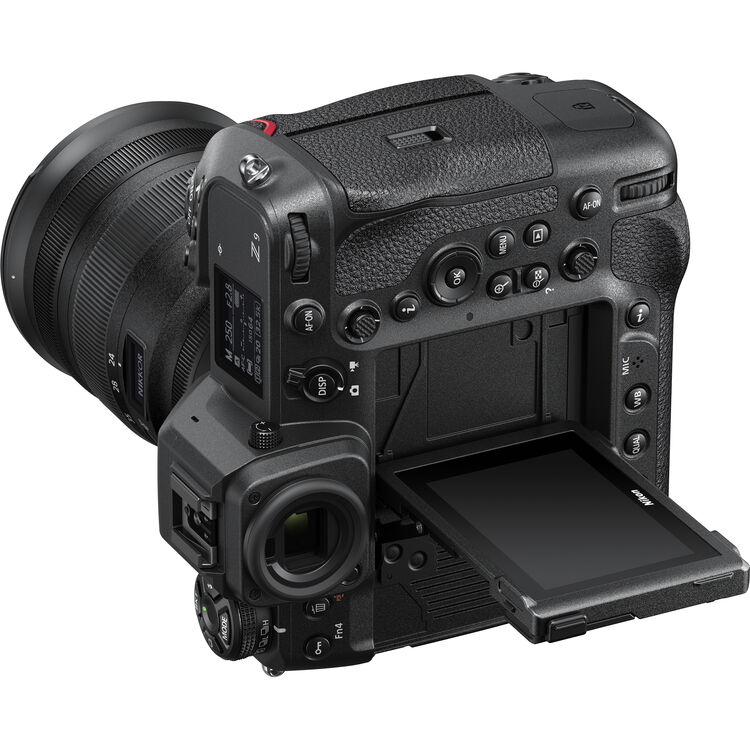
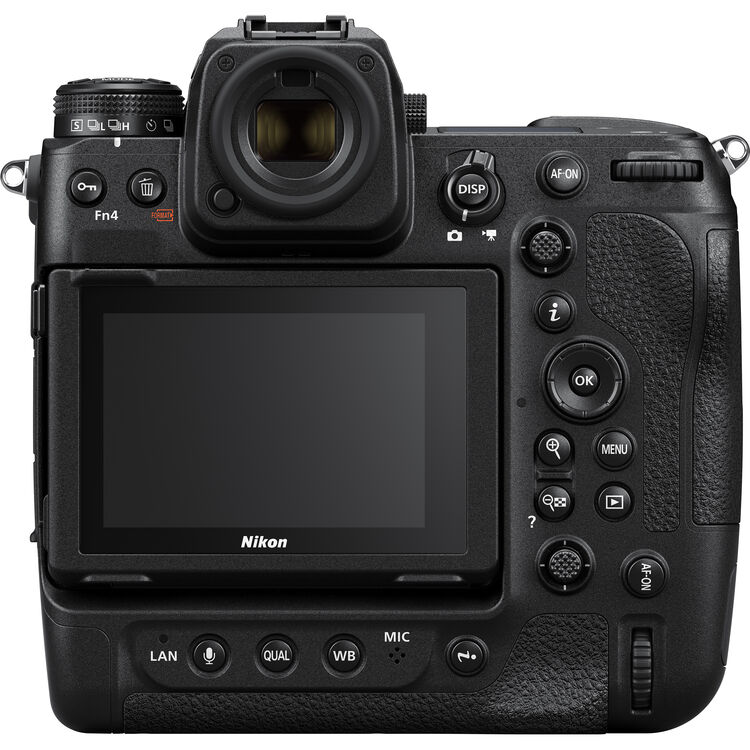
The Nikon Z9 has a rugged, professional build that reflects its flagship status. Its magnesium alloy body is fully weather-sealed and designed to withstand harsh conditions. At roughly 20 percent smaller than the Nikon D6, the camera is more manageable than Nikon’s previous DSLR flagship while still offering a secure, comfortable grip. The integrated vertical grip makes switching orientations intuitive, a benefit for sports and portrait photographers alike.
The Real-Live Viewfinder is a highlight of the shooting experience. With a bright 3.69m-dot OLED panel capable of reaching up to 3000 cd/m², it remains visible even under harsh sunlight. The blackout-free operation, enabled by dual-stream technology, ensures that continuous shooting feels natural and uninterrupted. The firmware-enabled 120 fps refresh rate makes motion appear smooth and lifelike during fast action.
The four-axis tilting touchscreen is another first for Nikon, offering excellent flexibility for both horizontal and vertical shooting. It supports tap-to-focus, menu navigation, and easy image review. Whether shooting low to the ground, overhead, or in tight spaces, this design makes composition more adaptable and intuitive.
Additional usability features include backlit buttons for nighttime work, a sensor shield that closes when the camera is off to prevent dust, and a VR safety lock for travel. These small touches collectively show that the camera is built for demanding field use, where reliability and convenience can make a noticeable difference.
Stabilization, Connectivity, and Workflow Tools
The in-body stabilization system on the Nikon Z9 is rated for up to 6 stops of compensation when paired with compatible lenses using Synchro VR. This level of stabilization is extremely helpful for handheld telephoto shooting, allowing crisp images even at slower shutter speeds. Video shooters benefit as well, gaining smoother footage when working without a gimbal.
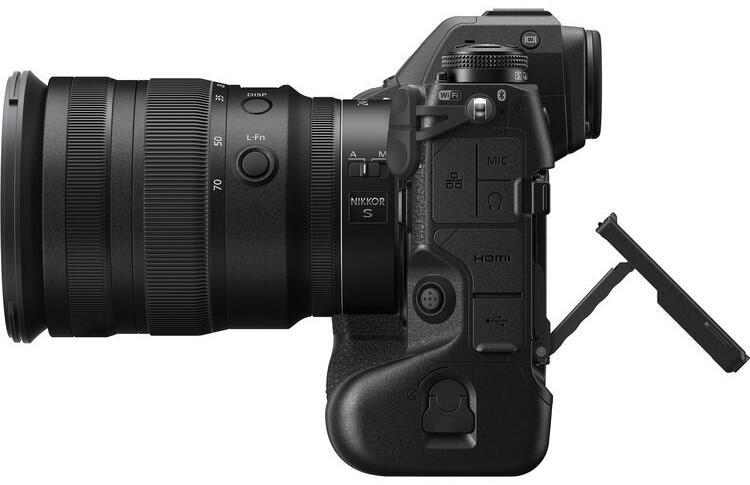
Connectivity is designed with professional workflows in mind. With full-size HDMI, USB-C, Ethernet, Wi-Fi, and Bluetooth, the Nikon Z9 supports a wide range of tethering and transfer options. The Ethernet port is especially valuable for sports and news photographers who need fast, dependable transfer during live events. Support for the NX Mobile Air app allows direct transfer to mobile devices when working on the go.
Storage flexibility comes via dual CFexpress Type B card slots, which provide the speed necessary for high-bitrate video and extended RAW bursts. The ability to use XQD cards offers backward compatibility, though CFexpress remains the recommended choice for maximizing performance. Power is provided by the EN-EL18d battery, offering strong longevity and compatibility with earlier EN-EL18 models.
These workflow tools make the Nikon Z9 a dependable companion for photographers and filmmakers who need robust connectivity and consistent performance under tight deadlines. For remote assignments, commercial sets, or fast-paced sports venues, the camera adapts to a wide range of professional situations.
Who the Nikon Z9 Is For

The Nikon Z9 is built for creators who require both speed and durability. Wildlife and sports photographers will benefit from its high-speed bursts, deep buffer, and reliable tracking that locks onto even the most unpredictable subjects. The low-light autofocus performance makes it an excellent choice for indoor or nighttime events as well.
Portrait and landscape photographers will appreciate the high-resolution sensor, rich dynamic range, and excellent color depth. The silent shutter is helpful for ceremonies, performances, and environments where discretion matters. For fine art or commercial work, the files hold up extremely well under detailed post-processing.
Filmmakers will find the camera appealing as an all-in-one production tool. The combination of internal 8K recording, RAW options, and extensive video monitoring features allows it to replace multiple bodies on certain shoots. Documentary filmmakers, wedding videographers, and content creators can all take advantage of its versatility.
Hybrid shooters, in particular, will find tremendous value in the Nikon Z9. Instead of switching between dedicated photo and video bodies, creators can streamline their kit while maintaining professional-grade performance in both areas.
Pros and Cons
Pros
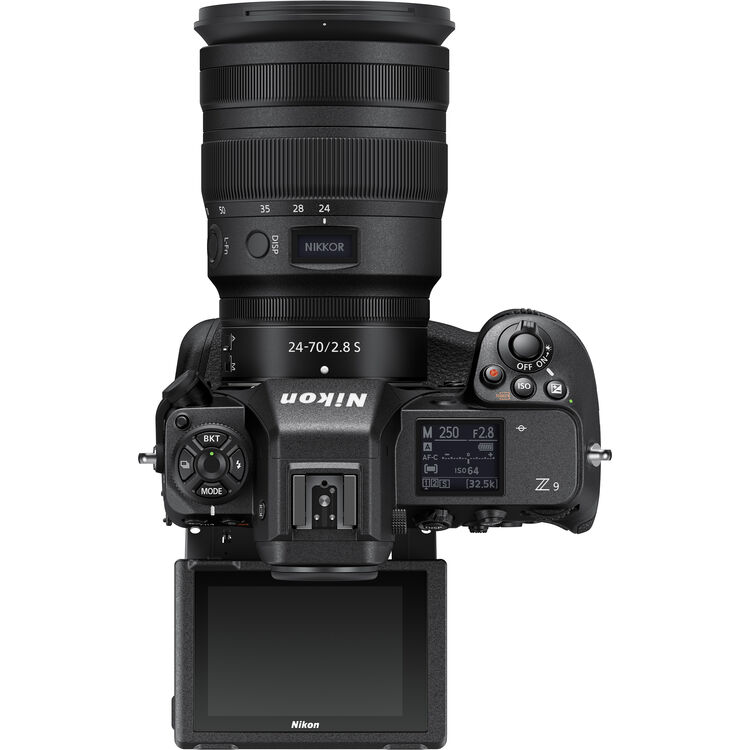
- Excellent continuous shooting speeds with long, reliable bursts
- Advanced autofocus with deep-learning subject detection
- Internal 8K and RAW video recording with long runtimes
- Rugged, weather-sealed build with professional ergonomics
- Blackout-free EVF with high brightness and responsive refresh
- Strong battery life and extensive connectivity options
Cons
- On the larger, heavier side compared to some mirrorless competitors
- Requires fast, premium CFexpress cards for best performance
- High-resolution RAW files are storage-intensive
- EVF resolution trails some competing models, despite strong brightness
Value Considerations: Buying the Nikon Z9 Used

The Nikon Z9 is a significant investment, but for those looking to balance cost with professional-grade performance, buying a used body can be an appealing option. Online platforms such as MPB often have lightly used or certified pre-owned Nikon Z9 units. These cameras are inspected, tested, and graded, giving buyers confidence that they are purchasing gear in excellent condition without paying full retail price.
Buying used also allows photographers and filmmakers to enter the flagship mirrorless category sooner, or to upgrade more frequently as new firmware and lenses are released. On platforms like MPB, you can often find Z9 bodies that include original accessories, batteries, and warranty options, making the purchase safer and more transparent. Prices for used Z9s fluctuate based on condition, shutter count, and included extras, but buyers can often save thousands compared to new units.
For professionals and hybrid shooters who plan to use the camera intensively, buying used from a trusted platform can be a practical choice, provided you check the return policy and warranty coverage. This approach delivers the Nikon Z9 experience while offering a more accessible entry point for those who want the performance of Nikon’s flagship mirrorless without immediately committing to full retail pricing.
Final Verdict
The Nikon Z9 brings together speed, intelligence, durability, and high-resolution imaging in a way that truly positions it as a flagship for professional creators. With its shutterless design, advanced autofocus, deep buffer, and powerful video tools, it handles a wide range of demanding scenarios without hesitation. Firmware updates have only made the camera stronger, particularly for video shooters who rely on RAW codecs and advanced monitoring features.
Whether you’re a specialist in fast action, a filmmaker needing internal 8K flexibility, or a hybrid creator who demands reliability across every job, the Nikon Z9 is a camera built with long-term professional use in mind. Its blend of performance and versatility makes it one of the most capable full-frame mirrorless bodies available today.
FAQ
Does the Nikon Z9 have a mechanical shutter?
No. The camera relies entirely on an electronic shutter that delivers fast readout speeds and allows silent shooting.
Can the Nikon Z9 record 8K video internally?
Yes. It records 8K/30p internally and can maintain long record times without overheating.
How good is the battery life?
The EN-EL18d battery delivers strong performance, often exceeding 700 shots per charge in real-world use.
Is the Nikon Z9 good for wildlife photography?
Absolutely. The fast burst rates, deep buffer, and advanced autofocus make it ideal for fast-moving subjects.
Does the Nikon Z9 work well for portraits?
Yes. The high-resolution sensor, accurate eye detection, and rich dynamic range make it a strong choice for portrait photographers.
What memory cards does the Nikon Z9 use?
It has dual CFexpress Type B slots and also supports XQD cards, though CFexpress provides the best performance.
Heads up: Clicking on our affiliate links and exploring our sponsored content helps us at no extra cost to you, and we only recommend gear we’re absolutely

