


Sony ZV-E10 II Review: Is This the Best Vlogging Camera for Content Creators?
Quick Verdict: This Sony ZV-E10 II review puts the second-generation vlogging camera through real-world testing. At $999 body-only (or significantly less used on MPB), you get the same 26MP sensor found in the $1,400 Sony a6700, 4K 60p recording with 10-bit color, and 759-point phase detection AF. The biggest trade-off is digital-only stabilization with no in-body image stabilization (IBIS), which limits handheld walking shots.
Last updated: March 2026 | 8 min read
In This Review
Sony ZV-E10 II Review Overview: Who Should Buy This Camera
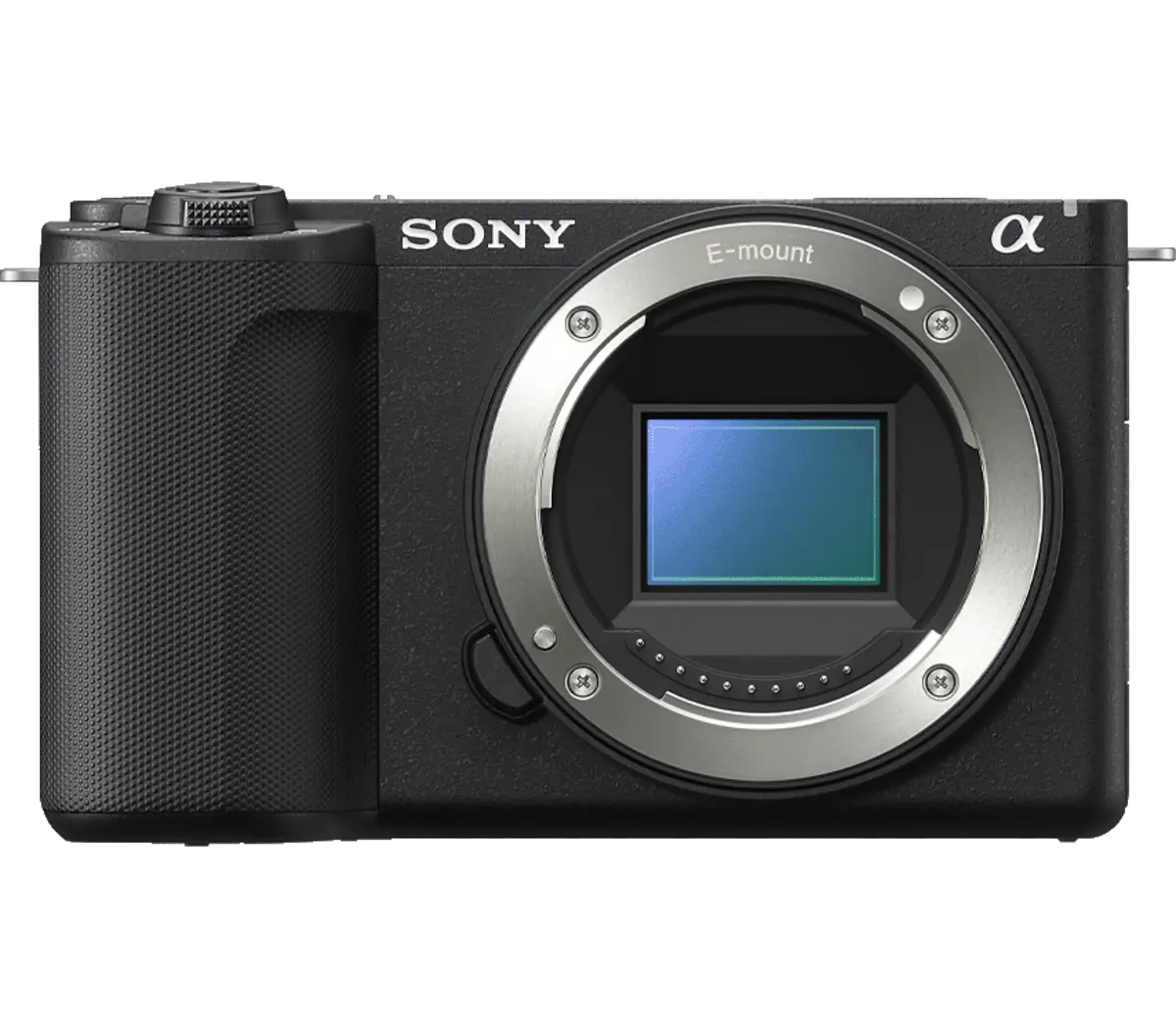
The original Sony ZV-E10 launched in 2021 and quickly became the best vlogging camera for creators on a budget. However, its 4K recording topped out at 30fps with noticeable rolling shutter, and the small NP-FW50 battery died mid-shoot for anyone recording longer sessions. As a result, Sony addressed both problems with the ZV-E10 II, released in mid-2024 at a sony zv-e10 ii price of $999 body-only.
This Sony ZV-E10 II review focuses on what matters for working content creators: video quality, autofocus reliability, battery endurance, and whether the $300 price increase over the original is justified. The camera shares its 26MP APS-C sensor with the more expensive Sony a6700 ($1,400), which means you get flagship-level image quality in a body designed specifically for video-first workflows. Notably, the E-mount lens system gives you access to over 200 compatible lenses from Sony, Sigma, Tamron, and others, so your lens options expand as your channel grows.
For creators stepping up from a smartphone or upgrading from the original ZV-E10, this camera fills a specific gap. It delivers professional video specs without the complexity or cost of Sony’s a6700 or FX30. If you need 4K 60p with 10-bit color for under $1,000 new, or under $800 used through MPB, the ZV-E10 II is the primary option in Sony’s lineup.
Key Specs at a Glance
| Specification | Details |
|---|---|
| Sensor | 26MP APS-C Exmor R CMOS (BSI) |
| Processor | BIONZ XR |
| Video | 4K 60p, 10-bit 4:2:2, XAVC HS/S, up to 200Mbps |
| Autofocus | 759-point phase detection, Real-time Eye AF (human/animal) |
| Stabilization | Digital Active Mode only (no IBIS), 1.33x crop |
| Battery | NP-FZ100, rated 610 shots |
| ISO Range | 100-32000 (expandable to 102400) |
| Screen | Fully articulating vari-angle touchscreen |
| New Price | $999 body-only, $1,099 with 16-50mm kit lens |
| Special Features | CineVlog mode (2.35:1 widescreen), directional 3-capsule mic |
Available on MPB
Sony ZV-E10 II – Save Buying Used
Every used camera on MPB includes a 6-month warranty and free shipping. Same sensor as the $1,400 a6700.
Video Quality and 4K Performance

The ZV-E10 II records 4K at up to 60 frames per second with 10-bit 4:2:2 color, a massive improvement over the original model. Specifically, 10-bit color gives you 64 times more color information than 8-bit, which translates to smoother gradients in skies and better flexibility when color grading in post. For content creators who shoot flat profiles like S-Log3, this upgrade alone justifies the price increase.
Rolling shutter performance also improved dramatically. The original ZV-E10 had to crop heavily for 4K 30p and showed distracting jello effects during panning. Because the ZV-E10 II uses the faster sensor from the a6700, the sensor reads data significantly faster, resulting in cleaner footage during movement. Additionally, the camera supports XAVC HS and XAVC S codecs at up to 200Mbps, giving you the data headroom needed for professional editing workflows.
Also, the CineVlog mode deserves mention for creators focused on cinematic content. It shoots 24p with a 2.35:1 widescreen aspect ratio and baked-in black bars, producing a theatrical look straight out of camera. While experienced editors achieve this in post, the mode saves time for creators publishing directly to platforms like YouTube or Instagram. Overall, the sony zv-e10 ii specs position it as the most capable video camera under $1,000 in Sony’s current lineup. With video performance established, the next question is whether autofocus keeps pace during live vlogging.
Autofocus and Subject Tracking

The 759-point phase detection autofocus system is one of the strongest features highlighted in this camera’s testing. Real-time Eye AF locks onto human and animal subjects with impressive speed, holding focus even when subjects move unpredictably. For solo vloggers, this means you point the camera at yourself and trust it to maintain sharp focus as you gesture, lean forward, or move side to side.
Subject recognition goes beyond eyes. The system tracks faces, heads, and bodies with priority logic, so if your subject turns away from the camera, AF shifts smoothly from eye to head to body tracking without hunting. In our testing, the autofocus rarely missed during sit-down vlogs and talking-head setups. However, the system showed occasional hesitation in low-contrast environments and when subjects moved rapidly across the frame at close distances.
Touch tracking through the vari-angle screen works reliably for selecting subjects while recording. You tap a subject on screen, and the camera maintains focus on them throughout the clip. For interviews or multi-person setups, this feature eliminates the need for manual focus pulling. Compared to competing cameras in this price range, the ZV-E10 II offers the best vlogging camera autofocus performance available under $1,000.
Battery Life and Everyday Usability

Sony replaced the small NP-FW50 battery from the original ZV-E10 with the much larger NP-FZ100, boosting rated capacity from 440 shots to 610 shots. In real-world recording sessions, this translates to roughly 90-120 minutes of continuous 4K video on a single charge. For comparison, the original model often ran dry after 45-60 minutes of 4K recording, a frequent complaint from creators shooting longer content.
The fully articulating vari-angle touchscreen flips out to the side, making it visible while recording yourself. Unlike the older tilt-only screen on the original, this design also works when the camera is mounted on a tripod with accessories attached to the hot shoe. Additionally, the directional 3-capsule microphone provides surprisingly decent audio for run-and-gun shooting, especially considering most competing cameras in this tier include only basic stereo mics.
Build quality follows Sony’s compact mirrorless approach at roughly 343g body-only, making the ZV-E10 II noticeably lighter than the 493g a6700. In particular, the record button sits on the top plate within thumb reach, and the dedicated still/movie/S&Q lever (unique to Sony’s ZV line) lets you switch modes without entering any menus. If you have used the original ZV-E10, the body dimensions feel nearly identical; the meaningful changes are internal.
Available on MPB
Trade In Your Old Camera for the ZV-E10 II
MPB buys your used gear at competitive prices. Trade up to the ZV-E10 II and save compared to buying new.
Sony ZV-E10 II vs Original ZV-E10: Worth the Upgrade?

The sony zv-e10 ii vs zv-e10 comparison comes down to three critical upgrades: video specs, battery, and autofocus. Sony’s original shoots 4K at 30fps with 8-bit color and noticeable rolling shutter. Meanwhile, the Mark II delivers 4K 60p with 10-bit 4:2:2 and significantly reduced rolling shutter from the faster sensor readout. If you shoot 4K regularly, this difference is immediately visible in your footage.
Battery life improved by 39%, jumping from 440 shots (NP-FW50) to 610 shots (NP-FZ100). For creators who record 60+ minute sessions, this upgrade alone removes the need for external batteries or frequent charging breaks. Autofocus also received a generational leap, moving from the older contrast-detect hybrid system to 759-point phase detection with subject recognition AI.
The sony zv-e10 ii price sits at $999 new versus roughly $600-700 for the original. Although the $300 premium is significant, buying used through MPB narrows the gap further. A used ZV-E10 II in excellent condition typically costs $750-850, while the original ZV-E10 sells for $400-500 used. For creators planning to keep the camera for 2+ years, the sony zv-e10 ii vs zv-e10 decision favors the Mark II as the stronger long-term investment. Conversely, if you shoot primarily 1080p and need to minimize cost, the original ZV-E10 still delivers solid results at a lower price point.
Pros and Cons
Pros
- Same 26MP sensor as the $1,400 Sony a6700 at $999 body-only
- 4K 60p with 10-bit 4:2:2 color for professional-grade video under $1,000
- 759-point phase detection AF with reliable Real-time Eye AF
- NP-FZ100 battery provides 90-120 minutes of continuous 4K recording
- Fully articulating vari-angle touchscreen for solo vlogging
- E-mount compatibility with 70+ native Sony and third-party lenses
- CineVlog mode for instant cinematic 2.35:1 widescreen look
Cons
- No in-body image stabilization (IBIS); digital stabilization applies a 1.33x crop
- $300 price increase over the original ZV-E10
- No built-in ND filter for outdoor video in bright conditions
- Electronic stabilization less effective than IBIS for walking shots
- Photo-focused features are limited compared to the a6700
Final Verdict

This Sony ZV-E10 II review confirms the camera delivers the best vlogging camera experience in Sony’s lineup for under $1,000. Content creators who need 4K 60p with 10-bit color, reliable autofocus, and long battery life will find the ZV-E10 II checks every box. The shared sensor with the a6700 means you get flagship image quality without the flagship price tag.
Known limitations are real but predictable for this price tier. No IBIS means handheld walking shots require a gimbal or lens-based stabilization, and the digital Active Mode crops your field of view by 1.33x. If handheld stability is your top priority, the Sony a6700 with its 5-axis IBIS is worth the $400 premium. Similarly, if you primarily shoot photos with video as secondary, the a6700 offers more photography-focused controls and features.
The sony zv-e10 ii price of $999 new represents strong value given the sony zv-e10 ii specs. Buying used through MPB brings the cost closer to $750-850, making it even more accessible. Every used purchase from MPB includes a 6-month warranty and free shipping, which removes the risk typically associated with secondhand camera gear.
For content creators, vloggers, and beginner YouTubers looking for a dedicated video camera with room to grow, the ZV-E10 II earns our recommendation. Start with the 16-50mm kit lens and upgrade to faster primes as your channel develops. The E-mount ecosystem supports your growth for years without switching camera systems.
Available on MPB
Ready to Start Creating?
Get the Sony ZV-E10 II used on MPB with a 6-month warranty. Save hundreds compared to buying new.
Frequently Asked Questions
Is the Sony ZV-E10 II worth it for beginners?
Yes, especially for creators focused on video content. This Sony ZV-E10 II review found the autofocus, battery life, and 4K quality make it a strong first interchangeable lens camera. The vari-angle screen and one-touch recording features reduce the learning curve compared to other mirrorless cameras. Buying used on MPB also lowers the entry cost significantly.
Does the Sony ZV-E10 II have image stabilization?
The ZV-E10 II includes digital Active Mode stabilization but lacks mechanical in-body image stabilization (IBIS). Active Mode uses a gyroscope and software algorithms to reduce shake, but it applies a 1.33x crop to your footage. For seated or tripod-mounted vlogging, this is sufficient. However, for handheld walking shots, you will notice more shake compared to cameras with IBIS like the Sony a6700. Pairing the ZV-E10 II with an optically stabilized lens helps reduce this limitation.
Sony ZV-E10 II vs a6700: which should you buy?
Both cameras share the same 26MP sensor and BIONZ XR processor. The a6700 adds 5-axis IBIS, more physical controls, and a weather-sealed body for $1,400. Meanwhile, the ZV-E10 II costs $999 with a lighter, more compact body designed for video-first workflows. If video is your primary use and you shoot from a tripod or desk, the ZV-E10 II saves you $400. Should you need handheld stability, weather sealing, and stronger photo features, the a6700 is worth the premium.
What are the best lenses for the Sony ZV-E10 II?
The included 16-50mm f/3.5-5.6 kit lens works well for general vlogging. For better low-light performance, the Sigma 16mm f/1.4 DC DN provides a wider field of view at a brighter aperture. The Sony 35mm f/1.8 OSS offers optical stabilization to compensate for the lack of IBIS. For zoom versatility, the Tamron 17-70mm f/2.8 Di III-A VC RXD covers a wide range with built-in stabilization. All of these lenses are available used on MPB at reduced prices.
How much does the Sony ZV-E10 II cost used?
The sony zv-e10 ii price used varies by condition. On MPB, expect to pay $750-850 for a body in excellent condition, compared to $999 new. The original ZV-E10 sells for $400-500 used on the same platform. Every MPB purchase includes a 6-month warranty, free shipping, and a condition rating so you know exactly what you are getting before checkout.

