

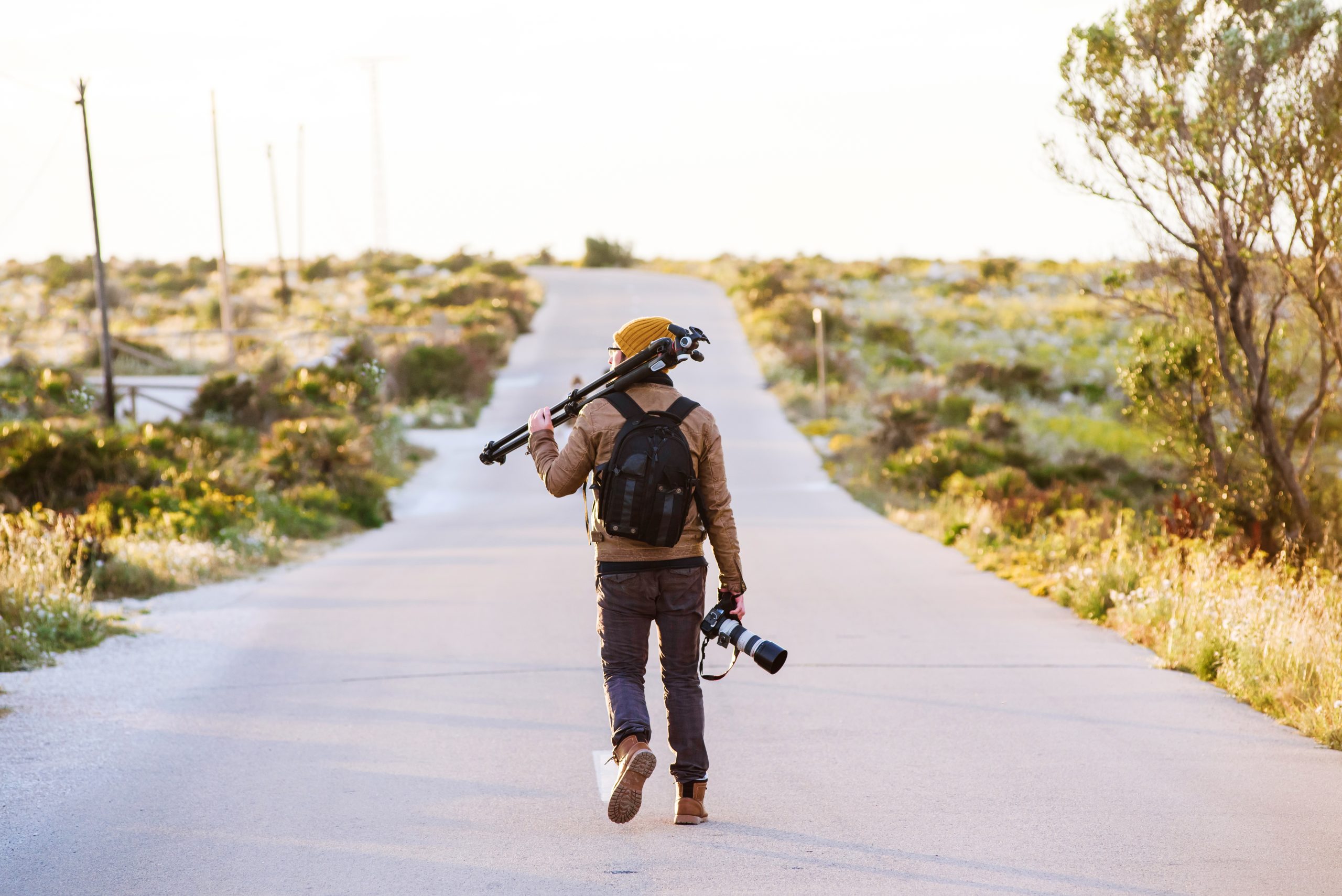
Quick Verdict: The Canon EOS R10 packs a 24.2MP APS-C sensor, 23fps electronic shutter burst, and an autofocus system pulled straight from Canon’s $6,000 R3 flagship into a body priced at $979 new. Used prices on MPB start around $700, making it one of the strongest values in mirrorless photography. The biggest trade-off is the lack of in-body image stabilization, which limits handheld shooting in low light without a stabilized lens.
Last updated: March 2026 | 10 min read
In This Review
- Canon EOS R10 Overview: Who Needs This Camera?
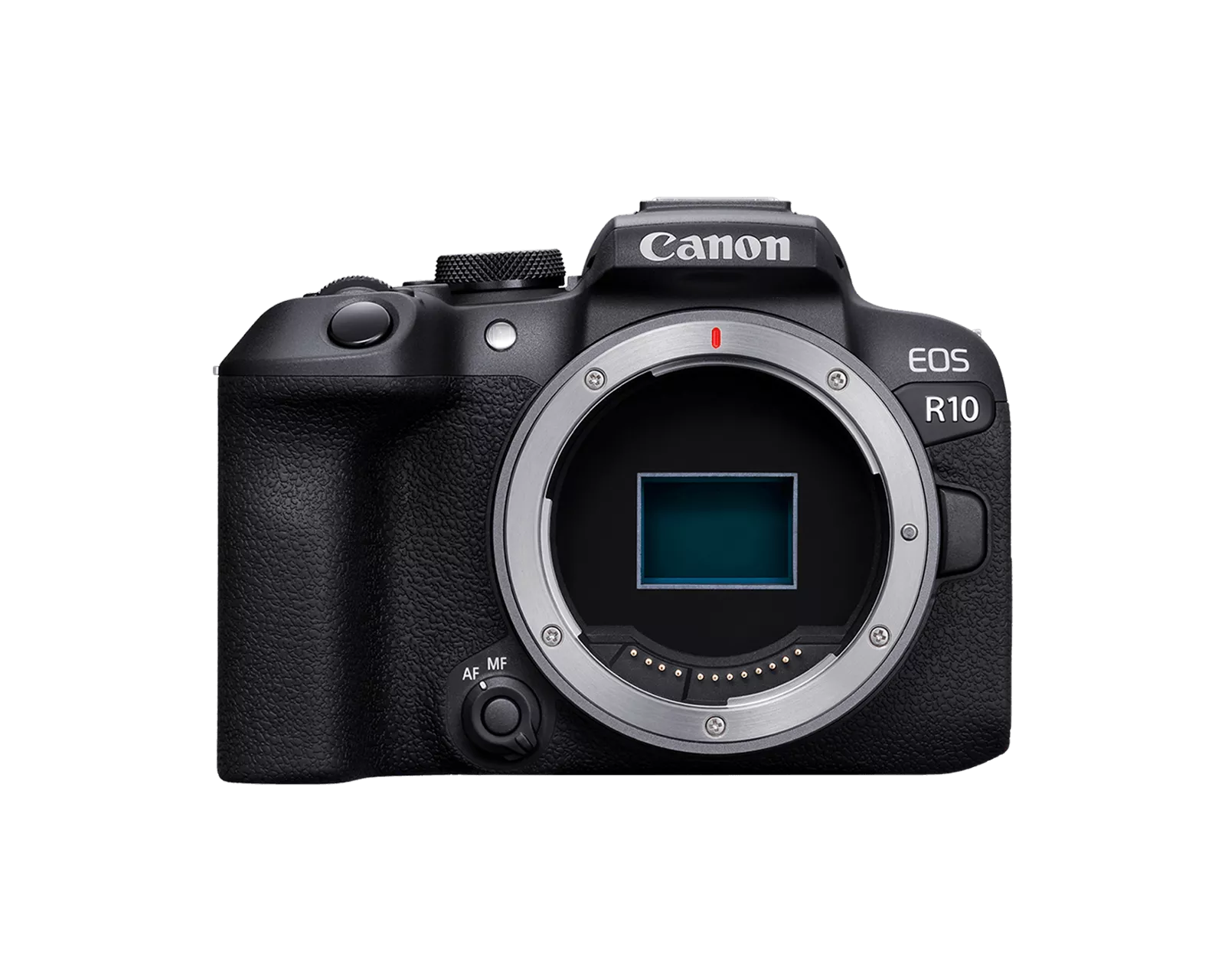
- Key Specs at a Glance
- Image Quality and Sensor Performance
- Autofocus System
- Burst Shooting and Buffer
- Video Capabilities
- Design, Build, and Handling
- Battery Life
- Canon EOS R10 vs. Sony a6700: Which Should You Buy?
- Should You Buy the Canon EOS R10 Used?
- Pros and Cons
- Final Verdict
- Frequently Asked Questions
Canon EOS R10 Overview: Who Needs This Camera?
The Canon EOS R10 sits in a unique position in Canon’s RF-mount lineup. It delivers flagship-level autofocus performance in an APS-C body priced under $1,000. Released in mid-2022, it replaced the aging Rebel/EOS M series and brought serious mirrorless features to Canon’s budget tier for the first time.
This camera is built for photographers upgrading from a smartphone, older DSLR, or entry-level mirrorless who want a meaningful jump in autofocus tracking, burst speed, and image quality without spending $1,500 or more. Wildlife photographers on a budget benefit from the 1.6x APS-C crop factor, which gives a 400mm lens the field of view of a 640mm. Street, travel, and event photographers get a lightweight body (429g with battery) paired with fast, reliable subject detection.
Compared to its sibling, the Canon EOS R7, the R10 sacrifices in-body image stabilization and weather sealing to hit a lower price point. Compared to Canon’s full-frame EOS R8, it trades sensor size for faster burst shooting and a lower entry cost. The value proposition is clear: R3-level autofocus at one-sixth the price.
Key Specs at a Glance
| Specification | Details |
|---|---|
| Sensor | 24.2MP APS-C CMOS |
| Processor | DIGIC X |
| AF Points | 651 zones (up to 5,940 positions) |
| Burst Rate | 15fps mechanical / 23fps electronic |
| ISO Range | 100-32,000 (expandable to 51,200) |
| Video | 4K 30p (full-width), 4K 60p (1.56x crop) |
| Stabilization | None (lens-based IS only) |
| Card Slot | Single SD (UHS-II) |
| Weight | 429g (body with battery and card) |
| Display | 3.0″ vari-angle touchscreen, 1.04M dots |
| Weather Sealing | No |
| Price (New Body Only) | $979 |
Featured on MPB
Used Canon EOS R10 – From $700
Save up to $280 versus new retail. Every used R10 on MPB ships with a 6-month warranty, free shipping, and a verified condition rating so you know exactly what you’re getting.
Image Quality and Sensor Performance
The R10’s 24.2MP APS-C sensor produces clean, detailed images at base ISO with good dynamic range for its class. RAW files retain enough shadow detail for 2-3 stops of recovery in post-processing, which is solid for an APS-C sensor at this price. Color accuracy is excellent, with Canon’s signature warm, natural skin tones straight out of camera.
Noise performance stays usable through ISO 6,400. By ISO 12,800, luminance noise becomes visible in shadow areas, and fine detail starts to soften. At ISO 25,600 and above, images are best reserved for small prints or web use. For context, the Sony a6700’s newer BSI-CMOS sensor handles about 1 stop better at high ISOs, giving it an edge in low-light situations.
JPEG shooters benefit from Canon’s DIGIC X processor and the same color science found in the R5 and R6 II. Skin tones, in particular, need minimal editing. The auto white balance performs reliably in mixed lighting, and the camera’s metering system handles high-contrast scenes well. If you shoot portraits, family events, or travel photography, the R10 produces images ready for social media or moderate-size prints with minimal post-processing.
Autofocus System
The autofocus is the R10’s strongest feature. Canon pulled the Dual Pixel CMOS AF II system and subject detection algorithms from the $6,000 EOS R3 and put them in a sub-$1,000 body. The system covers 100% of the frame horizontally and vertically with 651 AF zones and up to 5,940 selectable positions.
Subject detection tracks people (face and eye), animals (including birds), and vehicles with impressive accuracy. In testing for wildlife photography, the R10 locks onto bird eyes reliably and maintains tracking through erratic flight patterns. Eye AF holds focus during portrait sessions even when subjects turn away and look back.
Low-light AF performance is rated to -4 EV, though real-world testing shows the system hunting more in dim indoor settings. If you shoot concerts, receptions, or evening events, expect occasional focus misses below roughly -2 EV. Pairing the R10 with a fast f/1.4 or f/1.8 RF-mount lens improves low-light AF accuracy significantly. For general outdoor and well-lit indoor shooting, the AF system performs far above what this price bracket typically delivers.
Burst Shooting and Buffer
At 15fps with the mechanical shutter and 23fps with the electronic shutter, the R10 shoots faster than cameras costing two or three times as much. The Canon EOS R6 Mark II maxes out at 12fps mechanical, for comparison.
Buffer depth is the trade-off. Shooting RAW at 15fps, the buffer fills after approximately 29 frames (about 1.9 seconds of continuous shooting). With a UHS-II SD card, clearing the buffer takes several seconds. If you switch to JPEG, buffer depth extends to roughly 190 frames at 15fps. For wildlife and sports, this means short, targeted bursts work well, but holding down the shutter for extended sequences will stall the camera.
The electronic shutter mode at 23fps adds rolling shutter distortion on fast-moving subjects, which limits its practicality for certain sports. The mechanical shutter at 15fps remains the more reliable option for action photography where subject movement is lateral to the frame.
Sell Your Old Gear on MPB
Upgrade to the Canon EOS R10 for Less
Trade in your old DSLR or mirrorless body on MPB and put the credit toward a used R10. Free shipping both ways, instant quotes online, and no listing fees.
Video Capabilities
The R10 records full-width 4K at 30fps using the full sensor width, which means no additional crop beyond the native 1.6x APS-C factor. Stepping up to 4K 60fps applies a further 1.56x crop, narrowing your field of view significantly. For vloggers, this heavy crop at 60fps makes wide-angle framing difficult without an ultra-wide lens.
1080p recording reaches 120fps for slow-motion footage. Video quality at 4K 30p is clean with good detail retention and reliable autofocus tracking during recording. Canon’s Dual Pixel AF performs well in video, with smooth, natural focus transitions when switching between subjects.
The missing headphone jack is a real limitation for anyone producing content requiring audio monitoring. You need an external recorder or rely on the camera’s audio meters on screen. For casual vlogging and social media content, the built-in microphone is adequate, but serious video work demands an external mic setup. The vari-angle touchscreen flips forward for self-shooting, which partially compensates for the audio monitoring gap.
Design, Build, and Handling
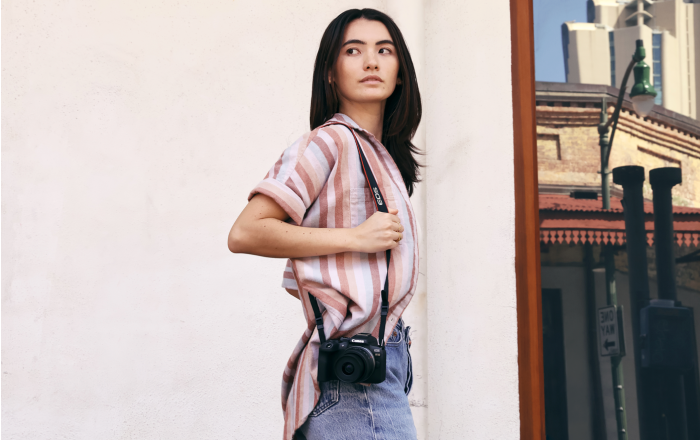
At 429 grams with battery and card, the R10 is one of the lightest RF-mount cameras Canon makes. The polycarbonate body feels solid despite the light weight, though it lacks any weather sealing. Shooting in light rain or dusty environments requires caution, or a rain cover.
Ergonomics are a highlight. The deep grip accommodates three fingers comfortably, and Canon included dual control dials (front and rear) for quick aperture and shutter speed adjustments. This is a significant upgrade from the single-dial designs on Canon’s older Rebel series. The top-plate mode dial, dedicated video button, and customizable function buttons give the R10 a layout closer to mid-range bodies like the EOS R7 than entry-level cameras.
Behind the viewfinder, a 2.36M-dot OLED panel provides a clear view with smooth refresh during tracking. Meanwhile, the 3.0″ vari-angle touchscreen tilts and swivels for high, low, and forward-facing angles. Menu navigation through the touchscreen is responsive, and Canon’s menu system is intuitive for both new and experienced users.
Battery Life
Battery life is the R10’s weakest specification. Canon rates the LP-E17 battery at 260 shots using the EVF and 430 shots using the LCD (CIPA standard). In practice, conservative shooting with power-saving settings enabled pushes the count closer to 500-600 shots. Heavy use of burst shooting, video, and live view drains the battery faster.
The LP-E17 battery is small and lightweight, which contributes to the camera’s portability, but a full day of shooting requires at least one spare. Third-party LP-E17 batteries cost $15-20 each, making it inexpensive to carry two or three extras. The camera charges via USB-C, so a portable power bank works as a backup charging solution between sessions.
Canon EOS R10 vs. Sony a6700: Which Should You Buy?
Sony’s a6700 is the R10’s most direct competitor, priced at $1,399 new (about $420 more than the R10). It uses a newer 26MP BSI-CMOS sensor with roughly 1 stop better high-ISO performance and includes 5-axis in-body image stabilization. It also features a weather-sealed body, a larger buffer, and 4K 120fps video recording. On paper, the a6700 wins in nearly every technical category.
The R10 fights back on three fronts: price, autofocus, and Canon’s RF lens ecosystem. At $700 used versus approximately $1,100 used for the a6700, the R10 costs significantly less. Canon’s subject detection, particularly for birds and animals, matches or slightly edges Sony’s system for wildlife tracking. And Canon’s RF-S lens lineup, while still growing, includes affordable options like the RF-S 18-150mm f/3.5-6.3 IS STM.
If you already own Canon glass, the decision is straightforward: the R10 keeps you in the ecosystem at a lower cost. Starting fresh with a budget of $1,400? The a6700 delivers more camera for the money. But if your budget tops out at $700-1,000, the R10 provides 80% of the a6700’s capability at roughly 50-65% of the price.
Should You Buy the Canon EOS R10 Used?
The used market is where the R10’s value proposition becomes strongest. New retail sits at $979. Used prices on MPB start around $700 for bodies in “Good” condition, with “Excellent” condition units running $750-800. At those prices, you save $180-280 compared to new, and the camera still has years of productive life ahead.
When shopping for a used R10, check the shutter count. The R10’s mechanical shutter is rated for approximately 100,000 actuations. Units with counts under 20,000 have used less than 20% of their rated lifespan. Inspect the sensor for dust spots, the LCD for scratches, and the hot shoe for corrosion or wear. The electronic contacts on the lens mount should be clean and scratch-free.
MPB is the recommended marketplace for buying a used R10. Every unit ships with a 6-month warranty, free shipping, and a clear condition rating (Like New, Excellent, Good, Well Used). Unlike private sales on eBay or Facebook, MPB inspects each camera and provides recourse if something is wrong. For a camera at this price point, the warranty alone is worth the slight premium over private-party pricing.
Pros and Cons
Pros
- R3-derived autofocus with animal, bird, and vehicle detection at sub-$1,000
- 23fps electronic / 15fps mechanical burst shooting
- Lightweight body at 429g with deep, comfortable grip
- Dual control dials and customizable buttons above entry-level standard
- Full-width 4K 30p video with reliable Dual Pixel AF
- Strong used market value starting around $700 on MPB
- 1.6x crop factor extends telephoto reach for wildlife and sports
- USB-C charging for on-the-go power
Cons
- No in-body image stabilization (lens IS only)
- No weather sealing on body
- Short battery life (~260 shots EVF, ~430 LCD)
- Single SD card slot (no dual-slot backup)
- RAW buffer fills in ~29 frames at 15fps
- No headphone jack for audio monitoring
- 4K 60p applies a heavy 1.56x additional crop
Final Verdict
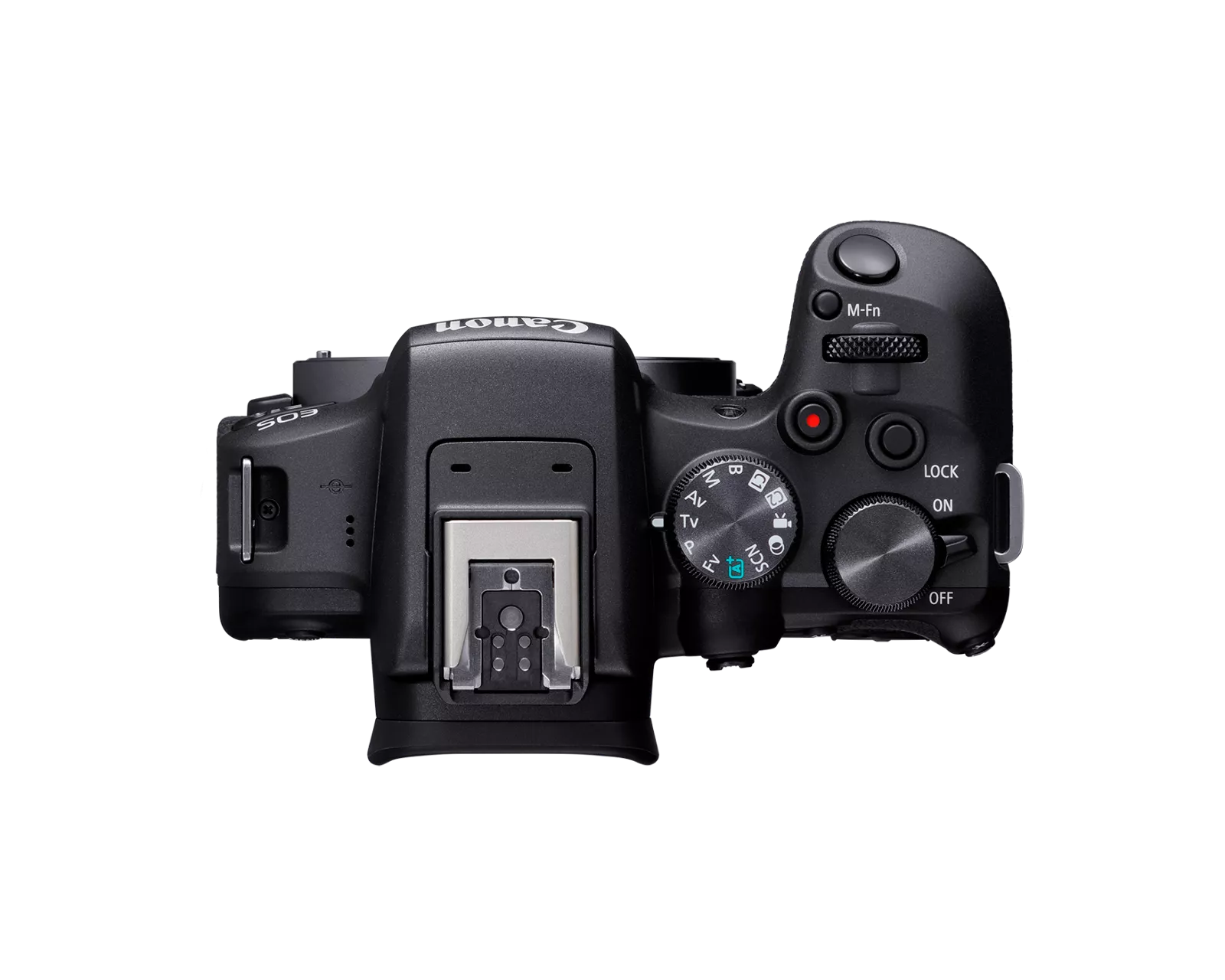
The Canon EOS R10 is the best value in APS-C mirrorless for photographers who prioritize autofocus performance and burst speed. No other camera under $1,000 offers this combination of R3-level subject tracking, 23fps burst shooting, and Canon’s color science. If you photograph wildlife, birds, family events, or sports, the R10 delivers results well above its price class.
The trade-offs are real but predictable at this price. Without IBIS, you need stabilized lenses for handheld shooting below 1/60s. And the absent weather sealing limits confidence in harsh conditions. Short battery life demands spare batteries. And the limited RAW buffer suits targeted bursts over sustained sequences. None of these are surprising for a sub-$1,000 body, and none significantly diminish what the R10 does well.
At $979 new, the R10 is already competitive. At $700 used from MPB with a 6-month warranty, it becomes one of the best values in photography. You get a camera with professional-grade autofocus, fast burst shooting, and solid image quality for less than the price of many mid-range lenses. For photographers upgrading from a DSLR or older mirrorless body, the R10 delivers the most noticeable improvement per dollar spent.
If you need IBIS and weather sealing and your budget stretches to $1,300, consider the Canon EOS R7. If you want full-frame on a budget, look at the Canon EOS R8. For everyone else looking at an APS-C mirrorless under $1,000, the Canon EOS R10 is the camera to beat.
PhotographyTalk Rating: 4.3 / 5
Ready to Buy?
Canon EOS R10 – Check Today’s Used Prices on MPB
Starting from $700 with a 6-month warranty, free shipping, and verified condition ratings. Save up to $280 versus buying new.
Frequently Asked Questions About the Canon EOS R10
Is the Canon EOS R10 good for beginners?
Yes. The R10 is one of the best Canon cameras for beginners because it pairs intuitive controls with advanced features you won’t outgrow quickly. Its touchscreen menu, guided mode, and auto-everything options make it approachable, while the dual dials, customizable buttons, and advanced AF system give room to grow into manual shooting.
Is the Canon EOS R10 better than the Sony a6700?
Sony’s a6700 is the technically superior camera with IBIS, weather sealing, better high-ISO performance, and a larger buffer. However, the R10 costs $420 less new and roughly $400 less used. For budget-conscious buyers, the R10 delivers approximately 80% of the a6700’s capability at 50-65% of the cost. If autofocus tracking for wildlife is your priority, the R10 matches or edges the a6700 in bird and animal detection.
Does the Canon EOS R10 have image stabilization?
No. The R10 does not have in-body image stabilization. It relies entirely on optical image stabilization built into compatible RF and RF-S lenses. If handheld shooting at slow shutter speeds is important to you, pair the R10 with a stabilized lens like the RF-S 18-150mm f/3.5-6.3 IS STM or consider stepping up to the Canon EOS R7, which includes 7-stop IBIS.
How long will a used Canon EOS R10 last?
The R10’s mechanical shutter is rated for approximately 100,000 actuations. A used unit with 15,000-20,000 clicks has used less than 20% of its rated lifespan. The electronic components, sensor, and processor have no meaningful wear-based lifespan limit. With proper care, a used R10 should remain productive for 5-8 years or more.
What lenses work best with the Canon EOS R10?
The RF-S 18-150mm f/3.5-6.3 IS STM is the best all-around kit lens for travel and general use. For wildlife and sports, the RF 100-400mm f/5.6-8 IS USM offers affordable telephoto reach. Portrait shooters benefit from the RF 50mm f/1.8 STM (80mm equivalent on APS-C). All RF and RF-S mount lenses are fully compatible.
Should I buy the Canon EOS R10 or wait for the R10 Mark II?
Rumors suggest a Canon EOS R10 Mark II could arrive in late 2026 with a higher-resolution sensor and potentially IBIS. If those features matter to you, waiting might be worthwhile. However, the current R10 is available now at strong used prices, and the Mark II will likely launch at $979-1,099 new. Buying a used R10 today at $700 and upgrading later is a low-risk approach.

