


Last updated: February 2026 | 12 min read
In This Review
- Canon EOS R8 Overview: Who Needs This Camera?
- Key Specs at a Glance
- Image Quality and Sensor Performance
- Autofocus: Dual Pixel CMOS AF II
- Burst Shooting and Buffer
- Video Capabilities and C-Log 3 Advantage
- Design, Build, and Handling
- Battery Life Reality Check
- Canon EOS R8 vs. R6 II: Which Should You Buy?
- Should You Buy the Canon EOS R8 Used?
- Pros and Cons
- Final Verdict
- FAQ
Canon EOS R8 Overview: Who Needs This Camera?
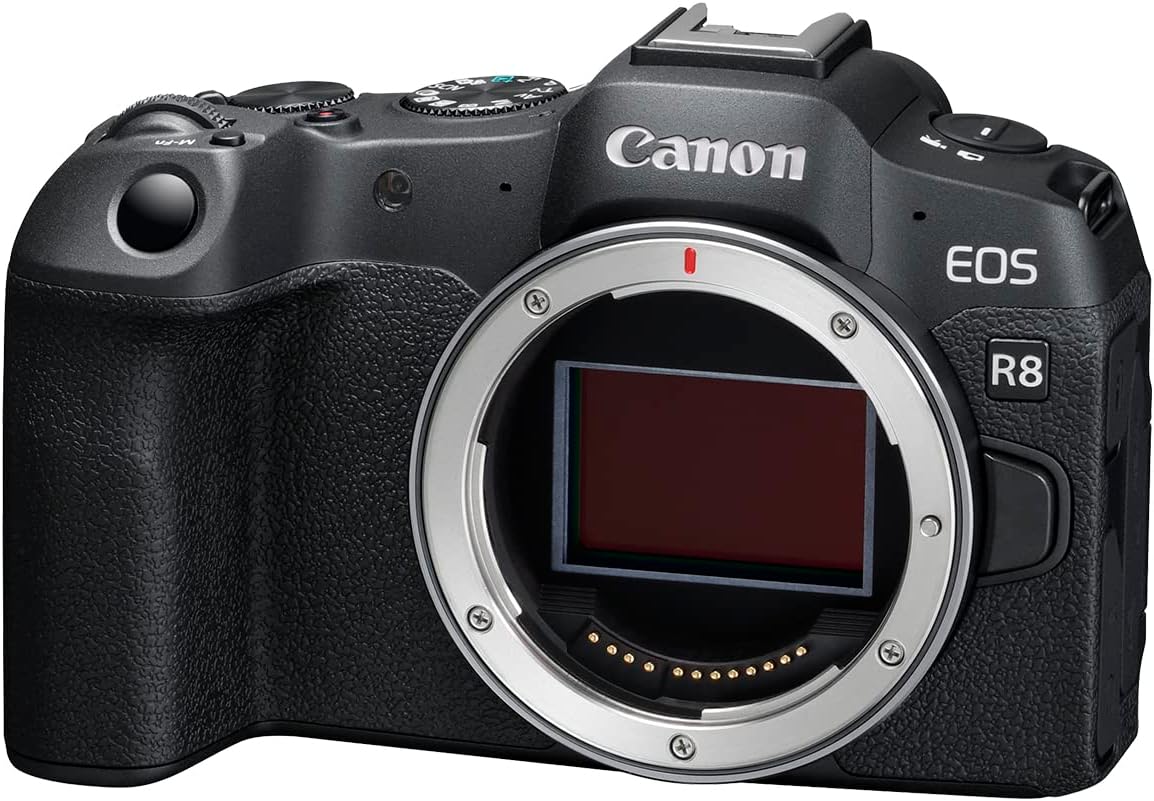
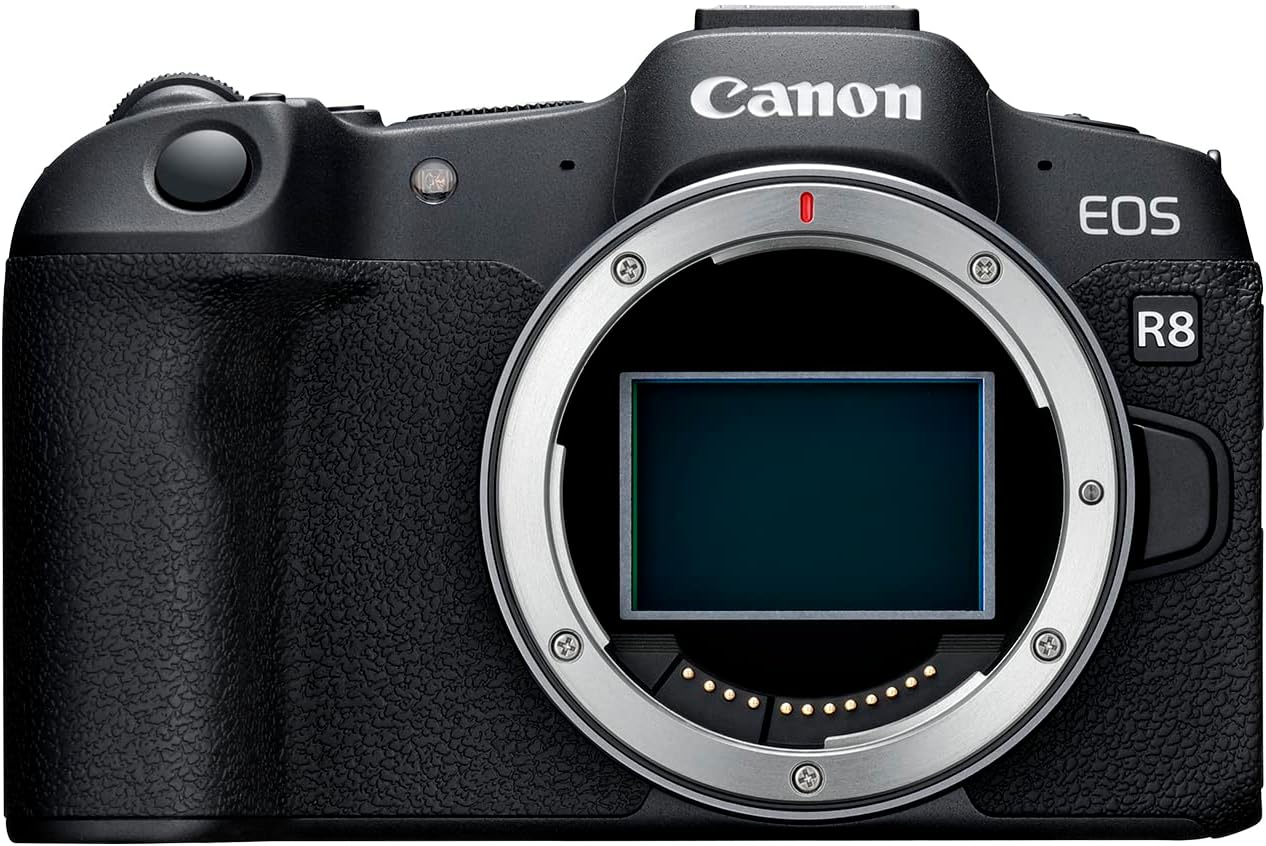
The Canon EOS R8 is a full-frame mirrorless camera released in late 2024 as Canon’s most compact and affordable RF-mount entry point. At 461 grams with battery, it’s the lightest full-frame mirrorless camera on the market. It packs a 24.2-megapixel CMOS sensor (identical to the R6 II), Canon’s Dual Pixel CMOS AF II autofocus system, and 40fps continuous shooting into a body that feels portable compared to traditional DSLRs or larger mirrorless systems.
The R8 appeals to travel photographers, hybrid photo/video creators, and anyone who values portability over feature completeness. Street photographers appreciate the compact footprint. Content creators love the full-width 4K 60p and C-Log 3 color science. Professional photographers often skip it in favor of the R6 II, but serious enthusiasts find tremendous value. It’s also the gateway to the Canon RF lens system, which now includes impressive affordable primes like the RF 50mm f/1.8 STM.
If you want a full-frame camera but refuse to carry a tank, the R8 earns serious consideration. For photographers comparing compact full-frame options, check our Sony A7C II review (which has IBIS) and our Nikon Zf review (which offers retro aesthetics). Budget-conscious shooters should also explore our Canon EOS R10 review, the APS-C sibling with the same AF system.
Save $200+ vs. retail on the lightest full-frame RF camera. Every used R8 from MPB comes with a 6-month warranty, free shipping, and rated condition so you know what you’re getting.
Key Specs at a Glance
| Specification | Canon EOS R8 |
|---|---|
| Sensor | 24.2MP full-frame CMOS (35.9 x 23.9mm, same as R6 II) |
| Processor | DIGIC X |
| ISO Range | 100-102,400 (expandable 50-204,800) |
| Autofocus | Dual Pixel CMOS AF II with subject detection (people, animals, vehicles) |
| Continuous Shooting | 40 fps electronic shutter, 6 fps electronic first curtain |
| IBIS | None (lens-based IS only) |
| Video | 4K 60p full width (no crop), 4K 30p oversampled, 10-bit C-Log 3 internal |
| Shutter | No mechanical shutter (electronic max 1/8000s, e-first curtain max 1/4000s) |
| Dynamic Range | 14+ stops (estimated from sensor specs) |
| Card Slot | Single SD UHS-II (in battery compartment) |
| Battery | LP-E17, rated ~290 shots CIPA |
| Weight | 461g body only (lightest full-frame RF camera) |
| Body Material | Weather-resistant polymer and metal (not fully sealed) |
| Lens Mount | Canon RF mount |
| Retail Price | $1,299 (body only) |
Image Quality and Sensor Performance

The 24.2-megapixel sensor in the Canon EOS R8 is the same unit found in the R6 II. This means you get rich color rendering, strong dynamic range, and reliable detail recovery from highlights and shadows. Canon’s DIGIC X processor handles this sensor and delivers JPEGs that are ready to share without editing for most shooting situations.
At base ISO (100), files are clean and detailed with minimal noise. Through ISO 6400, images remain highly usable, with negligible noise degradation. Push to ISO 12800 and noise becomes apparent but retains fine structure. Beyond ISO 25600, grain becomes more visible, but the character is acceptable for travel or event shooting when light is limited.
The R8’s dynamic range is generous. You can recover blocked shadows and blown highlights in post-production more effectively than you might expect from a 24MP camera. For photographers shooting RAW, the sensor shows excellent flexibility in white balance and exposure adjustment.
One advantage over the R10 APS-C sibling: full-frame real estate at identical megapixels means each pixel is larger, contributing to cleaner shadow regions and better high-ISO performance. The difference is measurable, not dramatic.
Autofocus: Dual Pixel CMOS AF II
The R8 uses Canon’s Dual Pixel CMOS AF II system, which is the same autofocus engine found in the R6 II. This is not a stripped-down version; it’s the full implementation. The system covers virtually the entire frame with phase-detection autofocus points and uses deep learning-based subject detection for people (face and eye), animals (cats, dogs, birds), and vehicles.
In practice, AF acquisition is fast and reliable. Eye-detection locks quickly on faces and tracks through movement during video or burst shooting. For portraits, this is a top-tier AF system. It performs well in low light and rarely loses focus on intended subjects during normal shooting scenarios.
The lack of an AF joystick is a minor ergonomic miss compared to the R6 II, but you adjust focus point selection through the rear multicontroller or touchscreen. Video autofocus is smooth with minimal hunting, making the R8 viable for professional hybrid shooters despite the compact body.
Burst Shooting and Buffer
The R8 shoots at 40 fps with the electronic shutter, giving you plenty of frames to choose from during fast action. This matches the R6 II. Buffer capacity is deep enough for extended bursts in RAW or JPEG, allowing you to capture entire sequences without worrying about hitting a write limit mid-burst.
The mechanical shutter limitation is worth noting. Canon disabled the mechanical shutter entirely on this body. This means all shooting uses the electronic shutter, which eliminates the slight banding risk associated with electronic shutter and studio flash in some scenarios. For most shooters, this is irrelevant. For high-speed sync flash work, use lenses with built-in ND filters or a dedicated flash that supports e-shutter sync.
Video Capabilities and C-Log 3 Advantage
The Canon EOS R8 shoots 4K at 60 fps at full width with no crop. Oversampling from higher resolution produces excellent detail. Internal 10-bit C-Log 3 recording is a major advantage over the cheaper Canon EOS R10. C-Log 3 gives colorists significantly more latitude in grading than standard Rec. 709, making the R8 suitable for professional color workflow without external recorders.
4K 30p is also available and offers the same oversampling benefit. Frame rates are flexible: 4K 24p, 25p, and 30p all work at full sensor width. For short-form content creators and vloggers, the full-width 4K 60p is a workflow advantage over crops required on some competitors.
Autofocus during video is reliable. Continuous AF tracking works smoothly without excessive hunting. For hybrid shooters doing interviews, weddings, or events, the R8’s video AF is more than adequate.
Heat management is acceptable for most video tasks. Extended 4K 60p recording in warm environments will eventually trigger overheating warnings, but you’ll get 60-90 minutes of continuous recording before that happens in typical conditions. For short takes, this is a non-issue.
Build your R8 kit for less. MPB carries the R8 body plus dozens of Canon RF-mount lenses, all with rated conditions, free shipping, and a 6-month warranty.
Design, Build, and Handling
At 461 grams, the Canon EOS R8 is light. Pair it with the RF 50mm f/1.8 STM, and you have a full-frame kit that weighs less than many APS-C systems with zoom lenses. For professional work requiring a versatile zoom, the Canon RF 24-70mm f/2.8 L offers excellent optical quality at manageable weight. This is the primary strength of the R8 design.
Build quality reflects the price point. The body uses weather-resistant polymer construction with metal internals, not the magnesium alloy of the R6 II. It feels solid enough, but the grip texture is plastic without premium tactile feedback. Weather resistance is present around seals and buttons but not at professional-grade levels. Light rain is fine; heavy downpour scenarios require caution.

The fully articulating touchscreen is excellent. It flips down and rotates 180 degrees for self-portraits and vlogging, making the R8 ideal for content creators. The screen is sharp, responsive, and makes menu navigation faster than older fixed screens.
Ergonomics are compact but functional. The grip is small but adequate for most hands with standard-length lenses. Mount a 70-200mm f/2.8, and front-heaviness becomes noticeable. The single SD card slot is inconveniently located in the battery compartment, making mid-session card swaps awkward.
Canon’s AF joystick is absent on the R8 (present on R6 II). You adjust autofocus points using the rear multicontroller or touchscreen. This adds a few extra button presses compared to competitors. It’s a compromise at this price point, but worth noting.
Micro-HDMI is the video port. For professional video work, this is less convenient than full-size HDMI. USB-C powers the camera and charges the battery via cable. There is no dedicated charger in the box.
Battery Life Reality Check
The Canon EOS R8 uses the LP-E17 battery, rated for approximately 290 shots per CIPA standards. In real-world shooting with moderate chimping and occasional video clips, expect 300-400 images per charge. Heavy video use, cold weather, or continuous AF tracking will reduce this further.
This is the R8’s most significant weakness. Compare to the R6 II at 500+ shots or the Nikon Zf at 380 shots, and the R8 falls short. You need to carry at least one spare battery, ideally two. Canon’s LP-E17 batteries are inexpensive and widely available as third-party options.
The silver lining: the camera charges via USB-C from any power bank or laptop charger. For travel photographers, this is more convenient than proprietary chargers. A quick 10-minute USB-C top-up can add 50-75 shots of capacity in emergencies.
Canon EOS R8 vs. R6 II: Which Should You Buy?
The Canon EOS R8 and R6 II share a sensor and autofocus engine, but diverge significantly in features and price. Here’s how they compare:
| Feature | Canon EOS R8 | Canon EOS R6 II |
|---|---|---|
| Sensor | 24.2MP full-frame CMOS | 24.2MP full-frame CMOS (identical) |
| Processor | DIGIC X | DIGIC X |
| Continuous Shooting | 40 fps electronic | 40 fps electronic, 6.4 fps mechanical |
| IBIS | None | Yes, 8-stop |
| Video | 4K 60p FF, C-Log 3 | 4K 60p FF, C-Log 3 |
| Shutter | Electronic only (1/8000s max) | Mechanical + Electronic (1/4000s mech) |
| Card Slots | Single SD | Dual SD UHS-II |
| AF Joystick | No | Yes |
| Battery Life | ~290 shots CIPA | ~500 shots CIPA |
| Build | Polymer body, weather-resistant | Magnesium alloy, professional sealing |
| Weight | 461g | 680g |
| Retail Price | $1,299 | $2,499 |
Choose the R8 if: You prioritize portability, travel frequently, want entry-level full-frame, shoot primarily stills with occasional video, and can live with no IBIS. At $1,299, it’s an exceptional value.
Choose the R6 II if: You need IBIS for handheld video or low-light photography, rely on mechanical shutter, want dual card slots for reliability, and appreciate professional build quality. The extra $1,200 buys significant advantages for serious hybrid shooters.
Both cameras deliver the same image quality and autofocus performance. The R8 is lighter. The R6 II is more feature-complete. Choose based on your priorities.
Should You Buy the Canon EOS R8 Used?
The Canon EOS R8 is new enough that the used market is developing but inventory exists. Buying used through reputable dealers like MPB typically saves $150-250 compared to the $1,299 retail price.
The R8’s polymer body is less prone to showing age than plastic-body cameras from previous generations, and it’s more durable than its appearance might suggest. A used unit in “Excellent” condition is virtually indistinguishable from new.
When shopping used, check shutter count. The R8’s electronic shutter is rated for millions of actuations, so shutter wear is less of a concern than mechanical shutters. A used R8 with 5,000-10,000 actuations has used barely 2-5% of its rated lifespan. Confirm firmware is updated to the latest version for AF improvements and feature additions.
MPB’s standardized condition ratings, 6-month warranty, and free shipping remove the guesswork from buying used. This is the safest way to save money on an R8 purchase.
Save $150+ vs. retail. 6-month warranty. Free shipping. Rated condition with photos of the actual unit. The smartest way to buy the R8.
Pros and Cons
✔ Pros
- Lightest full-frame mirrorless camera at 461g
- Same 24.2MP sensor as R6 II, same image quality
- Excellent Dual Pixel CMOS AF II autofocus system
- 40fps burst shooting with deep buffer
- Full-width 4K 60p without crop
- 10-bit C-Log 3 video (advantage over R10)
- Fully articulating touchscreen for vlogging
- Strong value at $1,299 body-only
- USB-C charging with any power adapter
- Compact RF lens ecosystem (50mm f/1.8 STM is excellent)
✘ Cons
- No IBIS (lens-based stabilization only)
- Short battery life (~290 shots CIPA)
- Single SD card slot in battery compartment (awkward access)
- No AF joystick for focus point selection
- Polymer body, not magnesium alloy
- Weather sealing is basic, not professional-grade
- Micro-HDMI port (not full-size)
- No mechanical shutter (electronic only)
- Budget grip and tactile feel vs. R6 II
- Canon RF mount limits third-party lens options vs. E or Z mounts
Final Verdict
The Canon EOS R8 is a brilliant camera for photographers who value portability and refuse to compromise on image quality. It delivers full-frame performance at a price point that would have seemed impossible five years ago. The autofocus is excellent, the video capabilities are strong, and the compact footprint opens possibilities for travel shooting that heavier cameras make difficult.
The missing IBIS stings for handheld video and low-light stills. The battery life requires carrying spares. The single card slot is inconvenient. The plastic body lacks the premium feel of the R6 II.
But at $1,299 body-only, and lower when buying used, the R8 represents exceptional value. Pair it with the RF 50mm f/1.8 STM and you have a professional-quality full-frame system that weighs less than most APS-C systems. For photographers seeking premium optics, the Canon RF 50mm f/1.2 L USM delivers exceptional rendering and shallow depth of field. For travel photographers, solo content creators, and anyone who’s tired of lugging gear, the R8 is hard to beat.
If IBIS is essential to your shooting style, the R6 II is worth the investment. If you’re budget-conscious and want full-frame, the R8 is the best answer Canon has offered.
PhotographyTalk Rating: 4.2 / 5
Frequently Asked Questions About the Canon EOS R8
Is the Canon EOS R8 good for beginners?
Yes. The autofocus is modern and reliable, making focus less of a learning curve. The touchscreen menu is intuitive. Battery life is the main drawback; you’ll want to buy a spare battery from the start. At $1,299 body-only, it’s expensive for a beginner, but the full-frame sensor and Dual Pixel AF make it an excellent long-term investment that won’t limit your growth.
Can the Canon EOS R8 shoot professional video?
Yes. The full-width 4K 60p and internal 10-bit C-Log 3 recording make it suitable for professional hybrid shooting, interviews, and short-form content. Autofocus is smooth and reliable for video. The main limitation is heat management during extended recording sessions. For all-day video production, the R6 II or R5 Mark II are safer choices.
What happens if you use IBIS-dependent lenses on the R8?
The R8 relies entirely on lens-based stabilization. Most modern RF lenses include built-in optical image stabilization, so compatibility is not an issue. However, older lenses without IS will be less stable in low light. When shopping lenses for the R8, prioritize RF primes and zooms with IS to compensate for the body’s lack of in-body stabilization.
Why is the Canon EOS R8 cheaper than the R6 II?
Canon positioned the R8 as an entry-level full-frame body. It sacrifices IBIS, mechanical shutter, dual card slots, AF joystick, and professional build quality to hit the $1,299 price. The sensor and AF system are identical to the R6 II because Canon prioritized image capture over portability features on the R6 II. For the R8, they prioritized portability and value.
Should you buy the Canon EOS R8 or R10?
The R8 is full-frame; the R10 is APS-C. If full-frame is your priority, the R8 wins on image quality and low-light performance. The R10 is cheaper and lighter. The R8 gets C-Log 3; the R10 does not. If you’re choosing between them, decide on full-frame vs. APS-C first. That’s the fundamental difference. Check our Canon EOS R10 review for a complete R10 breakdown.

