


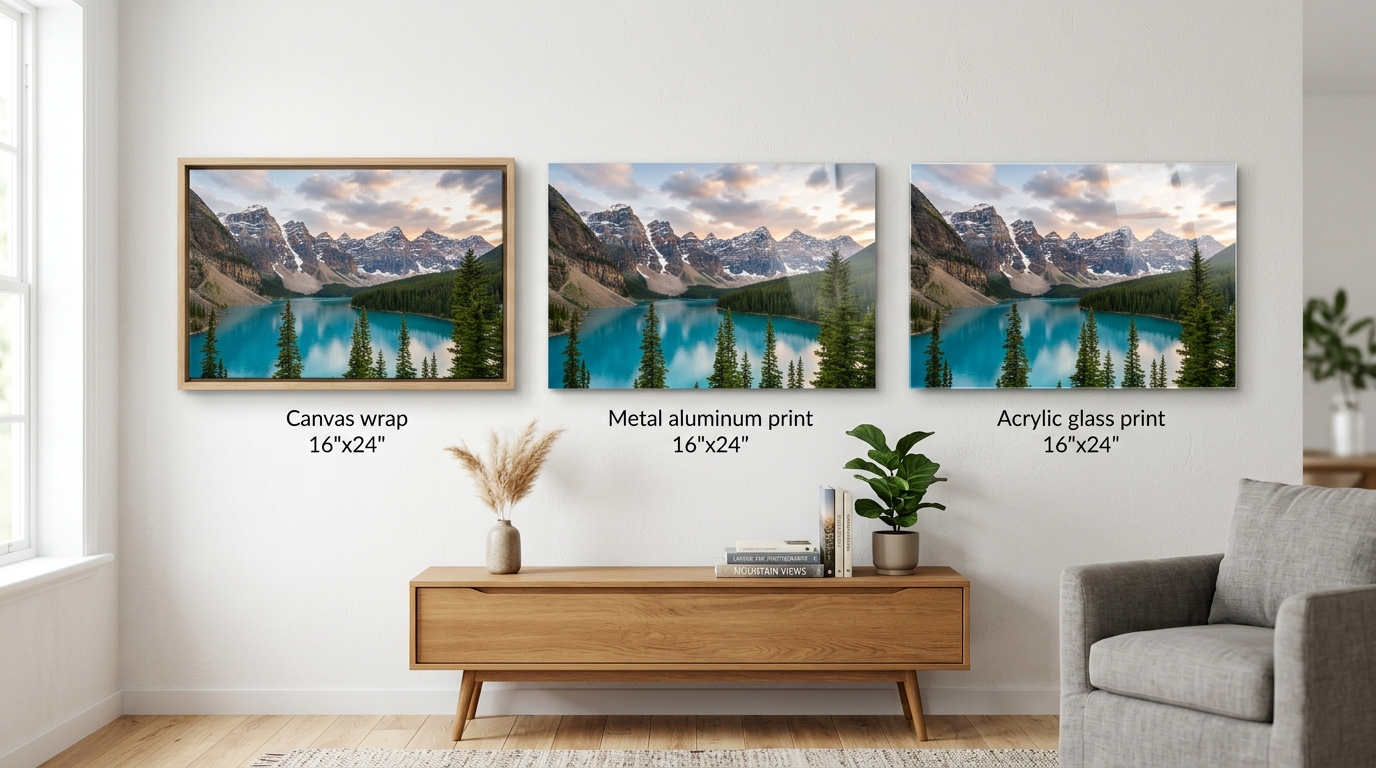
Quick Verdict: After testing canvas vs metal vs acrylic prints side by side for over two years, here’s where I landed: canvas delivers the best value starting at $9.89, metal produces the sharpest color for high-contrast shots, and acrylic offers a premium gallery look at 3-5x the cost. For most photographers, canvas or metal prints from LumaPrints provide 90% of the visual impact of acrylic at a fraction of the price.
Last updated: March 2026 | 9 min read
In This Article
- Canvas vs Metal vs Acrylic Prints: Overview
- Key Specs at a Glance
- Canvas Prints: The Budget-Friendly Standard
- Metal Prints: Vivid Color on Aluminum
- Acrylic Prints: The Premium Gallery Option
- Metal vs Acrylic Prints: The Real Value Breakdown
- Durability and Longevity Compared
- Best Print Material by Photography Style
- Head-to-Head: Canvas vs Metal vs Acrylic Prints
- Pros and Cons
- Final Verdict
- Frequently Asked Questions
Canvas vs Metal vs Acrylic Prints: Choosing the Right Material
Choosing between canvas vs metal vs acrylic prints is one of the most common decisions photographers face when turning digital files into wall art. I’ve been printing my own work for years, and I still remember the first time I held a metal print next to the same image on canvas. The difference was immediate: the metal version made my sunset shot glow like it had a backlight behind it. Meanwhile, the canvas softened everything into a warm, painterly feel. Two completely different moods from the same file.
Over the past two years, I’ve ordered from multiple labs, compared canvas vs metal prints on the same wall, and tested acrylic prints from premium providers. Each material produces a distinctly different look, feel, and price point. Consequently, the wrong choice leaves you with a print fighting your image instead of enhancing it.
The price gap between these three print materials is significant. For example, a 16×24″ canvas print from LumaPrints runs about $15-$31 depending on thickness. In contrast, the same size in metal costs around $100-$120. Acrylic prints from premium labs start at $150+ for similar dimensions. Therefore, your photography style, display environment, and budget all factor into the right decision.
This canvas vs metal vs acrylic prints comparison breaks down the real differences based on hands-on testing, verified pricing, and practical recommendations for different shooting styles.
Key Specs at a Glance
| Feature | Canvas | Metal | Acrylic |
|---|---|---|---|
| Starting Price (8×10″) | $9.89 | $30.57 | $60-$80+ |
| Print Method | Giclee / Eco-Solvent Inkjet | Dye-Sublimation | Dye-Sublimation or Direct Print |
| Finish | Semi-Glossy / Matte texture | Glossy, Satin, or Matte | High-Gloss (glass-like) |
| Weight | Light (wooden frame) | Light (aluminum sheet) | Heavy (solid acrylic panel) |
| Max Size (LumaPrints) | 52×100″ (stretched) | 40×60″ | N/A (not offered) |
| Water Resistant | No | Yes | Yes |
| Scratch Resistant | Low | High (polymer coating) | Medium (surface scratches visible) |
| Production Time | 2-3 business days | 2-3 business days | 5-7 business days (varies) |
| Best For | Portraits, landscapes, home decor | High-contrast, vivid color work | Gallery display, modern interiors |
Canvas Prints: The Budget-Friendly Standard
The first canvas print I ordered from LumaPrints was a 16×24″ landscape at 0.75″ depth. When I pulled it out of the box, the texture caught me off guard. It felt like linen, not the plasticky canvas you get from big-box retailers. Giclee printing applies your image directly onto woven fabric, and the texture softens fine details slightly, giving photos a painterly warmth. As a result, portraits and golden-hour landscapes look especially natural on canvas.
Cost is where canvas dominates the canvas vs metal vs acrylic prints debate. LumaPrints charges $9.89 for an 8×10″ stretched canvas at 0.75″ depth. A 16×20″ runs $14.92-$30.73 depending on frame thickness. Compare those numbers to metal or acrylic, and you’re spending 3-5x less for the same wall coverage. For wedding photographers selling to clients, the margin on a $15 canvas print priced at $75-$100 is healthy.
However, the trade-off is durability. Canvas absorbs moisture, collects dust in its texture, and fades under direct sunlight over several years. Fortunately, most modern labs (including LumaPrints) apply UV-resistant inks during production. I’ve had LumaPrints canvases on my office wall for over a year, hanging about six feet from a north-facing window, with zero noticeable color shift.
Another advantage worth noting: canvas is the lightest option in this comparison. A 24×36″ canvas weighs under 3 pounds. You hang it with a single nail. Metal and acrylic prints at the same size demand sturdier mounting hardware, which matters if you’re renting or working with drywall.
Featured Partner
Canvas Prints Starting at $9.89
LumaPrints offers canvas and metal prints with 2-3 day production, same-day rush options, and sizes up to 52×100 inches.
Metal Prints: Vivid Color on Aluminum

So what is a metal print, exactly? The process is called dye-sublimation. Special inks heat to a gas state and bond permanently into a polymer-coated aluminum sheet. Pick up a finished metal print and you’ll notice two things immediately: it’s cold to the touch, and the colors hit harder than any other print material I’ve tested. Highlights glow because the white aluminum base shows through lighter areas of your image, creating a luminous, almost backlit effect.
Because of this luminous quality, metal is the top choice for high-contrast photography. Specifically, landscapes with dramatic skies, wildlife shots with saturated plumage, and urban scenes with neon reflections all benefit from metal’s inherent brightness. In my LumaPrints metal print review, the color accuracy exceeded what I expected at the $30.57 starting price (8×10″). I printed a photo I shot on my iPhone, and even that looked surprisingly sharp.
Metal also wins on durability in this canvas vs metal prints matchup. The polymer coating resists scratches, and the aluminum substrate is waterproof. You could hang a metal print in a bathroom or kitchen without any concern. Try the same with canvas, and humidity will warp the fabric within months.
The main downside is cost. A 24×36″ metal print from LumaPrints runs $188.32. That same image on canvas costs $25-$45. For photographers selling prints to clients, the markup on metal still works well. For personal wall art on a budget, you need to be selective about which images deserve the metal treatment and which ones work fine on canvas.
Acrylic Prints: The Premium Gallery Option
I’ll be honest: the first time I held an acrylic print, I understood why galleries charge what they charge. Acrylic prints bond your image to a solid plexiglass panel, typically 1/8″ to 1/4″ thick. The surface feels glass-like. Colors appear rich and deep. There’s a subtle 3D effect where the image seems to float beneath the surface, and it’s striking in person.
This premium look commands premium pricing. Acrylic prints from labs like ArtisanHD start around $60-$80 for an 8×10″ and climb fast with size. A 24×36″ acrylic print runs $200-$350+ depending on the lab and thickness. Production times are also longer, typically 5-7 business days compared to 2-3 for canvas and metal at LumaPrints.
Here’s the key question for your budget, though: how different do metal vs acrylic prints look in the real world? In our metal vs acrylic prints comparison video, most viewers noted they had trouble telling the two apart at normal viewing distance. The visual difference becomes more apparent up close, where acrylic’s depth and glass-like clarity separate it from metal’s flatter surface. Still, for 2-3x the price difference, metal delivers roughly 90% of acrylic’s visual impact.
Acrylic is also heavy. A 24×36″ panel weighs significantly more than canvas or metal and requires proper wall anchors rated for heavy loads. Fingerprints and dust show easily on the glossy surface. Scratches, while less common, are more visible when they occur because of the transparent surface layer.
Metal vs Acrylic Prints: The Real Value Breakdown
Since many photographers considering acrylic prints end up choosing metal instead, here’s a direct metal vs acrylic prints cost comparison. The numbers speak for themselves:
| Dimension | Metal (LumaPrints) | Acrylic (Premium Labs) | Your Savings |
|---|---|---|---|
| 8×10″ Starting Price | $30.57 | $60-$80 | $30-$50 |
| 24×36″ Price | $188.32 | $250-$350 | $60-$160+ |
| Visual Similarity | ~90% match | 100% (baseline) | Negligible at viewing distance |
| Durability | Waterproof, scratch-resistant | UV-resistant, waterproof | Comparable |
| Production Time | 2-3 days | 5-7 days | 2x faster with metal |
For most photographers, the takeaway is clear. Unless you’re selling prints above $500 or displaying in a high-end gallery, metal from LumaPrints gives you nearly identical visual impact for significantly less money. Additionally, metal ships faster and weighs less, making it easier to hang.

Budget-Friendly Metal Prints
Get 90% of the Acrylic Look for Less
LumaPrints metal prints start at $30.57 with dye-sublimation printing, scratch-resistant coating, and included mounting hardware.
Durability and Longevity Compared
Longevity matters when you’re printing portfolio pieces or selling to clients who expect their purchase to last. In this category, metal prints take the lead. The aluminum substrate resists moisture, heat, and UV exposure more effectively than canvas or acrylic. Dye-sublimation manufacturers cite color stability measured in decades under controlled laboratory conditions. In real-world home environments with normal indoor lighting, you should expect strong color retention for many years.
Acrylic prints rank second. The acrylic panel itself resists UV rays and moisture well. However, the bond between the image layer and acrylic surface degrades faster when exposed to direct sunlight or extreme humidity. Under typical home conditions, acrylic prints maintain their quality for years without issues.
Canvas prints have the shortest lifespan without protective measures. Uncoated canvas fades noticeably within 5-10 years of indirect sunlight exposure. Fortunately, reputable labs like LumaPrints apply UV-protective coatings during production, which extends the usable life considerably. I’ve spoken with photographers who have quality UV-coated canvas prints holding up well after a decade of normal indoor display. Keep them away from direct sunlight and high-humidity areas for the best results.
Best Print Material by Photography Style
Landscape and Nature Photography: Metal prints are the strongest choice for this genre. The luminous aluminum base amplifies sky gradients, water reflections, and saturated greens. Sunset and sunrise shots gain an almost backlit quality on metal. If budget is tight, canvas still handles landscapes well, especially when the image leans warm and soft. A good starting point: order a 16×20″ metal print ($60-$80 range at LumaPrints) of your best landscape and see the difference for yourself.
Portrait and Wedding Photography: Canvas is the traditional pick here, and for good reason. The textured surface flatters skin tones and softens the clinical look of digital capture. Similarly, black-and-white portraits gain a fine-art quality from the fabric texture. For wedding clients, canvas prints in the $15-$30 range work as excellent upsell products with healthy profit margins.
Urban, Architecture, and Abstract Photography: Acrylic excels with geometric lines, reflections, and bold color blocks. However, metal prints produce a remarkably similar effect at roughly half the cost. Before committing to acrylic pricing for these subjects, try a metal print first. You will likely find the visual difference is negligible on high-contrast work.
Fine Art and Gallery Sales: Acrylic remains the gallery standard for contemporary photography exhibitions. The depth and clarity signal quality to buyers. For photographers pricing prints above $500, acrylic justifies the production cost. Below that price point, a well-printed metal or framed canvas from LumaPrints delivers strong presentation value.
Head-to-Head: Canvas vs Metal vs Acrylic Prints for Photographers
The biggest difference when comparing canvas vs metal vs acrylic prints comes down to how each material handles light. Canvas absorbs light, creating soft, warm tones and reducing glare. Metal reflects light through the image, producing vivid, high-contrast results with a luminous glow. Acrylic transmits light into the image layer, creating depth and color richness. Your image content should drive this decision, not trends or marketing.
On price, the gap between these print types is dramatic. A 24×36″ canvas from LumaPrints costs $25-$45. The same size in metal runs $188.32. Meanwhile, acrylic from a premium lab hits $250-$350. For photographers building a home gallery with 5-10 prints, canvas keeps the total project under $300. The same gallery in metal costs $900+, and in acrylic, $1,500+. Therefore, budget-conscious photographers should consider mixing materials: canvas for supporting pieces and one or two metal prints as feature pieces for your strongest images.
Installation difficulty also increases with material. Canvas goes up with a single nail. Metal requires two mounting points or a French cleat system. Acrylic demands heavy-duty wall anchors. If you’re renting and limited to adhesive hooks, canvas is your only realistic option, unless you opt for LumaPrints’ peel-and-stick prints for a damage-free alternative.
Pros and Cons
Canvas Pros
- Lowest cost: starts at $9.89 for 8×10″
- Lightweight, easy to hang with basic hardware
- Warm texture flatters portraits and soft scenes
- Available up to 52×100″ at LumaPrints
- 2-3 day production with same-day rush option
Canvas Cons
- Susceptible to moisture and humidity damage
- Texture softens fine details in sharp images
- Shorter lifespan without UV coating (5-10 years uncoated)
- Low scratch resistance
Metal Pros
- Vivid, luminous color reproduction from dye-sublimation
- Waterproof and scratch-resistant polymer coating
- Long-lasting color stability under indoor conditions
- Best value-to-impact ratio for high-contrast images
- Lightweight aluminum substrate
Metal Cons
- 3x the cost of canvas ($30.57+ for 8×10″)
- Maximum size limited to 40×60″ at LumaPrints
- Glossy surface creates glare in bright rooms
- Cold, clinical look on soft portrait subjects
Acrylic Pros
- Gallery-quality depth and clarity
- Exceptional color richness and 3D effect
- UV-resistant and waterproof surface
- Premium look for exhibition and commercial display
Acrylic Cons
- Most expensive option: $60-$80+ for 8×10″
- Heavy panels require proper wall anchors
- Shows fingerprints and dust easily
- Longer production times (5-7 business days)
- Scratches are highly visible on glossy surface
Final Verdict on Canvas vs Metal vs Acrylic Prints
After testing all three print types extensively, my recommendation for most photographers is straightforward. Metal prints from LumaPrints hit the sweet spot between quality and affordability. Starting at $30.57 for an 8×10″, you get vivid color reproduction, scratch resistance, waterproofing, and color stability measured in decades. The dye-sublimation process on aluminum produces results close enough to acrylic that most viewers will not notice the difference at normal viewing distance.
Canvas prints remain the right choice when budget is the primary concern or when your images benefit from a warm, textured aesthetic. At $9.89 for an 8×10″, canvas is the entry point for physical prints. Portrait photographers and wedding shooters should keep canvas in their product lineup because it’s the easiest sell for client gifts and affordable wall art packages.
Acrylic prints earn their place in specific scenarios: gallery exhibitions, high-end commercial displays, and fine art sales above $500. For personal projects and standard client work, however, the cost rarely makes sense when metal delivers a comparable result for half the price or less.
Here’s what I suggest: order one canvas and one metal print of the same image from LumaPrints. Compare them in person. You will immediately see which material suits your photography style, and you’ll spend under $50 total to find out. Then decide from experience, not guesswork.
PhotographyTalk Rating: 4.5 / 5 (for the canvas + metal combination from LumaPrints as the best value approach to physical prints)
Ready to Order?
Canvas from $9.89 | Metal from $30.57
LumaPrints ships in 2-3 business days with same-day rush available. Upload your photo and order in under 5 minutes.
Frequently Asked Questions
Are metal prints worth the extra cost over canvas?
For high-contrast images with saturated colors, absolutely. Metal prints amplify highlights and produce a luminous quality you won’t get on canvas. If your photography features bold colors, reflections, or sharp detail, the upgrade from a $10 canvas to a $31 metal print (at 8×10″) is worth the 3x price increase. For softer images like portraits, however, canvas delivers a better aesthetic match at a lower cost.
What is a metal print and how is it made?
A metal print uses dye-sublimation to infuse your image directly into a polymer-coated aluminum sheet. The process heats special inks to a gas state. Those inks then bond permanently with the polymer coating on the aluminum surface. The result is a smooth, scratch-resistant print where the metallic base shows through lighter areas, creating a luminous effect. LumaPrints adds an extra protective polymer layer for additional scratch and water resistance.
Are canvas prints out of style?
No. Canvas prints remain the highest-volume print product sold by online labs. Their warm, textured look fits both traditional and modern interiors. The “out of style” perception stems from low-quality, thin-frame canvas prints sold at discount retailers. A properly printed canvas on a 1.25″ or 1.5″ deep frame from a quality lab still looks current and professional.
How do I choose between canvas vs metal vs acrylic prints?
Start with your image content. Soft, warm images (portraits, golden hour landscapes, lifestyle shots) work best on canvas. High-contrast, vivid images (wildlife, cityscapes, astrophotography) shine on metal. Gallery exhibition pieces and modern interior installations benefit from acrylic’s depth. Then check your budget: canvas if cost matters most, metal for the best quality-to-price ratio, and acrylic only when the premium gallery look is essential for your sales strategy.
Do canvas prints fade in sunlight?
Uncoated canvas prints fade visibly within 5-10 years of indirect sunlight exposure. However, quality labs apply UV-protective coatings during production. LumaPrints uses UV-resistant inks and coatings on their canvas prints, which extends color life considerably under normal indoor lighting. For maximum longevity, avoid hanging any print material (canvas, metal, or acrylic) in direct sunlight.
Why are acrylic prints so much more expensive than metal?
Three factors drive acrylic pricing: material cost (solid acrylic panels cost more than aluminum sheets), production complexity (bonding the image to acrylic requires additional steps and curing time), and weight/shipping (acrylic panels are heavier, which increases packaging and freight costs). By contrast, metal prints skip these factors because labs print directly onto a lightweight aluminum sheet in a single dye-sublimation pass.
Should I order a sample print first?
Yes. LumaPrints offers affordable entry sizes: an 8×10″ canvas at $9.89 and an 8×10″ metal at $30.57. Many photographers order both materials with the same image to compare finish quality in person. The total investment is about $40, and it’s worth it before committing to a large 24×36″ piece. This hands-on comparison will tell you more than any article or review (including this one).

