


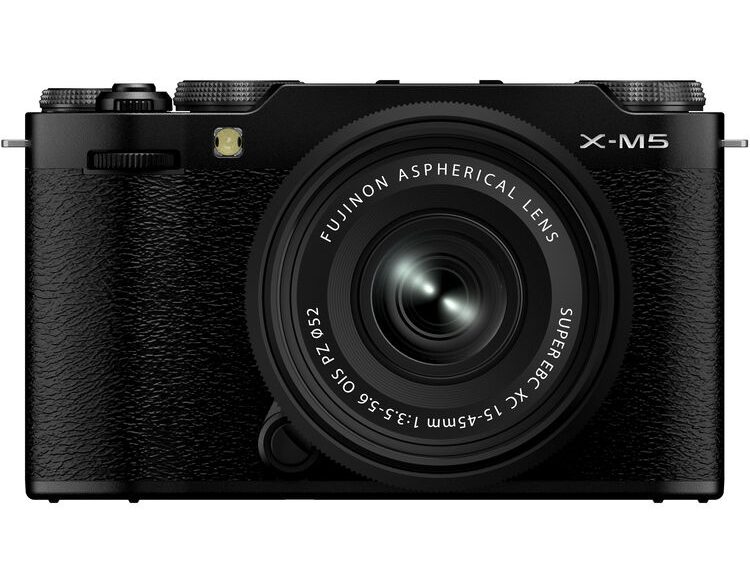
Why Sensor Size Matters for Travel and Everyday Photography
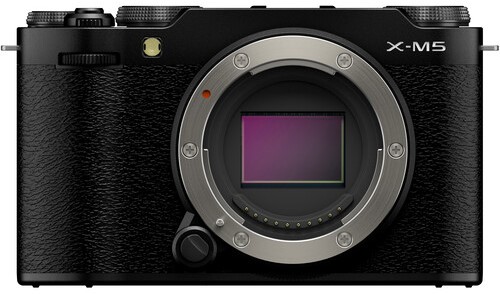
The Fujifilm X-M5 uses a 26.1-megapixel APS-C X-Trans 4 sensor, a major reason it performs more like a camera built for deliberate image-making than one that leans on processing to fill in gaps. In travel photography, a larger sensor means you’re not making compromises every time the sun drops or you step indoors. With more light captured per pixel, shadow detail holds together better, noise is less destructive, and dynamic range is wider. That means better files when you’re back home reviewing moments that you can’t reshoot.
When you’re wandering cities at night (which you enjoy capturing through street photography), a larger sensor becomes the invisible backbone of better images. Instead of watercolor smearing or heavy-handed noise reduction common on phones, the X-M5 renders edges and textures with more discipline. Signage, storefronts, reflections, and fast-moving people in mixed lighting scenes hold together with more natural transitions. It feels less like the camera is cleaning the scene and more like it’s preserving it.
Depth of field is another important difference for both travel and everyday photography. Many phones fake blur; the X-M5 gives you optical separation that looks real because it is real. With a 35mm or 23mm prime, you get authentic bokeh that wraps naturally around your subject rather than smearing around an edge map. That kind of separation matters in environmental travel portraits, food photography on café tables, and isolating foreground subjects against busy markets, streets, or architecture. The result is a compact camera experience that feels less digital and more intentional.
And when you’re on the road, that extra sensor area means you can crop tighter to adjust composition without your photo collapsing into mush. Whether it’s pulling a street performer closer, reframing a travel portrait, or tightening up a landscape detail, the X-M5 gives you room to make decisions later without penalty. That’s a hallmark of a compact camera that works like a larger system without carrying like one.
Portability and Design: A Compact Camera Built for Real Days
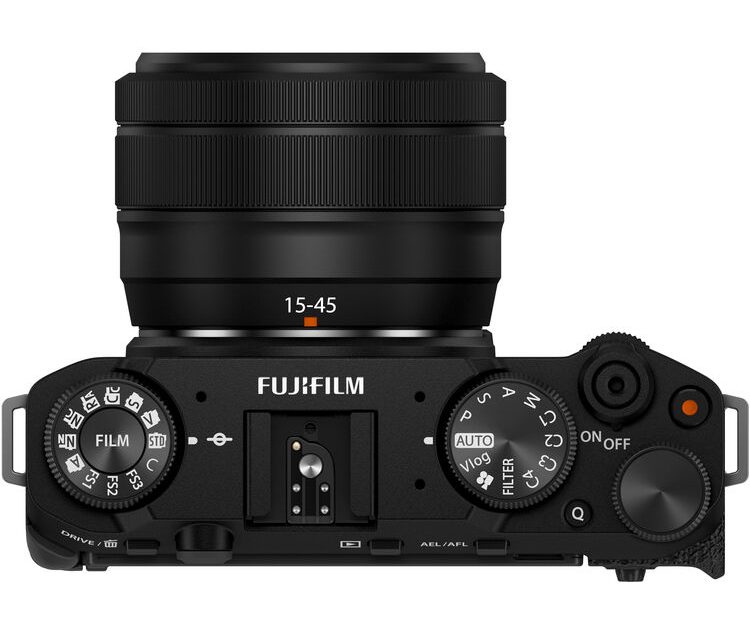
The X-M5 weighs 12.5 ounces (without a lens) and spans 4.4 inches wide, making it one of the most portable bodies in the entire X-series. That weight difference matters on long travel days when you’re carrying water, batteries, microphones, filters, or hiking layers. It is a compact camera in the true sense: small, light, and designed to be taken along without dominating your carry-on or sling bag.
Ergonomics shape how often you shoot. The X-M5 uses top dials for shooting mode, exposure, and film simulations, making adjustments tactile and fast. While phones ask you to slide exposure on a glowing rectangle, this compact camera invites you to turn a dial and move on. That kind of design helps you stay in the scene instead of in a UI.
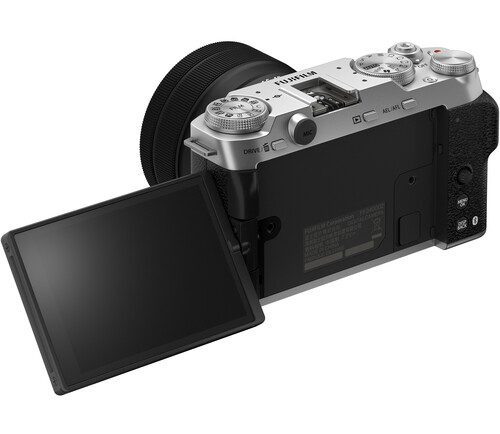
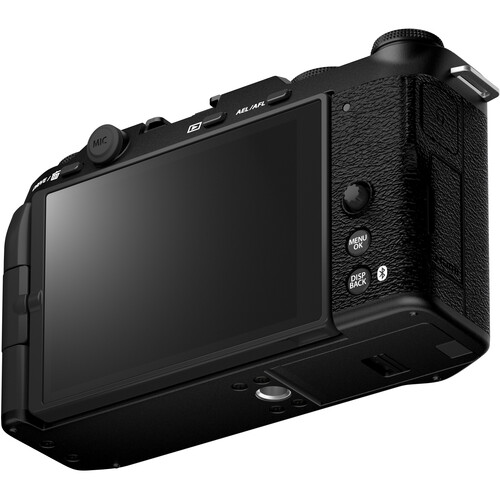
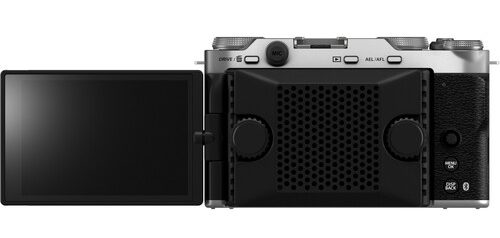
The 3-inch articulating touchscreen is ideal for high and low angles in crowded places. Flip it upward for street shooting at waist height. Tilt it downward to compose discreetly while walking through a market. Swing it sideways to get a low composition without kneeling on wet sidewalks. The camera does not interfere with how you move, which is one of the main reasons it works as a compact camera for travel photography.
Fujifilm also moved the connector ports to the right side, so cables don’t block the monitor during recording or external microphone use. The 3.5mm mic port was placed on the rear, making it friendlier for shotgun or lavalier setups without dangling side cables. Even if this article is focused on still photography, these small design decisions are part of what makes it a compact camera that creators and photographers can live with daily.
Lens Flexibility: The Compact Camera That Grows With Your Trips
Smartphones give you multiple focal lengths, but they are small digital crops behind a fixed lens stack. The X-M5 accepts the entire Fujifilm X-mount lens family, which is more than 35 lenses. That means you can choose optics that match the way you shoot. A 27mm pancake prime makes it feel like an even smaller compact camera. An 18-55mm zoom gives flexibility without adding massive bulk. A 23mm f/2 prime stays light and focuses fast in travel street photography. You can expand your system without replacing the camera body itself.
That lens flexibility is a major advantage in travel photography. Some trips call for wide architecture shots; others call for close food photography or tighter portraits. A phone can’t mount a real ultra-wide or a real fast 35mm equivalent prime. The X-M5 can, and that changes what you’re capable of capturing.
Compression and distortion also differ. On phones, wider focal lengths distort faces and vertical lines, especially at the edges. With the right lens on the X-M5, portraits look natural. Buildings don’t bend. Street frames feel deliberate instead of corrected later. This compact camera lets you use the right optical tool for the scene rather than asking software to fix optical issues after the fact.
The cost argument is real, but lens strategy matters. You don’t need a suitcase of glass to outgrow a phone. Many travel photographers pair a compact camera body like the X-M5 with just one zoom and one small prime. That two-lens approach gives creative range without feeling heavy. That’s the advantage of a compact camera system that doesn’t ask you to choose between flexibility and portability.
Color Science & Film Simulations for Travel-Friendly Workflow
Fujifilm’s color science has been refined across decades of film and sensor development. The X-M5 brings 20 film simulation modes that are embedded in capture rather than layered on top. That means color decisions are part of the image, not painted on later like a filter.
In travel photography, that means less editing. Many simulations produce images that feel finished without extra app work. That matters when you’re traveling and want to spend less time color-tuning on a phone screen and more time shooting or enjoying the place you’re in.
The Grain Effect mode adds organic texture that looks like film grain rather than digital noise. Color Chrome and Color Chrome Blue deepen tonal gradation in saturated colors like skies, signs, and fabrics without blowing out highlights. These modes give your travel photos more subtle color density without pushing them into neon HDR territory.
Because film simulations are available on the top dial, they are fast to change mid-shoot. Bright daylight? Turn to a softer simulation. Café interiors? Dial a warmer one. Evening street? Pick a simulation that protects highlights and shadows without flattening the mood. This compact camera lets you make color decisions quickly, intentionally, and consistently.
Autofocus & AI Tools for Unpredictable Scenes
Phones often win for speed but struggle for predictability when depth of field gets shallow or motion gets messy. The Fuji X-M5 pairs AI subject detection AF, eye tracking, face recognition, and product focus tools that perform consistently even with interchangeable lenses. This matters when your subject moves or the environment is unpredictable.
For travel street photography, autofocus needs to stick when crowds move through the frame. The X-M5’s tracking does not collapse when multiple people overlap. It finds eyes and faces reliably even in motion, even when you shoot at wider apertures for real optical blur.
Product Priority mode is ideal for travel creators shooting small product reviews or demonstrations from a hotel desk or café table. It automatically switches focus to objects placed closer to the camera, without hunting or requiring constant tapping.
Portrait Enhancer mode applies light skin smoothing directly in-camera in weak, medium, and strong options. Unlike phones that apply aggressive beauty processing, the X-M5 gives you control over how much enhancement happens. This is less about perfection and more about choosing a level that feels natural.
These tools do not compete with a phone’s ease of tapping a screen; they compete in reliability. And reliability is one of the main reasons many photographers consider moving to a compact camera like the Fuji X-M5 when they want autofocus that behaves predictably across lenses, motion, and light.
Used thoughtfully, these AF tools help this compact camera keep up with real life, on the road or during everyday photography, without demanding constant corrections.
Video Tools That Make a Compact Camera More Useful
Even if you’re primarily a still photographer, video is part of travel documentation today. As
Kensei Akatsu notes in the video above, the X-M5 offers 6.2K open-gate video at 29.97 fps, 4K slow motion at 60 fps, and up to 240 fps in Full HD. That resolution headroom lets you crop or reframe without losing quality.
Short Movie mode captures 9:16 vertical clips in preset lengths (15, 30, 60 seconds). This is useful for casual social clips, quick travel diaries, or posting highlights without reformatting.
Log modes give more latitude for grading. Phones produce social-ready footage but compress color decisions early. The X-M5 gives you a grading baseline that feels more like a camera built for post decisions.
Background Defocus mode adds optical blur priority for vlog shots without mounting a fast prime. This works for hotel room videos, street diaries, or foreground subject isolation in casual video.
Most importantly, the camera displays a red recording border outline so you never have to wonder whether you hit record. That kind of feedback matters when you’re shooting quickly, on a trip, or mid-errand. It’s part of what makes this compact camera feel easier to use, even when you’re mixing stills and video.
Video does not replace the need for good photos, but it adds utility to a compact camera that can adapt to creator needs without becoming a full cinema rig.
Why Buying Used on MPB Is a Great Compact Camera Strategy

One of the smartest ways to enter a compact camera system like the Fuji X-M5 is to buy used through a platform that removes the usual guesswork. MPB lets you buy, sell, and trade gear, which means you can move out older equipment and upgrade into a new-to-you Fuji X-M5 without carrying unused gear forward.
Used gear holds more value than phones for one simple reason: cameras evolve with lenses and accessories, not replacement cycles. A used compact camera body like the X-M5 gives you the same sensor and image pipeline, just at a lower cost, while still delivering the same creative flexibility.
MPB inspects gear before it’s sold, so you’re not inheriting someone else’s problems. Most items also include a six-month warranty and a seven-day return window. That protection is especially helpful when buying a compact camera used, because you can test it immediately and return it if anything feels off.
The value proposition becomes clearer when you realize MPB supports trading gear toward upgrades. Instead of selling old equipment through unverified marketplaces, you’re using a system built for photographers who want reliable new-to-you tools without gambling on condition.
Buying used on MPB is especially practical for travelers who want to keep their setup minimal. One compact camera body, one zoom, one prime, done. You get gear that’s been checked, backed by warranty, and supported by trade value when you’re ready for the next upgrade. That makes it easier to commit to a compact camera like the Fuji X-M5 without stretching your budget too far.
Final Verdict: Who This Compact Camera Is For

The Fuji X-M5 is not trying to beat phones at everything. It’s trying to win at the things phones can’t do without heavy-handed processing: depth, color fidelity, interchangeable lenses, and audio tools built into the body. That’s why many creators looking for a compact camera find this model more natural to grow with.
For travelers who want better files at night, true optical blur, lens choice, and physical controls that don’t interrupt the moment, the X-M5 earns its place. It’s a compact camera that stays light and useful without becoming a full photo rig.
For everyday shooters, the camera encourages more deliberate image-making without slowing workflow. You can shoot quickly, transfer to phone, edit lightly, and post—without asking the camera to fake optical behavior.
Who should stick with a phone? Casual shooters who value instant posting above optical flexibility. But for photographers who want more predictable results and creative control, the Fuji X-M5 proves why upgrading to a compact camera can be worthwhile, especially when bought used through platforms like MPB.
FAQ
Is the Fuji X-M5 a good compact camera for travel?
Yes. It’s light, starts fast, offers real depth of field, strong low-light performance, and accepts small primes or flexible zooms for travel photography.
Should I buy the Fuji X-M5 used?
Yes. A used Fuji X-M5 from MPB gives excellent value, inspection-backed condition, gear trade options, a six-month warranty, and a seven-day return window.
Is the X-M5 a better compact camera than a smartphone?
For image quality, depth, lenses, and predictable results—yes. For instant posting convenience—no, phones remain faster.
What lens should I start with?
A small 23–35mm equivalent prime or 18–55mm zoom keeps it lightweight and flexible for travel and everyday photography.
How long does the battery last?
Approximately 45 minutes of 6K recording or 440 stills in Economy mode. Add a spare or power bank for longer trips.
Heads up: Clicking on our affiliate links and exploring our sponsored content helps us at no extra cost to you, and we only recommend gear we’re absolutely crazy about

