



Big flagship cameras are easy to admire and harder to justify. The Nikon Z9 launched with an avalanche of specs, but the real question now isn’t what it could do at release—it’s how well it carries its weight into 2026. Cameras built for professionals have a longer life cycle than mid-range bodies, but even among high-end options, only a few genuinely earn their keep year after year. The Nikon Z9 value proposition depends less on buzz and more on how it behaves after tens of thousands of frames, long-haul trips, and endless media transfers at 2 a.m.
By 2026, the mirrorless flagship category will look more crowded and more expensive. The good news for Nikon shooters is that this body was engineered for the long game, from a shutterless architecture that eliminates a major wear point, to a sensor and processor combination that still feels fast even when pitted against newer competition. Nikon has a reputation for extending the lifespan of its pro bodies through meaningful firmware updates, and the Nikon Z9 has already benefited from a major mid-life boost via Firmware 2.0. The Nikon Z9 value conversation in 2026 will revolve around durability, autofocus intelligence, video muscle, ecosystem support, and the used market, which has become a powerful equalizer for those wanting flagship performance without flagship pricing.
And that used market matters more than ever. With online platforms like MPB offering fully inspected, graded, and warrantied Nikon Z9 bodies, many creators can now make the leap sooner or expand to a second body without feeling like they’ve mortgaged their kit. In this review, we’ll dig into Nikon Z9 value through 2026 with a focus on real ownership benefits, long-term firmware support, and what to expect when buying used from platforms like MPB. If you’re evaluating the Nikon Z9 value equation for 2026, this guide will help you connect specs to practicality, cost, and confidence.
Table of Contents
- Longevity by Design: Build Quality and Shutter Strategy
- Performance That Holds Up: Speed, Buffer, and Readout
- Autofocus and Nikon Z9 Value in 2026
- Video Capabilities and Nikon Z9 Value Through 2026
- Firmware Support and Nikon Z9 Value
- Used Market Economics in 2026
- Buying Nikon Z9 Used from MPB
- Ownership Costs Beyond the Sticker
- Who Gets the Most Nikon Z9 Value in 2026?
- Final Assessment on Nikon Z9 Value
- FAQ
Longevity by Design: Build Quality and Shutter Strategy
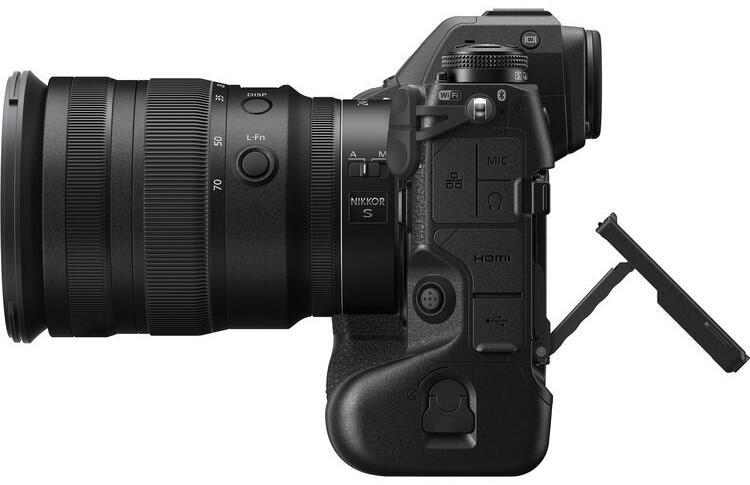
The Nikon Z9 was built like gear that expects to be dropped into the dirt, rained on, and trusted anyway. The magnesium alloy chassis gives it the kind of rigidity you notice immediately when you pick it up—solid without being clunky. Weather sealing is carried over from the Nikon D6 standard, which means this body was designed for outdoor shooters who work in environments where dust, spray, and sudden rain aren’t rare events—they’re Tuesday. A sensor shield closes over the sensor when the camera powers down, adding peace of mind during lens swaps. There’s also dual electro-conductive and fluorine coatings on the sensor’s optical filter to help repel dust and grime, which is one of those unglamorous features that quietly saves hours of sensor cleaning over a camera’s life.
The shutter decision is one of the most interesting engineering bets Nikon has made. The Nikon Z9 removes the mechanical shutter entirely, relying on a stacked sensor fast enough to handle every capture mode. No mechanical shutter means no shutter wear cycle, no eventual replacement bill, and no sudden failure in the field because a tiny motor or curtain assembly finally tapped out. You can shoot at 1/32,000 sec silently, without distortion, and without adding mileage to a physical mechanism. For wedding shooters, wildlife photographers, or anyone working near skittish subjects, silent operation is a gift. Nikon also gives you the option to enable a shutter sound with adjustable volume if you need audible awareness that a frame was captured. It’s a clever compromise for situations where silence is great, but feedback is better.
By 2026, shutterless longevity will matter even more. I’ve seen mechanical shutters fail mid-season on long wildlife expeditions. Losing a body for weeks of repair is not just frustrating—it’s expensive in lost opportunities. The Nikon Z9’s shutterless design directly supports Nikon Z9 value for shooters who keep bodies longer than the average upgrade cycle. Flash sync up to 1/200 sec and High Speed Sync are still supported despite the lack of a mechanical shutter, so you’re not losing functionality by losing the mechanism. For professionals who plan to own this camera for years, the absence of a mechanical shutter isn’t a limitation—it’s insurance.
Performance That Holds Up: Speed, Buffer, and Readout
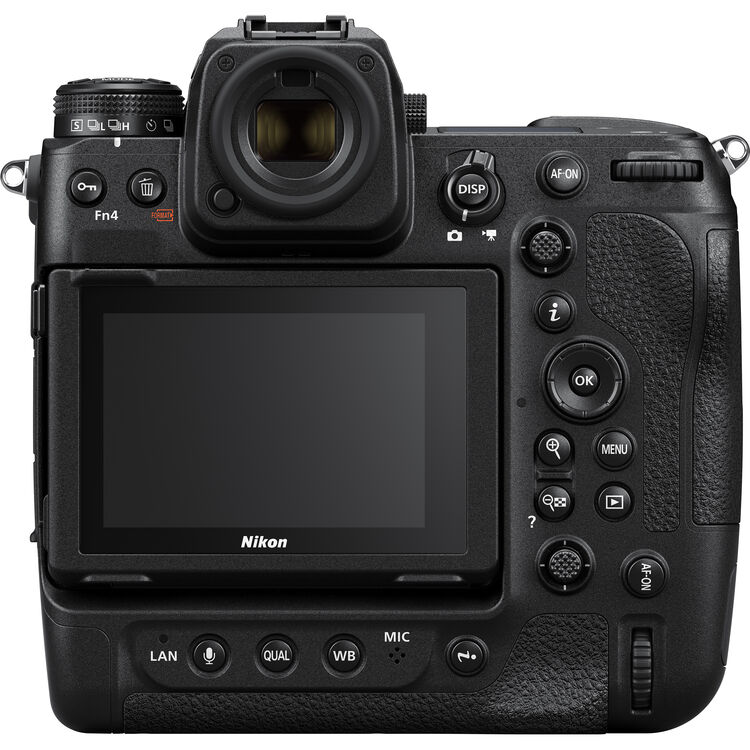
Flagship cameras have to do one thing better than anything else: keep up. The Nikon Z9 shoots 20 fps in RAW, 30 fps in JPEG, and 120 fps at 11MP resolution, all while maintaining autofocus and auto exposure. That last part is crucial. Plenty of cameras can fire off a fast burst if you lock focus and exposure on the first frame. The Nikon Z9 keeps recalculating at 120 fps, adjusting focus and exposure in real time while the shutter is held down. In wildlife and sports photography, this matters more than the peak frame rate itself.
Buffer depth is where Nikon Z9 value becomes impossible to ignore. The Nikon Z9 can buffer over 1,000 RAW frames continuously for roughly 50 seconds without slowing. That means you can capture long behavioral sequences in wildlife without timing your bursts like a casino bet. During playback, you can jump to the first frame of a burst instantly, which is a small but meaningful workflow accelerator for photographers reviewing takes between fast-paced sets or field sessions.
The new High Efficiency RAW format keeps files visually similar to uncompressed RAW while shrinking file sizes by about 30%. That means faster writing to CFexpress Type B cards, less storage overhead, and quicker playback scrubbing. Rolling shutter distortion is also dramatically reduced thanks to the sensor’s stacked design, even at extreme shutter speeds like 1/32,000 sec. For golf clubs, bats, wings, or fast panning, motion skew stays controlled. By 2026, these attributes will still feel quick and modern, especially if you’re shooting action. Nikon Z9 value here isn’t just about being fast—it’s about staying fast when other cameras would have to slow down.
Autofocus and Nikon Z9 Value in 2026

The Nikon Z9 uses a 493-point phase detection autofocus system covering 100% of the sensor area. There are no weak edges, no “center cluster only” compromise, and no guessing if your subject strayed too far from the middle. Starlight mode enables autofocus down to –8.5 EV, which is essentially moonlight-level focusing. I shoot night street scenes often, and I’ve tested bodies that claim low-light AF but hunt anyway. The Nikon Z9 grabs focus in darkness with a decisiveness that makes you feel like you cheated the clock.
Subject detection uses deep-learning classification for nine subject types: humans, dogs, cats, birds, cars, motorcycles, bicycles, airplanes, and trains. Auto-Area AF detects and tracks subjects automatically across the frame, while 3D Tracking (ported from Nikon DSLRs) follows subjects moving parallel or perpendicular to the camera. Nikon added 20 custom Wide-Area AF patterns via firmware, 12 of which work in video, letting you restrict detection to intentional areas. This is incredibly helpful when the subject is clear, but distractions are everywhere—like birds weaving through branches or cyclists cutting through busy urban frames.
Eye detection is refined to lock on regardless of subject size in frame. This has real implications for Nikon Z9 value in 2026 because autofocus intelligence is one of the first areas where cameras age poorly. The Nikon Z9 was given enough coverage, classification maturity, and customization that it won’t feel stale just because something newer exists. It won’t nail 100% of frames in chaos, but it nails enough that you’ll trust it when the pressure is on.
Video Capabilities and Nikon Z9 Value Through 2026
As DPReview TV explains in the video above, the Nikon Z9 records 8K/30p internally using full pixel readout for up to 2 hours 5 minutes without overheating. That’s not marketing—it’s relief. Most cameras ask you to add external recorders to unlock 8K RAW. The Nikon Z9 gives it to you internally. By 2026, 8K adoption will be more common in delivery pipelines, but two-hour internal recording without thermal limits will still be a rare advantage. 4K can be recorded at up to 120p for slow motion, or at 60p oversampled from the 8K sensor region for added sharpness and detail.
Firmware 2.0 added 12-bit internal RAW via N-RAW up to 8.3K/60p and support for ProRes RAW up to 4.1K/60p. Nikon’s N-RAW keeps file sizes smaller than most RAW formats and lets you generate MP4 proxies in-camera. Internal 10-bit 4:2:2 capture is supported in ProRes 422 HQ and H.265/H.264, along with N-Log and Flat profiles for grading, and HLG for HDR-ready delivery. Firmware also added waveform exposure monitoring, a red REC frame indicator, 1/6-stop ISO increments for video exposure, assignable dual AF-ON speeds, and assignable fast AF-ON transitions via Fn buttons.
What this means for Nikon Z9 value in 2026 is flexibility without dependency. Many filmmakers will still rig out their cameras with recorders, cages, and monitors, but plenty of real assignments won’t require external capture at all. Documentary shooters, wildlife filmmakers, commercial B-cam operators, and event creators get internal RAW with proxies, built-in monitoring, long record times, and granular ISO control. In 2026, these features will still feel current for creators delivering 4K and 8K content that requires color latitude and editing efficiency.
Firmware Support and Nikon Z9 Value
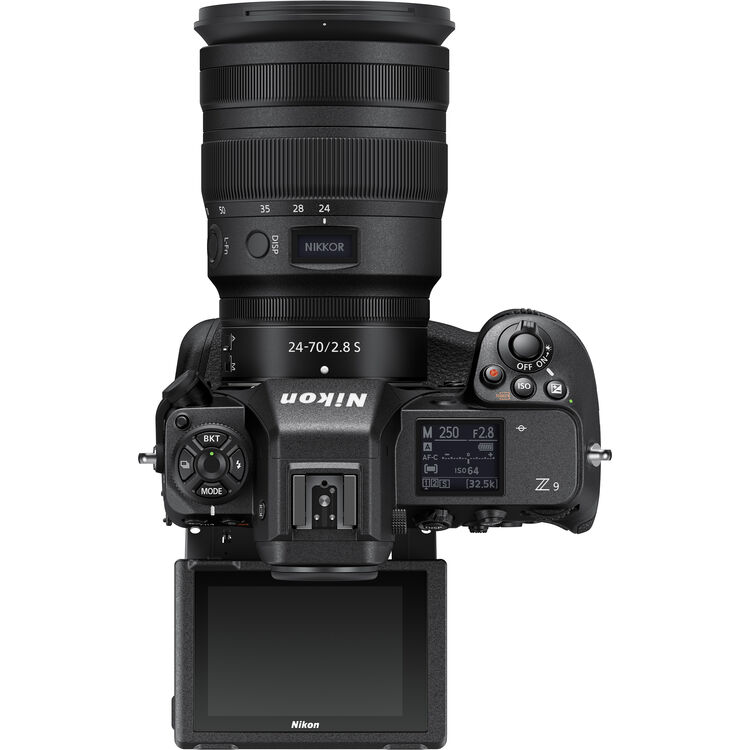
Nikon has a long history of treating firmware as a way to extend ownership life, not just patch bugs. With the Nikon Z9, Firmware 2.0 delivered upgrades that felt more like a product relaunch than a maintenance release. Waveform monitoring, high-frame-rate EVF mode at 120 fps, 1/6-stop ISO granularity for video, red REC indicators, dual AF-ON speeds, slow shutter video below 1/frame rate, custom Wide-Area AF patterns for video, and codec flexibility were all added after release. These weren’t small tweaks—they were tools that shifted how filmmakers could use the camera in production.
Why this matters in 2026 is simple: cameras that evolve retain Nikon Z9 value longer. The more Nikon adds to this camera through updates, the longer owners can postpone replacement, the longer the body stays competitive, and the stronger its resale economics remain. Firmware updates also improve autofocus classification, expand customization, and add production monitoring tools that matter to professional creators.
Based on Nikon’s track record, 2026 shooters can expect continued autofocus tuning, expanded lens communication support, codec compatibility longevity, workflow UI refinement, and continued Z-mount ecosystem firmware coordination. Nikon Z9 value in 2026 will still be heavily tied to how the camera gains new capabilities without requiring a new body purchase.
Used Market Economics in 2026

Flagship cameras depreciate faster than we like to admit, but that depreciation is the best part of the story for 2026 buyers. Because the Nikon Z9 has no mechanical shutter, shutter count doesn’t equate to shutter wear, shifting used value emphasis to body condition, sensor integrity, port and door wear, rubber gasket condition, and included accessories. This is a rare advantage that makes used Nikon Z9 purchases feel less like a gamble.
Reputable resellers inspect, grade, and often offer warranty coverage on used Nikon Z9 bodies. This creates predictable pricing spreads based on condition tiers, with savings that can reach thousands compared to new retail pricing. Used flagship bodies also make it easier to expand to a second body without doubling your cost.
What this means for Nikon Z9 value in 2026 is a healthier used pricing environment with confidence that you’re still buying flagship performance, not a tired mechanism. For photographers who plan to keep bodies longer or add a second camera for coverage, depreciation becomes a workflow advantage instead of a financial sting.
Buying Nikon Z9 Used from MPB

MPB has become one of the most trusted platforms for used camera purchases because every camera is inspected, graded, and photographed so buyers know exactly what they’re paying for. The Nikon Z9 value equation benefits here because MPB pricing tiers reward lightly used bodies, often include original accessories, and frequently offer warranty add-ons and generous return windows. You’re not buying “used” in the vague sense—you’re buying a camera with a condition label you can point to.
Another advantage is that MPB Nikon Z9 bodies often ship with OEM batteries, body caps, chargers, and sometimes storage media or cage components depending on the listing. While you’ll still want CFexpress Type B cards for best burst and video performance, you can reduce your initial spend by purchasing bundles that already include Nikon OEM power and caps.
In 2026, buying used from MPB will still be a practical path for professionals who want Nikon Z9 value without retail price pressure. The platform reduces friction, gives transparency, and makes upgrading or expanding kits feel safer and more economical.
Ownership Costs Beyond the Sticker
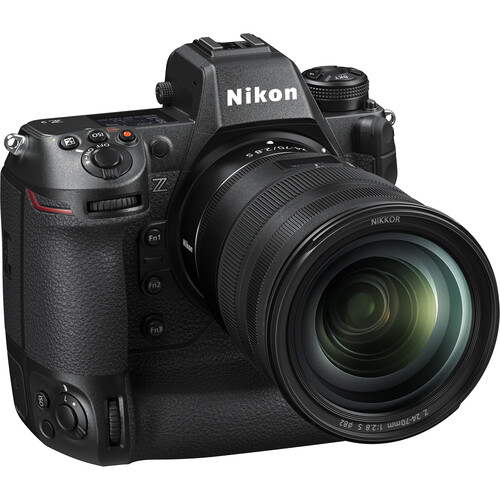
Evaluating Nikon Z9 value means acknowledging costs beyond the body. CFexpress Type B cards are premium media, and high-resolution 45.7MP RAW files or long 8K/RAW takes will demand real storage plans. But Nikon also gave this body tools that reduce spend elsewhere. USB-C in-camera charging reduces the need for expensive external battery hubs. Ethernet and Wi-Fi are built in, so you’re not adding dongles or transmitters for basic file transfer. Voice memos help you log field notes without pulling out a phone or notebook mid-action. Lack of overheating limits also reduces production delays that cost money in real assignments.
The EN-EL18d battery delivers about 700 frames per charge, and compatibility with older EN-EL18 batteries gives professionals flexibility if they already own Nikon pro batteries. Playback burst skip, proxy creation, and RAW efficiency reduce media handling time and storage load compared to other bodies that shoot similarly large files without compression efficiency.
In 2026, ownership costs will still matter, but Nikon Z9 value remains strong because the camera reduces dependency on expensive add-ons for many assignments, keeps bursts long without thermal or buffer throttling, and eliminates shutter wear costs entirely.
Who Gets the Most Nikon Z9 Value in 2026?

Wildlife shooters get Nikon Z9 value through high keeper rates during long bursts, reliable subject classification, and silent operation near sensitive animals. Sports photographers benefit from full-sensor AF coverage, 3D Tracking intelligence, and uninterrupted EVF motion at 120 fps. Portrait photographers get dependable eye AF, high resolution, rich color, and flexible orientation handling. Night shooters benefit from –8.5 EV Starlight AF, a bright EVF, backlit controls, and dimmable finder modes added in firmware.
Filmmakers gain internal RAW with proxies, waveform monitoring, dual AF-ON speeds, long record times, and 1/6-stop ISO increments for exposure control. Hybrid creators get Nikon Z9 value by replacing multiple bodies with one rugged, intelligent camera that doesn’t ask for an external recorder to unlock RAW or 8K.
In 2026, Nikon Z9 value favors anyone shooting fast action, working in darkness, delivering HDR or RAW video, or expanding kits via used purchases from platforms like MPB.
Final Assessment on Nikon Z9 Value
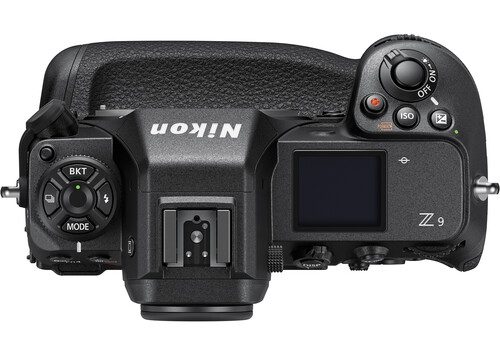
Through 2026, Nikon Z9 value persists thanks to its magnesium alloy durability, shutterless design that removes mechanical failure cycles, fast stacked sensor readout, deep buffer performance, full-sensor PDAF coverage, deep-learning subject classification, internal 8K and RAW capture without thermal limits, MP4 proxy generation, firmware momentum, and healthy used-market economics including MPB.
The Nikon Z9 isn’t cheap, but Nikon Z9 value is easier to justify when you consider ownership lifespan, reduced wear costs, and the upside of buying used. For 2026 shooters who want flagship performance without avoidable long-term costs, this camera still makes sense.
FAQ

Will the Nikon Z9 feel outdated in 2026?
No. Its burst speeds, buffer depth, and autofocus coverage will still feel fast and capable for action shooters.
Does shutter count matter on a used Nikon Z9?
Not for wear. There is no mechanical shutter, so count doesn’t equate to shutter wear.
Is the Nikon Z9 good in low light?
Yes. Starlight AF supports focusing down to –8.5 EV, and the EVF brightness helps in darkness.
Is buying the Nikon Z9 used from MPB safe?
Yes. MPB inspects and grades every camera, often includes accessories, and offers warranty add-ons and returns.
How long can the Nikon Z9 record 8K?
About 2 hours 5 minutes internally without overheating in 8K/30p.
What cards should I use for the best Nikon Z9 value?
CFexpress Type B for best burst and RAW video performance, though XQD is supported.
Is IBIS effective on the Nikon Z9?
Yes. Up to 6 stops with supported lenses using Synchro VR.
Can the Nikon Z9 replace dedicated cinema cameras?
For many assignments, yes—especially when internal RAW and proxies are enough.
Does Nikon still support the Z9 with firmware?
Yes. Nikon has already added major features post-launch and is expected to continue tuning AF and video tools.
Is the Nikon Z9 heavy compared to other mirrorless bodies?
Yes. It’s built large with an integrated vertical grip, prioritizing battery life and handling over compact size.
Our articles might have affiliate links and the occasional sponsored content, but don’t sweat it – if you buy something, we get a little kickback at no extra cost to you, and we only hype products we truly believe in!

