


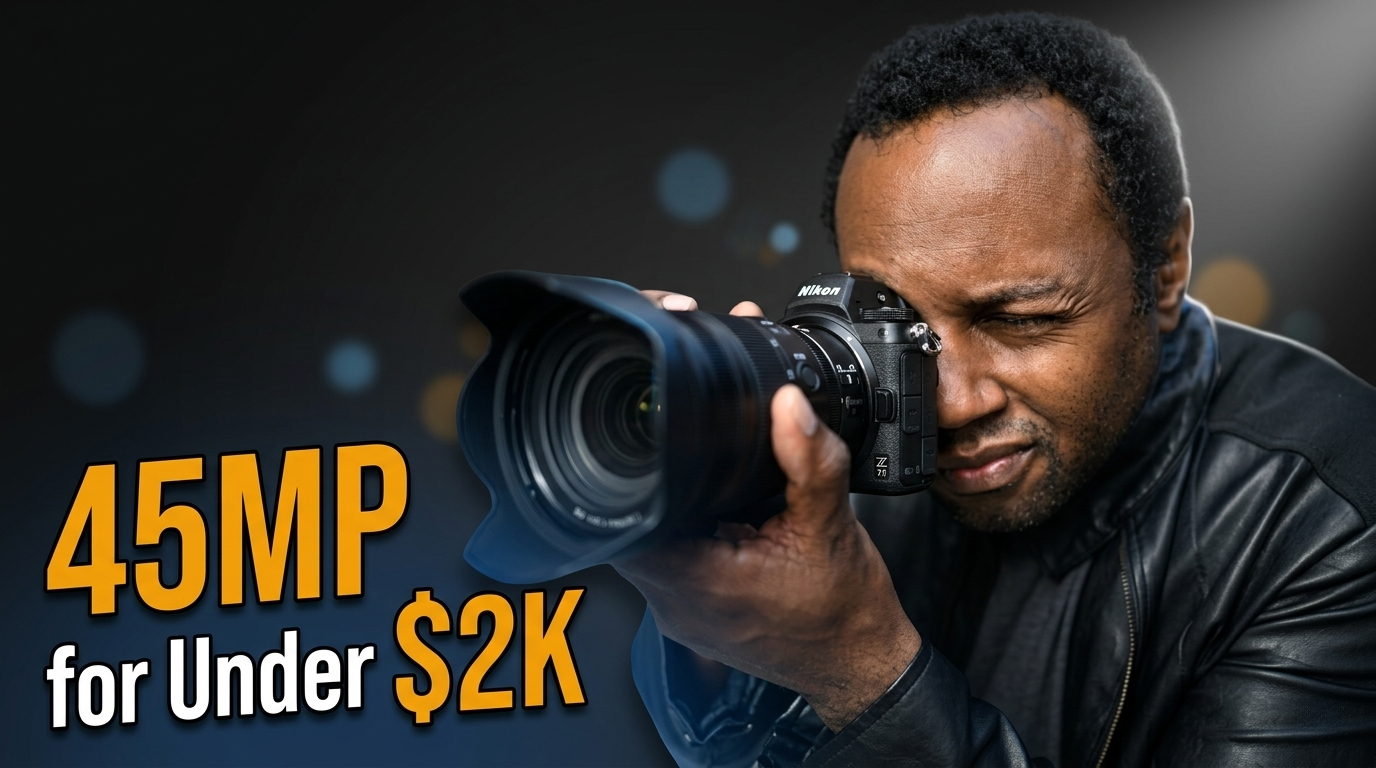
Quick Verdict: The Nikon Z7 II 2026 delivers exceptional image quality with a 45.7MP full-frame sensor, dual card slots, and weather sealing. In 2026, used prices hover around $1,250-$1,700, making this Nikon Z7 II a genuine bargain for landscape and studio photographers who prioritize resolution over speed. However, autofocus tracking remains slower than current flagship cameras, and video capabilities lag behind hybrid alternatives.
Last updated: April 2026 | 9 min read
In This Review
The Nikon Z7 II Overview: Who Is This For?
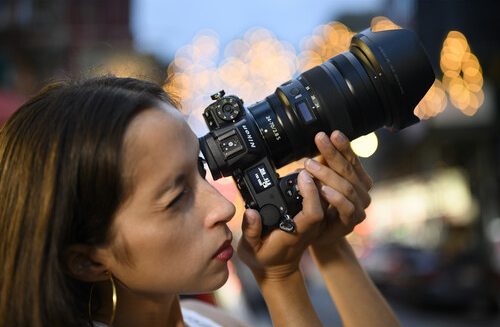
The Nikon Z7 II 2026 remains one of the highest-resolution full-frame cameras available today. Since photographers demand sharpness, detail, and dynamic range above all else, this mirrorless camera excels in those areas. Its 45.7-megapixel sensor captures files with exceptional detail, making it ideal for landscape work, studio portraiture, large-format printing, and commercial assignments where resolution matters. Therefore, for photographers in these niches, the Nikon Z7 II 2026 delivers the technical foundation you need for professional-grade results.
I owned the original Nikon Z7, so I know this camera line intimately. The Z7 II addresses the two biggest complaints I had: the single card slot and the buffer depth. For instance, those limitations frustrated me on location shoots. Notably, Nikon fixed both issues with the successor. My Z7 traveled to Norway, Switzerland, and across the American West. Consequently, the 45.7MP sensor produced landscape files with exceptional detail, especially in the shadow recovery range. Having shot both the D850 and Z7, I prefer the Z7 II’s electronic viewfinder for landscape composition. Moreover, the focus peaking and live histogram fundamentally changed how I expose scenes.
Compared to its predecessor, the Nikon Z7 II 2026 improves autofocus tracking, adds dual card slots for redundancy, and increases buffer capacity from roughly 11 frames to over 100 frames in high-speed continuous shooting. However, it trails the Z8 and Z9 in subject tracking speed. New prices for the body alone typically hover around $1,900-$2,100, whereas used models from reputable dealers range from $1,250 to $1,700 depending on condition and shutter count. Notably, the used market offers exceptional value for budget-conscious photographers seeking professional specifications.
This camera excels for photographers who work mostly with tripods and controlled lighting situations. Specifically, if you shoot wildlife or fast-action sports and need aggressive autofocus tracking, the Nikon Z7 II 2026 will feel slow. In contrast, for everyone else in the resolution-first category, this option represents one of 2026’s most compelling values for serious photographers. Above all, the combination of price and performance makes it worth considering.
Key Specs at a Glance
| Specification | Details |
|---|---|
| Sensor | 45.7MP full-frame CMOS |
| Mount | Nikon Z (mirrorless) |
| Autofocus System | 273-point contrast-detect, dual EXPEED 6 processors |
| Shutter Speed | 1/8000s mechanical, 1/32000s electronic |
| Continuous Shooting | 11 fps (mechanical), 11 fps (electronic) |
| Buffer | 100+ frames (RAW) |
| Card Slots | Dual XQD/CFexpress |
| Video | 4K up to 60p, no 8K |
| Weather Sealing | Dust and moisture sealed |
| EVF | 0.8x magnification, 3.69M dots |
| Weight | 675g (body only) |
Featured on MPB
Nikon Z7 II Used
Professional-grade 45.7MP resolution at used pricing. Save hundreds compared to new while getting world-class image quality.
Build Quality, Design, and Handling

The Nikon Z7 II 2026’s magnesium alloy chassis feels substantial without being heavy. Weighing 675 grams, it balances well with most Nikon Z-mount lenses. Meanwhile, the grip angles comfortably into your hand, and the back button layout follows Nikon’s ergonomic conventions. Notably, Nikon improved button placement compared to the original Z7 and added a vertical grip option for portrait work. Additionally, weather sealing keeps dust and moisture out, though it’s not rated for full submersion.
The dual XQD/CFexpress card slots represent a major upgrade over the single slot in the original. For landscape and studio work, this redundancy protects your shoot. Specifically, one card fills while the other backs up simultaneously, eliminating the risk of losing an entire session to a single card failure. Moreover, the buffer expanded dramatically compared to the Z7. The original Z7 sustained roughly 11 frames of RAW before slowing down significantly. By comparison, the Nikon Z7 II 2026 holds over 100 consecutive RAW frames before filling its buffer. Although this matters less for landscape and tripod work, the improvement still delivers real value for professionals.
The electronic viewfinder displays a 3.69-megapixel OLED panel with 0.8x magnification. For most users, this brightness and responsiveness proves sufficient. In bright sunlight, the viewfinder remains readable without being harsh. However, the magnification lags slightly behind competitors. Notably, if you wear glasses or struggle with smaller viewfinders, you’ll notice this limitation immediately.
Sensor and Image Quality: The Z7 II’s Strength

This section reveals where the Nikon Z7 II 2026 shines most notably. The 45.7-megapixel full-frame sensor delivers files with exceptional detail and tonal separation. For landscape photography, the Nikon Z7 II’s shadow recovery stands out from competitors. Specifically, underexposed areas lift cleanly in post-processing without excessive noise. Furthermore, the dynamic range handles bright skies and dark foregrounds gracefully. To illustrate, the Z7 II routinely recovers two stops of highlight detail and lifts shadows with minimal banding or artifacting.
Color science from the Nikon Z7 II 2026 leans natural and neutral throughout the tonal range. Skin tones render cleanly, and landscape colors feel true without over-saturation. I eventually left Nikon for Canon’s R5 because I needed stronger video specs for my 4wdTalk production work. For photographers shooting primarily stills, the Z7 II eliminates the video gap I experienced with the original Z7. Moreover, high-ISO performance reaches usable levels to ISO 3,200 with minimal noise. Beyond ISO 6,400, texture begins to soften noticeably. Therefore, since landscape photographers operate with tripods and controlled lighting, pushing these boundaries becomes unnecessary in most situations.
Autofocus has long been the Nikon Z7 II 2026’s weakest specification overall. The camera uses contrast-detect autofocus with 273 focus points, rather than the phase-detect systems found in competing mirrorless cameras. The Z7’s autofocus frustrated me during action shots because tracking proved inconsistent. Notably, Nikon’s firmware updates and the Z7 II’s dual EXPEED 6 processors improved this significantly. Single-shot autofocus improved and consequently, continuous tracking became serviceable for many situations. Nevertheless, it lags behind the Sony A7R IV and Canon R6 Mark II when tracking moving subjects. For landscape and studio work, this limitation disappears entirely.
Autofocus Performance and Battery Life

The Nikon Z7 II 2026’s autofocus excels in controlled environments and studio conditions. In studios with stationary subjects, autofocus locks quickly and accurately on target. The dual EXPEED 6 processors enable faster face and eye detection compared to the original Z7. For portraits, the Z7 II focuses on faces reliably in most lighting situations. Animal eye detection exists but lacks sophistication compared to newer Z8 and Z9 algorithms. Consequently, if you photograph birds or wildlife extensively, this gap becomes a practical limitation.
Battery life reaches approximately 330 shots per charge under normal conditions. For most landscape photographers, this proves adequate for a day of shooting, though you’ll want a spare battery in your bag. Compared to professional DSLR bodies achieving 600-700 shots per charge, the Nikon Z7 II 2026 requires more frequent charging sessions. Moreover, electronic viewfinder usage and image stabilization both drain batteries faster when compared to optical viewfinders. Consequently, carry a second battery or a USB power bank if you shoot extended sessions regularly.
Trade or Sell Your Current Gear
MPB Marketplace
Upgrade to the Z7 II by selling old equipment. MPB offers competitive pricing on used gear.
Nikon Z7 II vs. Sony A7R IV vs. Canon R6 Mark II
The Sony A7R IV features 61-megapixels and delivers faster autofocus performance compared to the Nikon Z7 II 2026. However, Sony’s menu systems remain unnecessarily complex for many users, and ergonomics favor Nikon’s body design overall. Additionally, the A7R IV costs more used ($1,600-$1,900) and locks you into Sony’s lens ecosystem. Conversely, the Z7 II provides better handling and a more intuitive menu layout, though you sacrifice megapixel count. For landscape work, the Z7 II’s 45.7MP exceeds most printing and screen display needs.
The Canon R6 Mark II delivers superior autofocus tracking and more advanced video capabilities than Nikon’s offering. Similarly, Canon’s color science produces slightly warmer skin tones selected by many photographers. Compared to the Nikon Z7 II 2026, the R6 Mark II excels at hybrid work and action assignments. Conversely, the Z7 II edges ahead in resolution and shadow recovery performance. Therefore, if video and autofocus tracking dominate your workflow, Canon becomes the stronger choice. Alternatively, if resolution and still-image quality matter most, Nikon’s Z7 II holds its ground at a lower price point.
Pros and Cons
Pros
- 45.7MP sensor delivers exceptional resolution and detail retention
- Dual card slots provide professional redundancy and workflow flexibility
- Outstanding dynamic range and shadow recovery for landscape work
- Robust weather sealing handles dust and moisture in field conditions
- Buffer capacity of 100+ RAW frames enables sustained shooting
- Excellent color science and neutral rendering without excessive processing
- Used prices ($1,250-$1,700) offer tremendous value for the specifications
- Intuitive button layout and ergonomic grip design
Cons
- Contrast-detect autofocus trails competitor systems in speed and tracking
- No animal eye detection; face detection is basic compared to Z8/Z9
- Video limited to 4K 60p; no 8K capability for future-proofing
- 330-shot battery life requires carrying multiple batteries for full-day work
- 0.8x EVF magnification feels cramped compared to 1.0x+ competitors
- Slower continuous autofocus struggles with unpredictably moving subjects
- XQD/CFexpress card ecosystem remains expensive relative to SD cards
- No in-body stabilization limits handheld shooting in low light
Final Verdict

The Nikon Z7 II 2026 remains an outstanding camera for photographers who prioritize resolution, dynamic range, and image quality over speed and video versatility. Landscape photographers, studio professionals, and fine-art shooters find tremendous value here. Specifically, the camera’s 45.7-megapixel sensor and exceptional shadow recovery set it apart distinctly. For controlled shooting conditions and tripod-based work, the Nikon Z7 II 2026 delivers files rivaling far more expensive systems.
However, if you shoot wildlife, fast action, or demand aggressive autofocus tracking and advanced video specifications, consider alternatives. The Sony A7R IV offers more megapixels and faster autofocus performance. Similarly, the Canon R6 Mark II provides superior video and subject tracking capabilities. The Z8 brings Nikon’s latest autofocus algorithms and faster overall performance. These represent real limitations, not minor quibbles. Therefore, the Z7 II accepts these trade-offs in exchange for superior handling quality, intuitive ergonomics, and a lower purchase price.
At used prices of $1,250-$1,700, the Nikon Z7 II 2026 represents one of the best deals in professional-grade cameras available in 2026. New versions run $1,900-$2,100, yet the used market offers cameras with low shutter counts at significant discounts. For landscape photographers, commercial still-life specialists, and studio professionals, this camera represents genuine value. Meanwhile, the Nikon Z5 serves budget-conscious users seeking resolution at a lower price point. Alternatively, for those willing to invest more, the Z6 III offers better autofocus and more video features. Between those options, the Z7 II carves out a compelling middle ground: exceptional image quality, professional build, and proven reliability at a justifiable price.
Ready to Buy?
Find Your Z7 II Today
Check current used inventory and pricing on the Nikon Z7 II from trusted dealers.
Frequently Asked Questions
How does the Nikon Z7 II compare to the original Z7?
The Nikon Z7 II 2026 improves autofocus speed and tracking, adds a second card slot for professional redundancy, and expands buffer capacity from roughly 11 frames to over 100 RAW frames. Meanwhile, the sensor remains the same 45.7-megapixel resolution. Therefore, for landscape work, the dual card slots and faster buffer make the Z7 II worth the upgrade.
Should I buy the Z7 II new or used in 2026?
Used Z7 II bodies from reputable dealers like MPB typically cost $1,250-$1,700 compared to $1,900-$2,100 new. If you purchase used, verify the shutter count and check for any signs of damage. Notably, most used examples with low shutter counts offer excellent value and represent the better purchase for most photographers.
Is the Z7 II good for wildlife photography?
The Nikon Z7 II 2026’s contrast-detect autofocus and lack of animal eye tracking make it less ideal for wildlife than competitors like the Sony A7R IV or Canon R6 Mark II. If wildlife is your primary work, those cameras offer superior autofocus. Conversely, the Z7 II excels at stationary subjects and controlled conditions.
What Nikon Z lenses work best with the Z7 II?
The Z-mount lens ecosystem has matured significantly. The Z 24-70mm f/2.8 S and Z 14-24mm f/2.8 S are professional-grade optically, though expensive. Alternatively, budget alternatives include the Z 24-200mm f/4-6.3 for travel and the Z 50mm f/1.8 S for portraits. All Nikon Z lenses autofocus on the Z7 II.
Does the Z7 II have image stabilization?
No, the Z7 II lacks in-body image stabilization. Stability depends on lens-based stabilization or using a tripod. Therefore, this limits handheld shooting in low light without fast lenses. If in-body stabilization matters for your work, consider the Z6 III or newer models.
What is the Z7 II’s video capability in 2026?
The Nikon Z7 II 2026 records 4K up to 60 frames per second and Full HD up to 240 fps for slow-motion work. There is no 8K recording. For hybrid work mixing stills and video, competitors like the Canon R5 offer more advanced video features. Specifically, the Z7 II targets stills photographers first.

