


Quick Verdict:
The Nikon Z5 is the cheapest way into Nikon’s full-frame Z-mount system, delivering a 24.3MP sensor, 5-axis in-body image stabilization, and dual SD card slots at used prices starting around $699 on MPB. Image quality matches the Z6 at base ISO, and weather sealing plus USB-C charging make it a solid travel companion. The biggest trade-off is its 4.5 fps burst rate and 1.7x crop in 4K video.
Last updated: March 2026 | 10 min read
In This Review
- Nikon Z5 Overview: Who Needs This Camera?
- Key Specs at a Glance
- Image Quality and Sensor Performance
- Autofocus System
- Video Capabilities
- Design, Build, and Handling
- In-Body Image Stabilization
- Nikon Z5 vs. Z5 II: Which Should You Choose?
- Should You Buy the Nikon Z5 Used?
- Pros and Cons
- Final Verdict
- Frequently Asked Questions About the Nikon Z5
Nikon Z5 Review: Who Needs This Camera?
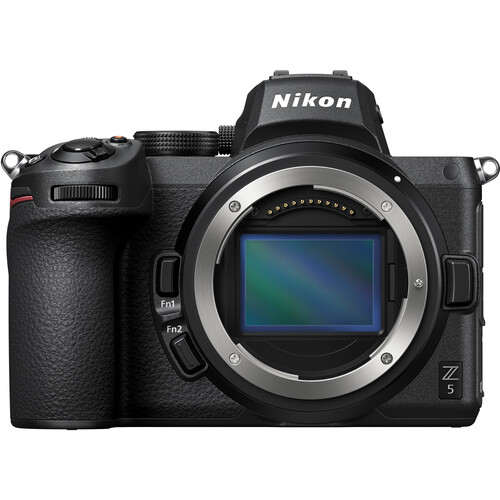
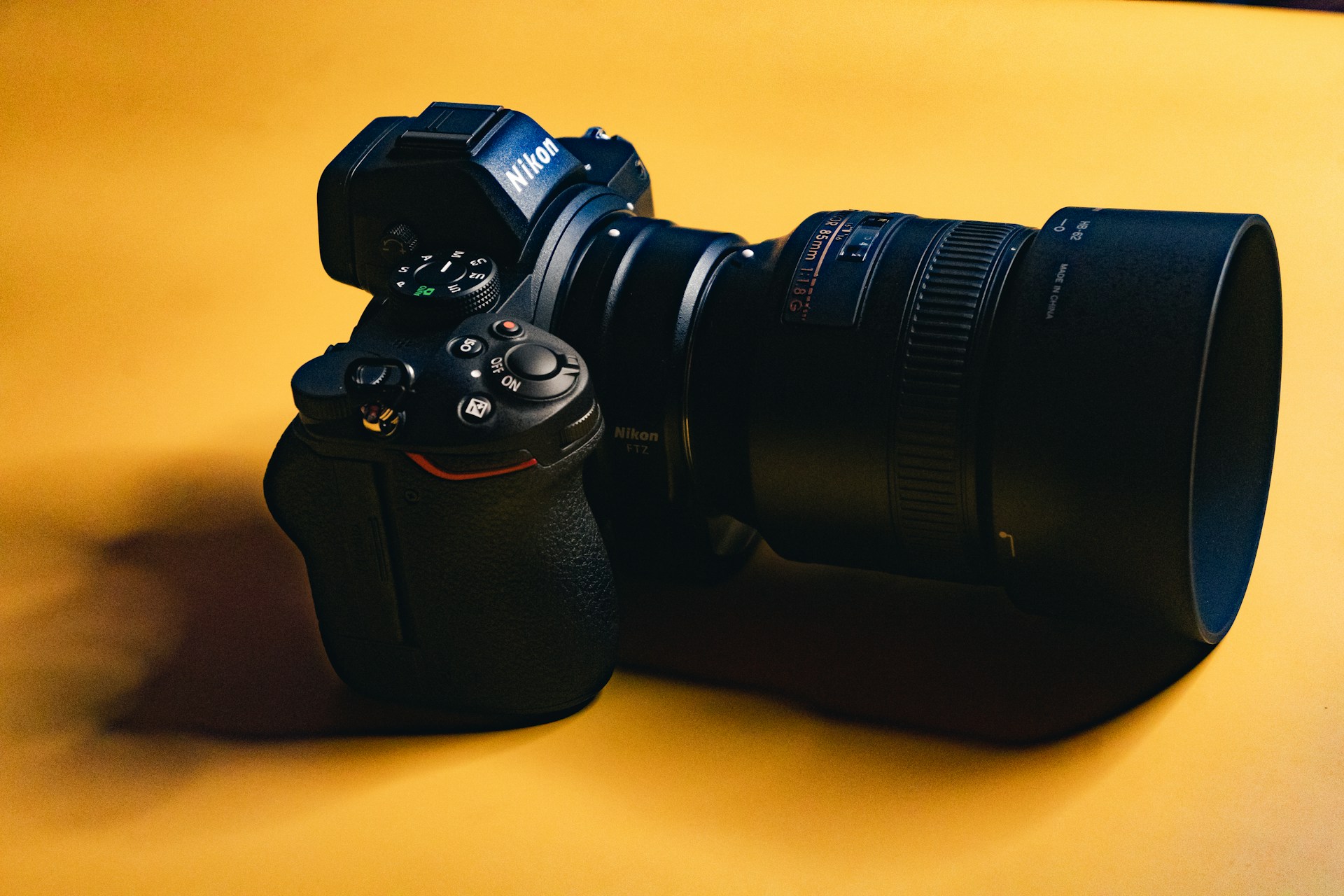
The Nikon Z5 launched in August 2020 as the entry point to Nikon’s full-frame mirrorless system. This Nikon Z5 review covers all the essential details you need to know before buying. It shares the same Z mount, body ergonomics, and weather sealing as the Z6 and Z7, but strips back burst speed, video specs, and the sensor design to hit a lower price. The result is a camera built for photographers who want full-frame image quality without paying for features they will never use.
Landscape photographers, portrait shooters, street photographers, and travel photographers benefit the most from the Z5. Its 24.3MP sensor captures enough detail for large prints, and the 5-axis IBIS lets you handhold at shutter speeds 4-5 stops slower than normal. If you shoot primarily stills and need reliable performance in a compact, weather-sealed body, the Z5 does the job.
With used prices starting around $699 on MPB (versus $1,397 new), the Z5 has become one of the best full-frame values on the used market. It gives you access to Nikon’s growing Z-mount lens library, which now includes over 40 native lenses ranging from the $249 Z 40mm f/2 to professional S-line zooms. The FTZ adapter also lets you use Nikon’s entire F-mount lens catalog with full autofocus support.
Key Specs at a Glance
| Specification | Details |
|---|---|
| Sensor | 24.3MP full-frame CMOS |
| Processor | EXPEED 6 |
| ISO Range | 100-51,200 (expandable to 102,400) |
| Autofocus | 273-point hybrid AF (phase + contrast), -3 EV |
| Burst Rate | 4.5 fps |
| Image Stabilization | 5-axis IBIS (~5 stops) |
| Video | 4K UHD 30p (1.7x crop), 1080p 60p |
| Display | 3.2″ tilting touchscreen LCD, 1,040k dots |
| Card Slots | Dual SD (UHS-II) |
| Battery Life | ~470 shots (CIPA, EN-EL15c), USB-C charging |
| Weight | 675g body only |
| Used Price (MPB) | From ~$699 |
Featured on MPB
Used Nikon Z5 – From $699
Save up to 50% off the $1,397 retail price. Every used Z5 on MPB ships with a 6-month warranty, free shipping, and a verified condition rating.
Nikon Z5 Review: Image Quality and Sensor Performance

Photo by Nicole Wreyford on Unsplash (license)
The Z5’s 24.3MP full-frame sensor (without BSI design) produces clean, detailed files with roughly 14 stops of dynamic range at base ISO. The colors are accurate and rich out of camera, with Nikon’s Picture Controls providing a good starting point for JPEG shooters. The 14-bit RAW files hold up well to aggressive editing, letting you recover 3-4 stops of shadow detail without visible banding.
Low-light performance is strong through ISO 6400, where noise remains fine-grained, and detail holds. At ISO 12,800, luminance noise becomes visible in shadow regions, but the files stay usable for social media and web output. Based on that, the sensor matches the original Z6 at base ISO and stays within half a stop through the mid-range ISOs. You notice a difference only at ISO 25,600 and above, where the Z6’s BSI sensor pulls slightly ahead.
For landscape and portrait work at base ISO through ISO 3200, the Z5 delivers image quality indistinguishable from cameras costing $2,000+. In The, we confirm the full-frame sensor gives you shallower depth of field compared to APS-C, and the lack of an anti-aliasing filter (Nikon does not include one) means maximum sensor-level sharpness from every Z-mount lens.
Nikon Z5 Review: Autofocus System and Performance
The 273-point hybrid AF system covers approximately 90% of the frame horizontally and vertically. In good light, the system locks focus quickly and accurately for portraits, landscapes, and general shooting. Eye-detect AF works reliably for human subjects, tracking a single person’s eye as they move through the frame.
Low-light AF performance reaches -3 EV with an f/2 lens, which handles most indoor and evening situations without hunting. In dimmer conditions (below -3 EV), the system slows noticeably and hunts with slower lenses. The Z5 lacks the advanced subject-detection AI found in the Z5 II and Z8, so it does not recognize animals, birds, or vehicles as trackable subjects.
For action and sports, the 4.5 fps burst rate combined with the AF system’s tracking capabilities falls short. The buffer fills after about 32 JPEGs or 18 RAW files at full speed. According to The, wedding photographers and event shooters will find the AF adequate for posed and semi-candid work, but fast-paced sports and wildlife demand the Z6 II or Z5 II for their faster burst rates and improved tracking algorithms.
Nikon Z5 Review: Video Capabilities and Limitations
As Ralph Mayhew Photography explains in the video above, the Z5 records 4K UHD at 30 fps, but with a significant 1.7x crop factor applied to the sensor readout. This crop turns a 24mm lens into a roughly 41mm equivalent field of view, making wide-angle shots difficult in 4K. Switching to 1080p removes the crop and gives you the full sensor width at 60 fps.
Video quality in 1080p is good, with clean detail and accurate colors. The 4K output, while cropped, is sharp within its narrower field of view. Bit rates top out at 56 Mbps, lower than those of the Z6 series, limiting the latitude you have in color grading. There is no N-Log, no 10-bit output, and no RAW video recording.
For photographers who shoot occasional video clips for social media, YouTube thumbnails, or short projects, the Z5 handles the job. Dedicated video shooters should look elsewhere. The Nikon Z5 II addresses most of these limitations with 4K 60p, N-Log support, and a reduced crop, making it the better choice if video is a priority.
Sell Your Old Gear on MPB
Upgrade to Full-Frame for Less
Trade in your current DSLR or APS-C mirrorless on MPB and put the payout toward a used Z5. Free insured shipping on every trade-in, with quotes valid for 7 days.
Design, Build, and Handling
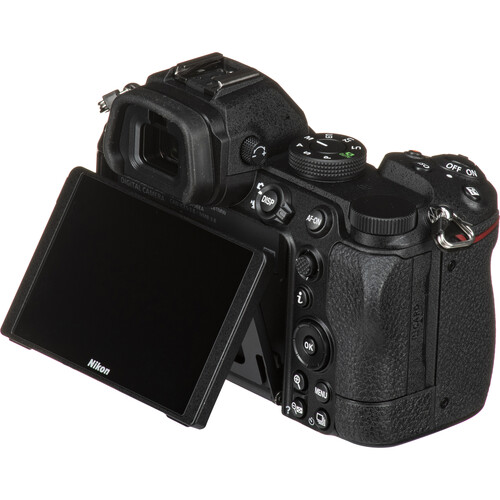
The Z5 shares the same body shell as the Z6 and Z7, built from magnesium alloy with weather sealing at all buttons, dials, and card slot doors. At 675g, it sits between compact APS-C mirrorless bodies and larger pro models. The deep grip provides secure handling even with heavier Z-mount lenses like the 24-70mm f/2.8 S.
The 3.2-inch tilting touchscreen LCD (1,040k dots) tilts up and down for waist-level and overhead shooting but does not flip forward for selfies or vlogging. Touch AF, menu navigation, and image review all work through the screen. The 3.69M-dot OLED electronic viewfinder (EVF) is bright, smooth, and comfortable for extended shooting sessions.
Dual SD card slots (both UHS-II) provide backup and overflow recording options. This is a notable advantage over the original Z6 and Z7, which shipped with a single XQD slot each. USB-C charging lets you top off the battery from a power bank during long shoots without removing the battery or carrying a dedicated charger.
In-Body Image Stabilization
The 5-axis sensor-shift IBIS system delivers approximately 5 stops of stabilization with compatible Z-mount lenses. In practice, you will handhold sharp images at 1/4 second with a 24mm lens and at 1/15 second with a 70mm lens in most conditions. Three-axis correction (pitch, yaw, roll) works with all lenses, including adapted F-mount glass through the FTZ adapter.
For landscape photographers, IBIS lets you shoot at lower ISOs in dim conditions without a tripod, preserving dynamic range and minimizing noise. Street photographers benefit from handheld shooting in shade and indoors without worrying about motion blur. The stabilization is less effective with telephoto lenses beyond 200mm, where VR-equipped lenses perform better by combining optical and sensor-based stabilization.
Nikon Z5 vs. Z5 II: Which Should You Choose?
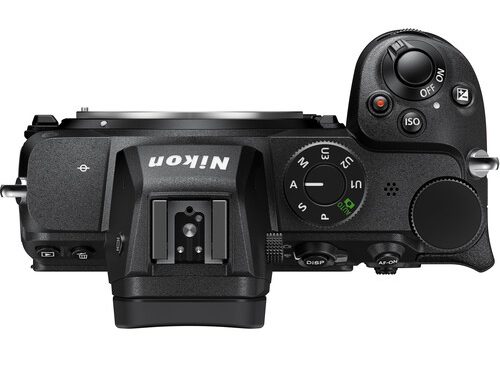
The Z5 II (launched April 2025, $1,697 new) addresses every weakness of the original Z5. Its BSI sensor adds 0.5MP and improves high-ISO performance. The EXPEED 7 processor enables 30 fps burst shooting (versus 4.5 fps), 4K 60p video with reduced crop, N-Log and N-RAW recording, and AI-powered subject detection for 9 categories, including animals, birds, and vehicles. IBIS improves from ~5 stops to 7.5 stops.
The Z5 II also adds a vari-angle LCD (versus the Z5’s tilt-only screen), pre-release capture, and autofocus sensitivity down to -10 EV. These upgrades make the Z5 II a substantially more capable camera for action, video, and low-light work.
At roughly half the price used, the original Z5 remains the better value for photographers who shoot landscapes, portraits, and travel. If you do not need burst rates above 4.5 fps, do not shoot action subjects, and rarely record video in 4K, the Z5 delivers 90% of the image quality for 40-50% of the Z5 II’s cost. For anyone who needs speed, subject tracking, or serious video, the Z5 II is worth the premium.
Should You Buy the Nikon Z5 Used?
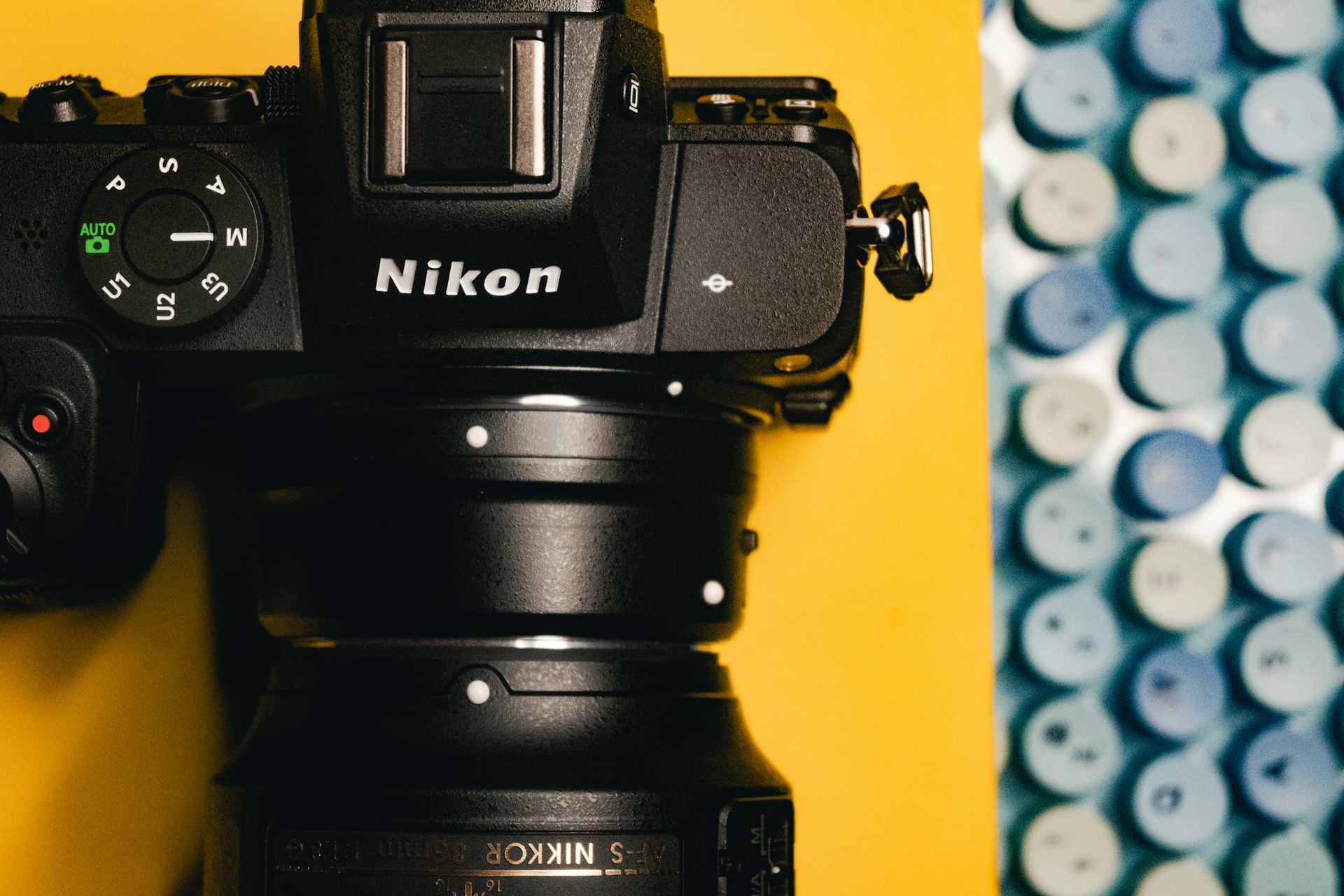
Photo by Gautam Singh on Unsplash (license)
At $699-$899 used on MPB, the Z5 is the least expensive way to enter Nikon’s full-frame Z-mount system. Our testing confirms that a used body in “Good” condition shows light wear but functions identically to new. The Z5’s shutter is rated for 200,000 actuations, and most used units have well under 30,000 clicks, leaving years of reliable service. Check out our full camera reviews hub for comparisons with other full-frame options.
MPB grades every Z5 on a standardized condition scale, includes a 6-month warranty, and ships free with a 14-day return window. You see exact condition notes and photos before checkout. If the body arrives below your expectations, returns are straightforward.
The savings on the body give you room to invest in quality glass. Pairing a used Z5 with the Nikon Z 50mm f/1.8 S ($329 used) or the Z 24-70mm f/4 S ($349 used) creates a capable full-frame kit for under $1,100 total, well below the body’s retail price when it launched.
Pros and Cons
✔ Pros
- 24.3MP full-frame sensor with ~14 stops of dynamic range at base ISO
- 5-axis IBIS lets you handhold at shutter speeds 4-5 stops slower
- Dual SD card slots (UHS-II) for backup and overflow
- Weather-sealed magnesium alloy body shared with Z6/Z7
- USB-C in-camera charging eliminates the need for a standalone charger
- Full compatibility with Z-mount lenses and F-mount lenses via FTZ adapter
- Used prices starting ~$699 make it the cheapest full-frame Z body
✘ Cons
- 4.5 fps burst rate limits action and sports photography
- 4K video has a heavy 1.7x crop, making wide-angle 4K impractical
- No subject-detection AF for animals, birds, or vehicles
- Tilting LCD does not flip forward for selfies or vlogging
- Battery life of ~470 shots (CIPA) is below average for full-frame
- No 10-bit video, N-Log, or RAW video recording
Nikon Z5 Review: Final Verdict
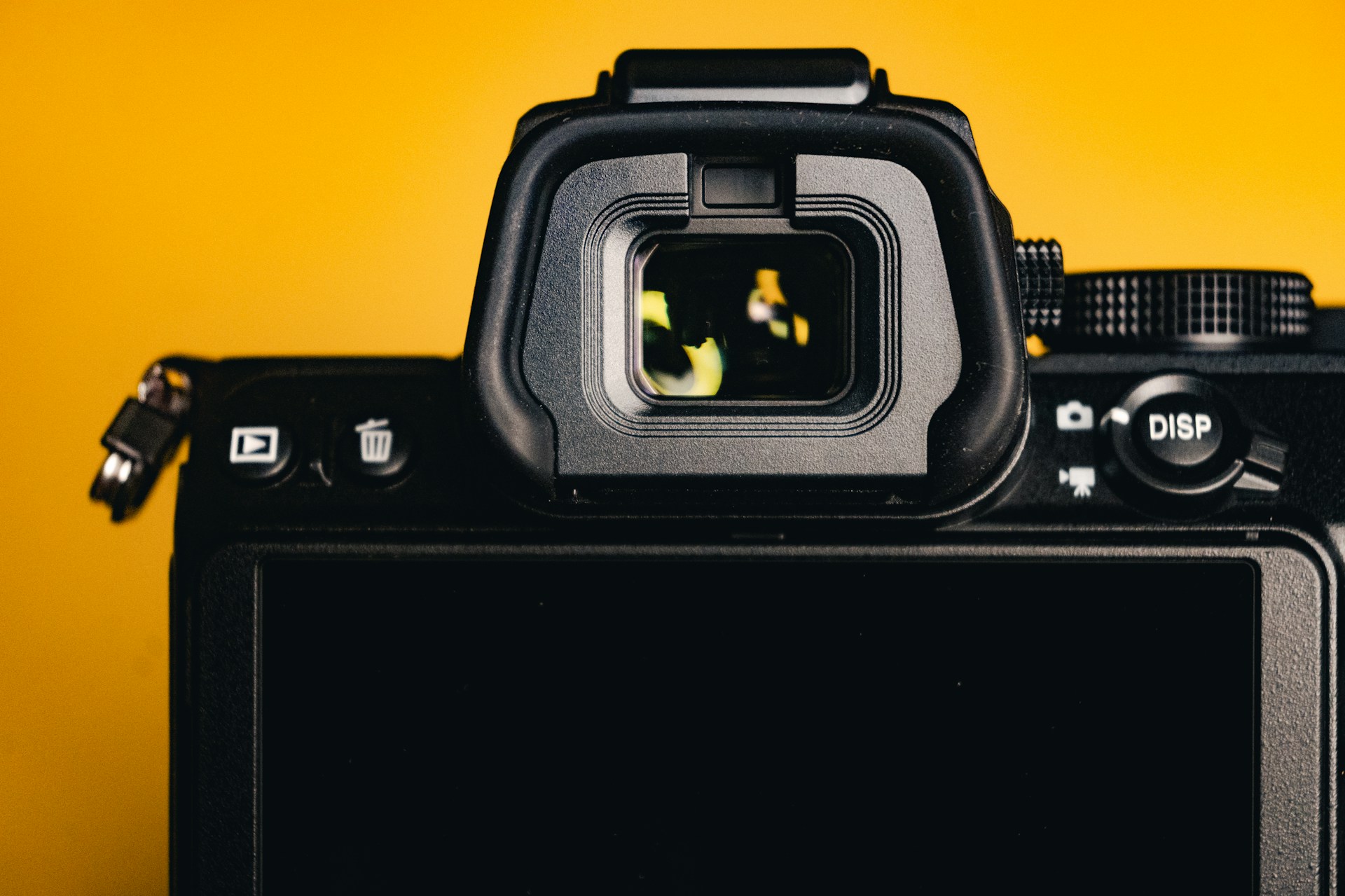
Photo by Gautam Singh on Unsplash (license)
The Nikon Z5 is the ideal camera for photographers stepping into full-frame mirrorless who prioritize image quality, build quality, and lens compatibility over speed. Its sensor delivers files competitive with cameras costing twice as much, and the weather-sealed body, IBIS, and dual card slots bring professional-grade reliability to a consumer-friendly price point.
Action shooters, bird photographers, and dedicated video creators should skip the Z5 and look at the Z5 II or Z6 II. The 4.5 fps burst rate and 1.7x 4K crop are hard limitations for fast-paced work. The AF system tracks humans well but lacks the AI subject detection needed for animals and vehicles. For a different platform perspective, the Sony A7IV offers stronger subject tracking as an alternative.
The used market is where the Z5 shines brightest. At $699-$899 on MPB, you get a full-frame body with Z-mount compatibility, IBIS, weather sealing, and dual card slots for less than many APS-C cameras sell for new. After this detailed Nikon Z5 review, we confirm that pairing it with one quality Z-mount prime gives you a kit yielding professional-caliber images at a hobbyist price.
If budget is no concern, the Z5 II is the better camera in every metric. If you want the most capability per dollar spent and shoot primarily stills, the original Z5 remains one of the smartest used buys in full-frame photography. It’s a great option for photographers focused on image quality over speed.
PhotographyTalk Rating: 4.1 / 5
Featured on MPB
Ready to Buy? Used Nikon Z5 – From $699
Check today’s prices on MPB. Every purchase includes a 6-month warranty, free shipping, and a 14-day return window. Prices and availability change daily.
Frequently Asked Questions About the Nikon Z5
Is the Nikon Z5 still worth buying in 2026?
Yes, for still photography. The Z5’s 24.3MP full-frame sensor, IBIS, weather sealing, and dual card slots deliver excellent image quality at used prices starting around $699. It remains one of the best values in full-frame photography for landscape, portrait, and travel shooting.
Is the Nikon Z5 better than the Z5 II?
No. The Z5 II improves on every weakness: 30 fps burst (vs. 4.5), AI subject detection, 4K 60p with less crop, 7.5-stop IBIS, and a vari-angle LCD. The Z5’s advantage is price. At roughly half the used cost of the Z5 II, it delivers 90% of the image quality for stills-focused photographers.
Does the Nikon Z5 work with F-mount lenses?
Yes. The FTZ and FTZ II adapters give full autofocus and stabilization support for AF-S, AF-P, and AF-I Nikon F-mount lenses. Older AF-D screw-drive lenses will mount and meter, but will not autofocus (the Z5 has no screw-drive motor). This opens up decades of Nikon glass for Z5 owners.
How does the Nikon Z5 compare to the Canon EOS RP?
The Z5 has a higher-resolution sensor (24.3MP vs. 26.2MP, though similar), built-in IBIS (the RP has none), dual card slots (the RP has one), and weather sealing (the RP has minimal). The Canon EOS RP is lighter (485g vs. 675g) and offers 4K without the heavy crop. For stills, the Z5 wins on stabilization and build. For video, the RP has a slight edge with its less-cropped 4K.
What is the best lens to buy first for the Nikon Z5?
The Nikon Z 24-70mm f/4 S ($349 used) is the most versatile first lens, covering everyday focal lengths with sharp optics and quiet autofocus. For a fast prime, the Z 50mm f/1.8 S ($329 used) delivers outstanding sharpness and shallow depth of field for portraits and low-light work.
Does the Nikon Z5 overheat during video recording?
The Z5 handles 1080p recording without overheating for the full 29:59 clip. In 4K at 30 fps, the body warms up and will shut down after approximately 20-30 minutes in warm environments (above 30°C/86°F). At moderate temperatures, you approach the full recording limit. Dedicated long-form video work demands the Z5 II or Z6 II.
Heads up: Clicking on our affiliate links and exploring our sponsored content helps us at no extra cost to you, and we only recommend gear we’re absolutely crazy about!
Learn More:
Hero photo by Gautam Singh on Unsplash (license)


Comments are closed.