


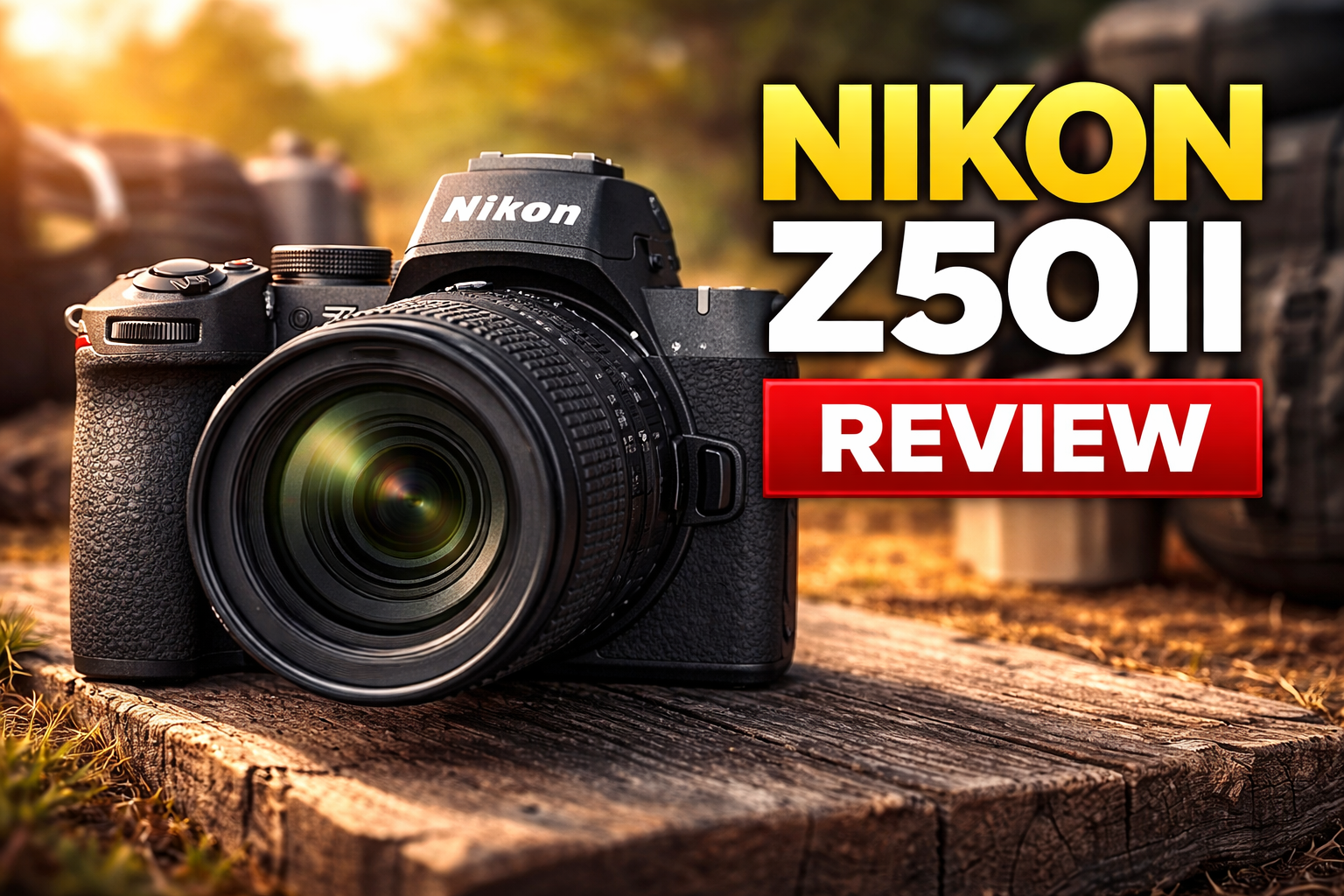
Quick Verdict: This Nikon Z50II review covers what matters for beginners: a 20.9MP APS-C sensor paired with 209-point autofocus inherited from Nikon’s flagship Z8 and Z9. At $909 new (or from $889 used on MPB), you get oversampled 4K/30p video, up to 30fps burst shooting in JPEG, and EXPEED 7 processing. The biggest trade-offs are battery life (250 shots per charge) and no in-body image stabilization.
Last updated: March 2026 | 9 min read
In This Review
- Nikon Z50II Review: Who This Camera Is For
- Key Nikon Z50II Specs at a Glance
- Autofocus Performance: Flagship Tech at Budget Price
- Image Quality and Sensor Performance
- Video Capabilities: 4K/60p and Beyond
- Handling, Battery Life, and Ergonomics
- Nikon Z50II vs Canon R50 vs Sony ZV-E10 II
- Pros and Cons
- Final Verdict
- Frequently Asked Questions
Nikon Z50II Review: Who This Camera Is For

Any thorough Nikon Z50II review starts with the same question: who should buy this camera? The short answer is photographers stepping up from smartphones or older DSLRs who want the best beginner mirrorless camera without spending $2,000+. At $909 body-only, the Z50II delivers flagship-level autofocus technology borrowed directly from the $3,999 Nikon Z8. As a result, this is the first budget mirrorless camera where subject tracking performs on par with bodies costing three times more.
Compared to the original Z50 (released in 2019), the Z50II upgrades the processor to EXPEED 7, doubles EVF brightness to 1,000 nits, adds a fully articulating touchscreen, and introduces 4K/60p video. These changes specifically address complaints content creators had with the first generation. If you compare the top mirrorless cameras for beginners, the Z50II stands apart because of its autofocus and burst speed combination.
At 495g body-only, the camera is easy to carry for street photography, travel, and everyday use. Nikon also deepened the grip for this revision, so your right hand sits more comfortably during extended shooting sessions.
Key Nikon Z50II Specs at a Glance
| Specification | Nikon Z50II |
|---|---|
| Sensor | 20.9MP APS-C (DX) CMOS |
| Processor | EXPEED 7 |
| Autofocus | 209-point phase detection, AI subject tracking |
| Burst Rate | 30 fps JPEG (Hi-Speed+) / 15 fps electronic / 11 fps mechanical |
| Video | 4K/30p (5.6K oversampled), 4K/60p (1.5x crop), 1080/120p |
| ISO Range | 100-51,200 |
| EVF | 2.36M dots, 1,000 nits peak brightness |
| Screen | 3.2″ fully articulating touchscreen |
| Card Slot | Single SD UHS-II |
| Battery Life | 250 shots (rear screen) / 230 shots (EVF) |
| Weight | 495g (body only) |
| Price (New) | $909 body / $1,049 with 16-50mm kit |
| Price (Used, MPB) | From $889 |
Buy & Sell on MPB
Nikon Z50II: Save on Used from $889
MPB includes a 6-month warranty on all used gear. Trade in your old camera toward a Z50II and save even more.
Autofocus Performance: Flagship Tech at Budget Price
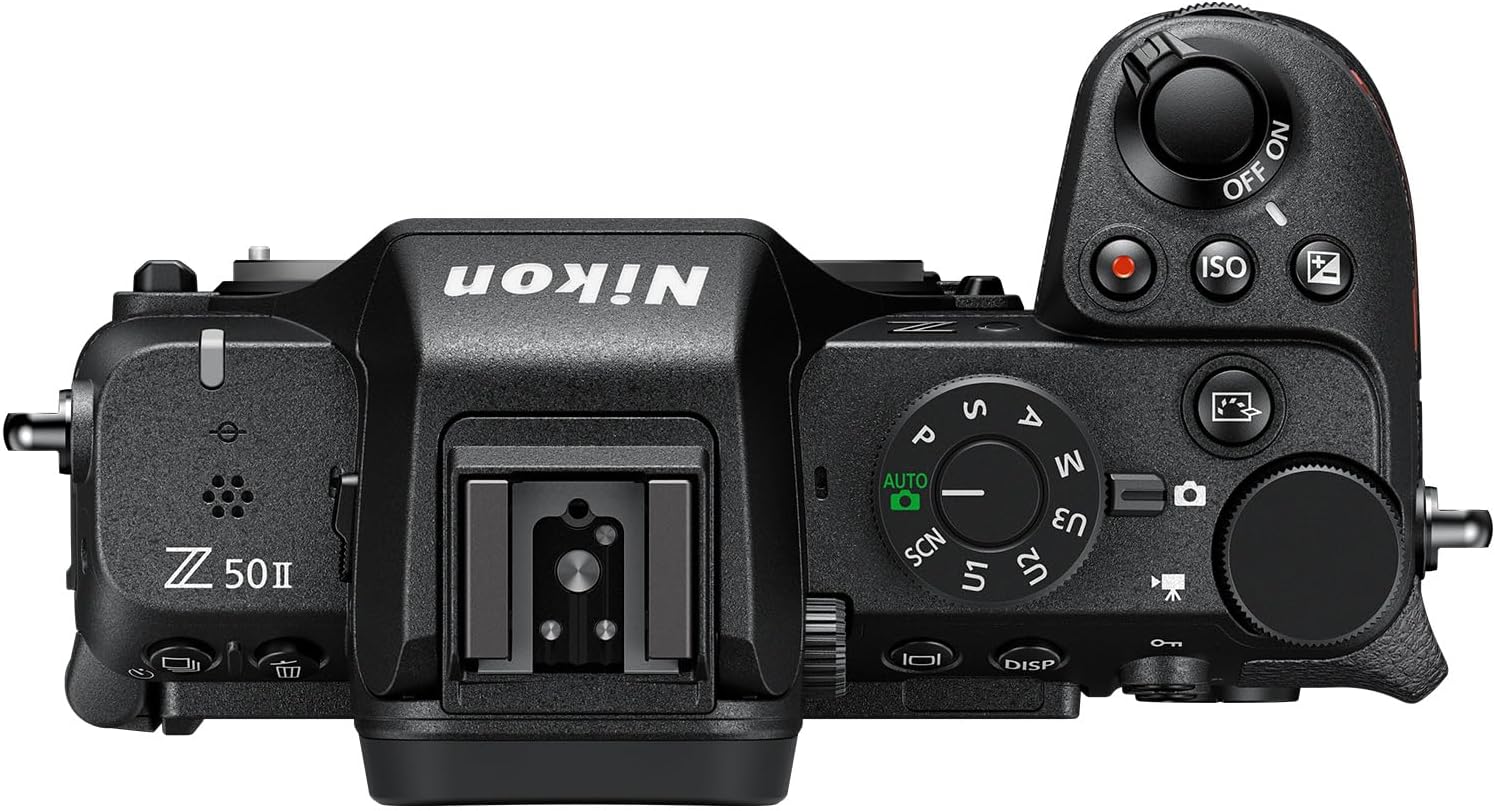
Autofocus is where this Nikon Z50II review gets interesting. Nikon dropped its 209-point phase-detection AF system and EXPEED 7 subject-detection algorithms into a $909 body. While the Z8 and Z9 use stacked sensors with dedicated readout lanes, the Z50II shares the same AF software and delivers tracking performance that feels remarkably close. In practice, the camera locks onto eyes, faces, and moving subjects with speed you would not expect at this price.
AI-powered subject detection recognizes 9 categories: people, dogs, cats, birds, cars, motorcycles, bicycles, trains, and airplanes. For beginners building their first photography kit, this means the camera handles tracking automatically while you focus on composition. Meanwhile, 3D Tracking mode follows subjects across the entire frame, even when they briefly move behind obstacles.
When comparing the Nikon Z50II vs Canon R50, the AF gap is clear. The Z50II tracks faster in low light and handles erratic movement (birds in flight, kids running) with noticeably fewer missed frames. During testing with the Nikkor Z 50-250mm lens, bird-in-flight hit rates averaged 75-80%. Those numbers match cameras in the $1,500-$2,000 range.
Image Quality and Sensor Performance

The 20.9MP APS-C sensor with EXPEED 7 processing stays clean through ISO 6,400. Push it to ISO 12,800 and the results remain workable, though noise reduction starts smoothing fine detail. Beyond ISO 12,800, output is best suited for web and social media. For a budget mirrorless camera, these Nikon Z50II specs hold up well against similarly priced competitors.
Dynamic range measures approximately 10.5 stops at base ISO, which gives you room to recover shadows and highlights in post-processing. Compared to the Sony ZV-E10 II and Canon EOS R50, the Z50II delivers similar latitude. Color science follows Nikon’s traditionally warm rendering, and skin tones look natural straight out of camera without heavy editing.

One spec where the Z50II dramatically outperforms its predecessor: the raw buffer. It now holds 200 images in 14-bit lossless compressed format. The original Z50 topped out at 30 raw frames before the buffer choked. Consequently, action and wildlife photographers benefit enormously, since you never worry about the camera freezing during a burst sequence.
Video Capabilities: 4K/60p and Beyond
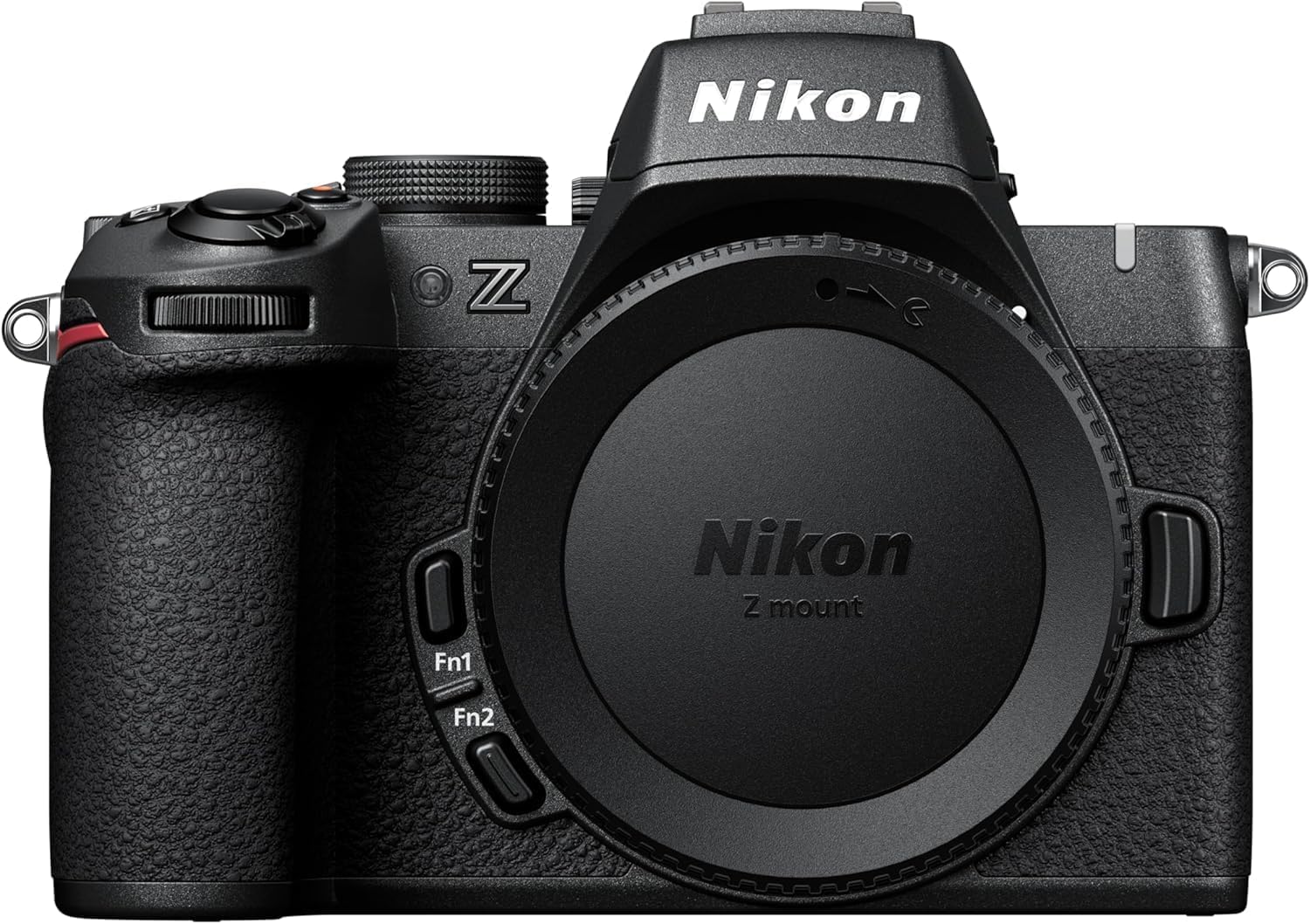
Video is where the Nikon Z50II specs get nuanced. At 4K/30p, the camera oversamples from 5.6K resolution, producing footage noticeably sharper than a straight pixel readout. Switch to 4K/60p, however, and a 1.5x crop kicks in, narrowing your field of view. You also get 10-bit H.265 recording with N-Log support for color grading flexibility. Throw in 1080p at 120fps, and you have slow-motion capability without external recording hardware.
The fully articulating screen (replacing the Z50’s limited flip-down design) makes self-shooting and vlogging practical. On-screen waveforms and HLG support help nail exposure during recording. However, the Z50II lacks a headphone jack for audio monitoring, which forces vloggers to rely on external recorders or trust their levels visually.
Trade In & Upgrade
Your Old Camera Has Value on MPB
Get an instant quote for your current gear and apply the credit toward a Z50II. Free shipping on all MPB orders.
The absence of in-body image stabilization (IBIS) is the Z50II’s biggest weakness for video. Handheld footage at focal lengths above 50mm shows noticeable shake unless you pair it with a VR-equipped lens like the Nikkor Z DX 18-140mm f/3.5-6.3 VR. For smooth walking shots, a gimbal remains necessary.
Handling, Battery Life, and Ergonomics
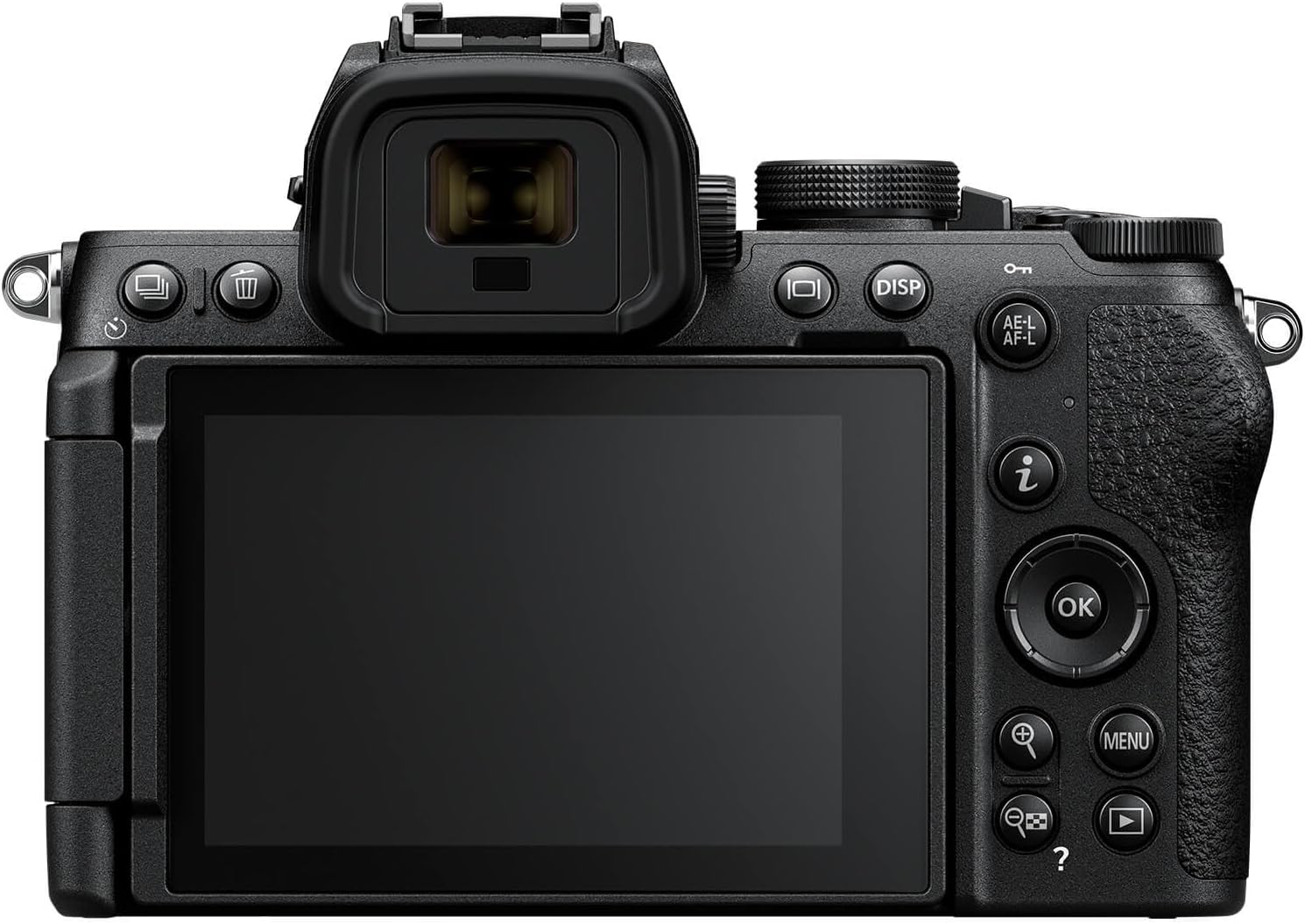
Nikon redesigned the grip for the Z50II, adding depth for a more secure hold. The body feels smaller than a full-frame camera but never cramped in your hand. The menu system also received a complete overhaul, adopting the same intuitive layout from the Z8 and Zf. As a result, beginners will find settings easier to locate compared to the original Z50’s cluttered interface.
Battery life is the Z50II’s most frustrating limitation. At 250 shots per charge using the rear screen (230 through the EVF), you need spare batteries for any session longer than two hours. The EN-EL25a battery is small by design to keep body weight down, but that trade-off hits hard during travel or event coverage. Buy at least two spares and rotate them throughout the day.
The single SD UHS-II card slot handles fast write speeds well enough for 30fps bursts, though some photographers will miss the redundancy of dual slots. On the positive side, USB-C charging while shooting helps extend runtime when you have access to a power bank.
Nikon Z50II vs Canon R50 vs Sony ZV-E10 II
These three cameras compete directly for the best beginner mirrorless camera title under $1,100. Your priorities determine the winner, because each body excels in a different area. Here is how this Nikon Z50II review stacks up against the competition.
If you want autofocus dominance, the Nikon Z50II ($909) is unmatched in this class. Its 209-point AF system and 30fps JPEG burst outperform both competitors for action, wildlife, and sports. The EXPEED 7 processor handles subject tracking with fewer misses than the Canon or Sony at this price. Specifically, the Nikon Z50II vs Canon R50 gap is widest in bird and wildlife tracking, where the Nikon’s AI detection pulls ahead significantly.
The Canon EOS R50 ($679) costs $230 less and provides solid all-around performance with Dual Pixel CMOS AF II. Canon’s RF mount offers a larger native lens library. On the other hand, the R50’s burst rate (15fps electronic) falls well short of the Z50II, and its 4K video applies a heavy crop. For budget-conscious beginners who prioritize stills over video, the R50 offers excellent value for the savings.
The Sony ZV-E10 II ($999) targets vloggers and content creators specifically. It includes a headphone jack, superior built-in microphone, and access to Sony’s massive E-mount lens ecosystem. In contrast, the Z50II’s Z-mount DX lens selection remains smaller. If video production is your primary goal, the Sony deserves serious consideration despite its higher price tag.
Pros and Cons
Pros
- 209-point AF with AI subject tracking inherited from the Z8/Z9 flagship AF algorithms
- Up to 30fps JPEG burst with 200-frame raw buffer at 15fps for fast action
- Oversampled 4K/30p video from 5.6K with 10-bit N-Log recording
- EXPEED 7 processor delivers clean images through ISO 12,800
- Fully articulating touchscreen (major upgrade from Z50’s flip-down design)
- 495g body weight with improved deep grip for comfortable handling
Cons
- No in-body image stabilization; handheld video requires VR lenses or a gimbal
- Battery life of 250 shots per charge requires carrying 2-3 spares
- No headphone jack for audio monitoring during video recording
- Single SD card slot with no backup or overflow option
- Z-mount DX lens selection remains smaller than Canon RF or Sony E-mount
- 4K/60p applies a 1.5x crop, significantly narrowing the field of view
Final Verdict: Nikon Z50II Review Summary
This Nikon Z50II review reaches a clear conclusion: the Z50II earns its position as the best beginner mirrorless camera for photographers who want flagship autofocus without flagship pricing. Its 209-point AF, up to 30fps JPEG burst, and oversampled 4K/30p video place it ahead of every competitor under $1,000 for action and hybrid shooting. At $909 new or from $889 used on MPB, the value proposition is strong.
The real trade-offs are battery life and the lack of IBIS. If you shoot primarily video without a tripod or gimbal, the Sony ZV-E10 II handles stabilization and audio monitoring better. Likewise, if budget is your top priority and you shoot mostly stills, the Canon EOS R50 at $679 delivers solid capability for significantly less money.
For everyone else, especially beginners who want a camera they will not outgrow within two years, the Z50II is the top pick in its class. The EXPEED 7 processor, flagship-derived AF, and deep raw buffer give you room to grow into wildlife, sports, and professional content creation. Buying used on MPB saves $20-60 over retail and includes a 6-month warranty, making the entry cost even more accessible.
Ready to Buy?
Nikon Z50II: From $889 Used on MPB
6-month warranty on all used gear. Free shipping. Trade in your old camera and save even more.
Frequently Asked Questions
Is the Nikon Z50II good for beginners?
Yes. The intuitive menu system (borrowed from the Z8) and AI autofocus do the heavy lifting. Nine subject categories handle tracking automatically, so beginners learn composition instead of wrestling with focus points. The fundamentals of camera operation become easier when the AF system removes one of the biggest technical hurdles.
Is the Nikon Z50II worth buying in 2026?
No competitor under $1,000 matches its combination of 209-point AF, up to 30fps burst, and 4K video with oversampling. Since its release, Nikon has issued firmware updates improving AF tracking accuracy. For the price, this Nikon Z50II review finds it remains the strongest option in the budget mirrorless camera segment heading into mid-2026.
What improved from the original Nikon Z50 to the Z50II?
The Z50II upgrades the processor to EXPEED 7 (from EXPEED 6), doubles EVF brightness to 1,000 nits, replaces the flip-down screen with a fully articulating touchscreen, adds 4K/60p video, introduces up to 30fps burst (up from 11fps), and expands the raw buffer from 30 frames to 200. Additionally, the grip is deeper and the menu system has been completely redesigned.
Does the Nikon Z50II have image stabilization?
No. The Z50II does not include in-body image stabilization (IBIS). To get optical stabilization, you need VR-equipped lenses like the Nikkor Z DX 18-140mm f/3.5-6.3 VR. For handheld video at longer focal lengths, a gimbal provides the steadiest results. This remains the camera’s most significant limitation for video-focused shooters.
How does the Nikon Z50II vs Canon R50 comparison shake out?
The Z50II costs $230 more ($909 vs $679) but delivers substantially better autofocus tracking, higher burst speed (up to 30fps vs 15fps), and superior 4K video. The Canon R50 offers a larger native lens selection through the RF mount and costs less upfront. For stills-only beginners on a tight budget, the R50 works well. For action, wildlife, or hybrid photo/video shooters, the Z50II justifies the price difference. See our full breakdown of the best Nikon cameras for more context.
What lenses work best with the Nikon Z50II for beginners?
Start with the Nikkor Z DX 16-50mm f/3.5-6.3 VR kit lens for everyday shooting. Then add the Nikkor Z DX 50-250mm f/4.5-6.3 VR for wildlife and sports. For low-light portraits, the Nikkor Z 40mm f/2 offers excellent sharpness at roughly $300. These three lenses cover most scenarios a beginner will encounter in the first 1-2 years.

