


Quick Facts:
- Topic: Lens compression in photography
- Skill Level: Beginner to intermediate
- What It Does: Makes background elements appear closer and larger relative to your subject
- Key Variable: Camera-to-subject distance (not focal length alone)
- Best Focal Lengths: 85mm, 135mm, 200mm, 300mm
- Time to Learn: One afternoon with a telephoto zoom
- Gear Needed: Any camera with a 70-200mm zoom or longer telephoto
- Best For: Portraits, landscapes, sports, street photography, real estate
9 min read
In This Guide
What Is Lens Compression?
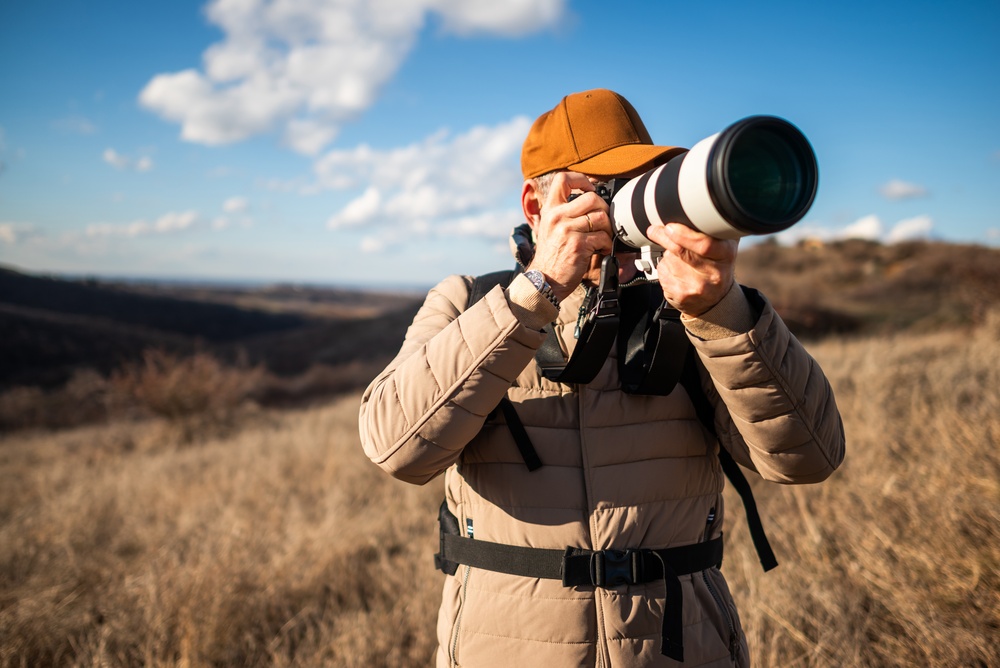
Most photographers get lens compression wrong. They think focal length causes it. It does not. Lens compression is a visual effect where background elements appear larger and closer to the foreground subject. For example, photographers use it to flatten the perceived distance between layers in a scene, creating images where mountains loom directly behind a subject or city buildings stack tightly together. In particular, the effect shows up most visibly when shooting with telephoto focal lengths at greater distances from the subject.
However, focal length alone does not produce this effect. Instead, the real variable is your distance from the subject. When you stand far from your subject and zoom in with a 200mm lens, you compress the scene because the relative distance between your subject and the background shrinks compared to your shooting distance. A 24mm lens cropped to match the 200mm field of view from the same position produces identical compression. Understanding the basics of camera lenses and focal lengths makes this relationship clearer.
Why does this matter practically? Because telephoto lenses force you to stand farther away to frame a subject. Consequently, the background compresses. Conversely, wider lenses let you stand closer, stretching the distance between layers. The lens is the tool; the distance is the mechanism.
How Lens Compression Works
Compression follows a simple principle from geometry. When you photograph two objects at different distances, their apparent size ratio depends on how far each one is from the camera. Specifically, if your subject stands 10 feet away and a building sits 100 feet behind them, the building is 11 times farther from you than the subject. Move back to 50 feet from the subject, and the building is now only 3 times farther. Therefore, the building appears proportionally larger relative to the subject from the 50-foot position.
This is why the compression effect looks so dramatic with longer lenses. At 200mm, you typically stand 20-50 feet from a portrait subject. Meanwhile, at 24mm, you might stand 3-5 feet away for the same framing. The telephoto position compresses every layer behind the subject because the ratios between distances shrink. Additionally, understanding focal length vs effective focal length helps when shooting with crop-sensor cameras, since a 70-200mm on APS-C behaves like 112-320mm in terms of field of view.
Background blur and compression work together but are separate effects. Specifically, compression stacks background elements closer. Meanwhile, aperture and focal length control how blurred those elements become. For a deeper explanation of blur quality, see our guide to understanding bokeh and background blur.
Lens Compression Examples by Focal Length
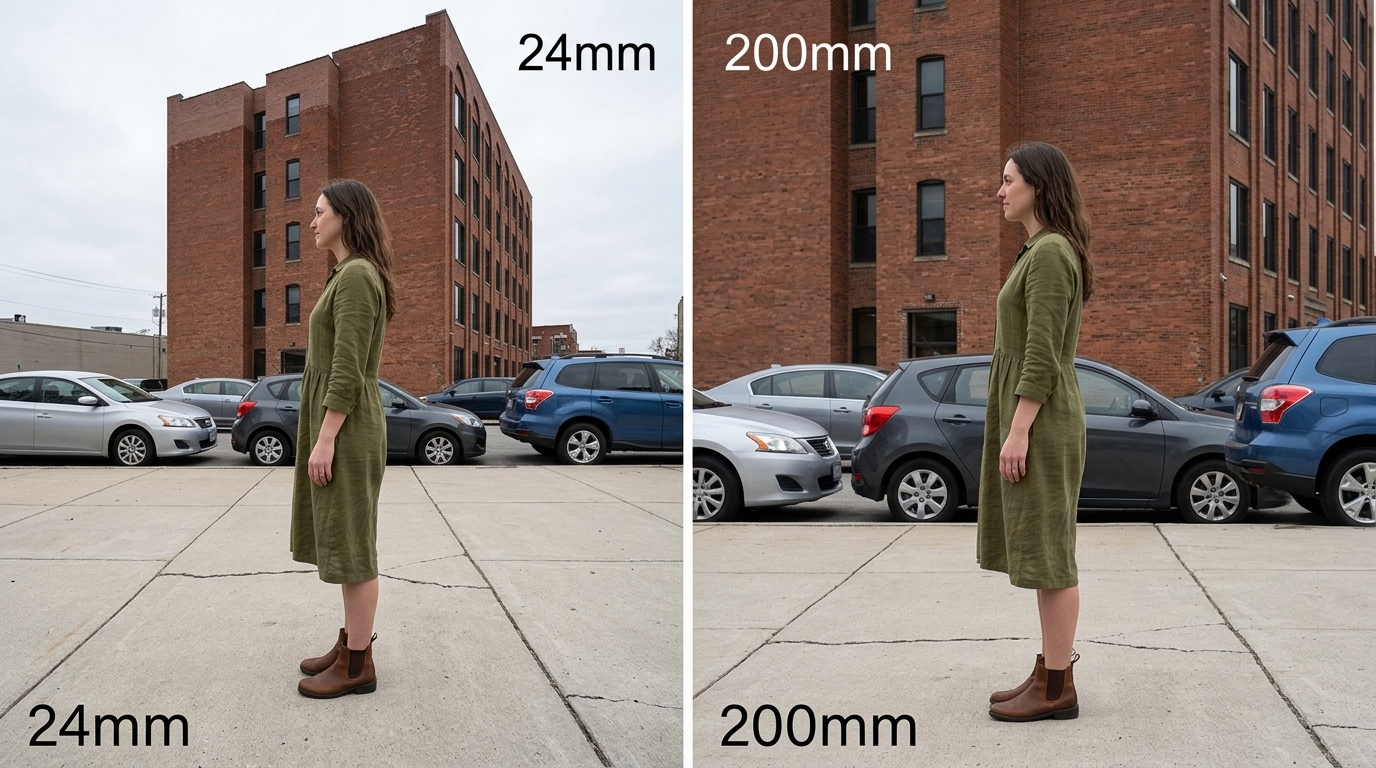
Seeing compression at different focal lengths makes the concept concrete. To illustrate, the following breakdown covers five common focal lengths, all framing the same subject at the same size in the final image. The only change is the camera-to-subject distance.
24mm: Wide-Angle Perspective
At 24mm, you stand roughly 4-5 feet from a portrait subject. Background elements appear small and distant. Also, straight lines near the frame edges stretch and bend. The distance between subject and background looks exaggerated. A mountain range 2 miles behind the subject therefore appears as a thin strip on the horizon. Wide-angle lenses are useful when you want to emphasize the separation between foreground and background or show environmental context.
50mm: Normal Perspective
At 50mm, you step back to about 7 feet for the same framing. Consequently, background elements grow noticeably larger compared to 24mm. Facial features render naturally without the rounded distortion of wider lenses. The background still appears separated from the subject, but the gap has narrowed. For this reason, 50mm is often called the “natural” focal length because the perspective closely matches human vision.
85mm: Short Telephoto
At 85mm, you shoot from approximately 8-10 feet. As a result, background compression becomes visible to the untrained eye. Buildings behind the subject appear closer and taller in the frame. Facial features flatten into a flattering rendering, which is why portrait photographers favor this focal length. Notably, the effect on depth of field in portrait photography compounds the visual impact, since 85mm at f/1.4-f/2 separates the subject from a compressed, creamy background.
135-200mm: Medium Telephoto
At 200mm, you stand 30-40 feet from the subject. Background elements now appear stacked directly behind the subject. For instance, a row of buildings looks compressed into a flat wall. Mountains fill the frame behind a person instead of sitting on the distant horizon. After years of shooting landscapes with a 70-200mm, I consistently see this focal range produce the most versatile lens compression examples. The 70-200mm telephoto zoom is the single most useful lens for learning and applying compression across multiple genres.
300mm+: Super Telephoto
At 300mm and beyond, compression reaches its most extreme. At these distances, layers in a landscape stack on top of each other. City blocks appear to occupy inches of depth instead of miles. My 300mm f/2.8 produces compression so dramatic the background looks painted onto a flat canvas behind the subject. Sports photographers shooting from 400-600mm compress entire stadiums into tight frames where players, coaches, and fans appear on the same visual plane.
Shop Telephoto Lenses on MPB
Canon RF 70-200mm f/2.8L from $2,519 Used
The go-to zoom for learning lens compression. Used copies include a free 6-month warranty and free shipping from MPB.
Using Lens Compression for Portraits
Portrait photographers rely on compression to flatter facial features and separate subjects from distracting backgrounds. At 85mm-135mm, facial proportions render naturally. Specifically, noses appear proportional to the face rather than exaggerated. Ears also sit at their true distance from the cheekbones. Because of this, shooting portraits at 24mm from 4 feet produces an unflattering “big nose” effect, while the same subject at 135mm from 20 feet renders with balanced, natural proportions.
Background control improves with compression as well. For example, a busy parking lot behind your subject at 200mm becomes an indistinct wash of color and light. The compressed perspective pulls background elements closer together, reducing the visual clutter between them. For outdoor portraits in urban settings, this transforms distracting environments into clean, painterly backdrops without needing to change locations.
Lens Compression for Landscape Photography
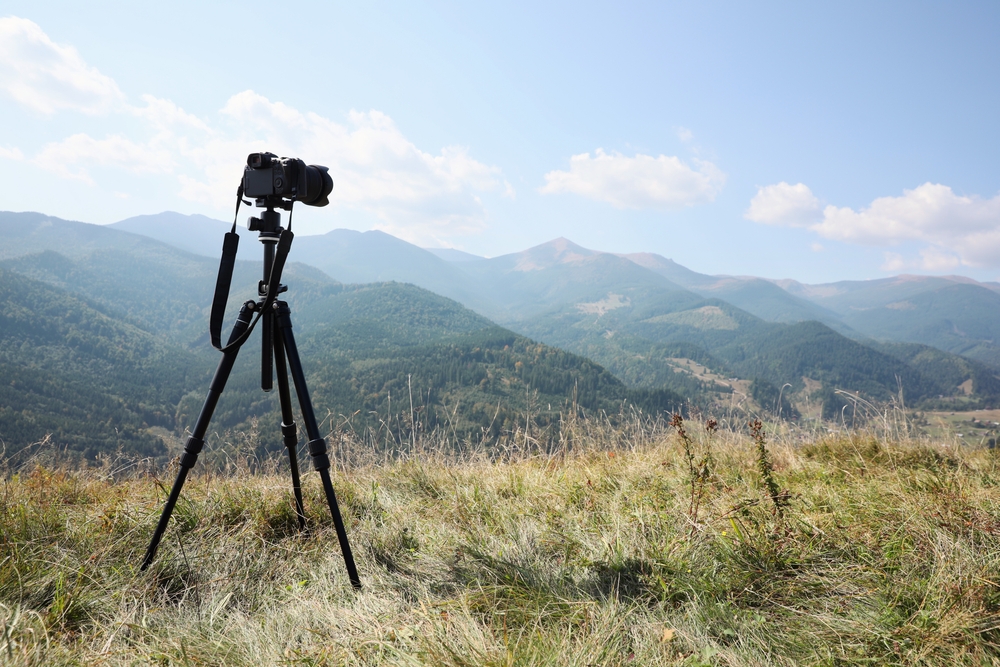
Landscape photographers typically default to wide-angle lenses. However, telephoto compression produces some of the most striking landscape images in modern photography. For instance, shooting a mountain range at 200mm from a distant vantage point stacks the peaks together, creating a layered effect where ridgeline after ridgeline fills the frame. Each layer appears nearly the same size, emphasizing the repetition and scale of the terrain.
I have spent years shooting Sierra Nevada landscapes with a 70-200mm f/2.8. The results consistently outperform wide-angle shots of the same scene for visual impact. At 200mm, a distant tree line appears pressed directly against the mountain backdrop. Rolling hills layer into horizontal bands of green, gold, and shadow. Similarly, ocean scenes benefit from this stacking effect: shooting surfers from 300mm stacks the wave sets behind them, making 6-foot swells look like walls of water rising from the entire horizon.
Level Up Your Compression
Canon EF 300mm f/2.8L IS II from $4,039 Used
Extreme telephoto compression for landscapes, wildlife, and sports. Wide f/2.8 aperture for subject isolation. Free warranty from MPB.
Compression Across Other Genres
Street Photography
Street photographers shooting at 85-135mm from across a road compress pedestrians, vehicles, and buildings into dense, layered frames. As a result, the frames mimic the crowded feel of urban life. Focal length compression at 135mm on a busy street stacks cars bumper-to-bumper and pedestrians shoulder-to-shoulder, even when several car lengths separate them in reality.
Sports and Wildlife
At 400-600mm, sports photographers compress the field of play. A pitcher and batter appear on the same visual plane despite standing 60.5 feet apart. Similarly, wildlife photographers shooting at 500mm compress animal herds into tight formations, making a scattered group of zebras appear packed together. The compressed background isolates subjects against smooth, distant landscapes.
Real Estate Exteriors
Real estate photographers typically shoot wide. However, exterior shots of homes benefit from mild background compression at 50-85mm. Shooting the front elevation from across the street flattens the facade, making the home appear wider and more symmetrical. Conversely, wide-angle exterior shots from the sidewalk exaggerate the roofline and shrink the background neighborhood, which sometimes misrepresents the property.
How to Use Lens Compression: Step-by-Step
Learning lens compression takes one afternoon and a telephoto zoom. To get started, follow these steps to see the effect firsthand and start applying it to your shoots.
First, find a subject with a distinct background element at least 50 feet behind them. A person standing in a field with a mountain, building, or tree line in the background works perfectly. Second, mount a 70-200mm zoom on your camera. Start at 70mm and stand close enough to fill the frame with your subject from the waist up.
Third, take the shot. Then walk backward until you need 200mm to achieve the same framing. Take the second shot. Compare the two images side by side. The 200mm shot shows the background element noticeably larger and closer to the subject. In contrast, the 70mm shot shows the same background element smaller and more distant. Both images frame the subject identically.
Finally, push it further. Walk back even more and use a 1.4x or 2x teleconverter to reach 280-400mm. The compression effect intensifies with each step backward. Check compatibility before purchasing, since not all RF and EF zoom lenses support extenders. Compatible lenses like the EF 70-200mm f/2.8L III and select RF super-telephoto primes maintain autofocus with the 1.4x attached.
Final Verdict
Lens compression is one of the most powerful compositional tools in photography, and it requires zero post-processing. Because the relationship between shooting distance and perceived depth is straightforward, you will start seeing opportunities in every scene once you understand it. The technique is not limited to portrait photographers. Landscape shooters, street photographers, sports coverage, and architectural work all benefit from deliberate use of this technique.
Your single best investment for learning and applying this technique is a 70-200mm f/2.8 zoom. This one lens covers the 85mm-200mm range where compression effects become consistently visible and useful. For photographers already comfortable with 200mm compression, stepping up to a 300mm f/2.8 opens a world of extreme compression effects in landscape and wildlife photography.
Start with the exercise described above. One afternoon of walking backward while zooming in teaches you more about lens compression examples than any article or video. Once you see the effect firsthand, every location you visit becomes a set of layers waiting to be stacked.
Ready to Buy?
Shop Telephoto Lenses on MPB
Canon 85mm f/1.4, 70-200mm f/2.8, and 300mm f/2.8 available used. Every purchase includes a free 6-month warranty, free shipping, and 14-day returns.
Frequently Asked Questions
What is lens compression in photography?
Lens compression is a visual effect where background elements appear larger and closer to the foreground subject. It occurs when you increase the distance between your camera and the subject, then use a longer focal length to maintain the same framing. The effect stacks background layers together, reducing the perceived depth in a scene.
Is compression caused by focal length or distance?
Distance to the subject is the primary cause. Focal length contributes indirectly because longer lenses force you to stand farther away to frame the same subject. However, two images taken from identical positions at different focal lengths and cropped to match will show identical compression. Consequently, the shooting position determines the compression; the focal length determines the field of view.
What focal length is best for lens compression?
Compression becomes consistently visible starting at 85mm. The 135-200mm range produces the most versatile results for portraits and landscapes. Extreme telephoto compression at 300-600mm creates dramatic stacking effects useful for wildlife, sports, and compressed landscape scenes. A 70-200mm f/2.8 zoom covers the broadest range of useful compression for most photographers.
How do you get telephoto compression with a kit lens?
Zoom your kit lens to its longest focal length (typically 55mm on APS-C or 70mm on full frame). Stand farther from the subject than you normally would. Frame the subject at maximum zoom and compare the background rendering to a shot taken at the widest setting from up close. The difference in background size and proximity demonstrates focal length compression on any lens.
Does lens compression work on smartphones?
Yes. Modern smartphones with multi-camera systems offer 2x, 3x, and 5x zoom lenses. Switching from the 0.5x ultrawide to the 5x telephoto and stepping back to match framing produces visible compression. The iPhone 15 Pro Max 5x lens (120mm equivalent) creates noticeable background stacking similar to a dedicated 135mm prime on a mirrorless camera.
Why do telephoto lenses make backgrounds look bigger?
Telephoto lenses require you to stand farther from the subject. From a greater distance, the ratio between your subject’s distance and the background’s distance shrinks. A subject at 30 feet with a building at 300 feet means the building is 10x farther. A subject at 5 feet with the same building at 300 feet means the building is 60x farther. The first scenario (telephoto distance) renders the building proportionally much larger behind the subject.

