


Quick Facts:
- Topic: Best Nikon cameras in 2026 across every price tier
- Price range: $909 to $5,499 new
- Top pick overall: Nikon Z6 III at $2,499
- Best value full-frame: Nikon Z5 II at $1,699
- Best for wildlife: Nikon Z8 at $3,999
- Best for beginners: Nikon Z50 II at $909
- Highest IBIS rating: 8 stops on Zf and Z6 III
- Best used market: MPB, 20 to 40 percent off retail with a 6-month warranty
- Best for: Photographers comparing Nikon Z bodies for stills, video, wildlife, or hybrid work
9 min read
In This Guide
- Why the Best Nikon Cameras Matter in 2026
- Nikon Z System at a Glance
- Nikon Z50 II: Best for Beginners
- Nikon Z5 II: Best Entry Full-Frame
- Nikon Zf: Best for Street and Creative Shooters
- Nikon Z6 III: Best for Photo and Video
- Nikon Z7 II: Best for Landscapes
- Nikon Z8: Best for Wildlife and Action
- Nikon Z9: Best Professional Flagship
- Nikon D780: Best for DSLR Holdouts
- Z5 II vs Z6 III: Which Should You Buy?
- Pros and Cons of the Nikon Z System
- Final Verdict
- Frequently Asked Questions
Why the Best Nikon Cameras Matter in 2026
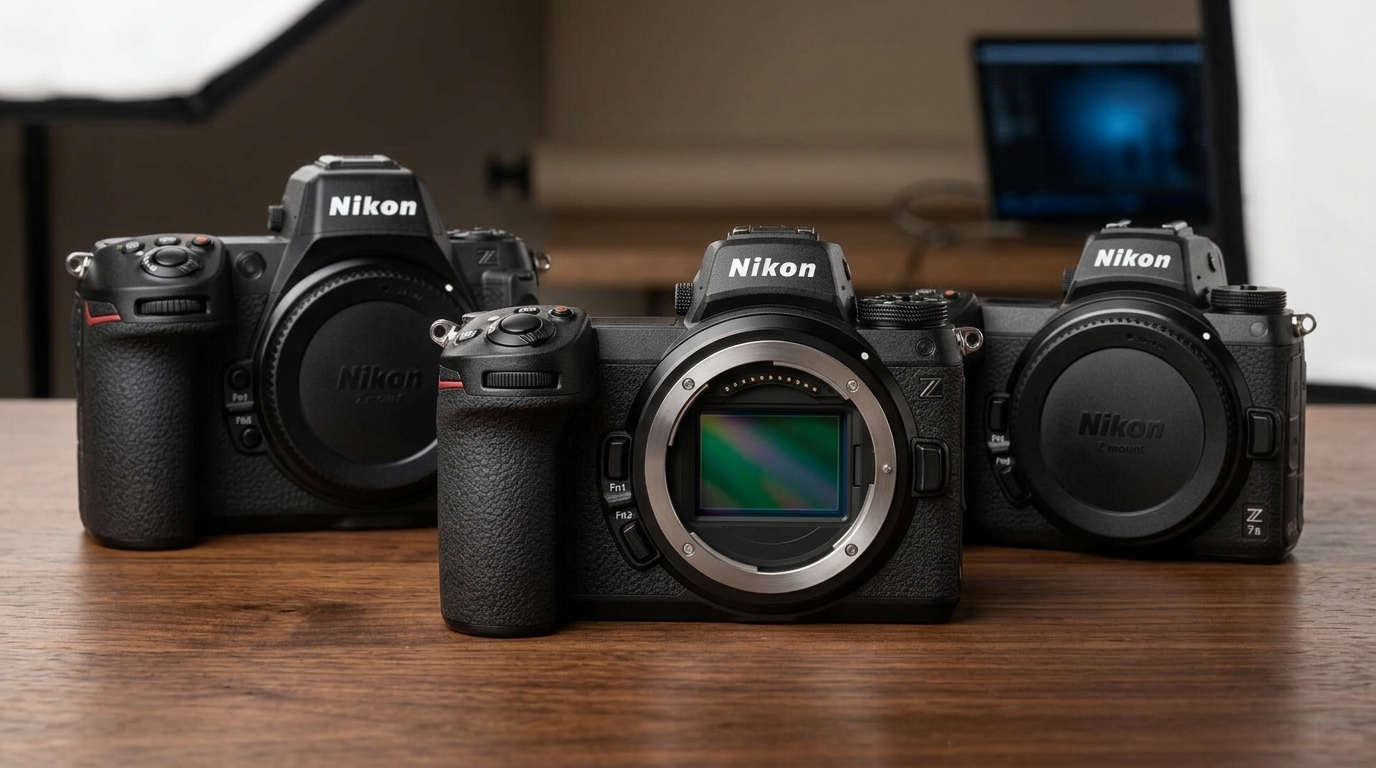
The best Nikon cameras in 2026 cover every tier from $909 to $5,499, and the right pick depends on what you shoot. Nikon spent four years as the perceived underdog in mirrorless. Today, the evidence no longer supports this label. My current Canon kit gives me no system loyalty bias. I shot Nikon for 17 years, Sony for six, and Panasonic for three before switching.
Where Nikon outperforms Sony and Canon right now is concrete. For example, the S-Line Z lens lineup delivers optical quality competitive with any system at equivalent focal lengths. Notably, IBIS across Nikon mirrorless bodies reaches 8 stops, among the highest ratings in the full-frame category. Moreover, Nikon’s skin tone rendering in portrait and wedding work remains a real differentiator. Lightroom presets do not fully replicate the in-camera look. Z8 and Z9 ergonomics also rank among the most intuitive professional body designs available.
Where Every Nikon Mirrorless Camera Still Falls Short
Nikon’s weaknesses matter equally. Specifically, third-party lens availability trails Sony E-mount. Sigma has released no full-frame Z-mount lenses. In addition, Nikon’s ongoing legal dispute with Viltrox limits affordable native third-party options. Every Z body, including the Z9, records video to a single card slot only. As a result, productions requiring dual-card backup need an external recorder. The menu system also carries a steeper learning curve than Canon’s touchscreen interface.
However, none of those limitations make Nikon a second-tier choice. RTINGS ranked the Z6 III the best mirrorless camera overall in 2026. Similarly, the Z5 II ranks among the strongest values in full-frame photography under $2,000. Below, the best Nikon cameras are ranked across every budget and use case, with each pick evaluated on specific merit.
Nikon Z System at a Glance
Here is a quick look at how the Nikon Z lineup compares across price, sensor, and use case. Used prices come from MPB, where every body ships with a 6-month warranty and free returns.
| Camera | Best For | Sensor | Price (New) | Used (MPB) |
|---|---|---|---|---|
| Nikon Z50 II | Beginners | 20.9MP APS-C | ~$909 | ~$750-$820 |
| Nikon Z5 II | All-rounder / Entry Full-Frame | 24.5MP Full-Frame | ~$1,699 | ~$1,350-$1,500 |
| Nikon Zf | Street / Creative | 24.5MP Full-Frame | ~$1,999 | ~$1,600-$1,800 |
| Nikon Z6 III ★ Top Pick | Hybrid Photo + Video | 24.5MP Part-Stacked | ~$2,499 | ~$1,900-$2,200 |
| Nikon Z7 II | Landscapes / High-Resolution | 45.7MP Full-Frame | ~$2,000-$2,100 | ~$1,250-$1,700 |
| Nikon Z8 | Wildlife / Action | 45.7MP Stacked | ~$3,999 | ~$3,000-$3,500 |
| Nikon Z9 | Professional Flagship | 45.7MP Stacked | ~$5,499 | ~$4,000-$4,800 |
| Nikon D780 | DSLR Holdouts | 24.5MP Full-Frame | ~$1,597 | ~$1,000-$1,200 |
New vs. Used
Save 20 to 40 Percent on Nikon Z Bodies
MPB grades every Nikon body by condition, backs each one with a 6-month warranty, and ships with free returns.
Nikon Z50 II: Best for Beginners
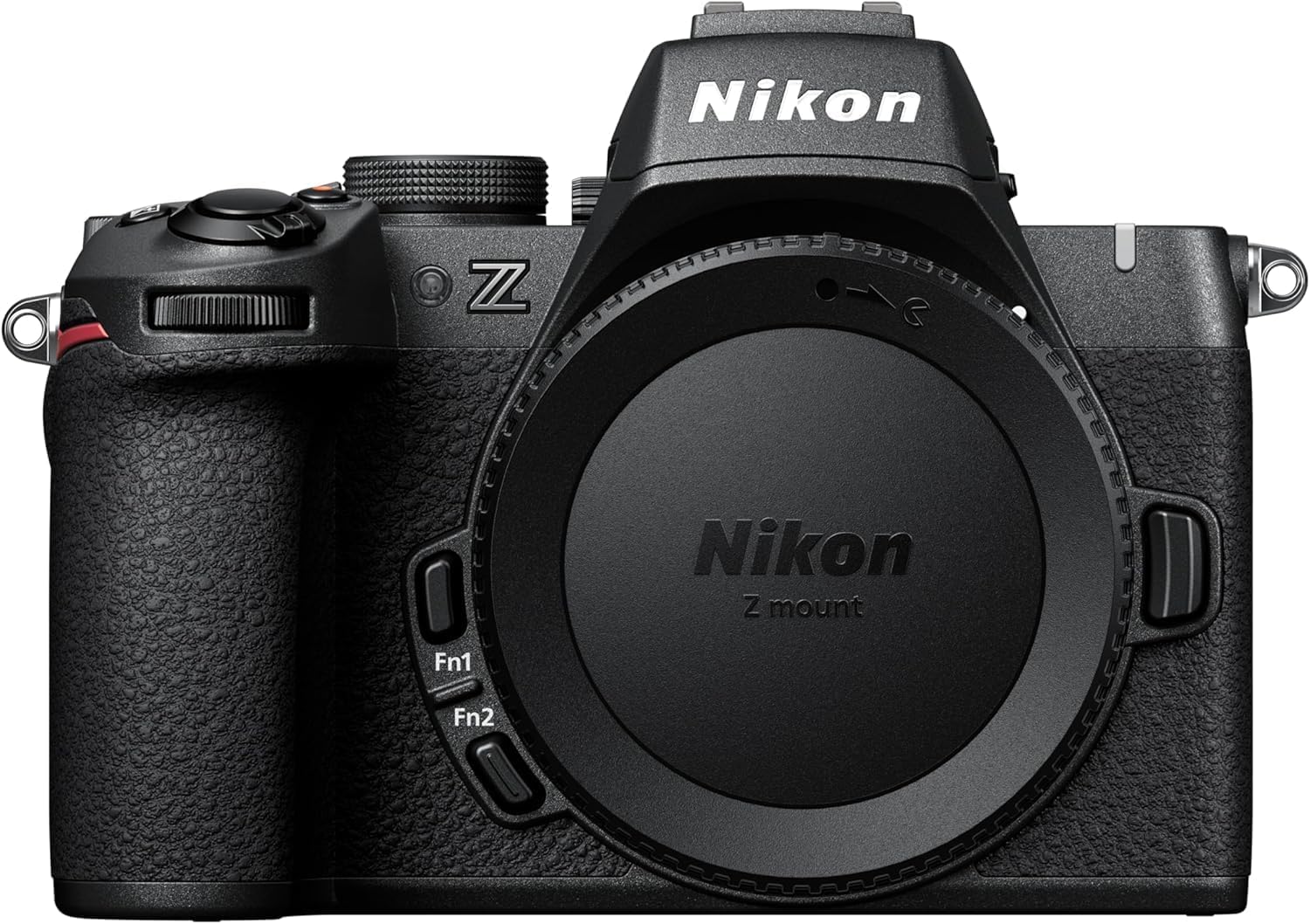
The best Nikon cameras for beginners in 2026 start with the Z50 II at $909. One spec separates it from every other camera at this price. The EXPEED 7 processor inside is the same chip Nikon put in the Z8 and Z9 flagships. Therefore, subject tracking, eye detection, and animal detection operate at full flagship performance, not a reduced version. A beginner shooting the Nikon Z50 II gets the same subject tracking as a professional shooting the Z9.
The 20.9MP APS-C sensor handles ISO 3200 cleanly. Its 11fps continuous burst covers fast-moving subjects for beginner use cases. Moreover, the fully articulating rear screen makes vlogging and low-angle shooting straightforward without extra accessories. However, one honest caveat stands out: native DX Z-mount lens selection is limited to a small handful of options. As a result, many Z50 II users end up pairing the body with heavier, more expensive full-frame Z lenses. If long-term system growth matters, starting with the Z5 II at $1,699 gives you a cleaner path into the full-frame Z ecosystem.
Read the full Nikon Z50 II review for autofocus tracking results, or compare beginner options across brands in our guide to the best cameras for beginners.
Nikon Z5 II: Best Entry Full-Frame and All-Rounder
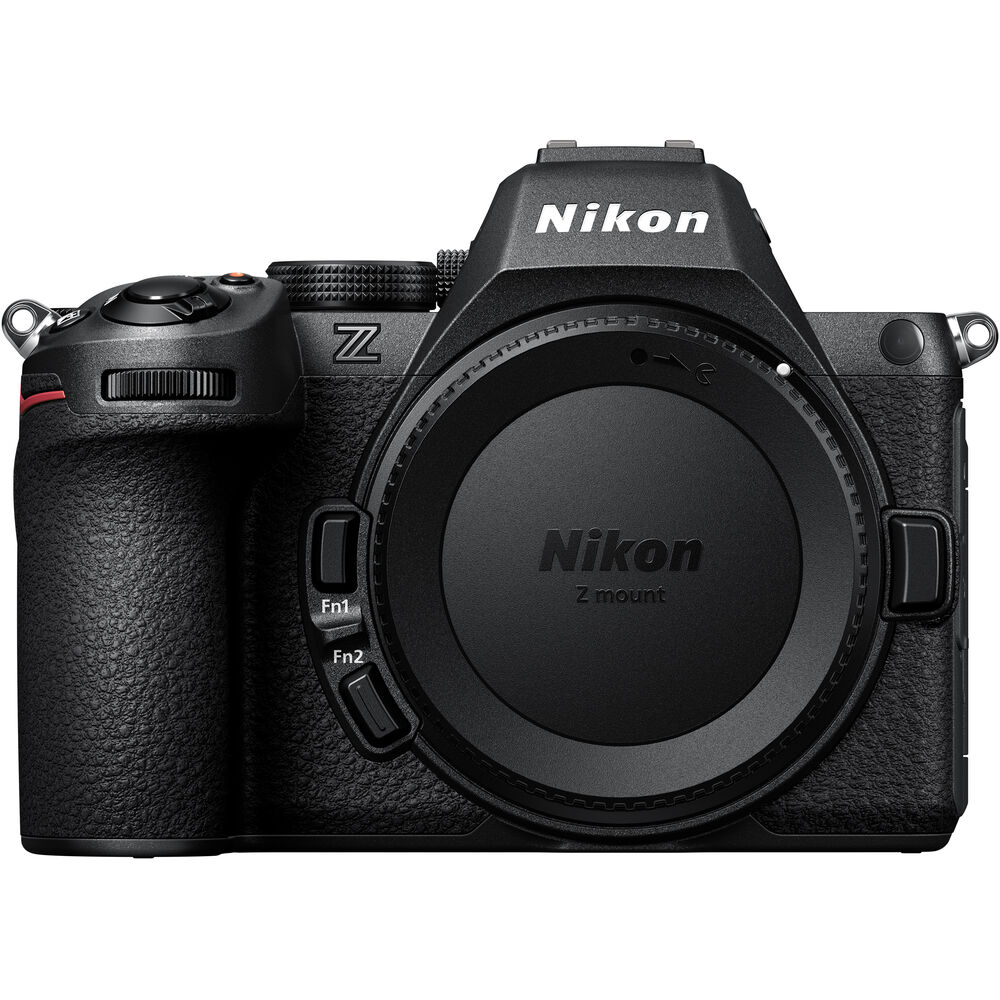
The Z5 II at $1,699 prioritizes stabilization, burst speed, and articulating-screen flexibility. Where the Zf optimizes for deliberate, dial-driven street shooting, the Z5 II is the better choice for photographers covering fast-moving events without a dedicated action body. Its 24.5MP BSI-CMOS sensor pairs with 7.5-stop IBIS. Specifically, this ranks among the highest stabilization ratings in the under-$2,000 full-frame category. The 15fps RAW burst (electronic shutter) rounds out the spec sheet.
Compared to its predecessor, the Z5 II delivers a substantial jump in AF performance. For example, EXPEED 7 subject tracking brings eye detection and animal recognition down to this entry full-frame price point. Video output reaches 4K/60p with a manageable crop, suitable for interviews, events, and social content. Dual UHS-II SD card slots support stills backup shooting, though video writes to a single slot only. Photographers upgrading from a consumer DSLR or APS-C body get full-frame image quality without the Z6 III’s hybrid-oriented premium.
On the used market, Excellent-condition bodies run $1,350 to $1,500 through MPB. For a comparison with the original model, see the Nikon Z5 review.
Nikon Zf: Best for Street and Creative Shooters
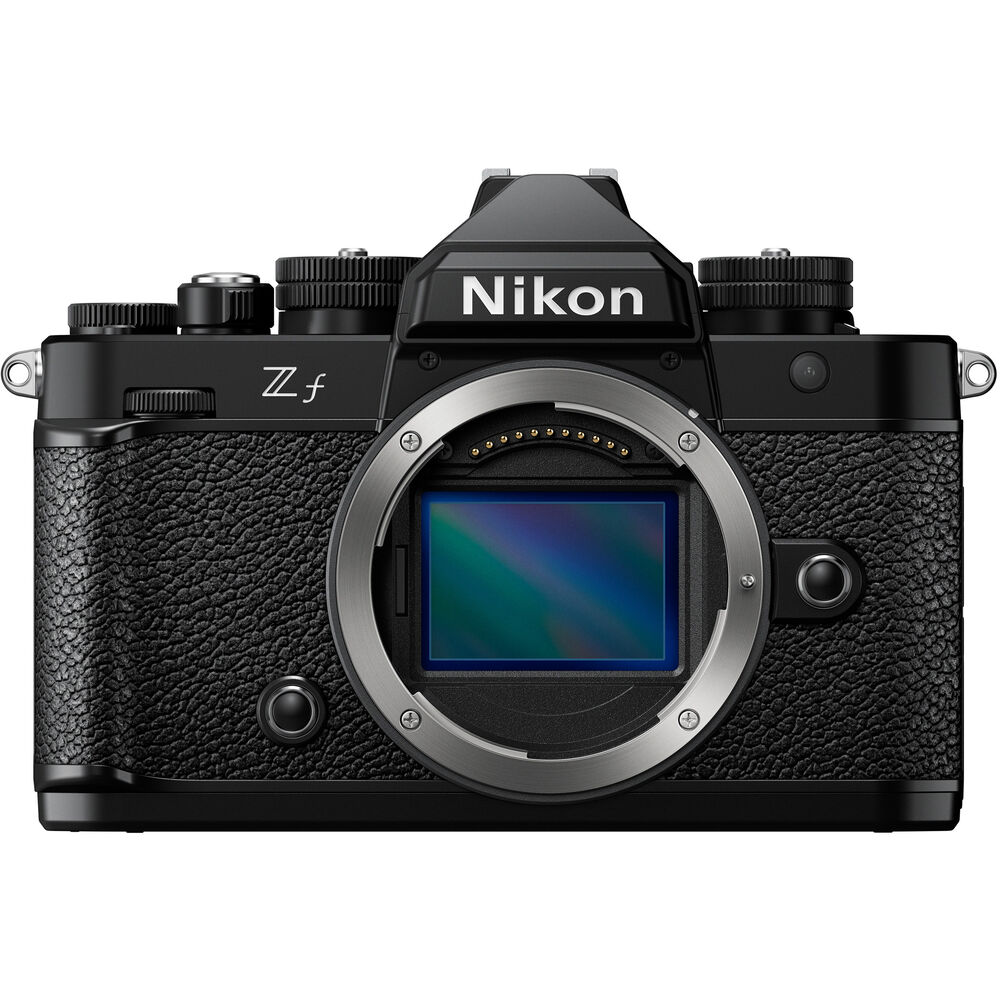
The Zf at $1,999 gets reduced to a style choice in most roundups. Doing so misses its practical value for photographers who shoot candidly. Physical aperture and shutter speed dials make the Zf a body built for deliberate, methodical shooting. For example, setting exposure without menu hunting is faster in fast-moving street situations. The retro design also disarms subjects in ways a modern mirrorless body does not. For candid and documentary work, the dials matter more than the looks.
Technically, the Zf delivers across the specifications its audience cares about. Specifically, its 24.5MP full-frame sensor paired with 8-stop IBIS is the highest stabilization rating in the Nikon lineup. As a result, handheld shots at 1/15s stay reliably sharp. EXPEED 7 subject detection covers eye, face, and animal tracking. Moreover, Monochrome Picture Control produces in-camera black-and-white JPEGs with film-like tonal quality. Many photographers prefer the result over Lightroom-processed files. Compared to the Fujifilm X-T5’s APS-C sensor, the Zf’s full-frame advantage shows most clearly at ISO 3200 and above, where the larger sensor preserves shadow detail with less grain.
Nikon Z6 III: Best Nikon Camera for Photo and Video
At $2,499, this is the best overall pick for photographers who need serious stills and professional video from one body. Its partially-stacked 24.5MP full-frame sensor enables 6K/60p N-RAW video recording internally. Previously, this output required external recorders or significantly more expensive bodies. RTINGS ranked the Z6 III the best mirrorless camera overall in 2026. Specifically, the combination of 20fps RAW burst, 8-stop IBIS, and a 5.76-million-dot EVF earned the position. Dual card slots (CFexpress Type B plus SD UHS-II) also support simultaneous stills backup to both cards.
Two trade-offs are worth knowing before you buy. First, video writes to one card slot only, which prevents dual-card backup during live events or productions where a single storage failure is unacceptable. Second, N-RAW requires specific software support in post-production. Therefore, verify your editing pipeline handles the format before committing to a 6K RAW workflow.
For photographers whose primary output is stills with occasional video, neither limitation is disqualifying. However, dedicated video professionals should weigh the card slot constraint against the otherwise excellent output quality. For a deeper breakdown of video specs across the Nikon lineup, read the dedicated best Nikon camera for video guide.
Sell or Trade Your Old Gear
Put Your Old Kit Toward a Nikon Z Upgrade
MPB buys used camera bodies and lenses directly. Request an instant quote and apply the value to any Nikon Z body, new or used.
Nikon Z7 II: Best for Landscapes and High-Resolution Work
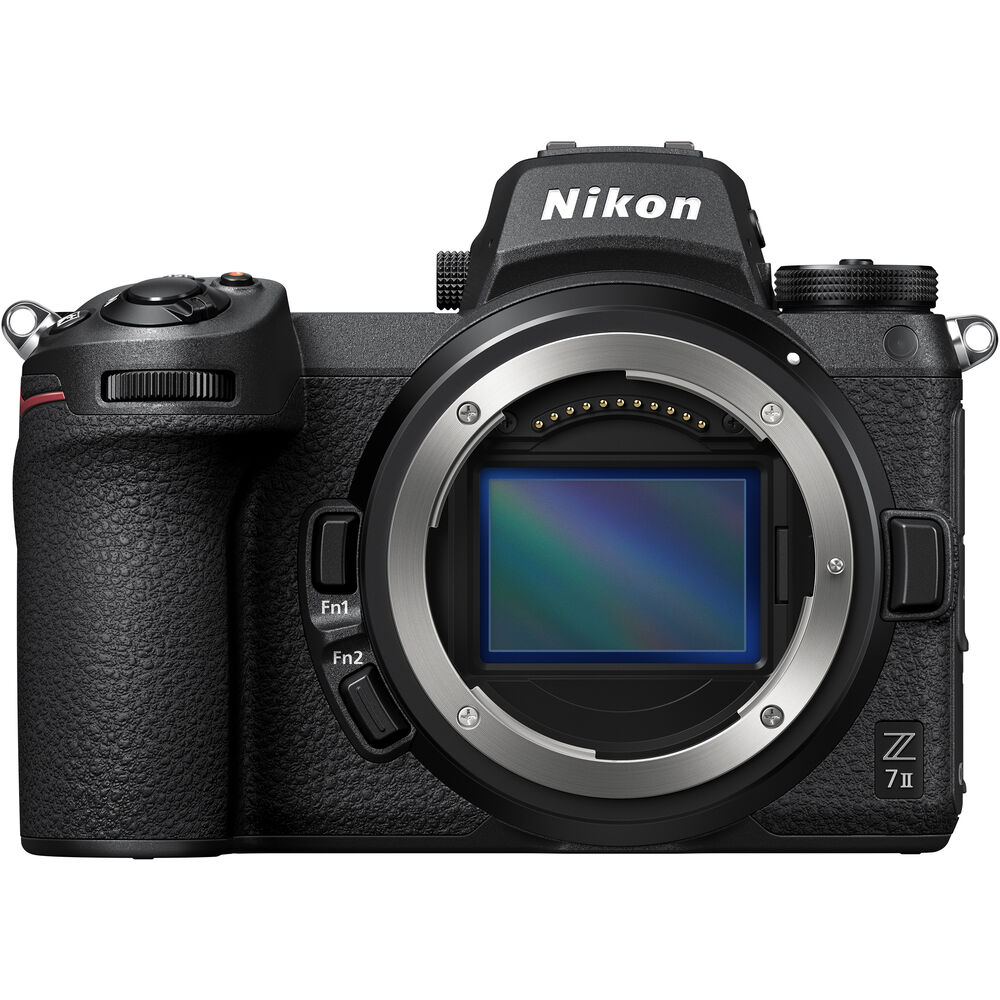
Resolution-first photographers get the most from the Z7 II at $2,000 to $2,100 new. The 45.7MP full-frame BSI-CMOS sensor produces files large enough to print at 40 by 60 inches with margin to spare. Specifically, shadow recovery performance in high-contrast natural light scenes ranks among the strongest in the full-frame mirrorless category. Moreover, the Z7 II’s slower sensor readout is not a practical disadvantage for landscape work where subjects are stationary.
On the used market, Excellent-condition Z7 II bodies on MPB run $1,250 to $1,700. As a result, 45.7MP full-frame resolution sits significantly below what both the Z8 and the Z9 cost. The Z7 II also includes dual card slots (CFexpress Type B and SD UHS-II), providing stills backup capability suited to critical fieldwork. Its CFexpress slot delivers superior buffer performance compared to the dual SD configuration in the Z5 II. See the dedicated guide to buying a used Nikon Z7 II, or read the full Nikon Z7 II review for dynamic range measurements and field results.
Nikon Z8: Best for Wildlife and Action
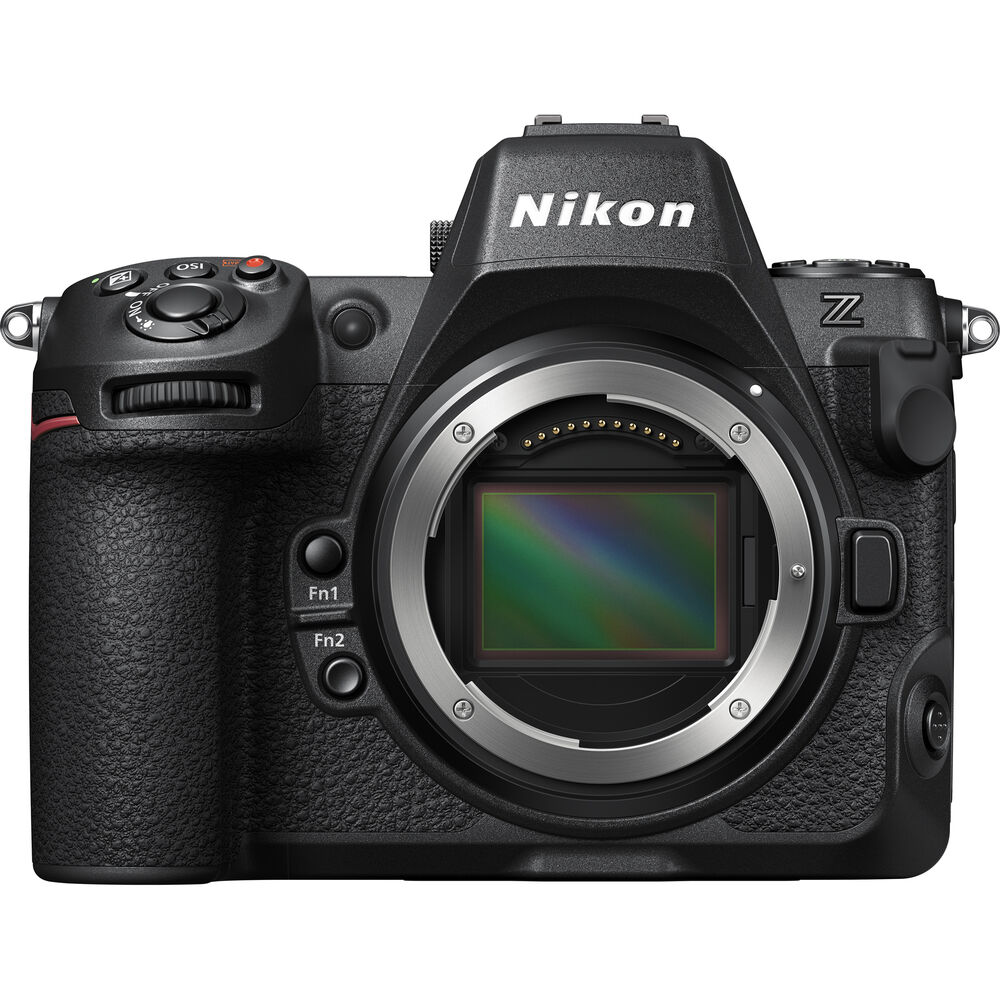
The Z8 at $3,999 occupies a unique position in the lineup. Specifically, it delivers essentially the same sensor and AF performance as the Z9 flagship in a body without the integrated vertical grip, at $1,500 less. Among the best Nikon cameras for wildlife work, the Z8 makes the strongest single argument. Its stacked 45.7MP sensor enables 20fps RAW burst with minimal rolling shutter. Moreover, AI subject detection covers birds, animals, aircraft, and vehicles with tracking reliability competitive with Sony’s best offerings at the same price tier.
For wildlife photographers, the combination of 45.7MP resolution and 20fps burst means full-resolution files at high frame rates. By contrast, some competing bodies require a resolution trade-off at their fastest speeds. Nikon’s pre-capture mode also buffers frames before the shutter release, reducing missed shots in unpredictable wildlife situations. Paired with the Nikon Z 100-400mm f/4.5-5.6, the Z8 covers most wildlife scenarios from songbirds to large mammals without a second body. On the used market, Excellent-condition Z8 bodies typically run $3,000 to $3,500 through MPB.
Nikon Z9: Best Professional Flagship
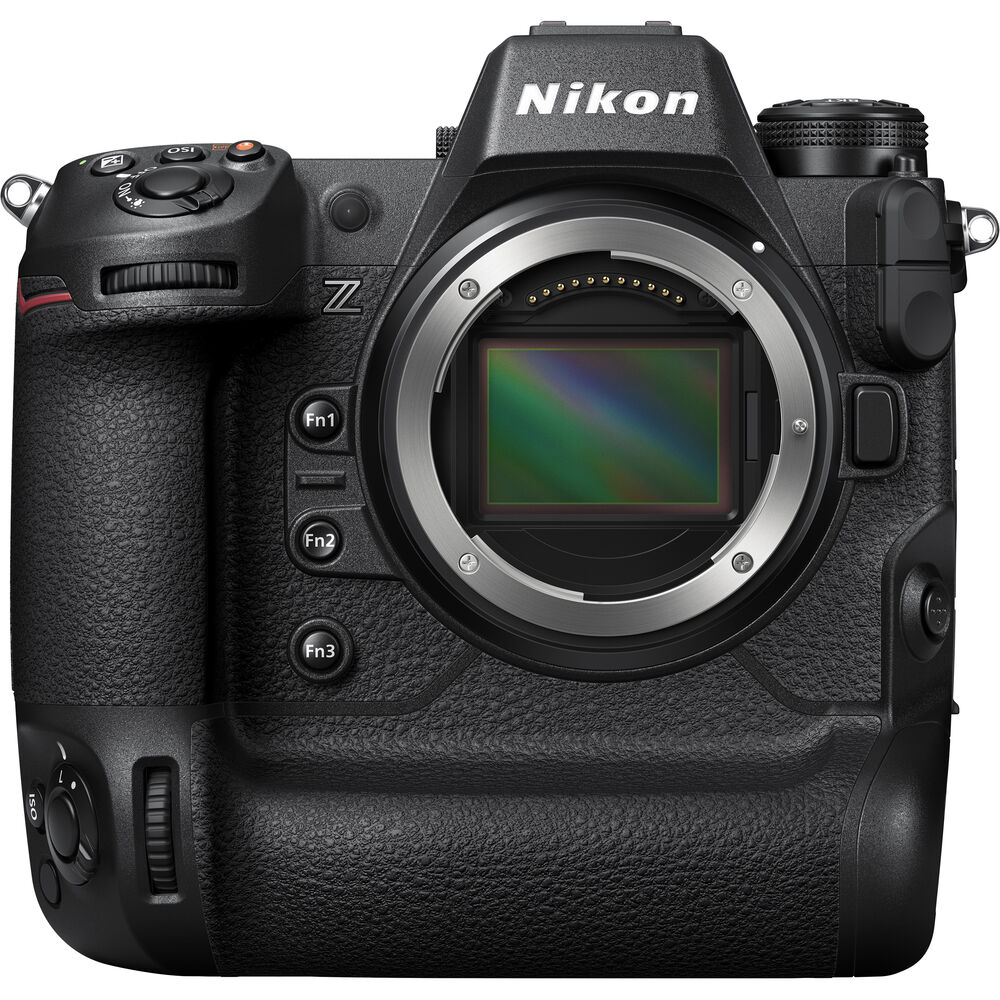
The Nikon Z9 at $5,499 is Nikon’s professional flagship. The spec sheet leaves nothing out. Its stacked 45.7MP sensor drives 120fps burst at 11MP for ultra-high-speed sequences. Full-resolution shooting reaches 20fps RAW with an unlimited buffer. An integrated vertical grip delivers approximately 700 shots per charge. In addition, 8K/60p internal video recording places it alongside the Sony A1 and Canon EOS R1 at the top of the professional mirrorless market.
However, the Z9 is a narrower buy than it looks. For most photographers comparing options across this guide, the Z8 delivers equivalent image quality at $1,500 less without the grip. The Z9 makes sense for working professionals who shoot multi-hour events, sports requiring continuous buffer without limit, or productions where the built-in grip is a practical ergonomic requirement. The same single-card-slot video limitation present across the Nikon lineup also applies here. Therefore, productions requiring dual-card backup during recording need an external recorder.
From the Z9’s professional tier, the conversation shifts to a question many experienced photographers still wrestle with: when does a DSLR still make sense in 2026?
Nikon D780: Best for DSLR Holdouts

The D780 at $1,597 new, or $1,000 to $1,200 used, is the right camera for photographers who require an optical viewfinder and want to keep shooting within the F-mount ecosystem. Among the best Nikon cameras for photographers with significant F-mount glass investments, it uses the same 24.5MP BSI-CMOS sensor as the Nikon Z6. Moreover, it delivers mirrorless-style contrast-detect AF in live view. Specifically, this is a meaningful improvement over older DSLR phase-detect systems.
The real question for DSLR holdouts in 2026 is what your F-mount glass is worth. If you own three or more F-mount lenses worth $2,000 or more in total, the FTZ II adapter lets every one of them operate on any Z body at full AF and image stabilization performance. In this scenario, the Z5 II at $1,699 is often the better forward path. For example, it opens the full Z-mount ecosystem with better stabilization and a future-proof lens mount, while the FTZ II adapter preserves your existing glass investment.
The D780 is the right choice when the optical viewfinder is a hard requirement. If you are undecided on the viewfinder question, the Z-mount path typically offers better long-term value. See the Nikon D780 review for a direct comparison against Z-mount bodies, or read which used Nikon camera is best for the full used-market breakdown.
Nikon Z5 II vs Z6 III: Which Should You Buy?
The two biggest practical differences between these bodies are sensor architecture and video output. The Z5 II uses a standard BSI sensor, while the Z6 III uses a partially-stacked sensor with faster readout. As a result, the architecture difference translates to less rolling shutter during fast burst shooting and the Z6 III’s 6K/60p N-RAW video capability, which the Z5 II does not offer. If your shooting involves high-speed action or professional video, the Z6 III’s $800 premium over the Z5 II is directly justified by those specific capabilities.
For photographers whose work is primarily stills across portraits, travel, street, and landscape, the Z5 II delivers better value. Both bodies share 24.5MP resolution and EXPEED 7 subject tracking. Specifically, the Z5 II’s 7.5-stop IBIS is half a stop below the Z6 III’s 8-stop rating, a difference imperceptible in real-world handheld work. In the Z5 II’s favor, the fully articulating screen handles more shooting positions than the Z6 III’s tilting display. Both bodies include dual card slots, though the Z6 III’s CFexpress slot delivers faster buffer performance for demanding burst workloads.
The short version: hybrid shooters take the Z6 III. If full-frame stills at the lowest viable price is the goal, take the Z5 II. Both pair well with the Nikon Z 24-70mm f/4 S as a standard zoom and the Z 50mm f/1.8 S for low-light and portrait work.
Pros and Cons of the Nikon Z System
Pros
- EXPEED 7 AI subject tracking on every body from the Z50 II ($909) upward
- IBIS up to 8 stops on the Zf and Z6 III, among the best ratings in full-frame mirrorless
- S-Line Z lenses deliver optical quality competitive with any system at equivalent focal lengths
- Color science, especially skin tones, delivers an in-camera look Lightroom presets do not fully replicate
- Z8 and Z9 ergonomics rank among the most intuitive professional body designs available
- Z6 III ranked best overall mirrorless by RTINGS in 2026, ahead of Sony and Canon equivalents
- Dual card slots across most Z bodies support professional stills backup workflows
- FTZ II adapter preserves full AF and stabilization with F-mount lenses on every Z body
Cons
- Third-party Z-mount lens selection lags Sony E-mount; Sigma has no full-frame Z lenses currently
- Nikon’s legal dispute with Viltrox limits affordable native Z-mount third-party options
- Every Z body, including the Z9, records video to a single card slot only
- Native APS-C DX Z-mount lens selection is limited, undermining the Z50 II’s budget system value
- Menu system has a steeper learning curve than Canon’s touchscreen-driven interface
- Fewer APS-C body options than Sony or Fujifilm for photographers building budget systems
Final Verdict: Which Nikon Should You Buy?
After evaluating the full range of best Nikon cameras in 2026, one conclusion is clear. Specifically, the Z system has closed every meaningful gap with Sony and Canon, and in several areas, surpassed them. Across IBIS performance, color science, and hybrid value, the Z system now leads its respective categories. The Z6 III is the strongest single recommendation for photographers who want one body covering stills, sports, and professional video. It earned RTINGS’ top overall mirrorless ranking, and the partially-stacked sensor delivers a tangible advantage in burst shooting and video output.
Pick by Use Case
The decision path by use case is straightforward. Stills-first photographers who want full-frame quality at the lowest viable price should choose the Z5 II at $1,699. Specifically, its 7.5-stop IBIS, 15fps RAW burst, and EXPEED 7 subject tracking cover most scenarios without paying the hybrid premium. For high-resolution landscape and architecture work, the Z7 II’s used pricing of $1,250 to $1,700 on MPB is the best value path to 45.7MP full-frame files. Wildlife and action photographers needing speed alongside resolution should look at the Z8 at $3,999, which delivers Z9-class performance in a more portable grip-free body.
Beginners should start with the Z50 II at $909, knowing the native DX lens selection is limited. As a result, a future upgrade to a full-frame Z body opens significantly more options. Photographers with F-mount glass should evaluate the Z5 II with the FTZ II adapter before committing to the D780. The Z-mount path typically offers better long-term value than continuing DSLR investment.
The Real Trade-Off Before Switching
Nikon’s third-party lens limitation remains the most significant trade-off for photographers switching from Sony or Canon. If lens ecosystem diversity matters for your work, Sony E-mount currently offers more options at more price points. Still, the best Nikon mirrorless camera for your use case, whether the Z5 II, Z6 III, or Z8, leads its respective category on image quality, IBIS, and value. Among the best Nikon cameras in 2026, the Z6 III, Z5 II, and Z8 represent genuine leadership, not consolation picks. Choosing Nikon today is a decision supported by the evidence.
Ready to Buy?
Check Today’s Price on the Nikon Z6 III
Shop graded used Nikon bodies on MPB at 20 to 40 percent below retail, backed by a 6-month warranty and free returns.
Frequently Asked Questions
Should I buy a Nikon DSLR or mirrorless in 2026?
A Nikon Z mirrorless body is the better long-term investment for most photographers in 2026. Specifically, the Z lineup delivers superior video performance, better subject-tracking autofocus, and a forward-looking lens mount Nikon continues to develop. However, the D780 remains a reasonable choice if you have significant F-mount glass and require an optical viewfinder. The FTZ II adapter also allows F-mount lenses to work on Z bodies. Nikon has not released a new DSLR since the D780, so any DSLR purchase is an investment in a platform with a limited update path.
What is the best Nikon camera for beginners?
The Nikon Z50 II at $909 is the best Nikon camera for beginners in 2026. Its EXPEED 7 processor is the same chip in the Z8 and Z9. As a result, beginners get professional-grade AF they will not outgrow. The fully articulating screen supports vlogging and content work. Native APS-C DX Z-mount lenses are limited in number, so planning your lens kit around full-frame Z lenses from the start avoids a lens ecosystem dead-end later. For a broader beginner comparison across brands, see the best cameras for beginners guide.
Is the Nikon Z6 III worth it?
Yes, at $2,499 the Z6 III is worth it for photographers who need a capable hybrid body for both stills and video. Its partially-stacked sensor enables 6K/60p N-RAW recording, 20fps RAW burst, and 8-stop IBIS in one package. RTINGS ranked the Z6 III the best mirrorless camera overall in 2026. The primary trade-off to evaluate before buying is the single video card slot, which prevents dual-card backup during recording. If your work is mostly stills with occasional video, the Z6 III will not feel like a compromise in either direction.
What is the best Nikon camera for video?
The Z6 III is the best Nikon camera for video in 2026, with 6K/60p N-RAW, 4K/120p, 10-bit N-Log, and 8-stop IBIS at $2,499. For professionals needing the highest output quality, the Nikon Z9 adds 8K/60p internal recording at $5,499. The Z8 at $3,999 sits between the two, offering 8K internal recording in a more portable form factor. All three share the single-card-slot video limitation, so verify your production workflow before buying. For a full breakdown of every Z body’s video specs, read the dedicated best Nikon camera for video guide.
Do F-mount lenses work on Nikon Z cameras?
Yes, every F-mount lens works on every Nikon Z body using the FTZ II adapter, retaining full autofocus and image stabilization performance. F-mount AF-S and AF-P lenses track subjects at full speed on Z bodies via the adapter. Therefore, it is a genuine system bridge rather than a workaround with performance penalties. The main consideration is physical: the FTZ II adds length and weight to the lens-body combination. For photographers with an existing F-mount investment, the adapter effectively removes the lens ecosystem switching cost when moving to the Z mount.
Which Nikon camera is best for wildlife photography?
The Nikon Z8 is the best Nikon camera for wildlife photography in 2026. Its stacked 45.7MP sensor enables 20fps RAW burst with minimal rolling shutter. Moreover, AI subject detection covers birds, animals, aircraft, and vehicles with reliable tracking. At $3,999, the Z8 delivers Z9-class performance without the integrated grip, making it more portable for field work. Excellent-condition Z8 bodies run $3,000 to $3,500 used through MPB. Pair it with the Nikon Z 100-400mm f/4.5-5.6 for a complete wildlife system.

