


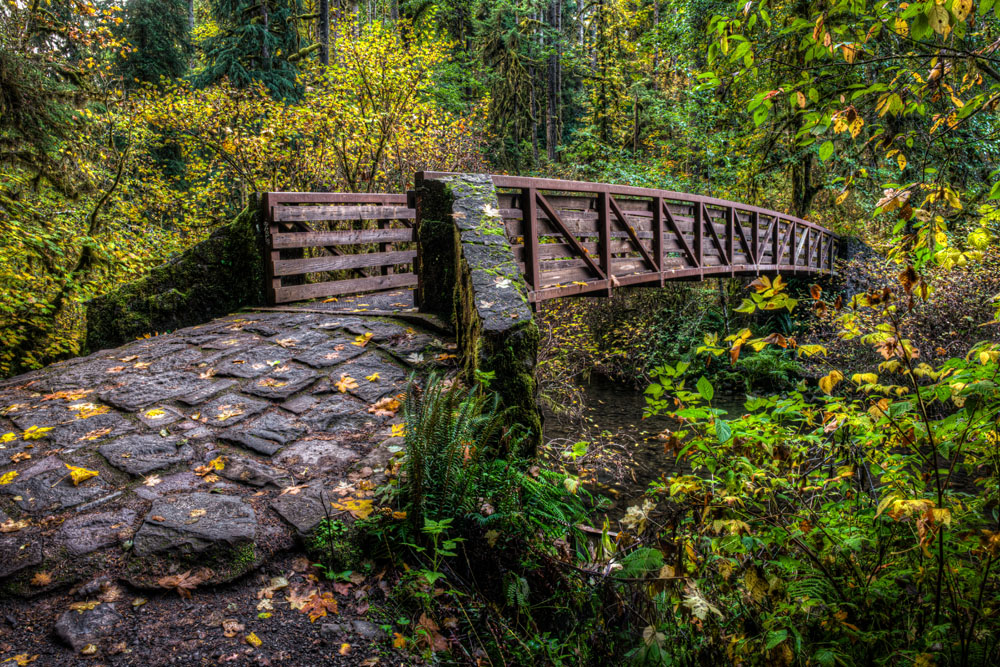
Oregon becomes one of the country’s best autumn studios every October, and learning how to photograph fall colors here rewards you with waterfalls, mossy canyons, and maple-lit forests in a single frame. The Columbia River Gorge and Silver Falls State Park draw photographers from around the world for good reason. Vine maples flare red along the cliffs, bigleaf maples glow gold above the trails, and rushing water threads through all of it. Few places pack this much variety into such a short drive.
This guide walks through the timing, light, and camera technique behind strong autumn images, with every tip anchored to a real Oregon location. You’ll also see how award-winning photographer Scott Setterberg, founder of ColorTexturePhotoTours, approaches these scenes after 35 years in the field. Whether you plan a solo road trip or a guided workshop, the goal stays the same. Come home with photos worth printing.
Quick Facts:
- Topic: How to photograph fall colors in Oregon
- Best season: Autumn, with October as the prime month
- Peak window: Mid-to-late October in the Columbia River Gorge
- Key locations: Columbia River Gorge, Silver Falls State Park, Multnomah Falls
- Skill level: Beginner through advanced
- Gear needed: Tripod, polarizing filter, weather protection
- Best for: Landscape and waterfall photographers
8 min read
In This Guide
- How to Photograph Fall Colors in Oregon: Why Autumn Here Stands Apart
- Oregon Fall Color Timing and Key Locations
- Timing, Scouting, and Reading the Oregon Light
- Camera Settings and Gear: How to Photograph Fall Colors Sharply
- Composition Lessons from Oregon’s Waterfalls and Forests
- Shooting Oregon’s Fall Colors Solo vs. Joining a Guided Workshop
- The Realities of Fall Color Photography in Oregon
- Final Verdict
- Frequently Asked Questions
How to Photograph Fall Colors in Oregon: Why Autumn Here Stands Apart

If you want to learn how to photograph fall colors, Oregon hands you a rare mix of subjects in one trip. Most autumn destinations offer trees and little else. Here, waterfalls, old-growth rainforest, basalt cliffs, and maple-lined rivers share the same frame. This density is why fall foliage photography in the Pacific Northwest feels different from New England or the Rockies.
Scott Setterberg built ColorTexturePhotoTours around these landscapes. Born and raised in the Pacific Northwest, he has photographed the region for 35 years, and his work has appeared in Outdoor Photographer and Landscape Photography Magazine. Because he knows where the color peaks and when the light turns, he treats scouting as half the work. Strong autumn landscape photography starts long before you press the shutter.
Who is this guide for? Beginners gain the most from the timing and light sections below, while seasoned shooters will find the Oregon-specific scouting notes useful. Either way, you’ll leave with a plan instead of a wish list.
Oregon Fall Color Timing and Key Locations
Before you book anything, study where and when the color arrives. The table below maps the prime regions, their peak windows, and the signature subject waiting at each one.
| Location | Peak Window | Signature Subject |
|---|---|---|
| Columbia River Gorge | Mid-to-late October | Waterfalls framed by vine maple |
| Silver Falls State Park | Mid-to-late October | Old-growth forest and ten waterfalls |
| Mount Hood and Highway 35 | Late October | Larch and maple along scenic roads |
| Multnomah Falls | Mid-to-late October | 620-foot two-tier waterfall |
| Willamette Valley | Mid-October | Vineyards and arboretums |
Shoot Oregon With a Local Pro
Oregon Fall Colors Photo Workshop
Skip the guesswork and shoot peak color with Scott Setterberg. This small-group, all-inclusive workshop covers the Gorge and Silver Falls at the right hour.
Timing, Scouting, and Reading the Oregon Light
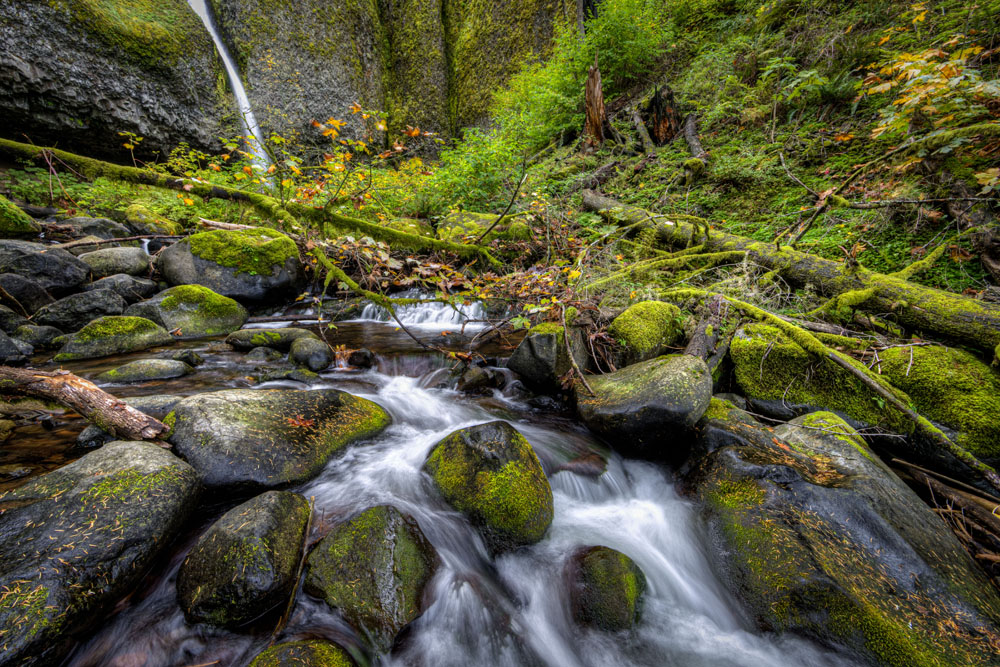
Timing makes or breaks a fall trip. According to Travel Oregon’s guide to Oregon’s fall foliage, color peaks across much of the state in mid-to-late October, and the Gorge runs slightly later thanks to its mild river climate. For peak fall color near the river, aim for the third and fourth weeks of October. Higher elevations around Mount Hood turn first, so a single trip often catches several stages at once.
Light matters as much as the calendar. Soft, overcast skies saturate reds and yellows while erasing harsh shadows, so a gray Oregon morning frequently beats blue sky. Fog along the water adds depth and mystery. For backlit maples, instead shoot toward the low early or late sun and let the leaves glow from behind.
Scout before you commit a sunrise to one spot. State color reports and foliage apps track Oregon fall colors week by week, and a short drive the evening before shows you where the richest pockets sit. Because conditions shift quickly, a flexible plan beats a rigid itinerary every time.
Camera Settings and Gear: How to Photograph Fall Colors Sharply
Sharp autumn images start with a stable base. Mount your camera on a tripod, drop to ISO 100, and keep foliage detail crisp by removing shake and noise. Next, choose an aperture between f/8 and f/11 for front-to-back sharpness across a forest scene. A two-second self-timer delay stops the tiny vibration from your finger on the shutter.
Few accessories matter more in autumn than a polarizing filter. It cuts glare off wet leaves and waterfall spray, deepens the sky, and lifts color saturation in one twist. For silky waterfalls, add a neutral density filter and slow your shutter to one or two seconds, which blurs the water while the leaves hold still. Meanwhile, watch your highlights, since white water blows out fast.
Bring weather protection. Oregon autumn means rain, so a rain cover and a microfiber cloth keep you working when the best moody light arrives. A mirrorless or DSLR body performs equally well here. For lenses, a 16-35mm handles sweeping scenes and a 24-70mm covers tighter forest and waterfall frames.
Composition Lessons from Oregon’s Waterfalls and Forests

Forest scenes overwhelm beginners because everything competes for attention. Simplify instead. Find one anchor, a single red vine maple or a moss-wrapped log, and build the frame around it. These techniques for shooting Oregon’s diverse landscapes apply across the Gorge, from intimate creek scenes to sweeping overlooks.
Use water as a leading line. A stream or a waterfall pulls the eye through the frame and into the color beyond. At Multnomah Falls, the 620-foot drop gives you a tall vertical anchor, so a portrait orientation often beats a horizontal one. Similarly, a curving trail or fallen log guides the viewer deeper into the scene.
Mix wide scenes with intimate details. One sweeping shot of Latourell Falls earns its place, yet a tight frame of three backlit leaves on wet basalt frequently carries more emotion. Shoot both, and your final set tells a fuller story of the day.
Save Your Spot
Small Groups Fill Fast
This small-group workshop sold out three years running and caps at six photographers. Reserve early to shoot the Gorge and Silver Falls with a pro.
Shooting Oregon’s Fall Colors Solo vs. Joining a Guided Workshop

A solo road trip gives you freedom and costs less. You set your own pace, chase color on your schedule, and answer to no one. The trade-off runs steep, though. You burn daylight hunting for locations, gamble on peak timing, and often miss the lesser-known spots locals keep quiet.
A guided workshop flips the equation. Scott Setterberg’s small-group Oregon Fall Colors workshop caps at six photographers and folds in lodging, transport, and park fees, so your energy goes into shooting rather than logistics. He leads you to Starvation Creek, Wahclella Falls, and Silver Falls at the right hour, then reviews your images and walks you through HDR and filter work. For anyone weighing the value, these reasons Oregon suits landscape photographers explain why the region rewards hands-on learning.
So which path fits you? Independent photographers comfortable with scouting will thrive on their own. However, anyone short on time, new to the region, or eager to improve quickly gains far more from a guided trip.
The Realities of Fall Color Photography in Oregon
Every destination carries trade-offs. Here is an honest look at what makes Oregon special in autumn and what tests your patience in the field.
Pros
- Waterfalls and fall color share one frame, a rare combination among US autumn destinations
- Color holds from mid-October into early November across different elevations
- Overcast Pacific Northwest skies saturate foliage without harsh shadows
- Huge variety within a one-hour drive, from the Gorge to Silver Falls to Mount Hood
- Multnomah Falls delivers a 620-foot anchor for dramatic vertical shots
- Old-growth rainforest adds moss and texture you rarely find in New England
Cons
- Frequent autumn rain demands weather protection and patience
- Multnomah Falls draws heavy crowds, so an early arrival is essential
- Peak timing shifts yearly with weather and resists long-range planning
- Wet basalt and leaf-covered trails turn slick and slow you down
- Short October daylight limits each golden-hour window to roughly 30 minutes
Final Verdict

Oregon ranks among the finest autumn destinations in the country for one clear reason. Nowhere else stacks 620-foot waterfalls, old-growth rainforest, and fiery maple against the same backdrop. For landscape and waterfall photographers, the Columbia River Gorge in late October delivers a portfolio in a single week.
The trade-offs are real, though. Rain soaks your gear, crowds gather at the famous falls, and peak color refuses to follow a calendar. Photographers who need guaranteed blue skies and empty trails should temper their expectations or look elsewhere.
On value, the payoff justifies the effort. A polarizer, a tripod, and a flexible schedule turn a wet October week into images you’ll print and hang. Patience and preparation matter more here than any single piece of equipment.
Our recommendation is simple. Plan your own trip if you love scouting and have the time to chase color across the Gorge. If you would rather learn faster and let an expert handle the logistics, a guided workshop with a seasoned local like Scott Setterberg shortens the path to strong autumn images.
Ready to Go Deeper?
Join the Oregon Fall Colors Workshop
All logistics handled, premium lodging included, and expert instruction at every stop. Shoot peak color with a Pacific Northwest native who knows these falls by heart.
Frequently Asked Questions
When is the best time to photograph fall colors in Oregon?
For most of the state, peak fall color arrives in mid-to-late October. The Columbia River Gorge runs slightly later, so the third and fourth weeks of October usually deliver the richest foliage. Because timing shifts yearly, check state color reports before you travel.
What camera settings work best for fall foliage photography?
Start at ISO 100 with an aperture of f/8 to f/11 for sharp, front-to-back detail. Use a tripod and a two-second timer to avoid shake. For waterfalls, slow your shutter to one or two seconds to blur the water against still leaves.
Do you need a polarizing filter to photograph fall colors?
A polarizer is not mandatory, yet it transforms autumn images. It removes glare from wet leaves and waterfall spray, then deepens saturation in a single twist. For Oregon’s rain-soaked scenes, few filters earn their place faster.
What is the best weather for photographing autumn leaves?
Overcast skies win more often than sunshine. Soft, even light saturates reds and yellows while removing harsh shadows. Fog and light rain add mood, so a gray Oregon morning frequently produces your strongest frames.
Where are the best places to photograph fall colors in Oregon?
The Columbia River Gorge and Silver Falls State Park top the list for autumn landscape photography. Multnomah, Latourell, and Wahclella Falls pair rushing water with vine maple, while Mount Hood’s Highway 35 adds larch and open scenic roads.
A quick heads-up: If you snag something through our affiliate links or check out our sponsored content, we might earn a commission at no extra cost to you. But fear not, we’re all about recommending stuff we’re truly stoked about!

