


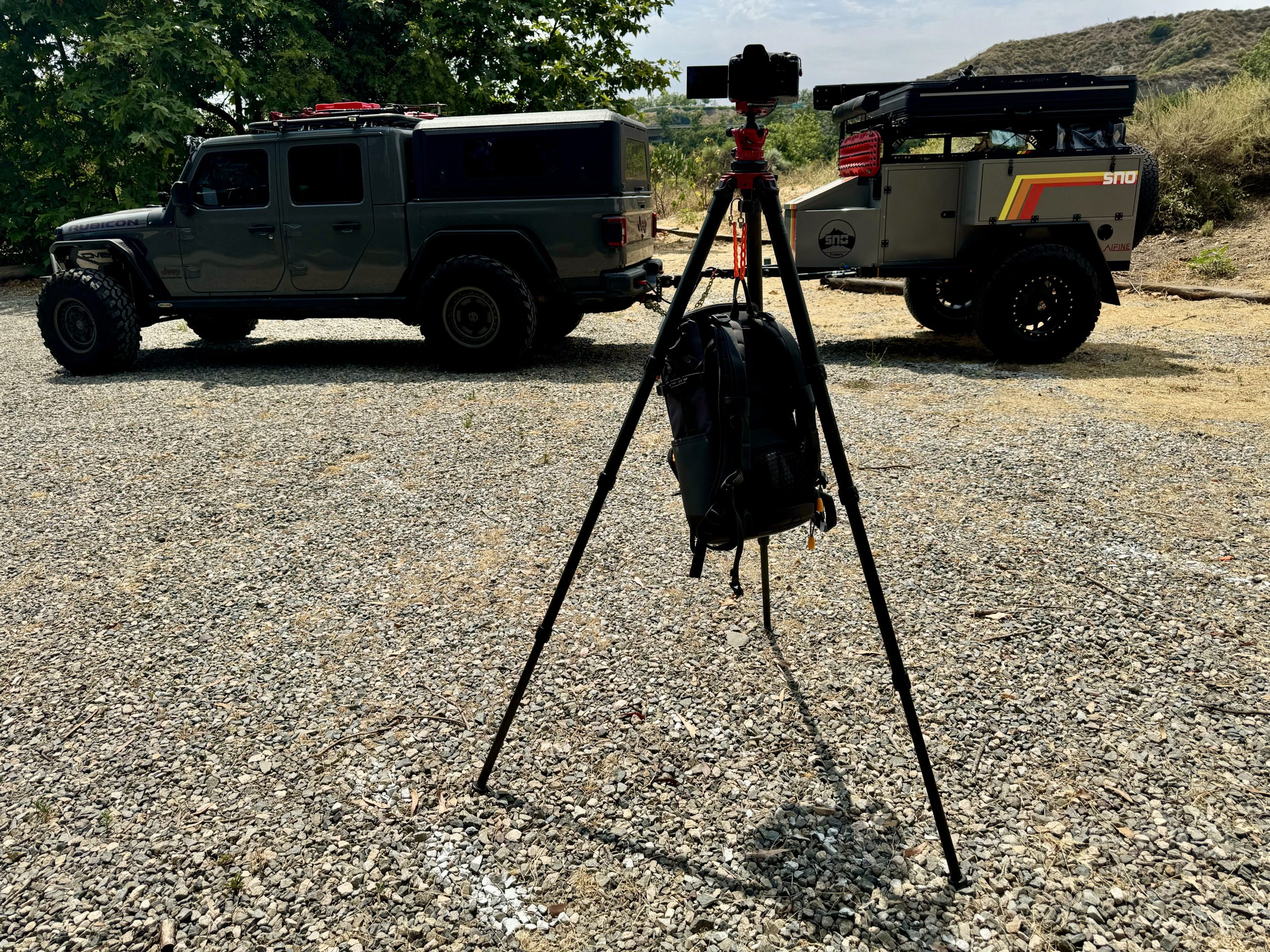
Quick Verdict: The best Canon cameras in 2026 span a price range from $479 to $6,299, and the right pick depends entirely on what you shoot. For most photographers, the Canon EOS R5 Mark II is the clear best overall choice: 45MP, 8K/60p video, and Eye Control AF in a body suited equally for stills and hybrid content. Budget-focused shooters get the most value from the Canon EOS R10 at around $799, which delivers 4K oversampled from 6K and excellent Animal Detection AF for well under $1,000. The biggest trade-off across the lineup is RF lens pricing, though Canon’s EF adapter keeps older glass usable on every R-series body.
Last updated: April 2026 | 14 min read
In This Guide
- Overview: Why Canon in 2026?
- Side-by-Side Comparison Table
- Best Canon Cameras in 2026: Our Top 8 Picks
- Best Used Canon Cameras to Buy in 2026
- Best Canon for Landscape Photography
- Best Canon for Video and Vlogging
- Canon DSLR vs Mirrorless in 2026: Should You Switch?
- Understanding Canon’s RF Lens Ecosystem
- Is the Canon EOS M Discontinued? What M50 Owners Should Do
- Pros and Cons of the Canon Ecosystem
- Final Verdict
- Frequently Asked Questions
Overview: Why Canon in 2026?
After 17 years shooting Nikon, 6 with Sony, and 3 with Panasonic, I sold everything in 2020 and moved 100% into Canon when the R5 launched. Six years later, I’m still shooting the original R5 alongside an R6 and an R6 Mark II, and I have no plans to leave. Recommending the best Canon cameras comes from a position of long-term ownership across every major brand, not from a press loan or a single shooting session. Long-term ownership matters when you’re deciding where to invest several thousand dollars in a camera system.
Canon’s EOS R lineup represents the most coherent mirrorless ecosystem available in 2026, and picking the best Canon mirrorless camera for your work is a different decision than it was even two years ago. The price ladder runs from $479 for the beginner-friendly R100 up to $6,299 for the professional R1, with genuinely useful options at every stop along the way. Moreover, the RF mount delivers optical quality no competitor currently matches at the fast-aperture end of the range, a point I return to in the lens section below. For photographers coming from Canon DSLRs, the EF-to-RF adapter preserves every piece of existing glass, which removes the major switching cost of migrating to Sony or Nikon.
The best Canon mirrorless camera options in 2026 share several traits setting the ecosystem apart from Sony’s E-mount and Nikon’s Z-mount. First, Canon’s Dual Pixel CMOS AF II system tracks subjects across the full frame with no dead zones, including eye, face, and animal detection working reliably in low light. Second, IBIS is built into every body from the R8 upward, with up to 8.5 stops of stabilization on the R5 Mark II when paired with an IS lens. Third, color science from Canon sensors requires minimal post-processing to achieve accurate skin tones, a consistent advantage for portrait and wedding photographers.
This guide covers eight cameras across every category from beginner compact to pro flagship. Each pick links to a full PhotographyTalk review with hands-on testing detail. Read the comparison table first to orient yourself on specs, then use the individual model sections to understand which one fits your shooting style and budget.
Shopping on a budget? Every body in this roundup is also available refurbished and graded at MPB, typically 20 to 40 percent below new retail, with a 6-month warranty on every camera.
Side-by-Side Comparison Table
Use this table to compare the eight best Canon cameras across the key decision metrics, then read the individual model sections for field-use context. Prices reflect current Amazon body pricing and are subject to change; used prices on MPB typically run 20 to 40 percent lower.
| Model | Sensor | MP | Max Video | AF System | Burst (e-shutter) | IBIS | Price (approx.) |
|---|---|---|---|---|---|---|---|
| R5 Mark II ⭐ Best Overall | Full-frame stacked BSI | 45MP | 8K/60p RAW | DPAF II + Eye Control | 30fps | Up to 8.5 stops | ~$4,299 |
| R6 Mark II | Full-frame BSI | 24.2MP | 4K/60p uncropped | DPAF II | 40fps | Up to 8 stops | ~$2,499 |
| R7 | APS-C CMOS | 32.5MP | 4K Fine/30p (7K oversampled); 4K/60p cropped | DPAF II | 30fps | Up to 7 stops | ~$1,499 |
| R8 | Full-frame BSI | 24.2MP | 4K/60p oversampled | DPAF II | 40fps | None | ~$1,499 |
| R10 | APS-C | 24.2MP | 4K/30p (6K oversample) | DPAF II | 23fps | None | ~$799 |
| R100 | APS-C | 24.1MP | 4K/24p (cropped) | DPAF | 6.5fps | None | ~$479 |
| R50 | APS-C | 24.2MP | 4K/30p (6K oversample) | DPAF II | 15fps | None | ~$679 |
| R1 | Full-frame stacked BSI | 24MP | 6K/60p RAW | DPAF Intelligent + Eye Control | 40fps | Up to 8.5 stops | ~$6,299 |
Ready to shop Canon?
Today’s Canon Prices, New and Used
See current prices new on Amazon, or shop graded used bodies on MPB at 20 to 40 percent below retail.
Best Canon Cameras in 2026: Our Top 8 Picks
My shortlist below covers the eight best Canon cameras across every realistic use case and budget. I shoot the R5 Mark II, R6, and R6 Mark II as my daily kit, and the rest of this list comes from a mix of hands-on testing and PhotographyTalk staff reviews. Every model links to a full review with real sample images.
1. Canon EOS R5 Mark II: Best Overall
First, the R5 Mark II is the best overall Canon camera in 2026, and it isn’t a close race. Its 45MP stacked BSI CMOS sensor delivers 8K/60p RAW video and 30fps continuous shooting with full subject tracking, all inside a body priced at approximately $4,299. In addition, the AF system adds Eye Control, a feature borrowed from the pro-grade R3 and R1, which lets you select a focus point by looking at it through the viewfinder. For photographers who shoot both stills and video professionally, nothing else in the RF lineup matches this combination of resolution, speed, and output flexibility.
I upgraded to the R5 Mark II after shooting the original R5 since 2020, and the stacked sensor’s improvement in rolling shutter and AF responsiveness is immediately apparent. In the studio, I pair it with the Canon RF 28-70mm f/2L, my all-time favorite lens for controlled portrait and product work. For landscape shoots, the 15-35mm f/2.8L IS USM handles the wide-angle work. The biggest trade-off is weight: at 746g body-only, it demands a serious grip for extended handheld sessions. Read the full Canon EOS R5 Mark II review for detailed autofocus testing and video analysis.
Check Price on Amazon
See Used on MPB
2. Canon EOS R6 Mark II: Best All-Rounder for Hybrid Shooters
The R6 Mark II is the best all-around choice for photographers who need professional results without the R5 II’s resolution requirements or price tag. At approximately $2,499, it combines a 24.2MP full-frame sensor with 40fps e-shutter burst, 4K/60p uncropped video with no recording limit, and up to 8 stops of in-body stabilization. While the lower resolution compared to the R5 Mark II is a real difference on paper, for most professional applications including event, wedding, and wildlife photography, 24.2MP prints clean at 20×30 inches and the files are significantly faster to process in bulk.
I added the R6 and later the R6 Mark II to supplement my R5, primarily for situations where I need a second body running simultaneously or lighter kit for travel. After two years of shooting the R6 II, the low-light performance at ISO 6400 remains the most practical reason to choose the R6 II over spending up to the R5 II. Specifically, the R6 II’s dual-card slot (CFexpress + SD) and weather sealing to the same IPX4 standard as the R5 II give it a professional build absent from the R8 and R10. See the full Canon R6 Mark II long-term review for results across two years of studio and field use.
Check Price on Amazon
See Used on MPB
3. Canon EOS R7: Best Canon Camera for Wildlife and Sports (APS-C)
The R7 is the best Canon camera for wildlife and sports photography under $2,000, and its 1.6x crop factor is an advantage rather than a compromise. For example, a 100-400mm lens effectively becomes a 160-640mm equivalent, extending reach without the cost of a longer prime. The 32.5MP APS-C sensor, 30fps e-shutter burst, and 7-stop IBIS put it in genuine competition with full-frame bodies at twice the price for action shooting. Video capability is equally strong, with 4K Fine/30p oversampled from the full 7K sensor readout, or 4K/60p with a modest crop.
I’ve shot the R7 alongside my R6 II on field days and the reach advantage is real: a 400mm RF lens reframed to 640mm equivalent without ever swapping glass. Noise above ISO 3200 is the trade-off you sign up for with APS-C, and the R7 shows more of it than the R6 II or R8 at the same sensitivity setting. Under daylight, the combination of reach, 30fps burst, and 7-stop IBIS is hard to beat at $1,499. Pair it with the RF 100-500mm f/4.5-7.1L IS USM for the complete wildlife kit. Read the Canon EOS R7 review to see full burst sequences and AF tracking results.
Check Price on Amazon
See Used on MPB
4. Canon EOS R8: Best Budget Full-Frame for Video
The R8 is a genuine full-frame sensor at $1,499 MSRP with 4K/60p video oversampled from 6K, no recording limit, and 40fps e-shutter burst. Most roundups bury it below the R6 II, which is the wrong call for anyone whose output leans video-heavy. For documentary creators and solo content shooters, the R8’s full-frame sensor with no crop in 4K is a significant advantage over APS-C alternatives at similar or higher prices.
No IBIS and a single SD card slot are the compromises. Mount the camera on a gimbal or tripod and the IBIS gap effectively disappears for video work, though handheld stills at slower shutter speeds remain harder than on an R6 II. At 461g body-only, the R8 is the lightest full-frame RF body currently available, which matters for travel and documentary creators on long shoot days. See the Canon EOS R8 review for 4K sample footage and rolling shutter measurements.
Check Price on Amazon
See Used on MPB
5. Canon EOS R10: Best Budget APS-C
At $799, the R10 earns its spot for one reason: autofocus this good at this price didn’t exist three years ago. Its 24.2MP APS-C sensor shoots 4K/30p oversampled from 6K, and the DPAF II system includes Animal Detection AF, a spec previously reserved for bodies above $2,000. The 23fps e-shutter burst makes it a legitimate option for youth sports and wildlife photographers on a tight budget. I’ve loaned this body to friends starting in mirrorless and the AF keeps up with my R6 II on static subjects.
Neither IBIS nor weather sealing appears at this price, so the R10 works best in controlled conditions or when paired with an IS lens. On the used market, the R10 runs around $780 in Excellent condition, a modest discount off new, and every MPB body ships with a 6-month warranty and free returns. Pair it with the RF-S 18-150mm kit zoom for walkaround use, or the RF 50mm f/1.8 STM for low-light portraits. Read the Canon EOS R10 review for used-market buying guidance and autofocus comparison charts.
Check Price on Amazon
See Used on MPB
6. Canon EOS R100: Best for Beginners
The R100 is the best Canon camera for beginners who want a mirrorless body under $500. At $479, it delivers 24.1MP APS-C resolution, 4K/24p cropped video, and the full RF mount, meaning every RF and RF-S lens works natively. For first-time photographers, the Guided UI mode walks through settings with plain-English explanations on-screen, removing the learning curve of manual exposure modes. When someone asks me which camera to buy for their first serious body under $500, this is my answer.
Compared to the R10, the R100 uses an older DPAF system without Animal Detection and tops out at 6.5fps burst, so action and wildlife photography fall outside its sweet spot. However, for portraits, travel, street, and everyday photography, the R100’s image quality from its 24.1MP sensor is genuinely strong at this price tier. See the Canon EOS R100 review for sample images and a comparison with the R10 and R50.
Check Price on Amazon
See Used on MPB
7. Canon EOS R50: Best Travel and Content Creator Pick
The R50 fills the gap between the R100 and the R10 as a pocketable, vlog-friendly body for travel and content creation. At approximately $679, it pairs a 24.2MP APS-C sensor with a fully articulating touchscreen, 4K/30p oversampled from 6K, and DPAF II with subject detection for people, animals, and vehicles. Unlike the R100, the R50 gets the newer AF processor and a dedicated movie mode dial, which matters for anyone shooting both stills and vertical video content in the same session.
The main trade-off is a single card slot and no weather sealing, both expected at this price. For travel photographers and creators who value a 375g body with full RF-mount compatibility, the R50 is easier to carry all day than any full-frame option in this roundup. Read the Canon beginner mirrorless comparison for R50 vs R100 vs R10 sample images side by side.
Check Price on Amazon
See Used on MPB
8. Canon EOS R1: Best Professional Flagship
The R1 is Canon’s mirrorless answer to the photojournalist and professional sports market, and its $6,299 price reflects the positioning. A 24MP stacked BSI full-frame sensor drives 40fps continuous shooting with Canon’s most advanced Dual Pixel Intelligent AF, including an updated Eye Control AF system refined from the R3. The R1 records 6K/60p RAW video internally and carries the most robust weather sealing in the RF lineup, equivalent to the EOS-1D X Mark III it replaces.
For most photographers reading this guide, the R5 Mark II delivers a more practical combination of resolution, speed, and price. The R1, by contrast, targets professional assignments where body durability, sustained buffer depth across multi-hour shoots, and the highest-available AF reliability justify the premium cost. Pair it with the RF 70-200mm f/2.8L IS USM for the standard photojournalism kit. Read the full Canon EOS R1 review for professional-grade field testing results.
Check Price on Amazon
See Used on MPB
Save 20 to 40 percent buying used.
Canon Bodies Graded, Cleaned, and Backed by a 6-Month Warranty
MPB grades every camera by condition: Like New, Excellent, Good, or Well Used. Each body ships with a 6-month warranty and free returns.
Best Used Canon Cameras to Buy in 2026
If the R1 or R5 Mark II felt out of reach above, the used market is where the best Canon cameras become genuinely affordable for working photographers. Buying used is the highest-value move in 2026, and a used Canon EOS R5 (original) in Excellent condition on MPB runs roughly $2,040 to $2,310, compared to the $3,899 launch price new. For landscape and portrait photographers who need 45MP resolution without the R5 Mark II’s $4,299 price tag, the original R5 represents considerable savings on a body with identical sensor output.
Similarly, the Canon EOS R6 (original) trades in the $1,160 to $1,560 range used, delivering 20.1MP full-frame performance, 4K/60p video, and 12fps mechanical burst at well under the R6 Mark II’s new price. For photographers coming from a Canon DSLR who want to experience full-frame mirrorless without committing to a new-body budget, the R6 used is an exceptional starting point. The Canon EOS R10 used also comes in around $780 to $810 in Excellent condition, making it the most cost-effective way to access DPAF II with Animal Detection AF.
MPB grades every camera across four conditions: Like New, Excellent, Good, and Well Used. Each body ships with a 6-month warranty and arrives cleaned and tested. For photographers new to buying used gear, this grading system removes the uncertainty of private-seller purchases. Used pricing for all three bodies above is representative of current MPB stock and will vary with availability.
See All Used Canon Bodies on MPB
Best Canon Cameras for Landscape Photography
The best Canon cameras for landscape photography share three requirements: high resolution for large-format prints, strong dynamic range to preserve shadow and highlight detail in high-contrast scenes, and reliable IBIS for handheld work at dusk or dawn when a tripod isn’t practical. On all three counts, the R5 Mark II leads the field in Canon’s current lineup. Its 45MP sensor resolves detail at a level few landscape photographers outgrow. Consequently, the 8.5-stop IBIS allows sharp exposures at shutter speeds where full-frame competitors without stabilization start to show camera shake.
For lens selection, the Canon RF 15-35mm f/2.8L IS USM is the landscape standard in the RF system. I’ve shot it extensively for wide-angle landscapes, and the combination of f/2.8 throughout the zoom range with L-series optical quality holds up beside anything Nikon or Sony offers at the same focal length.
Specifically, the 15mm end covers dramatic foreground-to-sky compositions, while the 35mm end frames tighter environmental scenes without switching glass.
Alternatively, if the R5 Mark II’s $4,299 price is out of reach, the R6 Mark II offers 24.2MP full-frame resolution at $2,499 with identical weather sealing and comparable IBIS performance. The R5 original, now available used from MPB and similar retailers in the $2,040 to $2,310 range, also remains among the best Canon cameras for landscape work with its 45MP sensor and 8-stop IBIS. For a complete comparison of landscape-focused bodies across every budget tier, see the dedicated guide to the best Canon cameras for landscape photography.
Best Canon Cameras for Video and Vlogging
Canon’s video performance across the EOS R lineup has improved substantially since the 2020 generation. Specifically, the best Canon camera for video in 2026 depends on your output requirements: the R8 at $1,499 delivers 4K/60p uncropped from a full-frame sensor with no recording limit, making it the strongest value for documentary and content creators who prioritize video output over stills. For hybrid shooters who need professional stills alongside broadcast-quality video, the R6 Mark II at $2,499 adds IBIS, dual card slots, and 40fps burst to the same 4K/60p specification.
At the professional tier, the R5 Mark II records 8K/60p RAW internally, a specification no competitor matches at its price. Meanwhile, vloggers and social creators who need a purpose-built body will land on the R50: its 375g frame, fully articulating screen, and dedicated movie dial make handheld vertical video easier than any other RF body. The R10 at $799 is the next step up for creators who also shoot action stills, and the R100 handles static talking-head content though its slower AF system limits run-and-gun vlogging.
For hands-free vloggers, the R50 and R8 pair well with small RF primes like the RF 50mm f/1.8 STM to keep the rig under 900g on a gimbal. A shotgun mic over the hot shoe and an external recorder remain optional, since all three bodies record clean internal audio via the 3.5mm input.
One consistent advantage across the Canon video lineup is Log recording: C-Log 3 on the R6 II and R5 II provides 12+ stops of dynamic range in video mode, simplifying color grading in post. Overall, the best Canon cameras for video in 2026 offer more recording flexibility than equivalent Sony or Nikon bodies at the same price points. For a deeper dive into Canon’s video capabilities across each body, read the comprehensive guide to the best Canon camera for video.
Canon DSLR vs Mirrorless in 2026: Should You Switch?
The 90D, 6D Mark II, and 5D Mark IV still produce excellent image quality in 2026. For photographers with a full EF lens kit, the question isn’t whether DSLRs take good photos. They do. The real question is whether the gap in autofocus performance, video capability, and future lens availability justifies the switching cost. In most cases, the answer is yes: the best Canon cameras for stills and video in 2026 are all RF mirrorless bodies, and the switching path via the EF adapter is smooth enough to remove most objections.
The AF advantage of RF mirrorless over DSLR is the most practical difference for everyday shooting. Canon’s DPAF II system in the R-series tracks eyes, faces, and animals across the full sensor, including in dark conditions where a DSLR’s phase-detect points would hunt or miss entirely. By contrast, DSLR phase-detect AF relies on a dedicated mirror-box sensor with limited coverage across the frame. Video is similarly one-sided: the best Canon DSLRs record 4K with a significant crop, while every RF body from the R100 upward delivers full-width 4K oversampled from a higher-resolution readout.
The EF-to-RF adapter preserves full AF and IS functionality for existing Canon EF lenses, removing the most common switching objection. Battery life does favor DSLRs: the 6D Mark II gets approximately 1,200 shots per charge vs. up to 450 shots via EVF for the R6 II with the supplied LP-E6NH battery. However, RF batteries now support USB-C charging, which eliminates the inconvenience of carrying a separate charger.
| Factor | Canon DSLR | Canon RF Mirrorless |
|---|---|---|
| Battery life | ~1,200 shots (6D II) | ~450 shots EVF; up to 760 LCD; USB-C charging |
| Lens selection | Large EF lens library; declining new releases | Growing RF library; EF fully compatible via adapter |
| AF performance | Phase-detect with limited frame coverage | Full-frame DPAF II; eye/face/animal tracking |
| Video | 4K with heavy crop on most bodies | 4K–8K uncropped; no recording limit (R6 II+) |
| Resale value | Declining as mirrorless adoption accelerates | Holding value better; newer product cycle |
| Weight (body only) | ~765g (5D IV) | 461g (R8) to 746g (R5 II) |
Understanding Canon’s RF Lens Ecosystem
Canon’s RF mount uses a shorter 20mm flange distance compared to the EF mount, enabling lens designs not optically achievable in the DSLR era. As a result, the RF lineup delivers primes and zooms with faster maximum apertures, better corner-to-corner sharpness, and more compact profiles at equivalent focal lengths. For photographers new to the RF system, the most important distinction is between RF and RF-S lenses: RF lenses cover the full-frame sensor on bodies like the R5 II, R6 II, R8, and R1, while RF-S lenses are designed for APS-C bodies including the R7, R10, and R100.
If you have existing EF glass, the Canon EF-EOS R adapter preserves full AF and image stabilization performance with every EF and EF-S lens, so your EF 70-200mm f/2.8L works natively on the R5 II or R6 II without any speed or tracking penalty. After five years of shooting the Canon RF 28-70mm f/2L as my primary studio lens, I consider it the best argument for the RF system: an f/2 zoom was not feasible in the EF era at this focal range.
For budget-focused buyers entering the RF system for the first time, a practical starter path is the RF-S 18-150mm kit lens at around $500 for APS-C bodies, or the RF 50mm f/1.8 STM at approximately $249 as a fast prime for full-frame. Both lenses deliver strong results and leave budget for body upgrades later. To see detailed RF glass performance testing, read the Canon RF 28-70mm f/2L USM review covering five years of real-world studio and event use.
Is the Canon EOS M Discontinued? What M50 Owners Should Do
Yes, Canon has officially discontinued the EOS M lineup. EF-M bodies including the M50, M50 Mark II, M6 Mark II, and M200 are no longer in production, and Canon has confirmed no new EF-M cameras are planned. The system reached end-of-life as Canon consolidated its mirrorless strategy entirely around the RF and RF-S mounts.
If you currently own an M50 and are considering an upgrade, the Canon EOS R10 at $799 is the most direct replacement. It shares the same APS-C sensor size, adds DPAF II with Animal Detection, improves burst rate from 10fps to 23fps, and uses the full RF mount for future lens compatibility. The R100 at $479 is a lower-cost entry point if the R10’s price is a stretch. For more detail on the M50’s standing in 2026 and used-market value, read the Canon EOS M50 review updated for this year. EOS M bodies are no longer sold new, so MPB is the most reliable source for used M50 and M50 Mark II stock.
Shop Used EOS M Cameras on MPB
Pros and Cons of the Canon Ecosystem
Before reaching a final recommendation, it’s worth zooming out from individual bodies to the ecosystem itself. After six years inside Canon RF, here is what works and what falls short relative to Sony E-mount and Nikon Z-mount.
Pros
- RF lens lineup includes optically unique designs unavailable on competing mounts (28-70mm f/2, 50mm f/1.2)
- IBIS on every body from the R8 upward, up to 8.5 stops combined on R5 II and R1
- DPAF II tracking covers the full sensor with eye, face, and animal detection from $799
- Consistent color science across the lineup reduces per-camera LUT or profile management
- Clear price ladder from $479 (R100) to $6,299 (R1) with distinct use-case differentiation at every tier
- EF-to-RF adapter preserves full AF and IS performance, protecting existing EF lens investments
- Weather sealing to IPX4 on R6 II, R5 II, R7, and R1 bodies for professional outdoor use
Cons
- RF lens pricing is premium at the L series: the 28-70mm f/2L costs $2,699, on par with Sony G Master equivalents, though Sony shooters benefit from a far larger third-party catalog at lower prices
- Fewer third-party RF native lenses compared to Sony E-mount, where Sigma, Tamron, and Tokina offer extensive catalogs at lower prices
- EOS M system discontinued, leaving M50 and M6 Mark II owners with no upgrade path within EF-M
- No IBIS on the R8 and R10, limiting handheld performance at slower shutter speeds
- R1 flagship pricing at $6,299 sits between Sony a1 ($6,499) and Nikon Z9 ($5,899) but offers lower resolution than either competitor
Final Verdict: Which Canon Camera Should You Buy?
After six years inside the Canon RF ecosystem, the single strongest argument for staying or switching to Canon isn’t any individual body spec. It is the lens lineup. The RF 28-70mm f/2L produces studio images at f/2 across the zoom range, a combination no competing mount offers. Equally important, the 15-35mm f/2.8L IS USM delivers landscape images with the consistency and resolution to print at 40 inches without compromise. Building a camera system around the glass is the long-term investment; the body upgrades every four to six years, while premium lenses stay in the kit for decades.
With the lens framework in mind, the body choice becomes simpler. Among the best Canon cameras available today, the R5 Mark II stands out as the top choice if budget isn’t the primary constraint. Its 45MP sensor, 8K/60p video, 30fps burst, and Eye Control AF make it the most complete camera Canon has produced for hybrid shooters. Six years of shooting Canon RF bodies across studio, landscape, and event work have reinforced my view: the R5 Mark II is the most capable stills-and-video combination available below $5,000 from any brand.
Budget matters, however, and the trade-offs are real. Photographers who don’t need 45MP resolution or 8K video will find the R6 Mark II at $2,499 a more practical choice, with equivalent weather sealing, identical DPAF II performance, and better sustained burst depth for event work. Budget-limited buyers should look seriously at the R10 around $780 new or graded used, or the R8 new at $1,499 for the most capable full-frame video body under $1,500. The best Canon cameras for entry-level budgets include the R100 at $479, still the most accessible point into the RF system with a lens roadmap worth building on.
Across all of the best Canon cameras in this roundup, the decision framework is practical: buy the R5 Mark II if you shoot professionally and need the resolution for large print sales or 8K video delivery. Choose the R6 Mark II if you shoot events, wildlife, or sports and want full-frame low-light with no recording limit on video. Start with the R10 if you’re new to mirrorless and want the best autofocus performance under $800. Above all, invest in RF glass as soon as budget allows: the lenses hold their value and the mount remains Canon’s long-term commitment for the next decade of camera development.
Ready to buy?
Compare Prices on Amazon, or See Graded Used Bodies on MPB
Amazon lists current new body pricing with fast shipping. MPB grades every used camera by condition and ships with a 6-month warranty and free returns.
Frequently Asked Questions
Which Canon camera should I buy in 2026?
For most photographers, the Canon EOS R6 Mark II at $2,499 is the best Canon mirrorless camera for balancing resolution, speed, and video output. Budget-focused buyers should consider the R10 at $799 for the strongest autofocus performance under $1,000. Professionals needing maximum resolution should go straight to the R5 Mark II at $4,299.
Is the Canon R5 Mark II worth it?
The R5 Mark II is worth the $4,299 price for photographers who shoot professionally and need 45MP resolution, 8K/60p video, or the Eye Control AF feature. For shooters who don’t print large or deliver 8K footage, the R6 Mark II provides nearly identical AF performance and 4K/60p video at $1,800 less.
Canon R6 Mark II vs R5 Mark II: which is better?
The R5 Mark II wins on resolution (45MP vs 24.2MP), video resolution (8K/60p vs 4K/60p), and the addition of Eye Control AF. On the other hand, the R6 Mark II wins on price ($2,499 vs $4,299), slightly higher burst rate (40fps vs 30fps), and lower file sizes for high-volume event workflows. For most photographers, the R6 Mark II is the more practical everyday choice.
Are Canon DSLRs still worth buying in 2026?
Canon DSLRs produce strong image quality in 2026, but the best Canon cameras for new buyers are now RF mirrorless bodies. DSLRs’ autofocus tracking, video capabilities, and long-term lens support lag behind the RF mirrorless lineup. The EF-to-RF adapter means your existing DSLR lenses work on RF bodies without any penalty, so switching to mirrorless doesn’t require replacing your glass investment.
What is the best Canon camera for beginners?
The Canon EOS R100 at $479 is the best Canon camera for beginners: it uses the full RF mount, shoots 24.1MP stills, records 4K/24p video, and includes a Guided UI mode for learning manual controls. After mastering the basics, the R10 at $799 is the logical step up when you’re ready for faster autofocus and higher burst rates for sports or wildlife.
Is the Canon EOS M discontinued?
Yes, Canon has discontinued the entire EOS M lineup including the M50, M50 Mark II, M6 Mark II, and M200. Among the best Canon cameras replacing EF-M bodies in 2026, the R10 and R100 offer the smoothest upgrade path. No new EF-M cameras are in production. M50 owners looking to upgrade should consider the Canon EOS R10, which uses the RF mount, adds Animal Detection AF, and delivers significantly faster burst performance at $799.

