


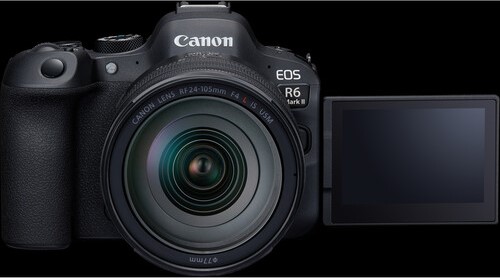
Quick Verdict: Canon V and C series cameras now share the same 32-megapixel full-frame sensor across the EOS C50, R6 Mark III, and the brand-new R6 V. Yet each body has a different set of artificially missing features. Active cooling sits in one, dual-aspect recording in another, an EVF in only one. We think the wall between these lines costs video shooters real money and costs Canon real market share in the segment it should own.
Last updated: May 2026 | 7 min read
In This Article
Overview: The Canon V and C Series Cameras Problem
The Canon V and C series cameras now overlap in a way that did not exist eighteen months ago. The new Canon EOS R6 V joins the EOS C50 and the EOS R6 Mark III, and all three bodies use the same newly developed 32-megapixel full-frame CMOS sensor. On paper, you have three different cameras tuned for three different audiences. In practice, you have three bodies built around the same imaging engine, each with a hole in its feature list where one of the other two has a strength.
Canon is a company we respect. The brand grew its mirrorless market share for a reason, and the EOS R System has produced some of the most useful hybrid cameras of the past five years. However, the segmentation strategy across this lineup has crossed into territory that hurts buyers more than it protects margin. We want to make the case clearly, body by body, before stepping back to ask what Canon should do next.
This is not an abstract complaint. Canon’s C50 lists at roughly $3,900 with an XLR handle. By contrast, the R6 Mark III sits below it in the hybrid range. Meanwhile, the R6 V opens at $2,500 body only. Buyers who walk into a store with $3,000 to $4,000 will spend hours trying to figure out which body matches their actual workflow. Therefore, the cost of confusion lands on customers first, retailers second, and Canon last.
Quick Facts on All Three Bodies
| Feature | EOS C50 | EOS R6 Mark III | EOS R6 V |
|---|---|---|---|
| Sensor | 32MP full-frame | 32MP full-frame | 32MP full-frame |
| Active cooling fan | Yes | No | Yes |
| IBIS | No | Yes | Yes (reduced) |
| EVF | No | Yes | No |
| Timecode + XLR handle | Yes | No | No |
| Anamorphic + shutter angle | Yes | No | No |
| Dual-aspect recording | Yes | No | No |
| Body-only price | ~$3,900 | Mid-range | $2,500 |
Where the C50 Wins and Loses
The EOS C50 is an EOS Cinema camera, and Canon built it around the assumptions of a working professional. As a result, you get timecode, full-size HDMI, dual-aspect-ratio recording, active cooling, and enough mounting points for any rig configuration. The menu system is the EOS Cinema layout, which working video shooters prefer to the R-series menu. So far, every choice makes sense.
Then Canon decided pros do not need an EVF or in-body image stabilization. We disagree on both counts. The lack of IBIS is the bigger miss. Even with the camera’s gyro data recorded for software stabilization in post, handheld footage from a sub-$4,000 cinema body should give shooters more options out of the box. Monopod work, run-and-gun documentary, and event coverage all suffer from the omission.
The C50 is so close to the right tool. Its sensor is excellent, the autofocus tracks reliably, and the codec support covers most production pipelines. However, the missing IBIS and EVF make the body harder to recommend to anyone working outside a controlled set. For a deeper look at Canon’s cinema and hybrid lineup, our best cameras of 2026 guide tracks how each body stacks up.
Where the R6 Mark III Lands
The EOS R6 Mark III arrived a couple of months after the C50, using the same 32-megapixel sensor and aiming squarely at hybrid shooters. Canon added the EVF and IBIS that the C50 lacks. As a hybrid body, it is one of the most polished cameras Canon has shipped in the R-series line.
However, the R6 III also drops several of the C50’s video tools. Timecode goes. The XLR handle compatibility goes. Anamorphic de-squeeze and shutter angle do not appear at all. Some of those choices likely come from thermal constraints, since the R6 III has no built-in cooling fan and runs in a smaller body. We accept the thermal argument for codec depth and recording duration.
However, we cannot accept it for shutter angle and anamorphic de-squeeze. Those are firmware features. They cost nothing in heat or battery. Canon owns the code that delivers both on the C50. Leaving them out of the R6 III is a deliberate marketing call, not an engineering one. Therefore, the lineup starts to look less like a feature ladder and more like a maze.
Where the R6 V Misses the Mark
The new EOS R6 V is the most frustrating of the three. Canon designed it for video-first content creators. So Canon added the C50’s active cooling fan back, dropped the EVF and mechanical shutter, kept IBIS at slightly reduced performance, and pitched it at the social media-savvy buyer. The packaging says “compact, video-first, full-frame.”
However, the body still misses features the C50 already ships, and those omissions hurt the exact audience the R6 V targets. Dual-aspect recording, the feature that lets you simultaneously capture horizontal and vertical clips to two card slots, is absent. The R6 V even has a vertical-friendly menu and a vertical tripod mount, which makes the missing dual-aspect feature look like a deliberate cut rather than an oversight. Beyond that, the R6 V also lacks anamorphic de-squeeze, shutter angle, and the C50’s video-friendly menu structure.
At $2,500 body only, the R6 V is a fairly expensive camera. By contrast, the C50 lists at $3,900 with an XLR handle, only $1,400 more. Content creators in that price range expect professional tools. Instead, they get a video-first body with a ceiling built into the firmware. For shooters comparing models head to head, our learn section walks through specs and use cases across Canon, Sony, and Nikon.
Why the Wall Hurts Video Shooters and Canon
The segmentation between Canon V and C series cameras hurts in three concrete ways. First, it forces buyers to pick which set of trade-offs they hate least. Second, it raises the chance a buyer regrets the purchase within six months, when the workflow demands a feature only one of the other bodies offers. Third, it concedes ground to competitors. Sony’s FX line and Panasonic’s S5 II line have all-but-eliminated this kind of firmware fragmentation in their video bodies.
Canon has the hardware. The same sensor, the same autofocus engine, and the same color science run through all three bodies. Therefore, the segmentation is software policy, not engineering necessity. Removing the wall would not collapse Canon’s pricing. It would push more buyers into the EOS ecosystem and keep them there. Specifically, the R6 V should ship with dual-aspect recording, the EOS Cinema menu option as a toggle, and shutter angle. None of those features adds cost.
The growing video market is the segment Canon should dominate. Photographers are buying fewer dedicated cameras year over year. Meanwhile, content creators are buying more, and they tend to upgrade more often. As a result, the buyer most likely to come back to Canon every 24 months is the same buyer the R6 V was built for. Likewise, the buyer most likely to leave for Sony is the buyer who notices the missing features first. For ongoing coverage of camera launches, follow our photography news feed.
Final Thoughts
Canon V and C series cameras have never been closer in capability, yet Canon keeps drawing arbitrary lines through their feature lists. As the most professional video tool of the three, the C50 lacks IBIS and an EVF that videographers want. By contrast, the R6 Mark III is the best hybrid, though it lacks the cinema-grade features it has the silicon to support. Meanwhile, the R6 V should be the bridge, the compact video-first body that pulls the best of both, yet Canon withheld the features needed to close the gap.
Our position is direct. The wall should come down. Firmware-level features like shutter angle, dual-aspect recording, anamorphic de-squeeze, and the EOS Cinema menu option belong on the R6 V at minimum. Hardware-level features like IBIS belong on the C50. The hardware tier should remain, since active cooling, mechanical shutters, and EVFs are real engineering choices with real costs.
Canon makes outstanding sensors and outstanding lenses. The company has the technology to make the strongest mirrorless video lineup on the market right now. However, the segmentation strategy is leaving that lineup half-built. We hope the next firmware cycle starts closing the gap. For the deeper history of Canon’s product lines, the Canon Camera Museum documents how the company has approached segmentation for decades.
Frequently Asked Questions
What sensor do the Canon V and C series cameras share?
The EOS C50, EOS R6 Mark III, and EOS R6 V all use the same newly developed 32-megapixel full-frame CMOS sensor. Canon has stated the C50 has slightly different imaging tuning, though the underlying hardware is the same across the three bodies.
Which Canon body in this lineup has IBIS?
The EOS R6 Mark III has full in-body image stabilization. By contrast, the R6 V offers IBIS at slightly reduced performance. Meanwhile, the C50 does not include IBIS at all, though it records gyro data for software stabilization in post.
What features does the EOS C50 have that the others lack?
The EOS C50 includes timecode, XLR handle compatibility, dual-aspect-ratio recording, active cooling, anamorphic de-squeeze, shutter angle, and the EOS Cinema menu system. None of those features appears on the R6 Mark III or R6 V at the same depth.
What does the R6 V get that the C50 does not?
The R6 V includes in-body image stabilization, a compact body, a vertical-oriented tripod mount, and a vertical-friendly menu layout. It also keeps the C50’s active cooling fan. However, the R6 V drops the EVF, mechanical shutter, and several pro video features.
Why does this segmentation matter to content creators?
Content creators on a $2,500 to $4,000 budget face a choice between three Canon bodies that each lack one or two features they need. Dual-aspect recording, in particular, is a feature the R6 V’s audience would use daily, yet Canon withheld it. As a result, the buyer either pays more for the C50 or loses the feature entirely.
Is a firmware update enough to fix this?
Several of the missing features are firmware-only, including shutter angle, dual-aspect recording, and anamorphic de-squeeze. Therefore, Canon would close most of the gap between the V and C series cameras with a firmware release. Whether the company will choose to is the open question.
Sources: Canon Camera Museum.

