


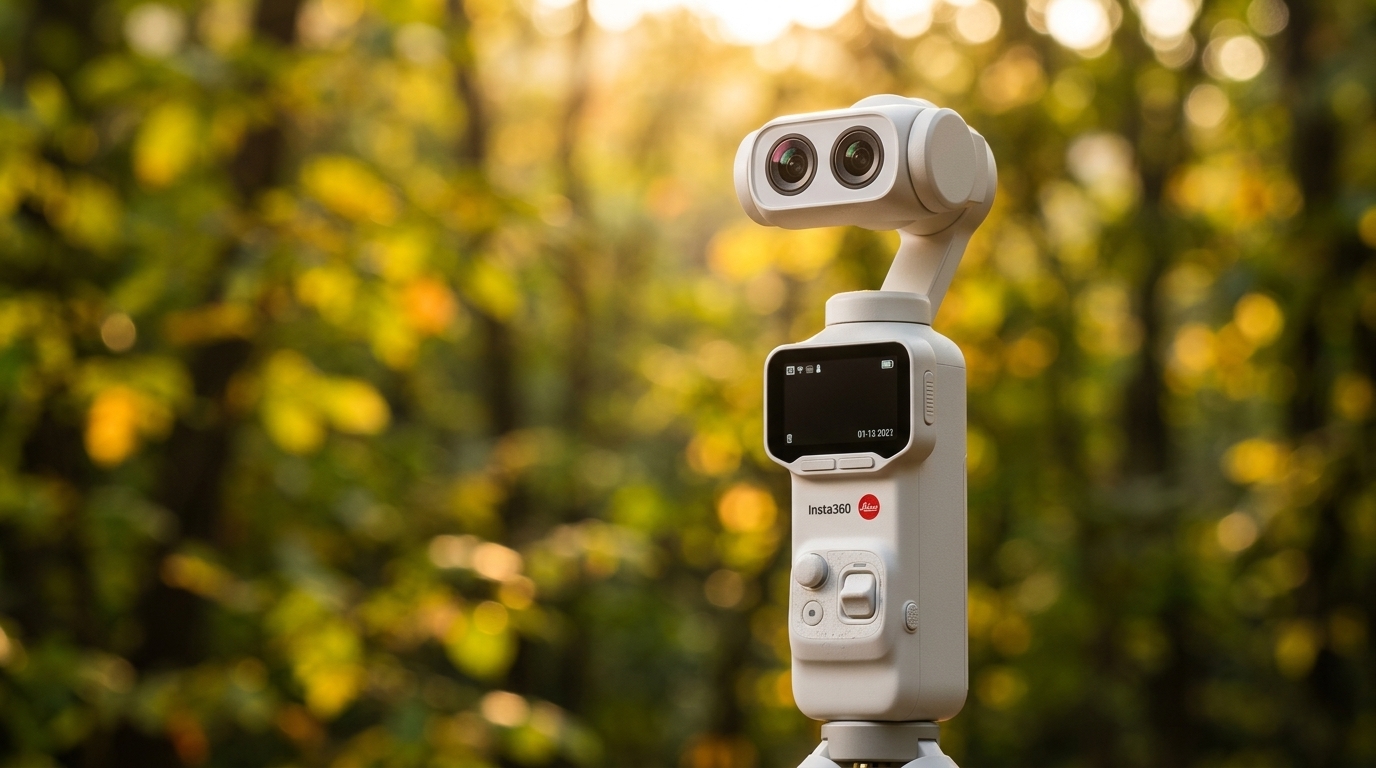
Quick Verdict: The Insta360 Luna vlogging camera is the first pocket gimbal that gives the DJI Osmo Pocket 4 a real fight. A 1-inch sensor, Leica-engineered 18 to 70mm zoom, 8K video, and a detachable 2-inch OLED touchscreen put the Luna in striking distance on hardware. The Twist Modular Design is the feature DJI does not have. With pricing landing around $780, this is the launch to watch heading into the summer travel season.
Last updated: May 2026 | 6 min read
In This Article
Overview: Why the Insta360 Luna Vlogging Camera Matters
The Insta360 Luna vlogging camera arrives at a moment when DJI has owned the pocket gimbal category for three product generations. As a result, content creators looking for compact 4K and 8K capture have defaulted to the DJI Osmo Pocket line by default. The Luna challenges that habit directly with a fresh modular design, Leica-engineered optics, and a 1-inch sensor that matches DJI on paper.
Insta360 officially teased the Luna at NAB 2026 and confirmed the launch through May. Tim Coleman tried a demo unit for TechRadar and called the Twist Modular Design the standout feature DJI wishes it had. The camera ships in two trims, with the higher-spec Luna Ultra leading the lineup at roughly $780.
For PhotographyTalk readers shopping a compact second body, the Luna is the first true alternative to the DJI Pocket 4. Travel, vlogs, and B-roll are the obvious use cases. Below, we walk through the specs, the modular design, and the head-to-head comparison with DJI’s incumbent.
Quick Facts on the Luna Ultra
| Detail | Value |
|---|---|
| Main sensor | 1-inch CMOS |
| Optics | Leica-engineered dual lens, 18 to 70mm |
| Zoom | ~4x optical |
| Video resolution | 8K + 4K up to 240fps |
| Color | 10-bit iLOG, 14 stops dynamic range |
| Screen | 2-inch rotating OLED, detachable |
| AI tracking | Deep Track 3.0 subject tracking |
| Battery | ~1,500 mAh, 150 to 180 min in 4K/30 |
| Price | ~$780 (Luna Ultra) |
| Launch window | Late Q2 2026 |
The Twist Modular Design Difference
The Twist Modular Design is the headline reason the Insta360 Luna vlogging camera commands attention. Specifically, the 2-inch OLED touchscreen detaches completely from the gimbal handle and continues to function as a low-latency wireless monitor. For complex camera angles, gimbal mounts, and over-the-shoulder coverage, the detachable screen solves a problem the DJI Pocket 4 simply cannot.
The implementation matters. Rather than forcing the creator to pair a phone via app, the Luna keeps a dedicated control surface in your other hand. As a result, you frame shots from a tripod, a gimbal extension, or a low-angle mount without crouching or losing latency. For solo travel vloggers, the workflow improvement is meaningful even before you look at the optical hardware.
Insta360 designed the Twist mechanism to lock securely during normal handheld use, so the modularity does not introduce wobble during ordinary shooting. The company has not released a detailed teardown of the magnetic and pin connections yet. However, demo units at NAB held up well to reviewer handling. For ongoing camera news, follow our photography news feed.
Leica Optics and Sensor Performance
The Luna Ultra pairs its 1-inch sensor with Leica-engineered optics covering an effective 18mm to 70mm focal range. The dual-lens system delivers roughly 4x optical zoom, which beats the DJI Pocket 4’s single fixed-focal lens for shooters who need framing flexibility. Specifically, an 18mm wide gives you architectural and travel framing, while the 70mm telephoto pulls in tighter subjects without digital crop loss.
Inside, the 1-inch sensor delivers 10-bit iLOG capture and 14 stops of dynamic range. As a result, color grading flexibility in post is closer to a mirrorless camera than a typical pocket gimbal. 8K video tops the specification sheet, while 4K slow-motion stretches to 240fps. For run-and-gun vloggers who color-grade their footage, the iLOG curve is the spec to watch.
The branding partnership with Leica matters for marketing more than engineering. However, it also signals Insta360’s commitment to optical quality in a category that has historically prioritized stabilization over glass. By contrast, DJI engineered the Pocket line’s optics in-house, with strong results but no co-branded lens partnership.
AI Tracking and Stabilization
Insta360 ships the Luna with Deep Track 3.0, the latest version of its subject tracking system. Specifically, the AI locks onto a chosen subject and keeps them in frame while the gimbal adjusts to compensate for motion. For solo vloggers walking-and-talking on camera, the tracking is the workflow feature that makes the Luna usable as a one-person production tool.
Mechanical stabilization on the Luna uses a three-axis gimbal head similar in concept to the DJI Pocket 4’s. As a result, handheld footage stays steady through walking, hiking, and dynamic motion. However, the gimbal-screen detach changes shooting posture, since you no longer need to keep the screen physically attached to the body during the shot.
Battery life lands at roughly 150 to 180 minutes in 4K/30 mode on the 1,500 mAh cell. By comparison, the DJI Pocket 4 averages a similar runtime in equivalent modes. For all-day shoots, both bodies require a power bank or hot-swappable battery setup. For broader comparisons, our best cameras of 2026 guide covers the compact category in depth.
Insta360 Luna vs DJI Pocket 4
The Insta360 Luna vlogging camera lands in territory the DJI Osmo Pocket 4 has owned since launch. As a result, direct comparison drives most buying decisions for content creators in the $500 to $800 range. Three differences stand out.
First, the Luna’s Twist Modular Design has no equivalent on the DJI side. Second, the Luna’s dual-lens Leica system covers a real zoom range, while the Pocket 4 ships a single focal length. Third, the Luna offers 8K capture, while the Pocket 4 tops out at 4K. By contrast, the Pocket 4 has the maturity advantage. Specifically, DJI’s mobile app, accessory ecosystem, and color science have been refined across three product generations.
Pricing favors the Pocket 4 for budget-conscious buyers, since the Luna Ultra at $780 sits at the higher end of the category. However, for shooters who would otherwise add a second body or external monitor to a Pocket 4 rig, the Luna’s all-in-one approach narrows the cost gap. For shoppers learning the segment, our learn section walks through gimbal-camera basics.
Final Thoughts
The Luna is the first DJI Pocket alternative that delivers on hardware rather than marketing. As a result, the compact gimbal category has a genuine two-horse race for the first time in three years. Travel vloggers, real estate creators, and run-and-gun documentary shooters all benefit from the increased competition, regardless of which body wins their wallet.
The Twist Modular Design is the standout reason to consider the Luna over the Pocket 4. Likewise, the 8K capture, Leica-engineered zoom, and 10-bit iLOG color give the Luna a quantitative edge on the spec sheet. However, the Pocket 4 retains the soft advantages of a mature platform, including DJI’s mobile app, accessory mounting standards, and reliable cloud workflow integration.
For PhotographyTalk readers shopping a compact second body before the summer travel season, the choice now comes down to workflow priorities. Specifically, the Twist screen and zoom range pull you toward the Luna. Meanwhile, app maturity and ecosystem familiarity pull you toward DJI. Either way, the launch finally gave the category a fight.
Frequently Asked Questions
When does the Insta360 Luna vlogging camera launch?
Insta360 has confirmed a late Q2 2026 launch, with most coverage pointing to a June rollout. The CEO previously stated the camera would arrive in the first half of 2026, and demo units have been circulating with reviewers since NAB.
How much does the Luna Ultra cost?
Pricing leaks place the Luna Ultra at roughly $780 USD. Earlier estimates ranged from $400 to $600, though the final number landed higher as full Leica-engineered optics and 8K capture were confirmed.
What is the Twist Modular Design?
The Twist Modular Design lets the 2-inch OLED touchscreen detach completely from the gimbal handle. As a result, the screen functions as a low-latency wireless remote monitor while the gimbal head shoots from a separate angle. The DJI Pocket 4 has no equivalent feature.
Does the Luna shoot 8K video?
Yes. The Luna Ultra captures 8K video at the top of its resolution stack, plus 4K at up to 240fps for slow motion. By contrast, the DJI Pocket 4 tops out at 4K resolution across its modes.
Is the Insta360 Luna better than the DJI Pocket 4?
On hardware, the Luna leads in zoom range, video resolution, and screen modularity. On platform maturity, the DJI Pocket 4 still wins for app reliability, accessory ecosystem, and three generations of color science refinement. The right body depends on whether you prioritize specs or workflow.
Does the Luna use Leica lenses?
Yes. The Luna Ultra ships with a Leica-engineered dual-lens system covering an effective 18mm to 70mm focal range. The partnership is a co-engineering arrangement rather than a Leica-only lens module.
Sources: Insta360 official site, Notebookcheck Luna Ultra specs report, NAB 2026 demo coverage.

