


Quick Facts:
- Topic: What a sealed body protects against, plus safe cleaning
- What it means: A weather sealed camera resists dust and light moisture, not full submersion
- Common rating: IP53 (OM System OM-1 Mark II body and M.Zuiko Pro lenses)
- Biggest myth: Weather sealed equals waterproof
- Safe cleaning tools: Blower, soft brush, damp microfiber, not a garden hose
- Skill level: Beginner friendly
- Best for: Wildlife, travel, landscape, and safari shooters
6 min read
In This Guide
The Viral Video: A Photographer Hosed Down His Camera
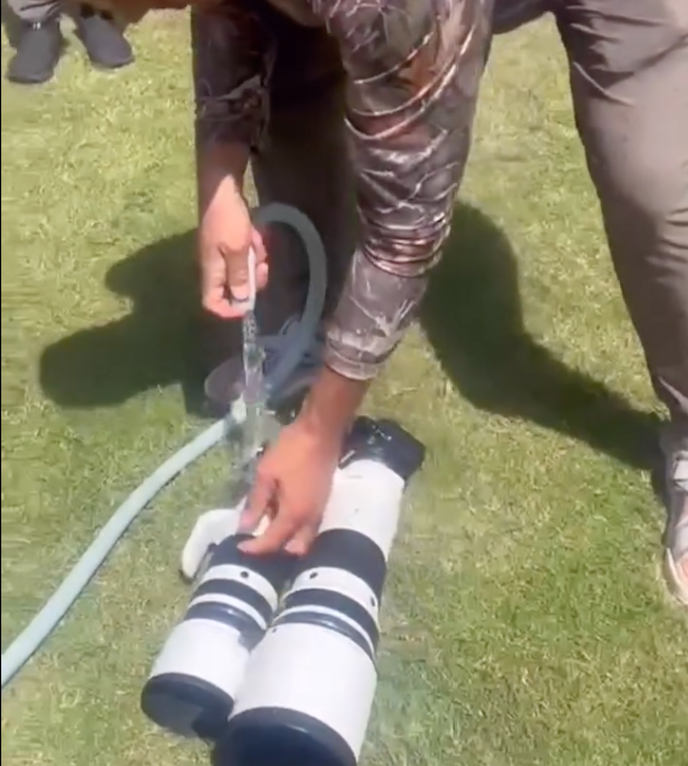
Most photographers guard a weather sealed camera like a newborn. Indian wildlife photographer Nikhil Devasar treats his like a muddy dog. After a dusty day on safari, he points a garden hose at the whole rig and rinses the dials, the lens barrel, and the grip. His video spread fast across Instagram, and the comments section melted down.
The jokes wrote themselves. “Don’t forget the sensors,” quipped photographer Michael Hickey, who recommended soap and a stiff brush for good measure. Photographer Zach Tarrant piled on with advice to microwave the gear afterward, so it dries without water spots.
Now, on a serious note, let us talk about weather and waterproofing. Devasar’s stunt is not reckless luck. Instead, it leans on a specific spec printed on his gear. Below, you get a plain explainer on what those seals truly cover, what the IP53 rating protects against, and how to clean your own kit without wrecking it.
What a Weather Sealed Camera Is and Is Not
A weather sealed camera uses gaskets, rubber rings, and tight seams to block dust and moisture. Manufacturers add these barriers around dials, doors, and the lens mount. As a result, light rain and blowing grit stay outside the body. However, the seals have limits, and water pressure changes everything.
Weather sealing is not a single standard across brands. For example, Canon, Nikon, Sony, and OM System each describe their protection differently. Some publish an IP code, while others use vague phrases like “dust and splash resistant.” Because the language varies, two sealed bodies rarely offer identical protection.
Think of this protection as insurance, not a force field. It buys you time in bad conditions. Still, it assumes the seals are intact, every door is shut, and no lens gap sits exposed. Once one of those points fails, water finds a path inside.
IP53 Decoded: What the Rating Numbers Mean
The OM System OM-1 Mark II in the video carries an IP53 rating, matched by its sealed M.Zuiko Pro lenses. This code looks cryptic, yet it follows a strict international standard. Specifically, the two digits after “IP” describe protection from solids and then liquids. Here is the breakdown.
| Specification | Details |
|---|---|
| IP code format | Two digits after “IP”: solids first, then liquids |
| First digit (5) | Dust protected; limited ingress, no harmful deposits |
| Second digit (3) | Protected from water sprayed up to 60 degrees from vertical |
| OM-1 Mark II body | IP53, freezeproof to 14 degrees Fahrenheit |
| M.Zuiko Pro lenses | IP53 when paired with the sealed body |
| Not covered | Submersion, high-pressure jets, prolonged soaking |
The first digit, 5, means the body is dust protected. In practice, fine grit is unable to enter in harmful amounts. The second digit, 3, covers water sprayed at up to 60 degrees from vertical. Therefore, a light shower or a gentle spray is fine, while a pressure jet or a full dunk is not.
An IP53 camera sits far below a true waterproof rating like IP68. For comparison, an IP68 device survives full submersion for a set depth and time. Devasar’s hose-down stays within IP53 limits because a low-pressure garden hose mimics heavy rain. Notably, he avoids the lens-off moment, when the open mount has zero protection.
Weather Sealed Camera vs Waterproof: Why the Gap Matters
People mix up three terms: weather sealed, weatherproof, and waterproof. A weatherproof camera resists rain and dust during normal use. By contrast, a waterproof camera survives underwater within a rated depth. Most interchangeable-lens bodies, including the OM-1 Mark II, sit in the weather sealed zone, never the waterproof one.
The gap matters for your wallet. Water damage rarely qualifies for warranty coverage. For instance, OM System states its sealing resists splashes, yet it warns against submersion. If you push a sealed body underwater, you own the repair bill. Even the toughest weatherproof camera has a breaking point.
Brand choice changes the odds. OM System and Pentax build reputations on aggressive sealing. For a second strong example, the compact OM System OM-5 carries the same IP53 rating in a smaller body. Meanwhile, entry-level cameras often skip sealing to cut cost. If you want the best weather sealed camera for rough conditions, weigh the published IP code over the marketing copy.
How to Clean Your Camera After a Dusty or Wet Shoot
You do not need a garden hose to get gear clean. Most post-shoot grime lifts off with simple tools and a careful order. Start dry, work from loose dust toward fixed grime, and finish with the sensor only when needed. A solid kit helps, so keep a best camera cleaning kit within reach.
Clean the Body and Dials First
First, knock off loose grit with a blower, never your breath. Next, sweep the seams and dials with a soft brush. Then wipe the body with a slightly damp microfiber cloth, wrung almost dry. Because moisture pools around buttons, dry each seam before you move on. For heavy mud, the same care you use to protect your camera in rain applies to cleanup too.
How to Clean a Camera Lens
Knowing how to clean a camera lens saves you from scratches. Begin with a blower to clear dust off the front element. Afterward, use a lens brush for stubborn particles. Finally, breathe lightly on the glass or add one drop of lens fluid, then wipe in a spiral from the center outward with a clean microfiber. Avoid paper towels, since wood fibers scratch coatings.
How to Clean a Camera Sensor
Learning how to clean a camera sensor takes the most care, so save it for last. First, run the in-camera sensor-cleaning function, which shakes off light dust. If spots still show in your photos, switch to a blower with the lens off and the body facing down. For baked-on marks, a wet sensor swab sized to your sensor works, though nervous shooters should book a pro. Never touch the sensor with a finger or a dry cloth.
Final Verdict
A weather sealed camera earns its keep in dust, drizzle, and cold. Devasar’s hose-down looks shocking, yet it stays inside the IP53 envelope his OM-1 Mark II was built for. For working wildlife shooters, this confidence keeps the focus on the animal, not the gear.
Still, his routine suits his exact kit and his low-pressure technique. If your body lacks an IP rating, skip the hose entirely. Instead, reach for a blower, a brush, and a damp cloth. A sealed body tolerates spray, although it resents pressure and submersion.
Value comes from matching your habits to the rating. For most photographers, gentle cleaning protects a multi-thousand-dollar investment better than bravado. Before you copy a viral clip, read your camera’s IP code and respect its ceiling.
If you want safari-grade sealing without the OM-1 Mark II price, look at the OM System OM-5 or a sealed Pentax body. Either way, pair the camera with weather-sealed lenses, because one unsealed lens breaks the whole chain.
Frequently Asked Questions
Are weather sealed cameras waterproof?
No. A weather sealed camera resists dust and light moisture, not submersion. Few cameras publish a formal IP code at all; where one appears, like IP53, it covers spray but not soaking. For underwater work, you need a waterproof housing or a dedicated waterproof camera.
What does an IP53 rating mean on a camera?
IP53 breaks into two parts. The 5 means dust protected, so fine grit will not harm the camera. A second digit of 3 means protection from water sprayed up to 60 degrees from vertical. Together, the code signals solid resistance to rain and dust, but not submersion.
Is it safe to use a camera in the rain?
Yes, if the camera is weather sealed and the lens is sealed too. For light rain, wipe the body dry afterward and check the seams. However, heavy downpours call for a rain cover. Drying the gear promptly stops moisture from creeping past the gaskets.
How do you clean a camera after a dusty shoot?
Work in order, from gentlest to most invasive. First, blow off loose dust, then brush the seams, and wipe the body with a damp microfiber cloth. Save the lens and sensor for last. Knowing how to clean a camera lens and how to clean a camera sensor correctly prevents scratches and streaks.
Which cameras have the best weather sealing?
OM System, Pentax, and the pro tiers from Canon, Nikon, and Sony lead on sealing. The OM-1 Mark II and OM-5 both carry IP53 ratings, which is rare in the camera world. For the best weather sealed camera in your budget, compare published IP codes rather than marketing claims.
Does weather sealing wear out over time?
Yes. Gaskets and rubber seals harden and shrink with age and heavy use. As a result, an older body resists less moisture than a new one. Therefore, treat a well-worn sealed body with extra caution in wet conditions.

