


Quick Facts:
- Topic: Colorado photography road trip
- Locations: 14 photo stops statewide
- Best season: Late September for aspens, summer for wildflowers
- Skill level: All levels
- Gear: Wide lens, telephoto, sturdy tripod, polarizer, ND filter
- Subjects: Peaks, alpine lakes, dunes, canyons, fall color
- Best for: Photographers planning a Colorado photo road trip
8 min read
In This Guide
- Best Places to Visit in Colorado With a Camera
- Your Colorado Photo Trip at a Glance
- The Rocky Mountains and Front Range
- The San Juan Mountains
- Southern Colorado National Parks
- Hidden Gems and Mountain Towns
- Best Time to Visit Colorado With a Camera
- Final Thoughts on the Best Places to Visit in Colorado
- Frequently Asked Questions
Best Places to Visit in Colorado With a Camera
Colorado stacks more vertical drama into one state than almost anywhere in the country. The best places to visit in Colorado with a camera run from glacier-fed lakes to red rock spires, dark canyons, and the tallest dunes in North America. Because the state holds 58 named peaks above 14,000 feet, the light here changes by the minute.
Below, you get 14 stops grouped by region. For each one, you also get the best light, the right season, and the gear worth packing. Treat this as a Colorado bucket list built for camera owners, not a generic sightseeing route. Since most stops sit at high elevation, afternoon storms build fast, so shoot early and watch the sky.
Landscape shooters will chase the peaks and aspens, while desert fans head south to the dunes and canyons. However, every region rewards an early alarm. If you enjoy destination work, our destination photography guide covers the same planning habits a Colorado road trip demands.
Your Colorado Photo Trip at a Glance
Each region below suits a different subject and a different time of day. Match your favorite scene to its peak season, then build a route around it. For instance, a fall aspen run looks nothing like a summer wildflower trip.
| Region | Main Subjects | Best Light | Peak Season |
|---|---|---|---|
| Rocky Mountains | Peaks, alpine lakes, aspens | Sunrise | Late Sep, summer |
| San Juan Mountains | Aspens, waterfalls, passes | Sunrise, golden hour | Late Sep |
| Southern Parks | Dunes, canyons, ruins | Sunrise, sunset | Spring, fall |
| Mountain Towns | Wildflowers, mills, lakes | Golden hour | July, fall |
The Rocky Mountains and Front Range
The Front Range holds Colorado’s signature peaks within reach of Denver. Here, alpine lakes mirror granite walls at first light. Because weather turns quickly, strong landscape photography techniques matter more than costly gear. In fact, Colorado landscape photography earns its name in these mountains.
Maroon Bells

The Maroon Bells rank among the most photographed peaks in America. Especially at sunrise, the twin summits glow maroon and reflect in Maroon Lake. During late September, golden aspens then frame the shoreline for the state’s classic shot. Reserve a shuttle or parking slot early, since access stays limited in peak season.
Rocky Mountain National Park
Rocky Mountain National Park packs alpine lakes, tundra, and elk into one drive. Bear Lake and Dream Lake both reward a sunrise hike with clean reflections. Meanwhile, Trail Ridge Road climbs above 12,000 feet for sweeping tundra views. Plan around the September elk rut, then check the Rocky Mountain National Park site for timed entry.
Garden of the Gods
Garden of the Gods scatters red sandstone fins beneath Pikes Peak. At sunrise, warm light hits the spires while the peak glows behind them. Since the park sits in Colorado Springs, access stays easy and free. Here, a wide lens stacks the red rock against the snowy summit.
Pikes Peak
Pikes Peak rises to 14,115 feet above Colorado Springs. Nearby, the Crystal Reservoir pullout mirrors the summit on calm mornings. Drive the highway or ride the cog railway to the top for distant ranges. Above all, dress for winter, since the summit stays cold year round.
The San Juan Mountains
The San Juans deliver Colorado’s most rugged peaks and richest fall color. Aspen groves blanket the slopes and turn gold in late September. For fresh angles, study some creative landscape photography ideas before you arrive.
Dallas Divide
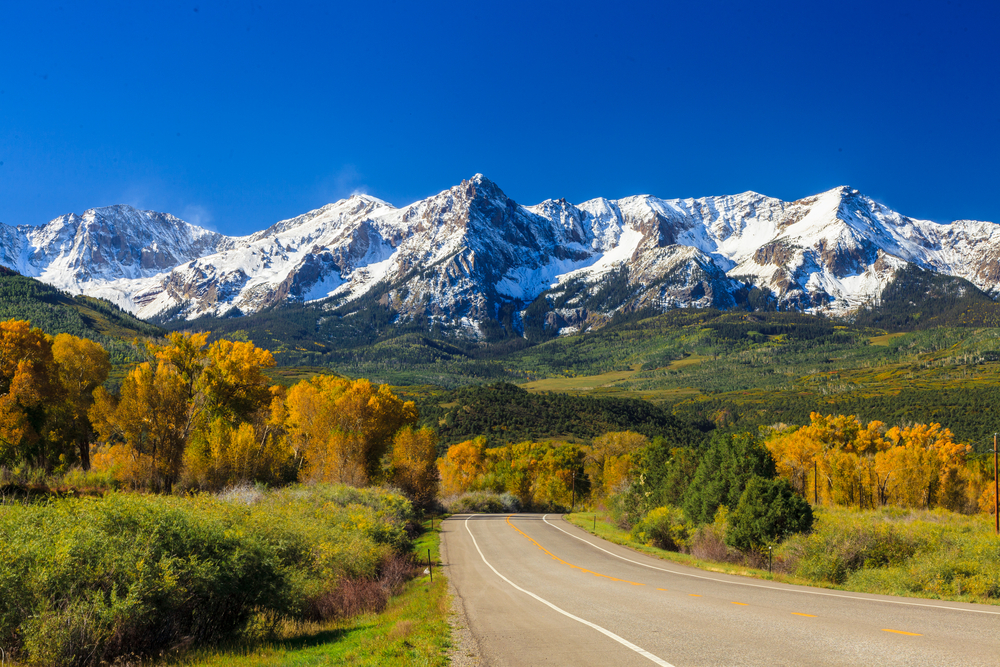
Dallas Divide near Ridgway frames Mount Sneffels above rolling aspen groves. At sunrise in late September, the gold leaves and snowy peak align perfectly. Specifically, telephoto compression stacks the ridges into layered light. Pull off Highway 62, then wait for first light on the summit.
Telluride and Bridal Veil Falls

Telluride sits in a box canyon ringed by sheer peaks. Bridal Veil Falls drops 365 feet, the tallest free-falling waterfall in Colorado. During golden hour, warm light fills the canyon walls and the historic power plant above the falls. A short telephoto also isolates the water against the cliff.
Million Dollar Highway
The Million Dollar Highway twists between Ouray and Silverton through the high San Juans. Meanwhile, pullouts reveal red peaks, mining ruins, and steep aspen slopes. During late September, the color peaks along the entire route. Drive slowly, since the road clings to cliffs without guardrails.
Blue Lakes and Mount Sneffels

The Blue Lakes basin holds turquoise alpine water beneath Mount Sneffels. In summer, wildflowers carpet the meadows along the trail. Because the hike climbs hard, start before dawn for soft light at the water. A polarizer also deepens the blue and cuts surface glare.
Southern Colorado National Parks
Southern Colorado trades peaks for dunes, deep canyons, and ancient ruins. Light here turns harsh by midday, so dawn and dusk rule. For night frames over the dunes, lean on solid blue hour photography habits.
Great Sand Dunes National Park

Great Sand Dunes holds the tallest dunes in North America against the Sangre de Cristo range. At sunrise, low light rakes the ridgelines and carves deep shadow. In late spring, Medano Creek pools at the base for foreground reflections. A telephoto compresses the dunes, while a wide lens sets the scale.
Black Canyon of the Gunnison
Black Canyon drops sheer walls more than 2,000 feet to the river below. The narrow gorge stays dark, which gives the park its name. Instead, shoot the rim at sunset, when warm light grazes the opposite wall. A wide lens struggles here, so a normal lens frames the depth better.
Mesa Verde National Park
Mesa Verde shelters ancestral Puebloan cliff dwellings under sandstone alcoves. For example, Cliff Palace catches warm side light in late afternoon. Because the ruins sit in shadow much of the day, time your visit for golden hour. A short telephoto isolates the stone rooms within the alcove.
Hidden Gems and Mountain Towns
Beyond the parks, Colorado hides wildflower meadows, historic mills, and travertine lakes. These stops reward photographers who venture off the main loop. Each one shines in a narrow seasonal window, so timing matters.
Crested Butte

Crested Butte earns its title as the wildflower capital of Colorado. In July, lupine and mule’s ears blanket the slopes around town. Soft morning light saturates the color without harsh shadows. A low angle turns a single bloom into a bold foreground.
Crystal Mill
The Crystal Mill perches on a rock ledge above the Crystal River. Notably, this weathered wooden mill ranks among Colorado’s most painted scenes. During late September, golden aspens frame the historic structure. A rough road guards access, so a high-clearance vehicle helps.
Hanging Lake
Hanging Lake glows turquoise from dissolved travertine in Glenwood Canyon. A steep trail climbs to the lake, where waterfalls spill over a mossy ledge. Midday light filters into the canyon and lifts the water color. Reserve a permit first, since the site limits daily visitors.
Best Time to Visit Colorado With a Camera
Late September delivers the state’s signature gold, the strongest window for color. By contrast, July brings alpine wildflowers and accessible high passes. Spring opens Medano Creek at the dunes, while winter coats the peaks in clean snow.
Plan each shoot around the sun rather than the clock. While peaks glow at sunrise, canyons and dunes often peak at sunset and blue hour. For deeper timing advice, study the split between golden hour and blue hour before you travel. Afternoon thunderstorms also build daily in summer, so finish high shoots by noon.
Final Thoughts on the Best Places to Visit in Colorado
Colorado rewards photographers who chase elevation and contrast. In one route, you move from alpine lakes to red rock and rolling dunes. As a result, no other state stacks this much range above 8,000 feet.
Start with the region matching your favorite subject, then expand outward. While peak chasers should anchor in the San Juans, park lovers belong in the south. For Colorado landscape photography, the mountains and the dunes deliver the widest payoff. Either way, these stops link into one ambitious Colorado road trip.
Pack a wide lens, a short telephoto, a polarizer, and a sturdy tripod, and you cover nearly every scene above. Then add an ND filter for waterfalls and creeks, and let the light set your schedule. Your Colorado bucket list grows the moment you map the first stop.
Frequently Asked Questions
What is the best time of year to photograph Colorado?
Late September suits aspen color, while July brings alpine wildflowers. Spring opens Medano Creek at the dunes, and winter coats the peaks in snow. Because each season favors a different region, plan around your top subject.
Where are the best landscape photography spots in Colorado?
The Maroon Bells, Great Sand Dunes, and the San Juan Mountains lead for drama. Each one offers iconic views within a short walk or hike. Notably, sunrise delivers the strongest light at all three.
What gear do you need for a Colorado photo road trip?
A wide lens, a short telephoto, a polarizer, and a sturdy tripod cover most scenes. In addition, an ND filter helps with silky waterfalls and creeks. A warm layer also matters, since high elevations stay cold at dawn.
Do you need a permit to photograph in Colorado parks?
Casual handheld photography needs no permit in most Colorado parks. However, commercial shoots with crews or props often require a permit and a fee. Some sites, such as Hanging Lake, also need a timed reservation to enter.
How many days do you need to photograph Colorado?
A focused region, such as the San Juans or the Front Range, fills three to five days well. By contrast, a full statewide loop needs two weeks or more. Shorter trips work best when you pick one region and go deep.

