


Quick Facts:
- Topic: The best compact cameras of 2026
- Why it matters: 9 of Japan’s 10 top-traded new cameras are compacts (Minna Camera survey)
- Top premium pick: Fujifilm X100VI
- Best travel zoom: Panasonic LUMIX ZS99
- Best budget pick: Kodak PIXPRO FZ55
- Price range: $99 to $2,898
- Best for: street shooters, travelers, and phone upgraders
8 min read
In This Guide
Best Compact Cameras in 2026: Why the Comeback Is Real
The best compact cameras of 2026 are outselling flagship mirrorless bodies, and Japan’s transaction data backs the trend. Minna Camera, a Japanese marketplace app, ranked its most-traded new and unused cameras from November 2025 through June 2026. Of the top 10, nine were compacts. Only one mirrorless model reached the list, and it landed near the bottom.
This guide turns the ranking into a US buying plan. You get the models people buy most, current US prices, and realistic alternatives when stock runs dry. Because several top picks sell out within hours, availability matters as much as specs here.
Compacts now span a wide price range. Prices start near $99 for a pocketable Kodak and climb to $2,898 for Sony’s full-frame a7 V. Notably, the a7 V is the most expensive camera on Japan’s list, yet it ranks only ninth. Meanwhile, premium fixed-lens compacts in the $1,000 to $1,700 range outsell it.
Whether you shoot street, travel light, or want a step up from your phone, a compact fits the brief. First, look at the data behind the comeback.
What Japan’s Sales Data Shows
Minna Camera counted completed transactions for cameras sold in new or unused condition. The window ran about seven months, and the company excluded duplicates and canceled orders. The result is a clean read on what buyers chose with real money. For context, the average prices below are in Japanese yen, with rough US dollar equivalents at the mid-June 2026 rate of about ¥160 to $1. These reflect the Japanese resale market, so they differ from the US retail prices later in this guide.
| Rank | Camera | Type | Avg. Price (¥ / ≈ USD) |
|---|---|---|---|
| 1 | Ricoh GR IV | Compact (APS-C) | ¥216,229 / ≈$1,348 |
| 2 | Ricoh GR IIIx | Compact (APS-C) | ¥175,120 / ≈$1,092 |
| 3 | Fujifilm X100VI | Compact (APS-C) | ¥272,211 / ≈$1,697 |
| 4 | Canon PowerShot G7 X Mark III | Compact (1-inch) | ¥167,488 / ≈$1,044 |
| 5 | Ricoh GR IV Monochrome | Compact (APS-C) | ¥254,020 / ≈$1,584 |
| 6 | Kodak PIXPRO FZ55 | Compact (budget) | ¥18,480 / ≈$115 |
| 7 | Panasonic LUMIX TZ99 (ZS99 in the US) | Compact (travel zoom) | ¥59,279 / ≈$369 |
| 8 | Kodak PIXPRO C1 | Compact (budget) | ¥13,430 / ≈$84 |
| 9 | Sony a7 V | Full-frame mirrorless | ¥323,098 / ≈$2,014 |
| 10 | Canon IXY 650 (PowerShot ELPH 360 HS in the US) | Compact (budget zoom) | ¥41,883 / ≈$261 |
Two patterns stand out. First, Ricoh’s GR series took three of the top five spots, an unusual run for one product line. Second, the Sony a7 V sat at the highest average price yet ranked ninth, because premium compacts simply changed hands more often. Data and attribution come from the Minna Camera survey, published in their marketplace report.
Why Compacts Are Outselling Mirrorless
The comeback is not a Japan-only story. According to CIPA, the industry body for Japanese camera makers, compact camera shipments rose about 30% in units during 2025 and roughly 49% in shipped value. Compacts were the standout growth category, while DSLR shipments kept falling. For the full picture, read the numbers on the CIPA statistics portal. Notably, the best compact cameras are gaining ground worldwide, not only in Tokyo.
Several forces drive the shift. First, phone fatigue is real. Many buyers want a dedicated camera with a sensor larger than a phone chip and a look phones do not produce. Second, younger shooters favor the candid, slightly imperfect aesthetic of a fixed-lens compact. As a result, demand now outstrips supply on the most wanted models.
Scarcity then feeds the prices. When a camera sells out at retail, buyers turn to the new and unused market, where popular compacts trade at or above list. This pressure is visible in film bodies too, where point-and-shoot prices keep climbing. Compact demand, in short, is broad and durable rather than a passing spike.
Buy It Used
Premium Compacts, Available Used
The Fujifilm X100VI and Ricoh GR sell out new within hours. Instead, MPB stocks inspected used copies with a six-month warranty, so you skip the waitlist.
The Best Compact Cameras to Buy Right Now
Here are the best compact cameras worth your money in 2026, grouped by what you shoot and what you spend. Prices reflect US retail in mid-2026. Moreover, where a camera is hard to find new, a used copy through a trusted dealer like MPB is the faster path. For each pick below, you get the sensor class, a real-world price, and the buyer it suits best.
Fujifilm X100VI: The Cult Favorite

The Fujifilm X100VI is the camera most people picture when they think of the compact revival. It pairs a 40-megapixel APS-C sensor with a fixed 35mm-equivalent lens and a hybrid viewfinder. Film simulations give you finished colors straight out of camera, so editing stays minimal. List price sits at $1,599, though chronic shortages since 2024 push real-world prices higher. If you want the lineage and the used-market route, read our Fujifilm X100V review for the predecessor still worth buying. Check current stock for the X100VI on Amazon.
Ricoh GR IIIx and GR IV: Pocket APS-C
The Ricoh GR line proves a serious sensor fits in a jacket pocket. Both the GR IIIx and the newer GR IV pack an APS-C sensor into a body lighter than most phones in a case. Street photographers love the snap focus and the silent operation. The GR IIIx runs about $1,047 new, while the GR IV lists at $1,499 and sells through Ricoh lottery drops within hours. For a full breakdown, see our Ricoh GR III review. Track availability for the Ricoh GR IIIx on Amazon.
Canon PowerShot G7 X Mark III: The Creator’s Compact
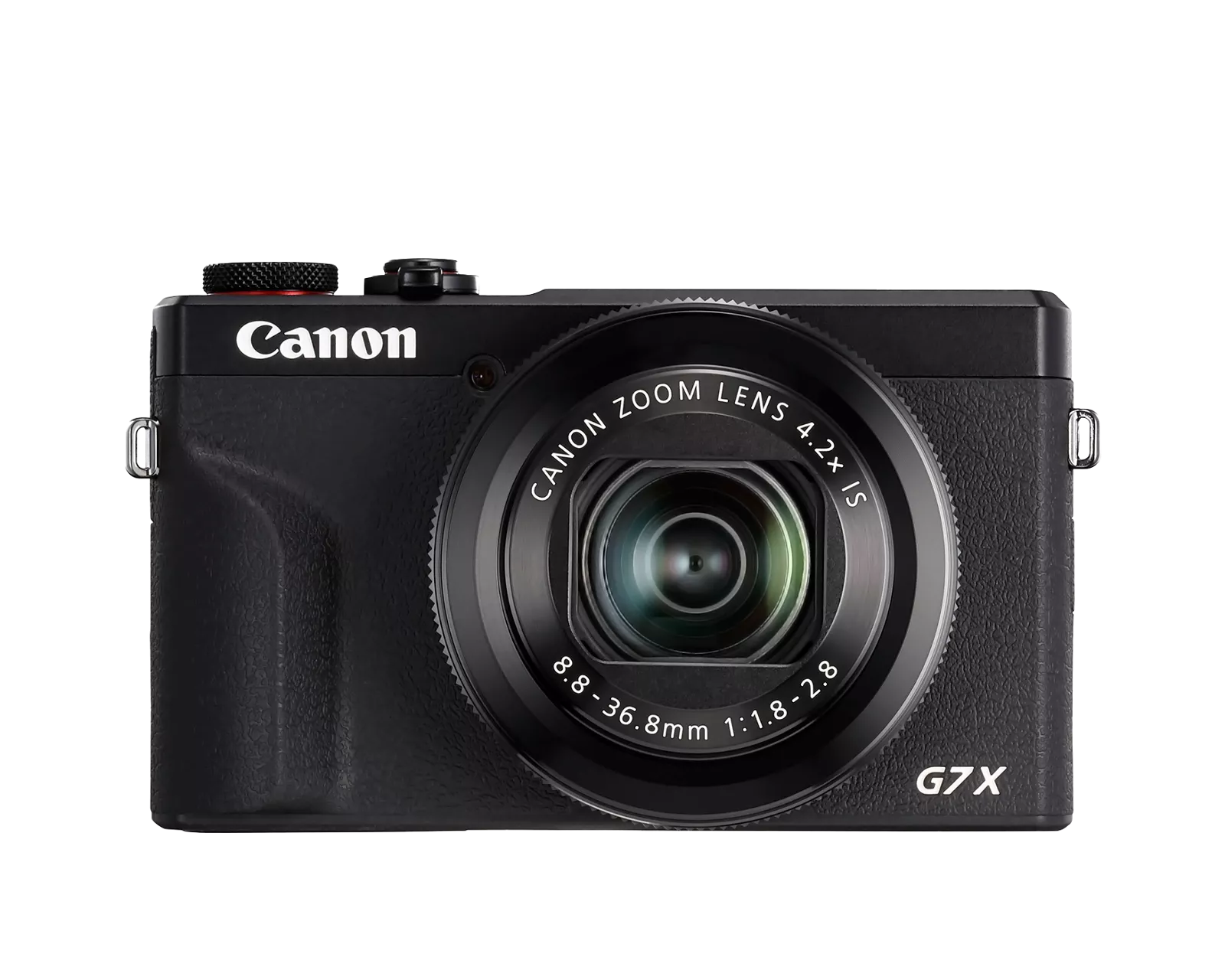
Video-first buyers gravitate to the Canon PowerShot G7 X Mark III. Its 1-inch sensor, flip-up screen, and clean live streaming made it a creator staple. List price is $749.99, although tight supply often pushes street prices past $1,000. As the best point and shoot camera for hybrid photo and video, it earns its spot. Compare current pricing on the G7 X Mark III at Amazon.
Panasonic LUMIX ZS99: The Travel Zoom
For reach in a pocket, the Panasonic LUMIX ZS99, sold as the TZ99 outside the US, is the best compact camera for travel on this list. Its 30x zoom covers wide landscapes through distant detail without a lens swap. Panasonic raised the US price to $699 in May 2026, and stock stays steady at major retailers. Because it weighs around 11 ounces, it disappears into a day bag. See the LUMIX ZS99 on Amazon.
Kodak PIXPRO and Canon ELPH: Budget Revival Picks
The cheapest seats in the revival still sell fast. The Kodak PIXPRO FZ55, a 16-megapixel point-and-shoot, runs about $140 at US retail and suits first-time buyers who want simple controls. Its smaller sibling, the PIXPRO C1, drops to near $99 for the basics. For more reach, Canon’s PowerShot ELPH 360 HS A, the 2025 US successor to the IXY 650, keeps a 12x zoom and lists at $379. None rival an APS-C sensor, yet each delivers the casual compact look at a low entry price. As a group, they are the best budget compact camera options for a first dedicated body. Browse budget compacts on Amazon.
Premium Compact vs. Full-Frame: Which Should You Buy?
The Sony a7 V is the better camera on paper. Its full-frame sensor, interchangeable lenses, and fast autofocus outclass any fixed-lens compact for low light, sports, and professional work. At $2,898 for the body alone, however, it asks for a real commitment in money and in size.
Premium compacts win on the thing people use most: carrying the camera. A Ricoh GR IIIx or Fujifilm X100VI slips into a pocket, draws no attention, and stays with you on ordinary days. Japan’s ranking reflects this. Buyers traded those compacts more often than the pricier a7 V, even though the Sony costs more. Likewise, the best point and shoot camera you own beats a bag of lenses left at home.
So the choice comes down to intent. Choose the a7 V if you need one system for every job and you will carry a bag. Choose a premium compact if the best camera is the one already in your pocket. For most everyday shooters, the best compact cameras are the smarter buy.
Compact Camera Pros and Cons
Pros
- Pocketable bodies you carry every day, some under 11 ounces
- APS-C sensors in models like the Ricoh GR IIIx rival larger cameras
- Film simulations and finished color reduce editing time
- Quiet, discreet operation suits street and travel
- Entry prices start near $99 for Kodak PIXPRO models
- Strong resale value, since demand outpaces supply
Cons
- Top models like the X100VI and GR IV sell out fast
- Fixed lenses limit framing compared with interchangeable systems
- Premium compacts cost $1,000 to $1,700, near mirrorless money
- Small bodies trade off battery life and grip comfort
- Budget models use small sensors with weaker low-light results
Save on Used Gear
Find Your Compact at MPB
Prefer to save on a premium compact? In addition, MPB grades every used body and ships with a six-month warranty, so buying used carries less risk.
Final Verdict
The data settles the debate. Compact cameras are not a nostalgia trend; they are the cameras people buy first in 2026. Japan’s marketplace ranking and CIPA shipment growth point the same direction, and US retail shortages confirm the demand. For a street, travel, or everyday shooter, a premium compact like the Fujifilm X100VI or Ricoh GR IIIx delivers the most camera you will carry.
The trade-offs are real, though. If you need interchangeable lenses, fast action autofocus, or top low-light performance, a full-frame body like the Sony a7 V still makes sense. You will pay more and carry more, but you gain flexibility no fixed-lens compact matches.
On value, the budget tier deserves attention. A Kodak PIXPRO or Canon ELPH gives newcomers the compact experience for under $400, while resale strength protects your money on the premium picks. If a top model is sold out, a used copy through MPB is the practical move; our guide on what to check when buying used walks you through it.
Our recommendation is simple. Start with the Ricoh GR IIIx for pocket APS-C quality, or the Panasonic LUMIX ZS99 if you want zoom range on a budget. Both rank among the best compact cameras on sale today.
Frequently Asked Questions
Are compact cameras making a comeback?
Yes. CIPA shipment data shows compact units rose about 30% in 2025, and Japan’s Minna Camera ranking found nine of its ten top-traded new cameras were compacts. As a result, the best compact cameras now sell faster than many flagship bodies. Demand outpaces supply on popular models.
What is the best compact camera for travel?
For travel, the Panasonic LUMIX ZS99 is our pick for the best compact camera for travel. Its 30x zoom reaches wide scenes and distant subjects in a body near 11 ounces, so you skip extra lenses on the road.
Why are point and shoot cameras so expensive now?
Demand surged faster than makers expected, so popular compacts sell out at retail. Buyers then pay list or more on the new and unused market. Scarcity, not specs alone, drives the high prices.
What is the best compact camera under $200?
The Kodak PIXPRO FZ55 at about $140 and the PIXPRO C1 near $99 are the strongest picks under $200. For a first dedicated body, the FZ55 is the best budget compact camera here. Both offer the casual compact look, although their small sensors limit low-light quality.
What is the difference between a compact camera and a mirrorless camera?
A compact camera has a fixed, built-in lens and a smaller body. A mirrorless camera like the Sony a7 V uses interchangeable lenses and a larger sensor. Compacts win on portability, while mirrorless wins on flexibility.

