


Quick Facts:
- Topic: Maine photography road trip
- Locations: 14 photo stops statewide
- Best season: Early October for foliage, summer for long days
- Skill level: All levels
- Gear: Wide lens, telephoto, sturdy tripod, polarizer, ND filter
- Subjects: Lighthouses, rocky coast, harbors, mountains, fall color
- Best for: Photographers planning a Maine photo road trip
8 min read
In This Guide
Best Places to Visit in Maine With a Camera
Maine hands photographers more coastline than any other New England state. The best places to visit in Maine with a camera run from granite lighthouses to working harbors, glacier-carved peaks, and quiet north woods. Because the coast twists for 3,400 miles, one trip rarely reaches every cove.
Below, you get 14 stops grouped by region. For each one, you also get the best light, the right season, and the gear worth packing. Treat this as a Maine bucket list built for camera owners, not a generic sightseeing route. Since the tide swings up to 11 feet here, plan your coastal shoots around the tide chart as well as the sun.
Coast lovers will chase the lighthouses and harbors, while hikers head inland to the peaks. However, every region rewards an early alarm. If you enjoy destination work, our destination photography guide covers the same planning habits a Maine road trip demands.
Your Maine Photo Trip at a Glance
Each region below suits a different subject and a different time of day. Match your favorite scene to its peak season, then build a route around it. For instance, a fall foliage run looks nothing like a summer harbor trip.
| Region | Main Subjects | Best Light | Peak Season |
|---|---|---|---|
| Acadia | Peaks, cliffs, lighthouses | Sunrise | Early Oct |
| Southern Coast | Lighthouses, beaches | Sunrise, blue hour | Summer, fall |
| Midcoast | Harbors, breakwaters, bays | Sunrise, golden hour | Summer, fall |
| Downeast & North | Coast, harbors, peaks, lakes | Sunrise | Fall |
Acadia National Park

Acadia packs granite peaks, surf-battered cliffs, and a famous lighthouse into one island. Here, the Atlantic meets bare rock for dramatic dawn light. Because crowds gather fast, strong landscape photography techniques matter more than costly gear. In fact, Maine landscape photography earns its name along this coast.
Cadillac Mountain
Cadillac Mountain catches the first sunrise in the United States for much of the year. From the summit, you shoot over islands scattered across Frenchman Bay. Reserve a vehicle pass early through the Acadia National Park site, since the road limits sunrise entry. Above all, arrive 45 minutes before dawn to claim a clear foreground.
Jordan Pond and the Bubbles
Jordan Pond mirrors two rounded peaks called the Bubbles at its north end. At first light, calm water doubles the hills and the sky. During early October, red and gold foliage rings the shoreline. Notably, a wide lens captures the full reflection from the south shore path.
Bass Harbor Head Light

Bass Harbor Head Light ranks among the most photographed lighthouses in Maine. The tower perches on pink granite above crashing surf. At sunset, warm light wraps the rock while the beacon glows. Therefore, scramble to the lower rocks south of the light for the classic angle.
Otter Cliffs and Thunder Hole
Otter Cliffs drop straight into the Atlantic along the Park Loop Road. At sunrise, the rising sun backlights the spray off the rocks. Nearby, Thunder Hole booms when incoming waves slam a narrow channel. Time your visit for rising tide, since the surf hits hardest then.
Southern Coast Lighthouses
Southern Maine packs classic lighthouses within an easy drive of Portland. Each one sits on accessible rock with clean foreground interest. For night frames, lean on solid blue hour photography habits.
Portland Head Light

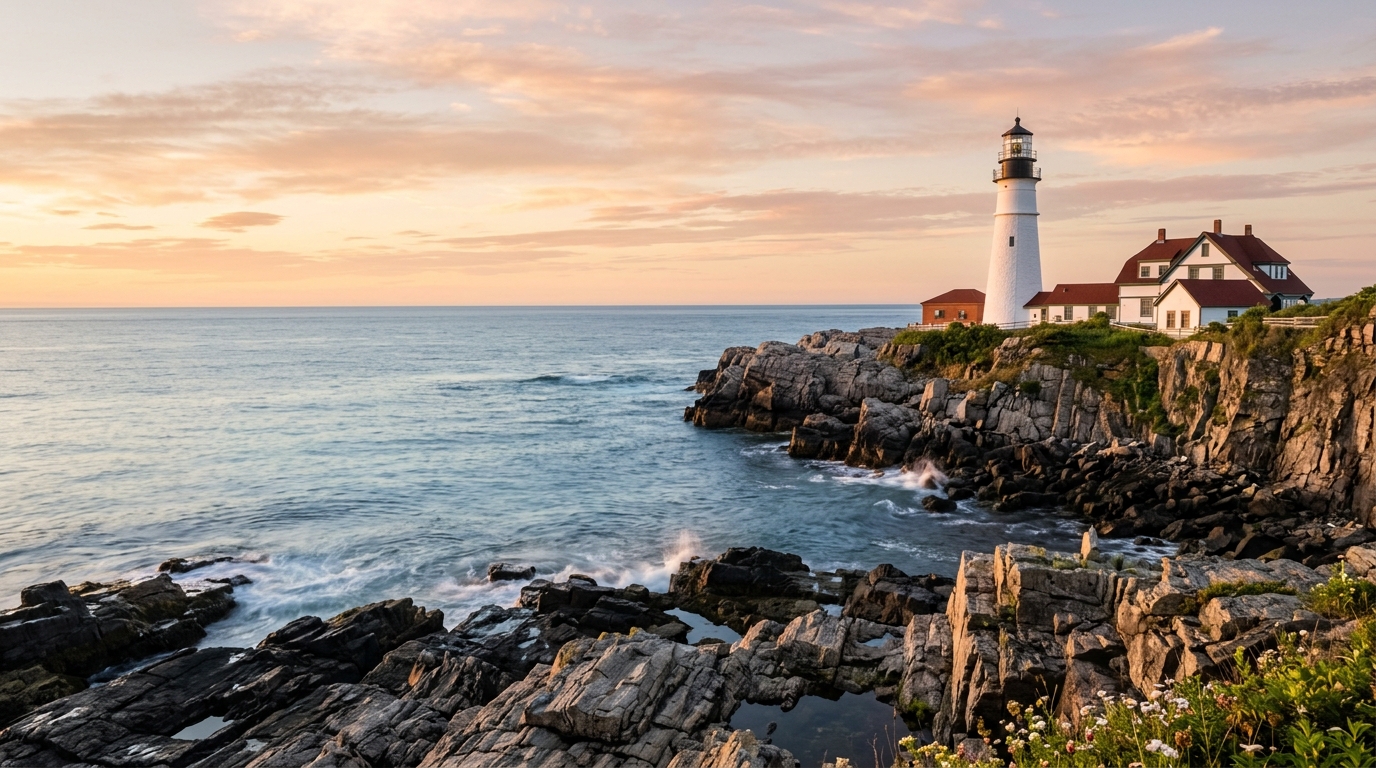
Portland Head Light stands as the oldest lighthouse in Maine, first lit in 1791. The white tower and keeper’s house sit on dark rock in Fort Williams Park. At sunrise, warm light rakes the cliff and the surf below. Because this ranks among the most photographed lighthouses in the country, arrive early for a clear frame.
Cape Neddick Nubble Light
The Nubble Light sits on a tiny island off York Beach. Meanwhile, a short channel separates the lighthouse from the mainland viewpoint. Blue hour suits the scene, especially when the keeper’s house lights glow. During the holidays, the whole island lights up for a rare winter shot.
Pemaquid Point Light

Pemaquid Point Light rises above dramatic tilted rock ledges. Specifically, these striped granite slabs lead the eye toward the tower. At sunset, low light reveals the texture in the stone. After a storm, big surf adds drama against the ledges.
The Midcoast
The Midcoast trades open ocean for tucked harbors, granite breakwaters, and bay views. Lobster boats and working docks add a human story to the scene. For fresh angles, study some creative landscape photography ideas before you arrive.
Marshall Point Lighthouse

Marshall Point Lighthouse reaches into the water on a slender wooden walkway in Port Clyde. For example, film fans know the spot from a famous running scene. At sunset, the walkway and tower glow against the bay. A low angle along the boards leads the eye straight to the light.
Rockland Breakwater Lighthouse
The Rockland Breakwater Lighthouse caps a granite jetty nearly a mile long. Then you walk the uneven blocks to reach the tower at the end. At sunrise, the long line of stone leads toward the beacon. Watch your footing, since gaps between the granite blocks stay wide.
Mount Battie, Camden

Mount Battie rises above Camden for a sweeping view over Penobscot Bay. Meanwhile, a short auto road climbs to the stone tower at the summit. During early October, foliage blankets the slopes below the overlook. Sunrise lights the harbor and the islands beyond the town.
Downeast and the North Woods
Beyond the Midcoast, Maine grows wild with working harbors, the easternmost coast, and inland peaks. These stops sit farther apart, so plan longer drives between them. Each one rewards photographers who venture past the day-trip loop.
West Quoddy Head Light

West Quoddy Head Light marks the easternmost point in the contiguous United States. Its candy-striped tower stands out against the fog and surf in Lubec. At sunrise, you catch the country’s first coastal light here. Notably, a telephoto isolates the red stripes against a moody sky.
Stonington
Stonington remains one of Maine’s busiest lobster harbors on Deer Isle. Brightly painted buoys and stacked traps fill the working docks. At golden hour, low light warms the boats and the harbor water. Shoot from the town landing as the fleet returns with the catch.
Baxter State Park and Mount Katahdin
Baxter State Park shelters Mount Katahdin, the highest peak in Maine. The mountain marks the northern end of the Appalachian Trail. At sunrise, alpenglow hits the summit above mirror-calm ponds. Sandy Stream Pond offers a classic foreground, and moose often feed there at dawn.
Moosehead Lake

Moosehead Lake spreads as the largest lake in Maine, ringed by forest. Nearby, Mount Kineo rises straight from the water near the center. At dawn, mist lifts off the surface for a quiet, layered scene. During fall, the surrounding woods turn deep red and gold.
Best Time to Visit Maine With a Camera
Early October delivers the state’s famous foliage, the strongest window for color. By contrast, summer brings long days and calm harbors full of boats. Winter coats the lighthouses in snow, while spring thaws the inland lakes and rivers.
Plan each shoot around the sun rather than the clock. While the coast glows at sunrise, harbors and bays often peak at sunset and blue hour. For deeper timing advice, study the split between golden hour and blue hour before you travel. Coastal fog also rolls in fast here, so watch the marine forecast.
Final Thoughts on the Best Places to Visit in Maine
Maine rewards photographers who chase the meeting of rock and water. In one route, you move from granite lighthouses to lobster harbors and quiet peaks. As a result, no other state packs this much coastline into a single drive.
Start with the region matching your favorite subject, then expand outward. While coast lovers should anchor in Acadia, harbor fans belong in the Midcoast. For Maine landscape photography, the coast and the north woods deliver the widest payoff. Either way, these stops link into one ambitious Maine road trip.
Pack a wide lens, a short telephoto, a polarizer, and a sturdy tripod, and you cover nearly every scene above. Then add an ND filter for silky surf and waterfalls, and let the light set your schedule. Your Maine bucket list grows the moment you map the first stop.
Frequently Asked Questions
What is the best time of year to photograph Maine?
Early October suits fall foliage, while summer brings long days and busy harbors. Winter coats the lighthouses in snow, and spring thaws the inland lakes. Because each season favors a different region, plan around your top subject.
Where are the best lighthouse photography spots in Maine?
Portland Head Light, Bass Harbor Head Light, and the Nubble lead for drama and access. Each one sits on rock with strong foreground interest. Notably, sunrise and blue hour deliver the strongest light at all three.
What gear do you need for a Maine photo road trip?
A wide lens, a short telephoto, a polarizer, and a sturdy tripod cover most scenes. In addition, an ND filter helps with silky surf and waterfalls. A weather-sealed body also resists coastal fog and salt spray.
Do you need a permit to photograph in Maine parks?
Casual handheld photography needs no permit in most Maine parks. However, commercial shoots with crews or props often require a permit and a fee. Acadia also uses a vehicle reservation for Cadillac Mountain sunrise.
How many days do you need to photograph Maine?
A focused region, such as Acadia or the southern coast, fills three to five days well. By contrast, a full coastal loop needs a week or more. Shorter trips work best when you pick one region and go deep.

