


Quick Facts:
- Topic: Montana photography road trip
- Locations: 14 photo stops statewide
- Best season: July to September for open passes, fall for color
- Skill level: All levels
- Gear: Wide lens, telephoto, sturdy tripod, polarizer, ND filter
- Subjects: Peaks, alpine lakes, waterfalls, wildlife, badlands
- Best for: Photographers planning a Montana photo road trip
8 min read
In This Guide
- Best Places to Visit in Montana With a Camera
- Your Montana Photo Trip at a Glance
- Glacier National Park
- Western Montana
- Yellowstone Country and the Beartooths
- Southwest and Eastern Montana
- Best Time to Visit Montana With a Camera
- Final Thoughts on the Best Places to Visit in Montana
- Frequently Asked Questions
Best Places to Visit in Montana With a Camera
Montana spreads mountains, prairie, and badlands across the fourth-largest state in the country. The best places to visit in Montana with a camera run from glacier-carved peaks to alpine lakes, waterfalls, and open bison range. Because the state covers vast distances, one trip rarely reaches every corner.
Below, you get 14 stops grouped by region. For each one, you also get the best light, the right season, and the gear worth packing. Treat this as a Montana bucket list built for camera owners, not a generic sightseeing route. Since high passes close under snow much of the year, plan your route around the summer window.
Peak chasers will anchor in Glacier, while wildlife shooters head south toward Yellowstone. However, every region rewards an early alarm. If you enjoy destination work, our destination photography guide covers the same planning habits a Montana road trip demands.
Your Montana Photo Trip at a Glance
Each region below suits a different subject and a different time of day. Match your favorite scene to its peak season, then build a route around it. For instance, a summer alpine trip looks nothing like a fall prairie run.
| Region | Main Subjects | Best Light | Peak Season |
|---|---|---|---|
| Glacier National Park | Peaks, alpine lakes, passes | Sunrise, sunset | Jul to Sep |
| Western Montana | Lakes, waterfalls, wildlife | Golden hour | Summer, fall |
| Yellowstone Country | Rivers, peaks, high passes | Sunrise | Summer, fall |
| Southwest & East | Ghost towns, badlands, history | Golden hour, night | Spring, fall |
Glacier National Park
Glacier holds Montana’s most dramatic peaks and clearest alpine lakes. Here, glacier-carved walls rise straight from turquoise water. Because weather turns fast at altitude, strong landscape photography techniques matter more than costly gear. In fact, Montana landscape photography earns its name across this park.
Going-to-the-Sun Road

Going-to-the-Sun Road climbs over Logan Pass through the heart of Glacier. Here, you shoot glaciers, meadows, and hanging valleys. At sunrise, low light rakes the peaks before crowds fill the road. For opening dates and current entry requirements, check the Glacier National Park site first.
Lake McDonald

Lake McDonald spreads colorful pebbles beneath clear water on the west side. At sunrise, calm water mirrors the peaks and the shoreline stones. Specifically, a polarizer reveals the red and green rocks below the surface. In addition, a wide lens sets the pebbles against the distant mountains.
Wild Goose Island
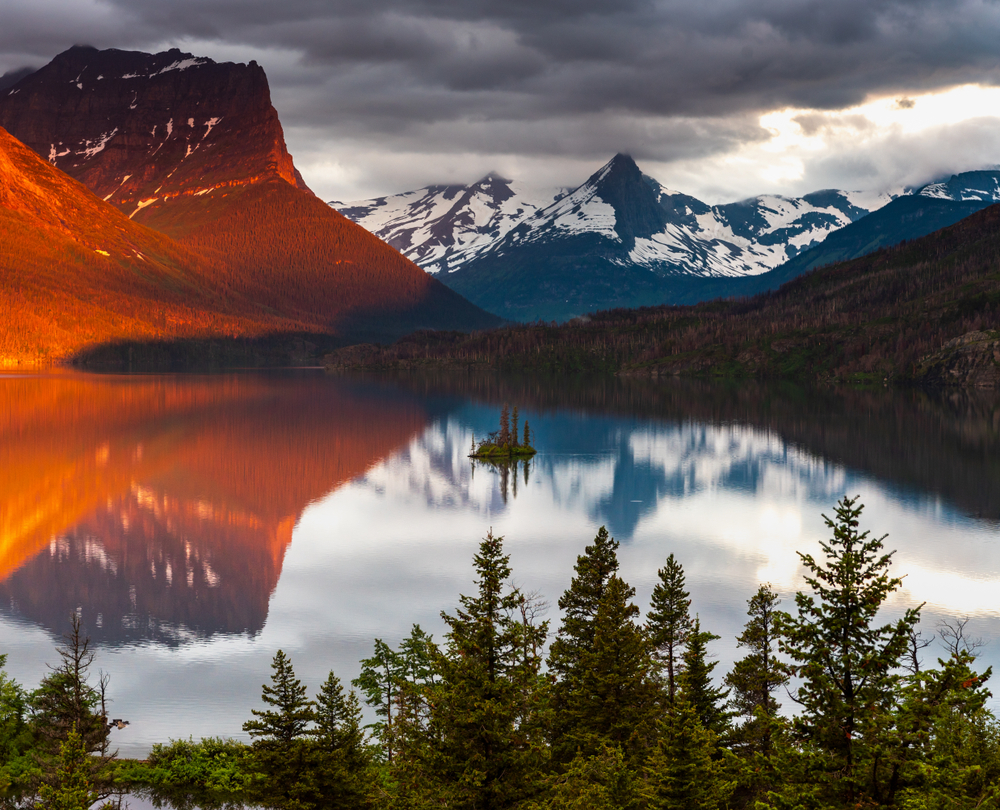
Wild Goose Island sits as a tiny dot in St. Mary Lake below sharp peaks. In fact, the overlook delivers the state’s most famous mountain-and-lake view. At sunrise, warm light hits the ridgeline while the island stays in shadow. Likewise, a telephoto compresses the peaks behind the small island.
Many Glacier
Many Glacier frames Swiftcurrent Lake beneath the Grinnell Glacier cirque. From the shoreline, still water doubles the peaks at first light. Meanwhile, the trail toward Grinnell climbs past turquoise lakes and falls. Watch for moose and bears, so carry a telephoto and give wildlife room.
Two Medicine
Two Medicine offers Glacier’s quieter southeast corner with fewer crowds. In particular, Sinopah Mountain rises straight above the still lake. At sunrise, the peak glows and mirrors in the calm water. A boat dock also adds a clean foreground line for the shot.
Western Montana
Western Montana trades high peaks for big lakes, waterfalls, and wildlife range. Forested valleys and clear rivers define the light here. For fresh angles, study some creative landscape photography ideas before you arrive.
Flathead Lake
Flathead Lake ranks as the largest natural freshwater lake in the western United States. Nearby, cherry orchards and the Mission Mountains ring the clear water. At sunset, warm light spreads across the wide lake surface. Specifically, a low angle from the shore stacks the water against the peaks.
Kootenai Falls

Kootenai Falls drops the Kootenai River across broad rock ledges near Libby. For example, a swinging footbridge above the gorge adds a dramatic vantage. Overcast light keeps the whites from blowing out for a slow shutter. Meanwhile, a tripod steadies the long exposure over the rushing water.
The Bison Range

The Bison Range, now managed by the Confederated Salish and Kootenai Tribes, protects herds of bison on rolling grassland near Moiese. Meanwhile, a scenic drive climbs for wide views over the Mission Valley. At golden hour, low light rims the bison against the hills. Notably, a long telephoto keeps a safe distance from the animals.
Yellowstone Country and the Beartooths
Southern Montana pairs the Yellowstone gateway with the towering Beartooth Plateau. Wide skies, rivers, and open range fill the frame here. Plan sunrise around the valleys and the high passes.
Beartooth Highway

The Beartooth Highway climbs past 10,000 feet between Red Lodge and Cooke City. In particular, switchbacks reveal alpine lakes, snowfields, and endless ridgelines. At sunrise, first light sets the high plateau glowing. Because the road closes in winter, plan a summer or early-fall drive.
Paradise Valley
Paradise Valley follows the Yellowstone River south from Livingston toward Gardiner. Here, Emigrant Peak rises above ranchland and the winding river. Early light and low mist shape the valley at dawn. Specifically, a long telephoto compresses the Absaroka peaks above the water.
Gallatin River and Big Sky
The Gallatin River winds through a canyon between Bozeman and Big Sky. For instance, riffles, boulders, and pine slopes frame the clear mountain water. At golden hour, warm light rakes the canyon walls. A slow shutter also blurs the current for a smooth, calm mood.
Southwest and Eastern Montana
The outer corners of Montana hide ghost towns, badlands, and prairie history. These stops sit far apart, so plan longer drives between them. For night frames under dark prairie skies, lean on solid blue hour photography habits.
Bannack State Park
Bannack preserves a gold-rush ghost town with more than 50 standing buildings. For example, weathered wood and empty windows fill the frame with frontier character. At golden hour, low light rakes the old storefronts. Besides, the dark skies here also reward a night shot over the town.
Makoshika State Park
Makoshika spreads Montana’s largest state park across eroded badlands near Glendive. Specifically, pinnacles, hoodoos, and fossil beds crowd the colorful hills. At sunrise, low light carves shadow into the ridges. A telephoto isolates the banded formations against the sky.
Little Bighorn Battlefield
Little Bighorn Battlefield marks the 1876 clash on rolling southeastern grassland. In addition, white markers dot the hills where the fight unfolded. At golden hour, warm light and long grass build a quiet mood. Meanwhile, a wide lens sets the markers against the open sky.
Best Time to Visit Montana With a Camera
July through September opens the high passes and suits most mountain photography. By contrast, late September paints the larch and aspen in gold across the west. Spring greens the prairie and swells the waterfalls, while winter locks the high country in snow.
Plan each shoot around the sun rather than the clock. While peaks glow at sunrise, valleys and rivers often peak at golden hour. For deeper timing advice, study the split between golden hour and blue hour before you travel. Mountain weather also shifts fast, so pack layers and lens protection.
Final Thoughts on the Best Places to Visit in Montana
The best places to visit in Montana reward photographers who chase big country and wild light. In one route, you move from glacier peaks to open bison range and eroded badlands. As a result, few states pack this much space and variety into a single drive.
Start with the region matching your favorite subject, then expand outward. While peak fans should anchor in Glacier, wildlife shooters belong near the Bison Range. For Montana landscape photography, the park and the Beartooths deliver the widest payoff. Either way, these stops link into one ambitious Montana road trip.
Pack a wide lens, a short telephoto, a polarizer, and a sturdy tripod, and you cover nearly every scene above. Then add an ND filter for the rivers and falls, and let the light set your schedule. Your Montana bucket list grows the moment you map the first stop.
Frequently Asked Questions
What is the best time of year to photograph Montana?
July through September opens the high passes and suits mountain scenes. Late September brings golden larch and aspen, while spring swells the waterfalls. Because each season favors a different region, plan around your top subject.
Where are the best landscape photography spots in Montana?
Glacier National Park, the Beartooth Highway, and Flathead Lake lead for drama and scale. Each one offers iconic views within a short walk or drive. Notably, sunrise delivers the strongest light at all three.
What gear do you need for a Montana photo road trip?
A wide lens, a short telephoto, a polarizer, and a sturdy tripod cover most scenes. In addition, an ND filter helps with rivers and waterfalls. A long telephoto also helps for bison and other wildlife.
Do you need a permit to photograph in Montana parks?
Casual handheld photography needs no permit in most Montana parks. However, commercial shoots with crews or props often require a permit and a fee. Glacier has used a timed vehicle reservation in recent seasons, so check the park’s current entry requirements before you go.
How many days do you need to photograph Montana?
A focused region, such as Glacier or Yellowstone Country, fills three to five days well. By contrast, a full statewide loop needs a week or more. Shorter trips work best when you pick one region and go deep.

