



Portrait photographers pour real skill and time into every session. You read light, direct subjects, earn trust, and deliver images families keep for decades. Yet for most photographers, income stops the moment the gallery goes live. The session fee covers your time, your editing hours, and your equipment costs, but once the client downloads their files, the revenue stream closes. There is a smarter way to structure things, and it does not require booking more clients or working longer hours.
Passive income for portrait photographers is less complicated than it sounds. The core idea is simple: the images you have already shot hold ongoing value, and print on demand for photographers lets you tap this value repeatedly with minimal additional effort. Whether you specialize in family portraits, senior sessions, or professional headshots, the work you have already done keeps earning long after the shoot ends. This guide walks through how to build this system, what to sell, how to price it, and how a fulfillment partner like Lumaprints handles logistics so you stay focused on shooting.
Quick Verdict: Passive income for portrait photographers is most reliably built through print sales paired with a print-on-demand fulfillment partner like Lumaprints. Canvas prints starting at $63 for a 16×20 and metal prints at $149 for the same size give you healthy margin potential while Lumaprints handles printing, packaging, and shipping on every order. Portrait photography is especially well-suited to print sales because clients already have emotional stakes in the images and want to display them, not simply store them digitally.
Last updated: May 2026 | 9 min read
In This Article
- Why Portrait Photography is Ideal for Print Sales
- Key Facts at a Glance
- What to Sell: Choosing the Right Print Products
- Pricing Your Prints for Real Profit Margins
- Why Fulfillment Matters as Much as Print Quality
- How Lumaprints Fits Into a Passive Income System
- Setting Up Your Print Store
- Pros and Cons
- Final Verdict
- Frequently Asked Questions
Why Portrait Photography is Ideal for Print Sales
Not all photography niches translate equally well into passive print income. Landscape photographers face significant competition from stock sites and wall art marketplaces where the same image is available to thousands of buyers. Portrait photographers, however, own something no marketplace replicates: unique, personal images belonging to specific clients and families. Newborn sessions, senior portraits, family gatherings captured in golden-hour light: these images hold emotional value with no expiration date.
That emotional weight is also a natural sales driver. When clients see their portraits displayed beautifully in print form, they respond differently than they do to digital files. Digital galleries of downloadable JPEGs feel temporary. A framed canvas print or a metal wall piece feels like something worth passing down. Because of this, portrait photographers consistently outperform landscape and commercial photographers when measuring per-client print revenue. The images already matter to your buyers, so your job is to give them a way to display it.
There is also a timing advantage specific to portrait work. Most portrait clients return regularly: annual family sessions, year-over-year senior shoots for siblings, milestone sessions like maternity and newborn. Each returning client represents another opportunity to introduce print options, especially as families grow or upgrade their wall art. Repeat business amplifies passive income for portrait photographers in ways single-booking commercial work never does, adding recurring print revenue without additional client acquisition costs.
Key Facts at a Glance
| Factor | Details |
|---|---|
| Best print products for portrait photography wall art | Canvas prints, framed canvas, fine art paper, metal prints |
| Lumaprints canvas pricing (16×20) | Starting at $63 |
| Lumaprints metal print pricing (16×20) | $149 |
| Typical print sale markup | 2x-4x cost depending on market and product type |
| Fulfillment model | Print-on-demand for photographers (no inventory required) |
| Lumaprints platform integrations | Shopify, Etsy, WooCommerce, Amazon, Squarespace, and more |
| Shipping coverage | Coast-to-coast US from dual facilities in CA and KY |
| Branding on shipments | None: orders ship under your brand |
| Metal print color retention | 98% color retention for 100+ years with UV resistance |
| Processing and ship time | 2-3 business days |
Print Fulfillment Partner
Start Selling Portrait Prints Without Touching Inventory
Lumaprints handles printing, packaging, and shipping on every order so you keep shooting while your print store runs itself.
What to Sell: Choosing the Right Print Products for Portrait Photography Wall Art
Portrait images carry specific qualities: skin tones, soft shadows, emotional expression. Each of these responds differently to print substrates than landscape or wildlife photography does. The wrong medium undermines the image. Choosing the right one makes a $63 canvas feel like a premium product worth two or three times the production cost.
Canvas Prints
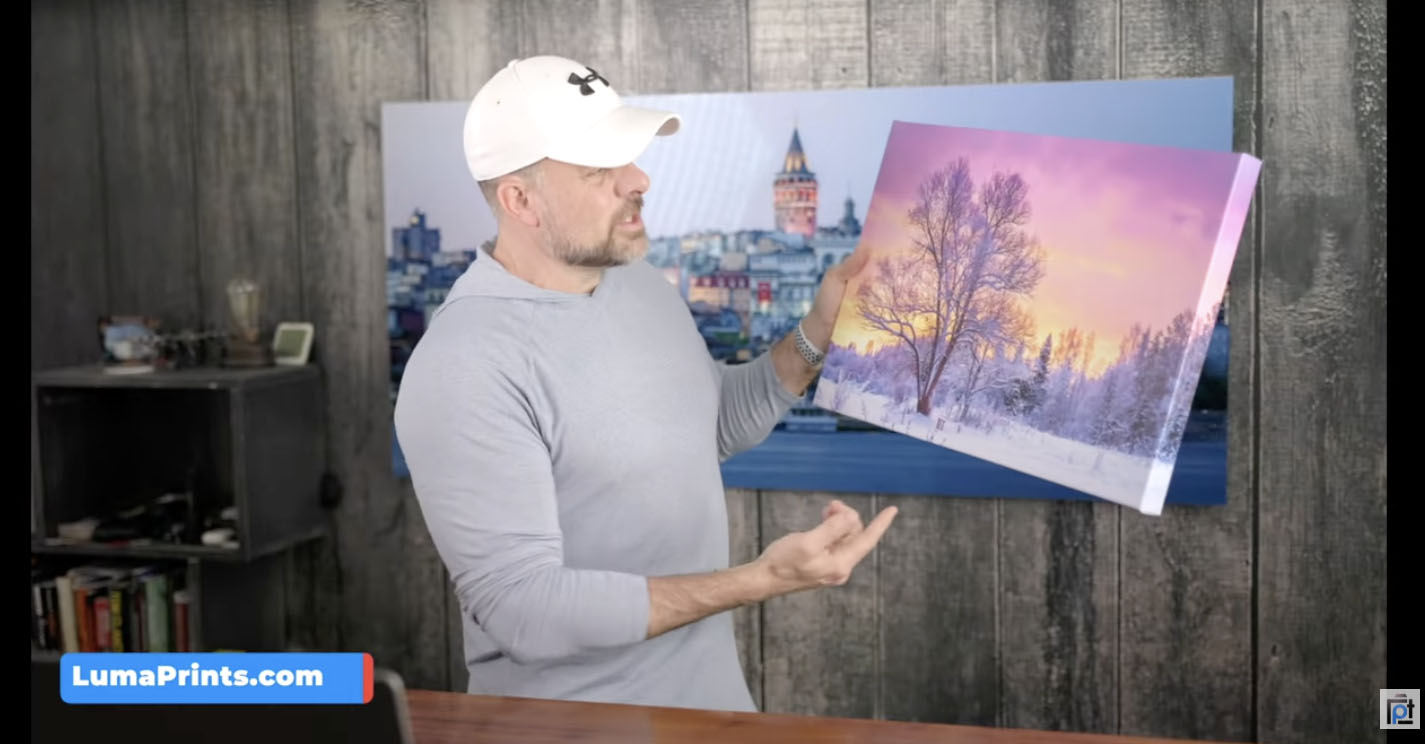
Canvas prints, like the one I’m showing in the photo above, are the highest-volume product for photographers who sell portrait prints online, and for good reason. The texture softens the overall look, flatters skin tones, and adds warmth to the image. Families respond well to canvas because it reads as classic and timeless rather than commercial. Stretched canvas with a floating frame gives a clean, gallery-ready result straight out of the box, which reduces friction at the buying decision.
Framed Canvas Prints
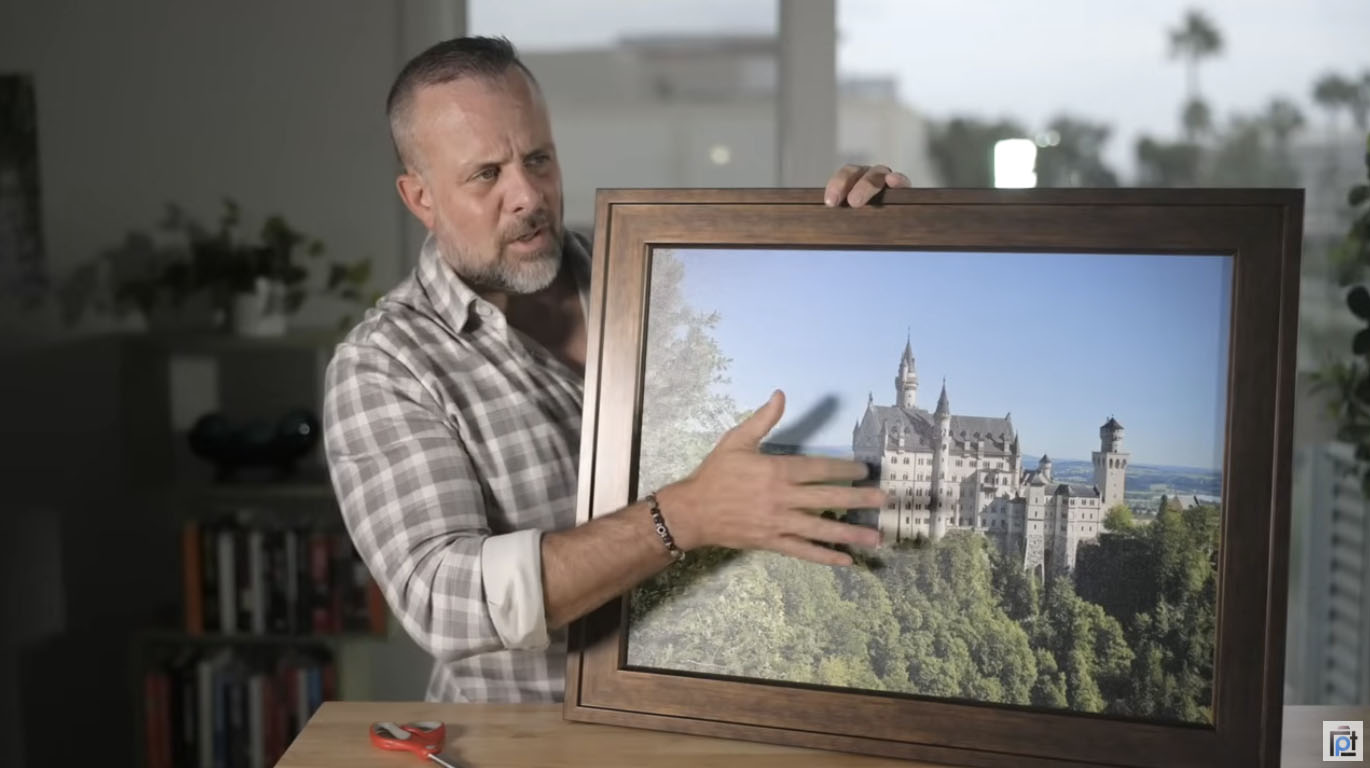
Framed canvas commands a higher price point because the frame is already included, and clients receive a fully finished piece ready to hang immediately. No trip to a frame shop, no size mismatch, no assembly required. Lumaprints’ framed canvas options use solid hardwood frames holding up well and feel premium in hand. For photographers serving clients who want the full presentation experience, framed canvas is often the easiest upsell in your product catalog.
Fine Art Paper Prints
Fine art paper suits editorial-style portraits, senior photos, and images where tonal detail is a priority. Compared to canvas, fine art paper renders finer detail more crisply and holds shadow gradients with greater precision. Acid-free paper also means the print holds up over decades without yellowing or color shift. For photographers building a premium tier in their print store, fine art paper paired with a solid wood frame is a compelling combination clients perceive as distinct from a standard photo lab print.
Metal Prints
Metal is the most durable option and the strongest choice for high-contrast portrait work: dramatic black-and-white headshots, environmental portraits with vivid backgrounds, or any image where luminosity is the selling point. The dye sublimation process infuses color directly into the aluminum surface rather than sitting on top of it, which means metal prints from Lumaprints retain 98% of their color for 100 years or more. For photographers targeting commercial clients or marketing headshots as professional wall pieces, metal prints justify a premium retail price and hold up in office environments where humidity and light exposure vary.
Pricing Your Prints for Real Profit Margins
Pricing is where passive income for portrait photographers either scales or stalls. The instinct is to price prints slightly above cost, but treating prints as a convenience add-on rather than a premium product. Your markup should reflect the creative work behind the image, not only the production cost of the print itself.
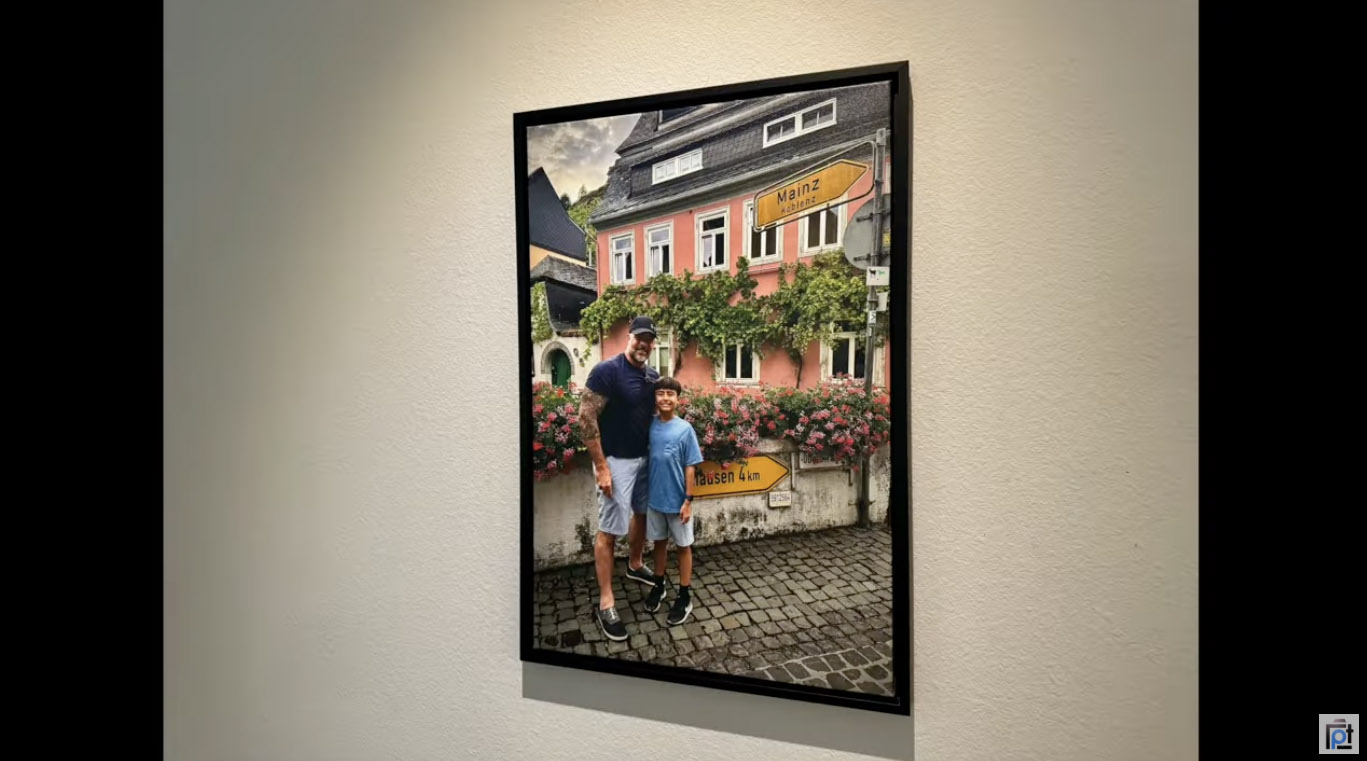
A practical starting framework for print on demand for photographers: aim for a 3x-4x markup on print production costs. Specifically, a $63 canvas sells at $185-$250. A $149 metal print sells at $450-$600. These numbers hold up in most markets, especially when you position prints as heirloom-quality wall art rather than commodity photo products. Photographers who have built successful print businesses consistently report clients respond to how prints are presented, not only what they cost. Showing a canvas displayed on a living room wall rather than as a flat product image shifts the perceived value considerably.
Also, keep your product menu tight at launch. Three to five size options prevent decision fatigue and make it easier for clients to choose rather than stall. A small, medium, and large option per product type is a reasonable starting structure. You add complexity later once you understand what your specific client base prefers.
Ready to Build Your Print Store?
Canvas at $63, Metal at $149: Pricing That Leaves Real Margin
Lumaprints connects with Shopify, Etsy, WooCommerce, and more. Sign up free and start fulfilling print orders automatically.
Why Photography Print Fulfillment Matters as Much as Print Quality
A print looks stunning at the lab and arrives damaged at the client’s door when photography print fulfillment is handled carelessly. Poor packaging, inconsistent color calibration, and slow turnaround all create customer service problems undermining the passive income model. Instead of spending time on new sessions, you end up managing remakes and refunds. Your fulfillment partner’s reliability is, therefore, as important as the print quality itself.
Print-on-demand for photographers specifically requires consistent output across every individual order. Unlike a traditional print lab relationship where you review a bulk batch, POD means every order ships individually and directly to your client. A single bad experience reaches a real person under your brand name. Your fulfillment partner’s quality control, packaging standards, and shipping speed reflect on your business with every order placed.
Turnaround time also affects the passive experience. When a client orders a print and waits three weeks, the sale does not feel passive to them: it feels unreliable. Lumaprints processes and ships in 2-3 business days from dual US manufacturing locations in Anaheim, California, and Louisville, Kentucky. This coast-to-coast footprint keeps shipping times consistent whether a client is in Portland or Miami.
How Lumaprints Fits Into a Passive Income System for Portrait Photographers
I’ve worked with photographers on brand and sales strategy for years, and the friction point I see most often isn’t photography skill: it’s the operational complexity of adding a product business to a service business. Photographers don’t want to manage inventory, negotiate with labs, and troubleshoot shipping issues on top of running shoots. A fulfillment partner handling the back end is, therefore, the right infrastructure for passive print income.
Over the years, I’ve reviewed multiple Lumaprints products firsthand and tested their output across different portrait images and print substrates. Consistency across orders has been the most notable quality. Budget labs frequently produce strong samples, but order quality varies over time. Lumaprints’ output has been reliable across canvas, metal, and fine art paper formats in my experience, which is the baseline requirement for a print store running without constant oversight.
My review of 7 Lumaprints products tested over two years reaches similar conclusions, noting none of the products showed the quality issues typical of budget alternatives and pricing undercuts comparable quality competitors by 30-40% at the canvas level. For photographers building a print store, this combination of reliability and accessible cost means healthy margins without quality compromises damaging your reputation.
Specific product tests are equally encouraging. Our Lumaprints canvas print review awarded the 16×20 canvas a 6 out of 5 for value, an unusual score in a publication having reviewed dozens of labs. Meanwhile, our metal print review highlighted the Chromalux coating and solid mounting hardware as standouts at the price point. Similarly, the framed canvas review confirmed solid hardwood framing and protective packaging hold up through transit, which matters for portrait clients receiving a finished wall piece rather than a flat print.
On the business side, Lumaprints integrates with Shopify, Etsy, WooCommerce, Amazon, Squarespace, and several other platforms, which means automated order routing once your store is connected. Orders come in, get forwarded to Lumaprints automatically, and ship under your brand with no Lumaprints packaging or branding included. Clients see your brand throughout the experience. Your side of it is a system fulfilling orders while you shoot.
Setting Up Your Store to Sell Portrait Prints Online
Getting a print on demand store live does not require weeks of work. A focused setup takes a few days when you approach it methodically. Here is a practical sequence for photographers who want to build passive income from existing work.
First, select your platform. Shopify and Squarespace are the most photographer-friendly options for building a standalone store. Etsy works well when you want built-in marketplace traffic at the cost of platform fees and less control over branding. When you already have a photography website, WooCommerce on WordPress is a natural extension of what you already own.
Second, connect Lumaprints as your photography print fulfillment partner. The integration process is straightforward: link your store, set up your product catalog with Lumaprints’ pricing as your base cost, and configure your retail prices. Orders automatically route to Lumaprints for fulfillment once a client checks out.
Third, create product listings built to convert. Images displayed in context, on a living room wall or above a mantle, convert far better than flat product shots. Show clients where the print lives, not only what it looks like on its own. Write descriptions emphasizing the archival quality of the materials, the size options relative to common wall spaces, and the fact prints arrive ready to hang.
Fourth, promote at the right moment. The highest-converting touchpoint for print sales is immediately after gallery delivery, when clients are still emotionally engaged with the images. An email sequence introducing print options within 48 hours of gallery access, with a direct link to the store, outperforms a generic newsletter by a significant margin. Email marketing gives you control over timing and keeps the conversation under your brand throughout.
Pros and Cons
Pros
- Portrait images hold built-in emotional value driving print purchases, which gives passive income for portrait photographers a natural conversion advantage over other niches.
- Print-on-demand for photographers eliminates inventory costs entirely. You pay production cost only when a client orders.
- Canvas prints starting at $63 for a 16×20 leave a 3x-4x markup achievable at competitive retail prices in most markets.
- Platform integrations with Shopify, Etsy, WooCommerce, and others automate order routing with no manual processing on your end.
- Dual US manufacturing facilities in CA and KY enable 2-3 business day processing and faster coast-to-coast shipping for clients nationwide.
- White-label dropshipping ships under your brand with no Lumaprints branding on packaging, protecting the client-facing experience completely.
- Metal prints retain 98% color for 100+ years, a legitimate quality differentiator worth including in your print store listings.
- Repeat portrait clients, such as annual family sessions and sibling senior shoots, create recurring print sales without new client acquisition costs.
Cons
- Print sales require active promotion at the gallery delivery stage: passive does not mean zero effort, especially during the setup phase.
- Per-unit costs are higher with print-on-demand than bulk ordering, which compresses margins on lower-priced products in the catalog.
- Building client purchasing habits around prints takes time when your existing clients are accustomed to digital-only delivery.
- Budget-focused portrait niches, including volume school photography, operate in price-sensitive markets where premium markup is harder to sustain reliably.
- Setting up platform integrations and product listings involves an upfront time investment before orders start flowing through the system.
Final Verdict

Passive income for portrait photographers is genuinely achievable, and print sales through a reliable fulfillment partner are the most practical path to get there. Unlike stock photography, which requires a portfolio in the hundreds of images and yields small per-download royalties, print sales work within the client relationships you already have. Portrait clients are emotionally invested in their images and represent a warm audience for wall art rather than a cold traffic problem to solve.
The biggest trade-off is this system rewards photographers who add print options clearly into their workflow: at booking, during sessions when discussing display plans, and prominently at gallery delivery. Photographers who bury print options at the bottom of a gallery or skip the conversation entirely see lower conversion rates. The income becomes passive once the system is running, but building the system requires intentional setup and client communication at the start.
For value at the production level, Lumaprints holds up consistently across canvas, framed canvas, metal, and fine art paper. Pricing undercutting comparable quality labs by 30-40% on canvas gives you margin flexibility, and the 2-3 business day turnaround keeps clients satisfied without requiring your involvement after the order is placed. Platform integrations handle automation, and white-label dropshipping keeps your brand front and center throughout the purchase and delivery experience.
Portrait photographers delivering digital galleries without a print option attached are leaving a meaningful revenue stream unused. The images already hold value for your clients. A well-structured print store backed by dependable print-on-demand for photographers converts this value into income without requiring another booking another session to earn.
Frequently Asked Questions
How much do portrait photographers realistically earn from print sales?
Earnings vary by client volume and how actively prints are promoted. Photographers who integrate print options into their workflow at every gallery delivery commonly report $200-$600 per session in additional print revenue. At a 3x markup on Lumaprints’ base costs, a single canvas sale recoups the production cost quickly. Multiply this across 30-60 sessions a year, and print sales become a meaningful income layer rather than an occasional bonus.
Do I need to hold any inventory to sell portrait prints?
No. Passive income for portrait photographers works precisely because the print-on-demand model requires zero inventory. Print-on-demand means every print is produced after a client places an order. Lumaprints prints, packages, and ships directly to your client, so there is no inventory to store, no upfront production cost on unsold prints, and no manual fulfillment work on your end. You pay production cost only when an order comes in.
Which print format works best for portrait photography?
Canvas is the highest-volume seller for portrait photographers because it flatters skin tones and reads as timeless in home interiors. Framed canvas appeals to clients who want a fully finished piece without a separate trip to a frame shop. Fine art paper suits editorial portraits and images where detail and tonal precision are priorities. Metal is the best choice for dramatic black-and-white work or high-contrast images where luminosity and longevity are the primary selling points.
How do I promote portrait photography wall art without it feeling pushy?
Timing is the key variable. Clients are most receptive to print options within 48 hours of gallery delivery, when they are still emotionally engaged with the images. A simple email with two or three curated print recommendations, sized and framed for common display spaces, converts far better than a generic shop link. Showing prints displayed in a living room or hallway context also helps clients visualize the purchase rather than evaluate it abstractly.
Is Lumaprints a good fit for photographers new to selling prints?
Yes. The platform integrates with major e-commerce tools photographers already use, the setup process is straightforward, and the 2-3 business day turnaround is reliable enough to build a client-facing store around. Base pricing on canvas, metal, and fine art paper leaves room for a 3x-4x markup, which gives new print sellers a financially viable margin structure without needing high sales volume to break even on their setup investment.
What image resolution do I need for large-format portrait prints?
For most modern cameras, files shot at full resolution are sufficient for canvas and fine art paper prints up to 24×36 inches without quality loss. As a general guideline, target 150-300 PPI at the final print size. Files from full-frame cameras shooting at 24 megapixels or higher handle large-format prints comfortably. Lumaprints’ ordering interface shows a quality indicator during upload flagging files below the recommended resolution for the selected size.
A quick heads-up: If you snag something through our affiliate links or check out our sponsored content, we might earn a commission at no extra cost to you. But fear not, we’re all about recommending stuff we’re truly stoked about!

