


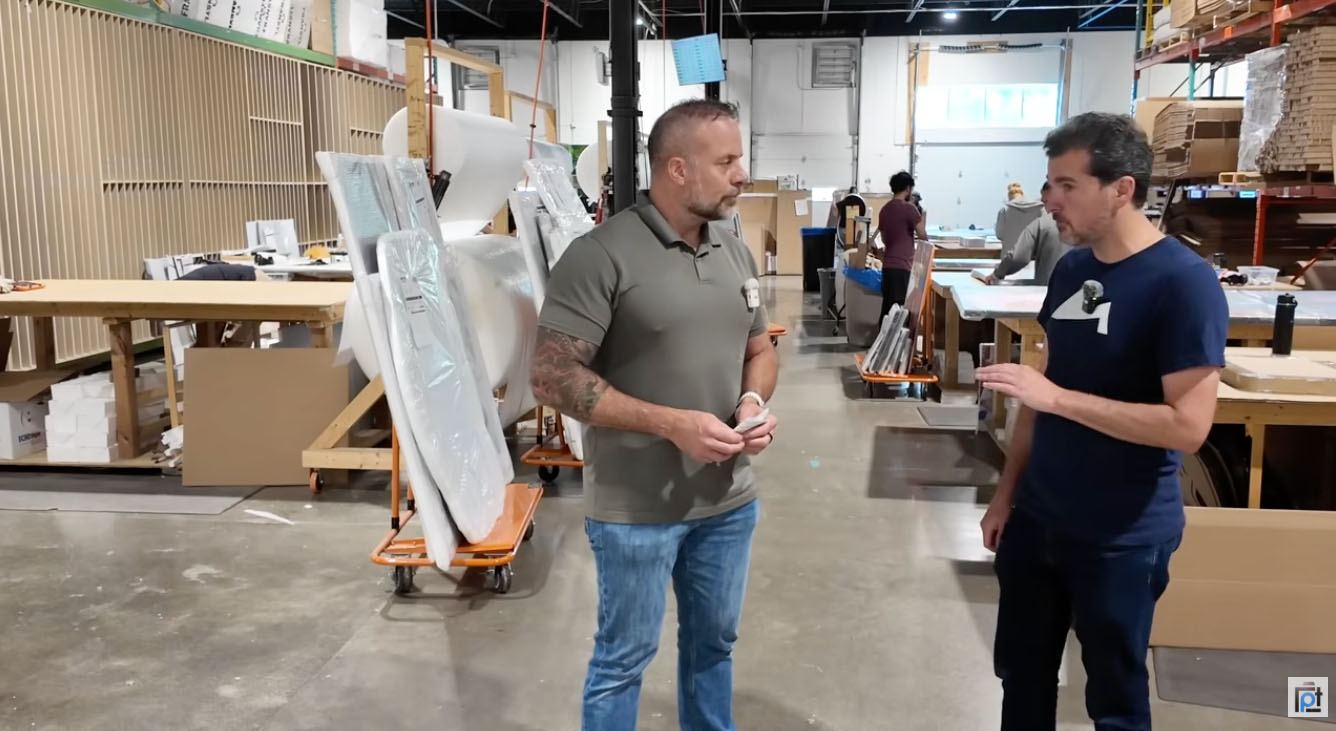
I’ve been in this industry for decades, evaluating prints and print companies for a living. In all those years, I’ve reviewed close to 200 prints across metal, canvas, acrylic, paper, and wood. I’ve tested labs from garage operations to serious fine art studios, and I’ve learned to read the difference between a company building something and a company going through the motions. So when I flew from California to Montreal to visit Pictorem’s facility in person, I wasn’t going in looking for a press release. I was going in with a list of hard questions and two days to get them answered.
What I found when I got there was something I didn’t entirely expect. The Pictorem prints I’d already reviewed and tested over the years had consistently impressed me. But seeing the operation firsthand gave me a different kind of confidence. Watching a 4×8 acrylic sheet come off the press and watching the team build frames on site: these things deepen what a review alone cannot. Talking to founder Fabien Dormoy about every decision he’s made since starting the company out of his garage roughly a decade ago added another layer. This is my full report from the visit.
Quick Facts:
- Company: Pictorem
- Location: Right outside Montreal, Quebec (Laval)
- Founded: Approximately 10 years ago by Fabien Dormoy
- Products: Canvas, HD sublimation metal, brushed metal, white matte metal, acrylic (gloss and non-glare), wood, fine art paper, framed prints, PVC, murals, multi-panel
- Max print size: Up to 96×48 inches on most surfaces; 5×8 feet on acrylic
- Production time: 5 to 7 working days standard; specialty moldings up to 10 days
- Shipping: Free to continental USA and Canada, no minimum order
- Guarantee: 100% satisfaction, no-questions replacement policy
- Best for: Photographers, artists, interior designers, and resellers across North America
8 min read
In This Article
- How Pictorem Started: Fabien Dormoy’s Origin Story
- Key Specs at a Glance
- Which Surfaces Does Pictorem Offer?
- HD Sublimation Metal: The Standout Product
- File Prep: What Pictorem Needs From You
- Gloss vs. Matte: How to Choose
- Durability: How the Prints Hold Up
- Frames, Mounting, and What I Saw on the Floor
- The Three Most Common Print Mistakes
- Pictorem vs. US-Based Labs: What Actually Changes?
- Pros and Cons
- Final Verdict
- Frequently Asked Questions
How Pictorem Started: Fabien Dormoy’s Origin Story
I asked Fabien to take me back to the very morning he decided to start Pictorem. His answer was one of the most honest origin stories I’ve heard from any print lab founder. He told me he was an amateur photographer, passionate about the craft, and he wanted to do an exhibition. He wasn’t satisfied with the printing options available to him. So he bought a printer. He told me it was “a weird decision” because it cost far more than he expected. At the point of purchase, he had no choice but to try to make money from it; otherwise the investment made no sense. Laughing, he added he never did end up doing the exhibition.
He started about ten years ago, printing on canvas first, mostly his own travel photography. From there the business grew to acrylic and metal and expanded into a larger facility. Eventually Pictorem merged with Cine-Affiches, an established Montreal-based printing company, and consolidated into a single, larger, state-of-the-art space. What struck me about the story is how consistent it is with what I see in the Pictorem prints I review on this site. This is a lab founded by someone who started because he cared about his own output. And he never stopped.
Key Specs at a Glance
| Specification | Details |
|---|---|
| Location | Right outside Montreal, Quebec (Laval) |
| Top three products | Canvas, HD sublimation metal, , per Fabien Dormoy |
| Canvas wrap depth | 1.5 inch (standard/specialty) and 3/4 inch; 1.5 inch recommended |
| Max size (most surfaces) | 96×48 inches; acrylic up to 5×8 feet on select presses |
| HD metal current max | 60×40 inches (expanding to 96×48 soon per Fabien) |
| Color spaces accepted | sRGB, Adobe RGB, ; all processed |
| File formats accepted | JPEG, TIFF, PSD and more; all upscaled to 300 DPI before printing |
| Production time | 5 to 7 working days standard; up to 10 for specialty moldings |
| Frames built on site | Yes, cut and assembled at the facility |
| Shipping | Free to continental USA and Canada |
Order Direct from Pictorem
Start Your Print at Pictorem.com
Canvas, metal, acrylic, wood, and more. Free shipping to the USA and Canada, with a 100% satisfaction guarantee on every order.
Which Surfaces Does Pictorem Offer?

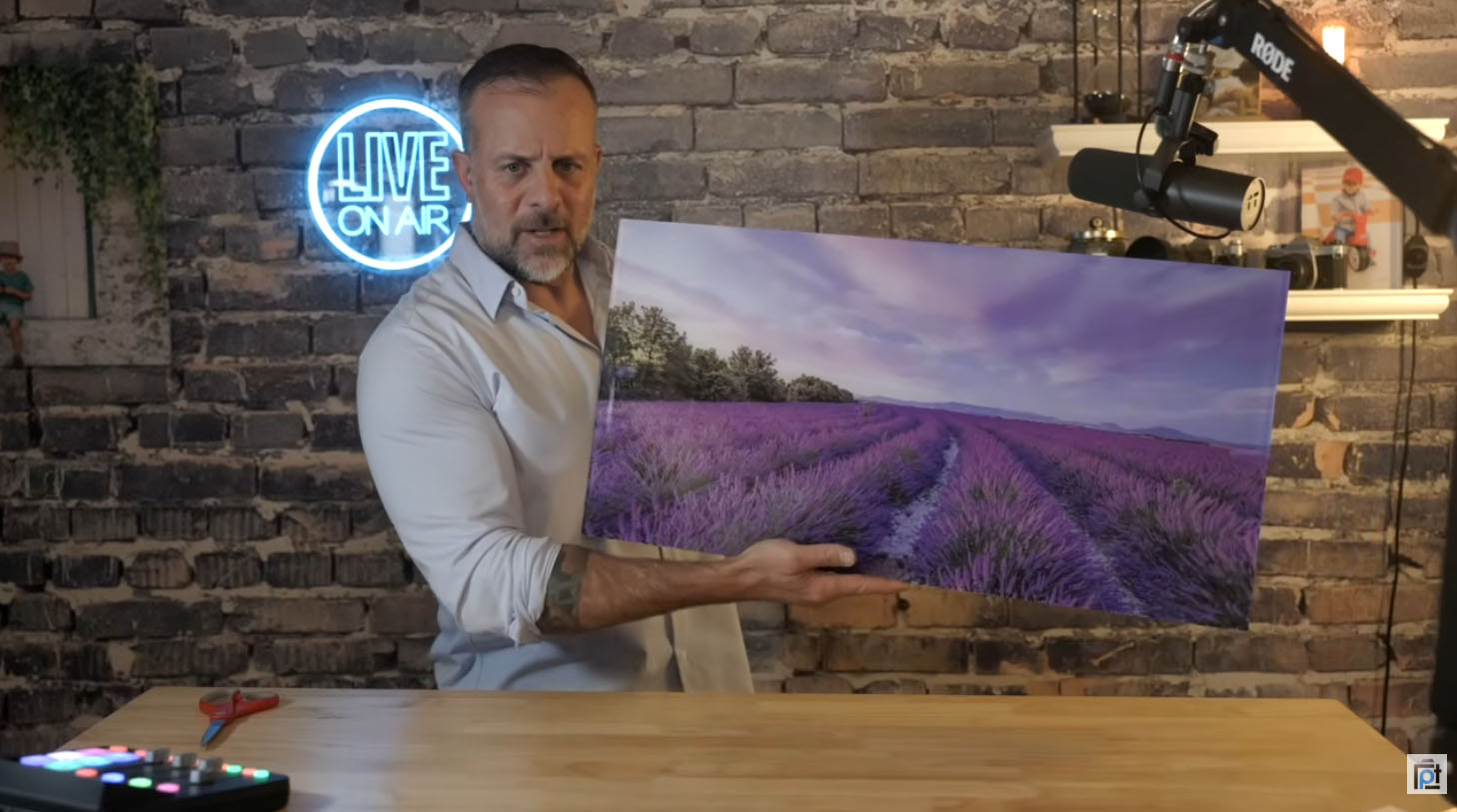
I asked Fabien directly: which surfaces are the top performers? His answer was unambiguous. Canvas is still the best seller because the ratio of cost, print precision, and customer familiarity is simply hard to beat. HD sublimation metal (like the print shown above) is the second most popular, and acrylic rounds out his top three. Beyond those, Pictorem also offers brushed metal, white matte metal, fine art paper, wood, PVC panel, murals, multi-panel, and framed prints across various molding styles.
For photographers wondering which images translate best to which surfaces, Fabien made one distinction worth noting. Most subjects work well on canvas, acrylic, and metal. The one area to be careful, he told me, is surfaces with texture: brushed metal and wood specifically. On those, whites in the image become the surface material itself, and fine detail in dark areas is harder to read. However, he also noted those textures often produce something “very artistic and very original” when the subject plays well with the industrial or natural look.
HD Sublimation Metal: The Standout Product
The HD sublimation metal print is Pictorem’s showpiece product, and Fabien made no effort to undersell it. He described the color saturation as outstanding in our conversation, and his description matches my experience reviewing their output. The dye-sublimation process infuses the image into the ChromaLuxe aluminum panel’s coating at high heat rather than printing on the surface. This is why the color doesn’t sit on top of the metal. It becomes part of it.
Currently, HD metal at Pictorem maxes out at 60×40 inches. Fabien told me directly, however, they have new equipment allowing them to reach 96×48 and are in the testing phase to make sure everything is correct before releasing it. When I walked the floor, I watched a 60×40 HD metal piece come out of production. The colors were immediately striking: rich, dimensional, the kind of output photographers order once and then tell everyone about. Beyond HD metal, Pictorem’s brushed and white matte metal options extend to 96×48 inches using direct print on aluminum. The brushed version lets the silver metallic grain show through in highlight areas, creating an industrial look well-suited to architectural and abstract subjects.
File Prep: What Pictorem Needs From You

This is an area where Pictorem’s approach stands out, and Fabien was direct about it. They accept sRGB, Adobe RGB, and ProPhoto color spaces. They accept JPEG, TIFF, and even Photoshop PSD files. All files are processed internally and upscaled to 300 DPI before going to press. So regardless of the color space you’re working in, their team handles the conversion.
Fabien also told me about the three most common mistakes he sees from photographers sending files. First, artists place signatures too close to the print edge, sometimes right where a standoff post would sit, causing them to be partially obscured or cut off. Second, some clients submit images with heavy dark areas and subtle shadow detail, expecting the output to read lighter than the file is. On certain surfaces, particularly varnished canvas, those shadows don’t lift the way customers expect. Third, photographers sometimes upscale their own files before submitting, thinking bigger is better, but the aggressive upscaling introduces softness the team sees immediately when they zoom in for quality review. On all three, Fabien said: “We contact the customer. We advise them before printing.” His team flags the issue before it becomes a product problem. Few labs at any price point do this routinely.
Gloss vs. Matte: How to Choose
Fabien’s guidance on finish selection was practical and clear. For acrylic, Pictorem offers standard gloss and a non-glare matte. For metal, they offer high gloss, HD gloss sublimation, and smooth white matte. His framing of the choice came down to two questions: does the wall where this will hang face a window, and does the customer want the reflective quality or not?
Beyond environment, he noted the technical difference clearly. Glossy finishes produce richer blacks, more vibrant color, and higher contrast. Matte finishes eliminate reflections and work better for portraits and images where surface glare would compete with the subject. The short version from Fabien was simple: “It’s a personal choice. All the glossy finish will be a lot more vibrant in terms of color rendering.”
Durability: How the Prints Hold Up
I pressed Fabien specifically on longevity in challenging environments: direct sunlight, humidity, coastal homes, and bathrooms. His answer separated the surfaces clearly. Pictorem uses archival and UV-resistant inks across their product line, and he noted indoor durability is strong across the board. For humid environments, he specifically recommended metal or acrylic over canvas. Canvas uses pigment-based ink, and it’s more vulnerable to moisture. Acrylic and metal, by contrast, handle bathroom environments without issue in his experience.
On canvas specifically, Fabien was candid: “I don’t recommend it” for high-humidity spaces, even with varnish. For dry indoor environments, however, canvas holds up well. In terms of direct sunlight indoors, Fabien said there’s no issue on any of their surfaces; the archival inks and UV treatments handle it.
Frames, Mounting, and What I Saw on the Floor
One of the more impressive things I saw during the factory visit was the framing operation. Pictorem builds and cuts all their frames on site. While I was there, I watched several team members assembling and finishing frames in the back of the facility. Fabien confirmed they’re actively adding new molding models to give customers more choices, but the entire framing process happens under the same roof as the printing.
For mounting, Fabien described two primary options. The back frame is the most popular mounting for galleries and residential installations. It holds the print approximately one inch off the wall, is easy to install, and gives the piece a floating, frameless look appropriate for modern spaces. The floating frame is the second most popular option, adding a more traditional presence and stronger visual impact on the wall. Both options work across metal, acrylic, and wood panels. Canvas prints use 1.5-inch gallery wraps almost exclusively; Fabien noted the 3/4-inch option exists but isn’t their specialty. For larger canvas, the 1.5-inch depth provides better structural support, and pairing it with a floating frame is, in his words, the option he personally likes most.
Free Shipping to USA and Canada
No Fees, No Minimums, No Customs Surprises
Every Pictorem order ships free within continental North America. 100% satisfaction guarantee on every print.
The Three Most Common Print Mistakes
Fabien’s breakdown of common beginner mistakes was one of the most useful parts of our conversation, and worth restating clearly. First: placement of signatures or fine text too close to the print border, particularly near where a standoff post would be installed. Second: submitting images with heavy dark areas without accounting for how shadow detail reads on certain surfaces, especially varnished canvas where subtle gradients are harder to appreciate. Third: upscaling files manually before submission, which introduces visible softness Pictorem’s team flags during file review.
On the question of over-saturation, which I specifically asked about, Fabien’s answer was interesting. He said photographers are often surprised by how saturated HD metal renders their images, not in a negative way, but in a “more than I expected” way. The HD sublimation process amplifies what’s in the file. For photographers coming from paper prints, the vibrancy of the output is a genuine surprise. He noted overall color accuracy is strong: “It’s very accurate from what they see on the screen.” His description matches my own experience reviewing their output across multiple orders.
Pictorem vs. US-Based Labs: What Actually Changes?
For US-based photographers, the practical question is whether a Montreal lab creates friction. Based on what I saw and discussed on my visit, the answer is: not in the ways most matter. Free shipping to the continental United States removes the cost barrier. Production time at five to seven working days is competitive with US labs. The file review process and satisfaction guarantee are better than most US competitors at comparable price points.
Where Canadian photographers gain a more significant advantage is obvious. No US lab ships domestically within Canada without customs complications and brokerage fees. Based in Laval, right outside Montreal, Pictorem eliminates all of it. For Canadian photographers specifically, there is genuinely no comparison to make. Pictorem is the clear answer. For US photographers, the combination of product breadth, free shipping, and file review process puts them in serious contention with domestic alternatives.
Pros and Cons
Pros
- Founded by a photographer passionate about his own output; the quality obsession is institutional
- Free shipping to all of continental USA and Canada with no order minimum
- In-house file review on every order before production; team contacts customers about issues proactively
- All frames and moldings built on site at the Montreal facility
- HD sublimation metal with vivid, accurate color and strong long-term durability
- Accepts all major color spaces (sRGB, Adobe RGB, ProPhoto) and processes all files to 300 DPI internally
- 100% satisfaction guarantee, replacement or refund, no return required
Cons
- HD sublimation metal currently maxes at 60×40 inches (larger sizes in testing)
- Canvas not recommended for high-humidity environments; metal or acrylic is the stronger choice
- Brushed metal and wood require more care in image selection; fine detail in shadows is often lost
- Specialty moldings extend production time to up to 10 working days
- US West Coast customers sometimes see slightly longer transit times than from a domestic US lab
Final Verdict

I flew to Montreal having already formed a strong opinion about Pictorem prints from years of reviewing them on this site. The factory visit didn’t change my opinion. It deepened it. Fabien Dormoy knows every part of his process. He still makes decisions based on what produces the best output. He operates the facility with the discipline of someone who started because he wasn’t satisfied with what was available. The file review step alone sets Pictorem apart. Specifically, someone on his team looks at every order before it goes to press. If something looks off, they contact the customer. Few competitors I’ve evaluated at this price level do this routinely.
For Canadian photographers, this is the obvious choice and not a close call. No other lab combines Montreal-based production, a product range wider than almost any domestic competitor, and free shipping to your door without the customs complications of ordering across the border. For US photographers, Pictorem competes seriously. The HD sublimation metal output is strong, the canvas is their best seller for good reason, and the acrylic holds its own against anything I’ve tested from US labs at comparable pricing. The five-to-seven-day production time and free shipping make the Montreal location a non-issue in practice.
If you haven’t ordered from Pictorem and you’re serious about how your images look on a wall, this is the time to try them. The output is what it looks like in the reviews. And now I’ve seen the operation behind it.
Ready to Buy?
Order Your Print at Pictorem
Free shipping across North America, 100% satisfaction guarantee, and a product range unmatched by any Canadian competitor.
Frequently Asked Questions
Where is Pictorem located?
Pictorem is located right outside Montreal, Quebec, in Laval. Founder Fabien Dormoy started the company approximately ten years ago from his garage and has since expanded to a larger, merged facility following a partnership with Cine-Affiches, an established Montreal-based printing company.
What are Pictorem’s most popular print products?
According to founder Fabien Dormoy, the top three are canvas, HD sublimation metal, and acrylic. Canvas leads in overall volume due to its cost-to-quality ratio. HD sublimation metal produces the most vivid and saturated output. Acrylic is the third pillar and works well across a wide range of photographic subjects.
What file formats and color spaces does Pictorem accept?
Pictorem accepts JPEG, TIFF, PSD, and other common file formats. On color space, they process sRGB, Adobe RGB, and ProPhoto. All files are upscaled internally to 300 DPI before printing, so photographers don’t need to handle the step themselves. Do not upscale your own files before submitting; Pictorem’s team flags files where customer upscaling has introduced visible softness.
How durable are Pictorem prints in humid environments?
Metal and acrylic hold up well in humid environments, including bathrooms. Fabien Dormoy specifically recommends metal or acrylic over canvas for high-humidity spaces. Canvas uses pigment-based ink and is more vulnerable to moisture, even with varnish. For dry indoor environments, canvas performs well. For humid or coastal environments, go with metal or acrylic.
What is the production time at Pictorem?
Standard production time at Pictorem is five to seven working days. Paper prints go faster. Orders with specialty moldings or custom framing takes up to ten working days. During peak periods like the holiday season, Fabien noted the website displays updated lead times so customers know what to expect before ordering.
Does Pictorem review files before printing?
Yes. Every order receives a professional file review before it goes to press. Pictorem’s team checks for resolution issues, placement of text or signatures near borders, and other problems visible before printing. If they spot an issue, they contact the customer to advise before proceeding. Few labs at any price point offer this level of proactive review as standard practice.
Our articles might have affiliate links and the occasional sponsored content, but don’t sweat it – if you buy something, we get a little kickback at no extra cost to you, and we only hype products we truly believe in!

