


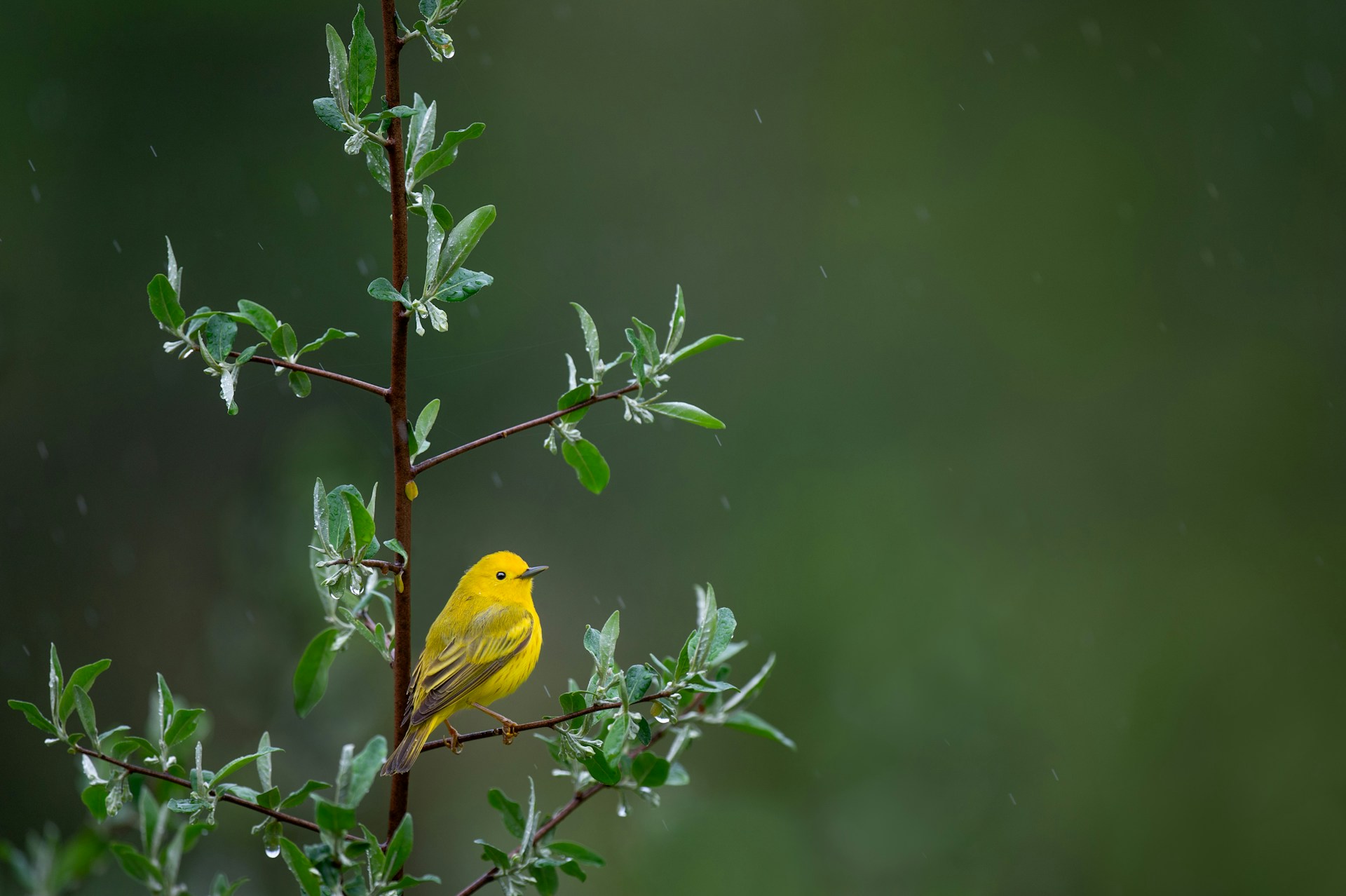
I’ve been photographing birds for more than thirty years. A large part of that time has involved working with other photographers to help them get more from their time in the field. One habit I see more than any other is the tendency to pack up and leave when it starts to rain. I understand the impulse. Gear is expensive, and wet conditions feel like an obstacle. Three decades of field work changed my view on this. Some of my most compelling bird images were made on days when everyone else went home. The same is true of the best images I’ve helped other photographers produce.
Bird photography in the rain rewards patience and preparation in ways that fair-weather sessions rarely do. Rain changes bird behavior and transforms the quality of light. It creates shooting conditions that no amount of post-processing reproduces and empties popular locations of competing photographers. The challenge isn’t the rain itself. The challenge for bird photography in the rain is protecting your gear well enough to stay in the field and keep shooting. This guide covers the behavior, the settings, the compositional opportunities, and the gear setup that makes wet-weather bird photography consistently productive.
Quick Facts:
- Topic: Bird photography in the rain: behavior, settings, and gear protection
- Skill level: Beginner to advanced birding photographer
- Best subjects in rain: Waterfowl, wading birds, raptors, songbirds at feeders
- Shutter speed (freeze rain and bird): 1/500s to 1/1000s
- Shutter speed (streak rain): 1/100s to 1/250s
- ISO range: 800 to 3200 depending on light and cloud density
- Aperture: f/4 to f/6.3 for most birding telephoto lenses
- Gear protection: Camera Canopy mounts to hot shoe, covers lenses to 500mm
- Camera Canopy price: Original $119; Mini for mirrorless $89
9 min read
In This Guide
- Why Bird Photography in the Rain Produces Better Results
- Bird Behavior in Rain: What to Look For and Where
- Rain Light: Why Overcast Skies Help Birding Photographers
- Camera Settings for Bird Photography in the Rain
- Composition Techniques: Drops, Shakes, and Wet Plumage
- Protecting Your Camera and Telephoto Lens in the Rain
- Pros and Cons
- Final Verdict
- Frequently Asked Questions
Why Bird Photography in the Rain Produces Better Results
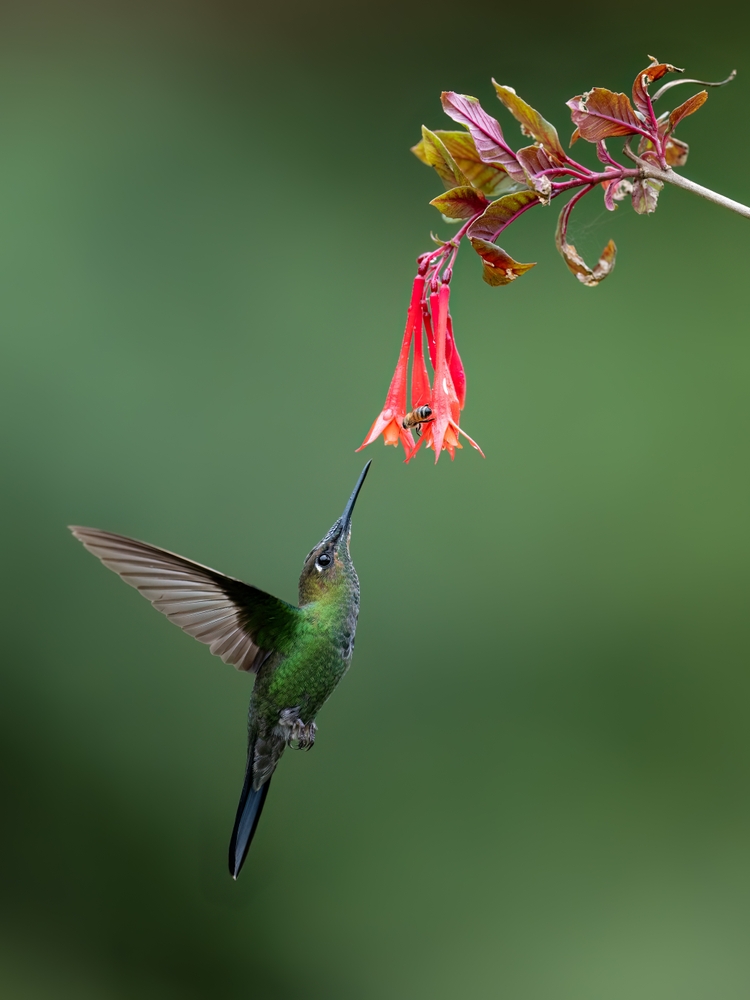
The case for bird photography in the rain begins with a simple observation: birds don’t stop what they’re doing when it rains. They continue to feed, preen, hunt, call, and interact with their environment. The behavioral changes rain triggers are often more photogenic than the baseline behaviors you see on a dry, sunny day. At the same time, most photographers pack up and leave, which means fewer people competing for the same locations and subjects.
The light quality under overcast skies is a significant advantage for bird photography specifically. Direct sunlight creates harsh highlights on pale-plumaged species like egrets, swans, and white ibis. Soft diffused light preserves feather detail that direct sun blows out entirely. On a bright day, a white egret against a blue sky requires constant exposure compensation to avoid clipping the highlights. On an overcast or rainy day, the same bird is lit evenly from all directions. Every feather detail comes through cleanly. This is the same reason portrait photographers prefer overcast days for skin: the light is flattering and forgiving.
Rain also creates visual elements that add story and context. Wet plumage looks different from dry plumage. Raindrops on a duck’s back bead and glisten. A raptor hunched against the rain looks more powerful and dramatic than the same bird in calm, dry conditions. A heron standing in the shallows while rain dimples the water around it produces an image that a cloudless day cannot replicate. These are not effects you add in post-processing. They exist in the field, and you access them by being there.
Bird Behavior in Rain: What to Look For and Where

Understanding which species remain most active in rain, and what they do differently, is the key to productive wet-weather sessions. Not all birds respond to rain the same way. Targeting the right species for the conditions dramatically increases your return per session.
Waterfowl and Wading Birds
Waterfowl are among the most rewarding rain subjects because their plumage is specifically adapted to wet conditions. Ducks, geese, and mergansers have dense waterproof feathers that shed rain in visible, photogenic beads. These birds are entirely unaffected by rainfall and remain as active in heavy rain as in dry conditions. On ponds, lakes, and rivers during a downpour, rain striking the surface creates a visual texture beneath the birds. No dry-day image replicates this framing effect.
Wading birds such as herons, egrets, and ibis increase feeding activity when it rains. Rain falling on soil flushes earthworms and invertebrates to the surface, creating a dense, immediate food source. Great blue herons are worth targeting during and immediately after rain events. Their patient, stationary hunting style makes them easier to approach than most species. In rain, herons often hold position for extended periods. This gives you time to compose and wait for the right behavioral moment.
Raptors in Rain
Birds of prey present some of the most dramatic bird photography opportunities in wet weather. Raptors often perch higher and hold their perches longer during rain, as visibility over open ground improves when the rain flattens vegetation. Owls are difficult to locate in dense foliage during dry conditions. In rain, they sometimes sit in exposed positions, particularly barn owls and short-eared owls hunting open fields. Kestrels and red-tailed hawks perch prominently during rain, scanning for movement in wet grass where prey is more visible.
The image type most associated with raptors in rain is the hunched, rain-soaked silhouette. Picture a large hawk with feathers slicked against its body, turning its head into or away from the rain. These postures rarely occur in dry conditions. Catching them requires being in position during or after a rain event. Adequate camera protection is what keeps you in the field throughout.
Songbirds and Feeders
At backyard feeders and garden locations, rain concentrates songbird activity in two specific ways. First, many birds seek dense shrubs or feeders near cover during light rain, making them easier to locate and frame. Second, rain increases the energy demands of small birds, which push their feeding activity higher to maintain body temperature. Robins are a particularly productive rain subject. Robins move to open lawns and paths during rain to hunt earthworms. They often approach observers closer than in dry conditions, focused on feeding rather than threat avoidance.
Rain Light: Why Overcast Skies Help Birding Photographers

The light quality during rain is the single most underrated advantage of wet-weather bird photography. Direct sunlight creates strong shadows and bright highlights simultaneously, which is a technical challenge for every camera sensor on the market. The dynamic range required to expose correctly for both a bright sky and a shadowed bird often exceeds what the sensor delivers. Overcast and rainy conditions collapse that range dramatically.
Under full cloud cover, light wraps around a bird from multiple directions at once. Under full cloud cover, there are no harsh shadows under beak or wing. There are no blown-out highlights on white plumage, and no need to position yourself around the sun angle. Point the lens at the bird, expose for the subject, and the light does the work. No additional management is needed. Overcast conditions are a substantial improvement for photographers who spend sessions fighting harsh midday sun with fill flash or shadow recovery. Both shooting ease and final image quality benefit.
Color and Saturation in Rain
Wet surfaces saturate color in ways dry conditions don’t. Green vegetation behind a bird deepens and intensifies when wet. Brown bark, grey rock, and dark soil all become richer in tone. This increased saturation produces more vivid contrast against the bird. It is most noticeable with brightly colored species like wood ducks, painted buntings, or kingfishers. The background does compositional work in a rain image that it doesn’t do in a dry one, without any additional editing.
Camera Settings for Bird Photography in the Rain

Bird photography in the rain requires settings adjustments from your standard dry-condition approach. The changes are specific and predictable. Setting them before going out is better than adjusting mid-session when a subject is in front of you.
Shutter Speed
Shutter speed is the primary creative variable in rain bird photography. To freeze both the bird and individual raindrops, use 1/500s to 1/1000s. This range captures the drops as individual points of light against a darker background. It also stops wing and head movement in the bird. At 1/100s to 1/250s, raindrops blur into streaks, suggesting rain without showing its structure in detail. This slower range suits stationary birds, such as herons or raptors on a perch. The slower shutter creates rain atmosphere without introducing blur on the bird.
The most dramatic water-shake images require fast shutter speeds of 1/1000s to 1/2000s. At these speeds, the arc of water flying from the bird’s body freezes while the bird itself stays sharp. Water-shake behavior is common in waterfowl and is worth anticipating. Birds typically shake after preening, after landing on water, or during a break in rain intensity.
ISO and Aperture
Rain conditions typically require ISO 800 to 1600 at minimum, increasing to ISO 3200 or above in heavy overcast or late-afternoon rain. Modern full-frame cameras handle ISO 3200 without significant noise impact on a properly processed image. Crop-sensor bodies show more noise at high ISO. Pushing above ISO 1600 on an APS-C body warrants review before publishing images from a session.
For aperture, f/4 to f/6.3 covers most bird photography scenarios in rain. Wider apertures like f/4 let in more light in low conditions and produce pleasing background separation. This matters when wet vegetation behind the subject is potentially distracting. Stopping down to f/6.3 increases depth of field. This suits birds at close range, where focus plane errors at wide apertures are more likely.
Autofocus in Rain
Rain reduces contrast in the scene, and contrast is what phase-detection autofocus systems rely on to lock and track. In heavy rain, AF systems sometimes hunt before locking, particularly on small birds against complex backgrounds. Two adjustments help. First, switch from full-zone or wide-area AF to a single point or small cluster of points. With fewer points active, the camera is less likely to lock onto rain in front of or behind the subject. It is more likely to hold on the bird’s eye. Second, use continuous AF modes with subject tracking if your camera supports bird or animal recognition. Modern mirrorless systems from Sony, Nikon, and Fujifilm handle bird-eye tracking in rain reliably, even in reduced contrast conditions.
Lens Hood and Front Element Management
A lens hood is essential for bird photography in the rain. Without one, rain strikes the front element directly and creates blur spots that ruin images. With a hood, rain typically falls short of the front glass and the front element stays cleaner for longer between wipes. Keep a microfiber cloth in an accessible pocket and wipe the front element between shots during breaks in subject activity. Checking the front element is a habit that most experienced rain photographers develop quickly. A single unnoticed raindrop on the front glass ruins a burst sequence instantly.
Buy Direct From Camera Canopy
Keep Shooting When the Rain Starts
The Camera Canopy mounts to your hot shoe and protects your camera and telephoto lens with both hands free. No sleeves. No fumbling. Full control throughout the session.
Composition Techniques: Drops, Shakes, and Wet Plumage

Bird photography in the rain offers compositional opportunities unavailable in dry conditions. Learning to anticipate and frame these moments separates rain sessions that produce standout images from those that produce wet versions of ordinary portraits.
Raindrops on Plumage
On waterproof-feathered species like ducks and coots, rain beads into visible droplets on the surface of the feathers. These drops add texture and visual interest to an otherwise standard portrait. To render them clearly, shoot in the 1/500s to 1/1000s range with a dark or shadowed background behind the bird. A shadowed background makes the drops reflect light and stand out. Against a bright sky or pale water surface, the drops disappear. Positioning the bird against a darker area of vegetation or shadow is the difference between showing the drops and losing them. Background choice is critical.
On birds with less waterproof plumage, rain produces a different effect. Small songbirds’ feathers soak through in rain, making the bird look smaller and more compressed than usual. A rain-soaked robin or sparrow looks distinctly different from its dry-weather profile. This difference alone gives the image a specificity that a standard perched portrait lacks.
Water-Shake Behavior
Water shaking is one of the most dramatic behaviors in bird photography and rain is the primary trigger. Birds shake water from their plumage between 1 and 5 times per minute during sustained rain, depending on the species. Waterfowl shake most frequently. The shake starts at the head and ripples toward the tail, throwing water outward in an arc. At 1/1000s or faster, this motion freezes into a halo of droplets surrounding the bird. Anticipating the shake requires watching the bird’s posture. A slight lowering of the head and a tensing of the neck indicate a shake is about to start. Holding continuous shooting at the moment the behavior begins produces a sequence from which the peak frame is selectable in post.
Environmental Rain Images
Pull back from tight portraits when rain is at its heaviest. A bird photographed in a wider frame during a downpour tells a story that a tight telephoto portrait doesn’t. Splashing water, rain-soaked vegetation, and dimpled water surfaces become part of the image. These images show a bird’s relationship with its habitat in a way a clear-sky portrait doesn’t. The weather has to read as weather for the image to work. A 70-200mm zoom or 100-400mm lens at the shorter end of its range gives enough field of view to include the surrounding scene. The bird remains the clear primary subject while the environment reads as environment.
Protecting Your Camera and Telephoto Lens in the Rain
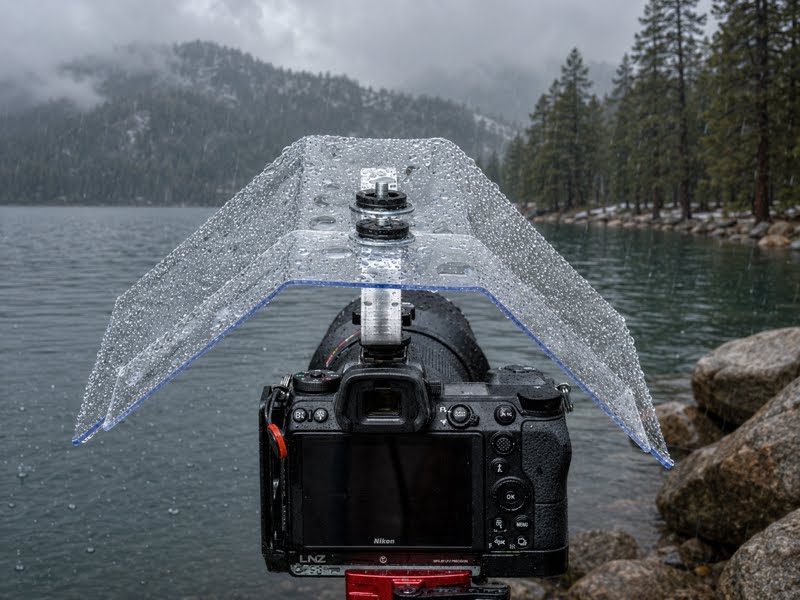
Gear protection is the foundational problem of bird photography in the rain. The best settings, the most productive location, and the strongest behavioral moment are all wasted if rain gets into your gear. The protection approach you choose determines how much of the session you spend managing gear versus shooting.
The Problem With Fabric Rain Sleeves for Birding
Fabric rain sleeves are the most common protection solution for field photography. They work, but they create a specific problem for birding: you lose direct access to your camera controls. Changing ISO, exposure compensation, AF mode, or burst speed through a fabric sleeve requires stopping your tracking motion to fumble through the fabric. In the fast-moving sequences that characterize bird photography, this delay costs frames. A water-shake sequence, a bird taking flight, or a raptor striking toward prey doesn’t pause while you adjust settings through a sleeve.
The other limitation of fabric sleeves for bird photography is lens compatibility. Birding telephoto lenses range from 100-400mm to 500mm and 600mm. Fabric covers in these sizes become bulky. Repositioning them when you need zoom or focus ring access adds time and friction to every adjustment.
The Camera Canopy Approach for Birders
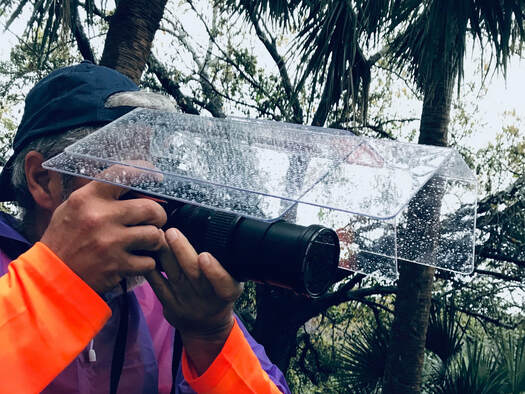
The original Camera Canopy rain shield addresses the birding-specific problems that fabric sleeves create. It mounts to the camera’s hot shoe and extends a clear acrylic canopy over the body and lens. The canopy covers setups up to 500mm. Because the shield sits above rather than around the camera, every dial, button, and focus control remains directly accessible. Changing settings during an active sequence happens exactly as it does in dry conditions. There is no friction of working through a sleeve.
Mirrorless birders using 100-400mm or 100-500mm zoom lenses should consider the Mini Camera Canopy for mirrorless. It provides the same hands-free overhead protection at $89 versus $119 for the original. Both versions include a rear tripod shield for extended hide or tripod sessions. This is a meaningful addition for birders who spend long periods at a fixed position. The rear shield protects the LCD and battery area during longer static sessions at ponds or feeding stations. At these locations, the camera holds position for extended periods rather than tracking moving subjects.
The transparent acrylic design keeps the lens hood and front element management unchanged from dry-condition shooting. There is no sleeve to remove when wiping the front element between shots. This is a workflow advantage during active rain sessions when lens checks happen frequently.
Mirrorless Birding Photographer?
The Mini Camera Canopy Is Built for Your Setup
Lightweight, compact, and designed for mirrorless cameras with telephoto zooms. Same hot-shoe mount. Full control access. At $89 plus shipping.
Pros and Cons of Bird Photography in the Rain
Pros
- Overcast light eliminates harsh shadows and blown highlights on pale-plumaged species like egrets and swans
- Waterfowl remain highly active and visible in rain, with water-bead effects on plumage adding visual texture
- Wading birds increase feeding activity as rain flushes prey to the surface
- Raptors hold perches longer and in more exposed positions during rain, improving shooting angles
- Water-shake behavior occurs frequently during rain, producing dynamic action sequences unavailable in dry conditions
- Popular birding locations empty of competing photographers, giving you better access to key spots
- Wet background vegetation intensifies color saturation, improving contrast behind the subject
Cons
- Rain reduces scene contrast, causing AF systems to hunt before locking on small or distant birds
- Raindrops on the front lens element create blur and require frequent checking between active sequences
- Low light in heavy rain pushes ISO to 1600–3200, which introduces grain on APS-C and entry-level full-frame sensors
- Fabric rain sleeves restrict access to camera controls, costing frames during fast action sequences
- Many songbirds reduce activity and shelter during heavy rain, limiting species diversity in the field
- Sustained heavy rain eventually saturates clothing and causes physical discomfort, limiting session length
Final Verdict

Bird photography in the rain is a different discipline from fair-weather birding, and the difference works in your favor more often than not. Light is better for pale-plumaged species. Behavior is more varied and dramatic. Locations are less crowded. Images look different from the standard telephoto portraits that fill most birding portfolios, because the conditions that produced them are genuinely different.
The practical barrier for bird photography in the rain is gear management. The birding telephoto lens is among the most expensive pieces of equipment any photographer owns. Protecting it during rain sessions is non-negotiable. The protection system you choose determines how much of the session you spend shooting versus managing your cover. For the fast-reaction demands of bird photography, the right protection system keeps both hands on the camera and leaves every control accessible. Fabric sleeves protect the gear but cost you the frames. A rigid, hot-shoe mounted canopy keeps the gear protected and keeps you shooting.
DSLR birders and mirrorless photographers with lenses up to 500mm will find the original Camera Canopy at $119 covers everything the session demands. Mirrorless shooters using 100–400mm or 100–500mm zoom systems should start with the Mini Camera Canopy at $89. Both ship with the rear tripod shield and carry bag. Both mount to any standard hot shoe without tools or setup time. Wet weather sessions are where the best bird images get made. The gear setup should keep you out there long enough to find them.
Ready to Buy?
Check Today’s Price on Camera Canopy
Made in the USA. Ships with rear tripod shield, lens cleaning cloth, and weather-resistant carry bag. Mount it, go shoot.
Frequently Asked Questions
Is bird photography in the rain worth it?
Bird photography in the rain produces images and behavioral moments that dry-weather sessions don’t. Waterfowl remain active and display water-bead effects on their plumage. Wading birds increase feeding activity. Raptors hold exposed perches longer. The light is softer and more flattering for pale-plumaged species. Rain sessions also tend to be less crowded, giving you better access to productive locations. The investment in adequate gear protection is the main requirement for making wet-weather sessions consistently productive.
What camera settings should I use for bird photography in the rain?
Start at ISO 800 to 1600, shutter speed 1/500s to 1/1000s for birds in motion or to freeze raindrops, and aperture f/4 to f/6.3. For rain-streak effects on stationary birds, reduce shutter speed to 1/100s to 1/250s. In heavy overcast or late afternoon rain, push ISO to 1600 to 3200. Use single-point or small-zone autofocus to improve AF lock in low-contrast rain conditions. Switch to bird or animal tracking modes if your camera supports them.
Do birds come out in the rain?
Many species remain active during rain and some increase their activity level. Waterfowl (ducks, geese, mergansers) are unaffected by rain and remain fully active on the water. Wading birds (herons, egrets) often feed more intensively as rain flushes invertebrates to the soil surface. Raptors continue hunting and often perch in more exposed positions. Robins move to open ground to hunt earthworms. Some songbirds shelter during heavy rain, but most resume activity quickly when rain lightens or stops.
How do I protect my camera for bird photography in the rain?
For bird photography in the rain, the primary protection challenge is maintaining access to camera controls during fast action sequences. Fabric rain sleeves protect the gear but restrict your hands from reaching dials and buttons. This costs frames during water-shake behavior, birds taking flight, and other fast sequences. A hot-shoe mounted rigid canopy like the Camera Canopy keeps overhead moisture away from body and lens. Every control stays fully accessible throughout the session. Both hands stay on the camera, and settings changes happen without removing or repositioning the cover.
How do I photograph raindrops on bird feathers?
To show raindrops clearly on plumage, position the bird against a darker background , shadowed vegetation, dark water, or shaded ground. Against a pale or bright background, drops become invisible. Use 1/500s to 1/1000s to freeze the drops as individual points rather than blurs. Waterfowl with waterproof plumage show the most visible beading effect. Small songbirds show a different effect: their feathers soak through, producing a compressed, drenched appearance that reads distinctly from a dry-day portrait.
What birds are best for rain photography?
Waterfowl are the most productive rain subjects because their plumage is waterproof and they remain fully active during rainfall. Ducks, geese, and mergansers all work well. Wading birds, particularly great blue herons and great egrets, are productive rain subjects. They feed more actively in rain and hold their positions long enough to compose and shoot deliberately. Raptors on exposed perches during rain provide dramatic posture shots. At feeders, robins and other ground-feeding species increase activity during rain as earthworms surface. They are accessible and active even in heavy conditions.
Can I use a non-weather-sealed camera for bird photography in the rain?
Yes, with adequate overhead protection. A non-sealed camera body under a Camera Canopy in moderate rain faces less direct moisture exposure than a weather-sealed body shooting unprotected in the same conditions. The canopy keeps rain away from the top of the body, the hot shoe area, the lens mount, and the front element. In heavy or horizontal rain, a weather-sealed body with dedicated protection is the more reliable combination. For most rain birding sessions, the protection system matters more than the weather sealing rating of the body.
Our articles might have affiliate links and the occasional sponsored content, but don’t sweat it – if you buy something, we get a little kickback at no extra cost to you, and we only hype products we truly believe in!

