


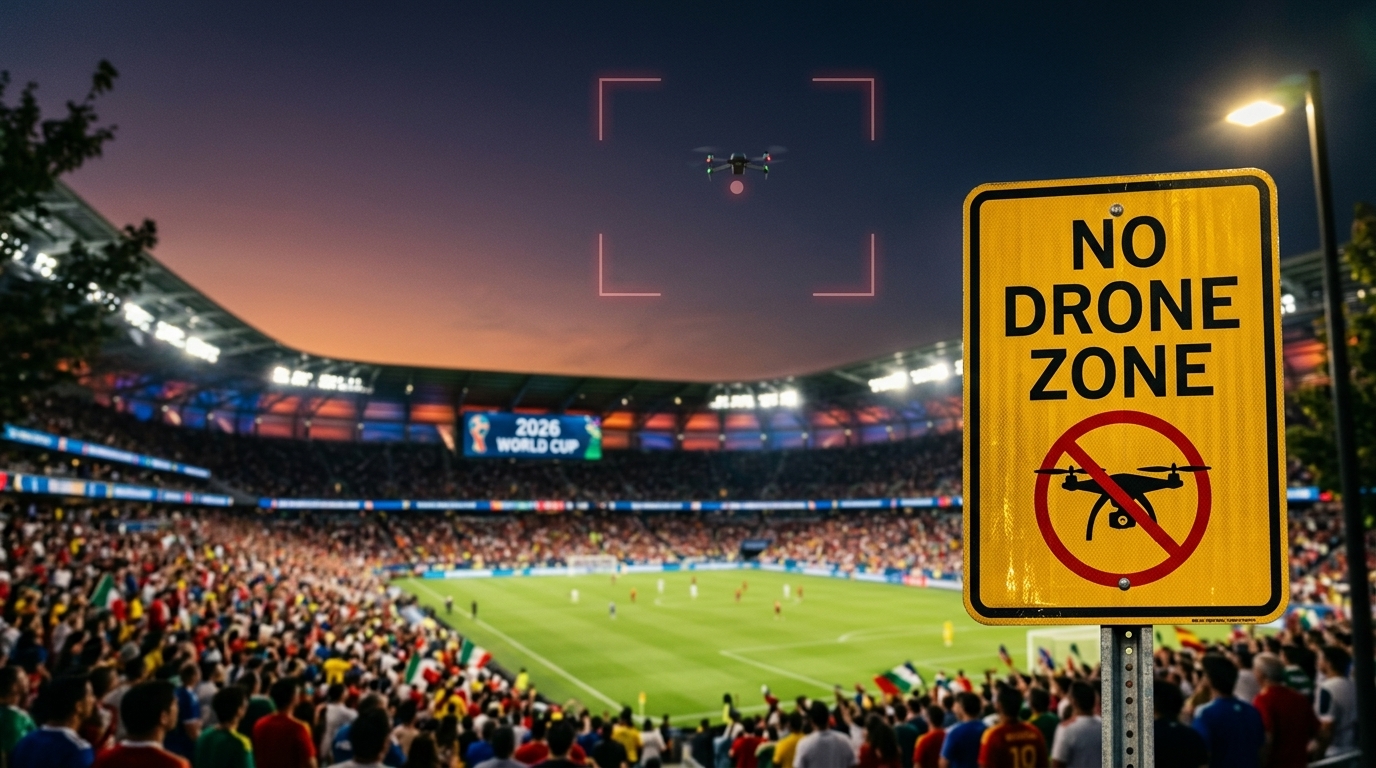
Quick Facts:
- Event: 2026 FIFA World Cup, U.S. host venues
- No-fly status: FAA No Drone Zone over every stadium and fan zone
- Drones seized: 300+ since June 11, 2026 (TSA)
- Match-day ring: 3 nautical miles, up to 3,000 feet above ground
- Fan-zone ring: 1 nautical mile, up to 1,000 feet above ground
- Florida enforcement: 54 drones seized, 49 operators ticketed (FBI Miami)
- Penalties: civil fines up to $75,000; criminal fines up to $100,000
- Best for: any drone pilot flying near a World Cup host city
5 min read
In This Article
- What Happened: 300 Drones Seized at World Cup Venues
- What a No Drone Zone Means for Drone Pilots
- FAA TFRs and How to Check Restricted Airspace
- Penalties for Flying in a No Drone Zone
- Recreational vs. Part 107 Pilots: Who the Rules Cover
- How Enforcement Works at World Cup Venues
- What Drone Pilots Should Do Before Flying
- Frequently Asked Questions
What Happened: 300 Drones Seized at World Cup Venues
U.S. authorities have turned every 2026 FIFA World Cup venue into a federal No Drone Zone. Since the tournament opened on June 11, 2026, agencies have seized more than 300 unauthorized drones. The Transportation Security Administration announced the figure on June 23. Moreover, the TSA called it the most comprehensive airspace security and drone mitigation effort in U.S. history.
For drone pilots, the message is direct. Fly near a stadium without approval, and you risk losing your aircraft. Specialized FBI teams sit at venues to detect and disable drones in real time. Because penalties reach into six figures, the stakes for one casual flight run high.
This guide explains where the rules apply, how far the closures extend, and what happens to operators who ignore them. You will also learn how to check restricted airspace before takeoff. First, here is what the rules mean for your flights.
What a No Drone Zone Means for Drone Pilots
A No Drone Zone is airspace where drone flights are prohibited without specific authorization. On match days, the FAA bars all aircraft operations within three nautical miles of each stadium, up to 3,000 feet above ground level. Therefore, a hobby flight a mile from the gates still breaks federal rules. These event closures stack on top of the everyday drone rules for photographers who shoot near crowds.
Fan gatherings carry their own ring. At official fan zones, the FAA bars drones within one nautical mile and up to 1,000 feet above ground level. As a result, the restricted area covers far more ground than the stadium alone. Pilots working in host cities should treat the entire event footprint as off limits, including parking lots, plazas, and broadcast compounds.
FAA TFRs and How to Check Restricted Airspace
Each closure is enforced through a temporary flight restriction, or TFR. A TFR is a short-term FAA order closing a defined block of airspace for a set window. During the tournament, every host stadium sits under an FAA TFR on match days. Pilots should read the active notices, known as NOTAMs, before every single flight.
Checking airspace takes minutes. Use the FAA B4UFLY app or a current drone no fly zone map to confirm your location sits clear of any closure. Look up active TFR drone restrictions for the exact date and time of your shoot. A drone no fly zone map refreshes as new closures appear, so check it the same day you plan to fly. For the official rules, review the FAA’s No Drone Zone guidance first. These event TFRs also sit alongside broader federal drone regulations already in force.
The closures reach across every U.S. host city, not one region. For example, a TFR drone ban activates around each stadium on its match days, while fan-zone rings hold throughout the event. Because match schedules shift between cities, an area clear yesterday turns restricted today. Therefore, build the airspace check into your pre-flight routine, the same as a battery or firmware check.
Penalties for Flying in a No Drone Zone
Penalties for breaking these rules run steep. The FAA sets civil fines up to $75,000 per violation. On the criminal side, fines reach $100,000, alongside federal charges and possible arrest. Authorities also confiscate the aircraft on the spot, so one bad flight ends with empty hands.
Recent enforcement shows the scale. In Florida, the FBI’s Miami field office ticketed 49 operators and seized 54 drones. Meanwhile, agents in Kansas City confiscated eight drones and controllers at a stadium and a nearby fan zone. Two operators there received violation notices from the Federal Air Marshal Service. These drone fines apply to hobbyists and licensed pilots alike. Before buying, weigh the cost of the best drones for photography against a five-figure penalty for one wrong flight.
Recreational vs. Part 107 Pilots: Who the Rules Cover
Nobody is exempt. Recreational flyers, licensed Part 107 operators, and media crews all face the same airspace closures. Holding a Part 107 certificate does not grant access to a restricted stadium ring. Instead, any flight inside the zone needs direct authorization from air traffic control.
Working photographers with a legitimate assignment have one path. Request authorization in advance through the FAA, then wait for written approval before takeoff. Without clearance, the aircraft stays illegal inside the zone. New pilots should also confirm their registration is current, since lapsed paperwork adds a second violation. For owners of affected models, here is what drone owners need to know about staying compliant.
How Enforcement Works at World Cup Venues
Enforcement moves fast. Specialized FBI units stationed at venues detect unauthorized drones and disable them in real time. In addition, counter-drone systems flag aircraft the moment they cross into the ring. Consequently, most operators never finish a flight before agents reach them.
The crackdown follows a wider federal push. Last year, President Donald Trump signed an executive order to strengthen U.S. defenses against threatening drones. The Department of Homeland Security has also installed counter-drone systems at the U.S.-Mexico border in Texas. Earlier cases set the tone for this response. One man pleaded guilty after flying a drone over an NFL playoff game in Baltimore in January 2025, while a Massachusetts man faced charges for a drone near the 2024 Boston Marathon finish line.
What Drone Pilots Should Do Before Flying
The safest move during the tournament stays simple. Keep your drone grounded anywhere near a host city on match days. If you plan a legitimate shoot, secure FAA authorization well ahead of time, because approval is slow and seizure is instant.
Before any flight elsewhere, run three quick checks. First, open a current airspace app and confirm no TFR covers your spot. Second, stay clear of crowds, stadiums, and fan zones across the host cities. Third, keep your registration and Part 107 paperwork in order. Together, these habits protect both your aircraft and your wallet through the rest of the 2026 World Cup.
Frequently Asked Questions
Is it legal to fly a drone over a stadium?
No. During the 2026 World Cup, every stadium sits inside a No Drone Zone on match days. Flights within three nautical miles need air traffic control approval. Without it, you face seizure, federal charges, and steep fines.
What about an empty stadium with no event?
Match-day TFRs lift once the airspace order ends. Still, many venues hold standing restrictions, and local rules differ by city. Check a current drone no fly zone map for the exact date before you launch.
What happens if you fly a drone in a restricted zone?
FBI teams detect the aircraft and disable it. Agents then seize the drone and often issue a citation. Operators face civil fines up to $75,000 and criminal fines up to $100,000.
How close to a stadium are drones allowed?
On match days, no drone flights are allowed within three nautical miles of a stadium, up to 3,000 feet. At fan zones, the ring shrinks to one nautical mile and 1,000 feet. Outside those rings, standard FAA rules apply.
What are the FAA penalties for a No Drone Zone violation?
Civil penalties reach $75,000 per violation. Criminal fines reach $100,000, with federal charges, possible arrest, and confiscation of the aircraft. Each drone fine lands per violation, so several flights multiply the total fast.
Do the rules apply to recreational and Part 107 pilots?
Yes. The closures cover hobby flyers, licensed Part 107 pilots, and media crews equally. A Part 107 certificate alone does not grant access. Authorization from air traffic control remains the only legal route into a restricted ring.

