


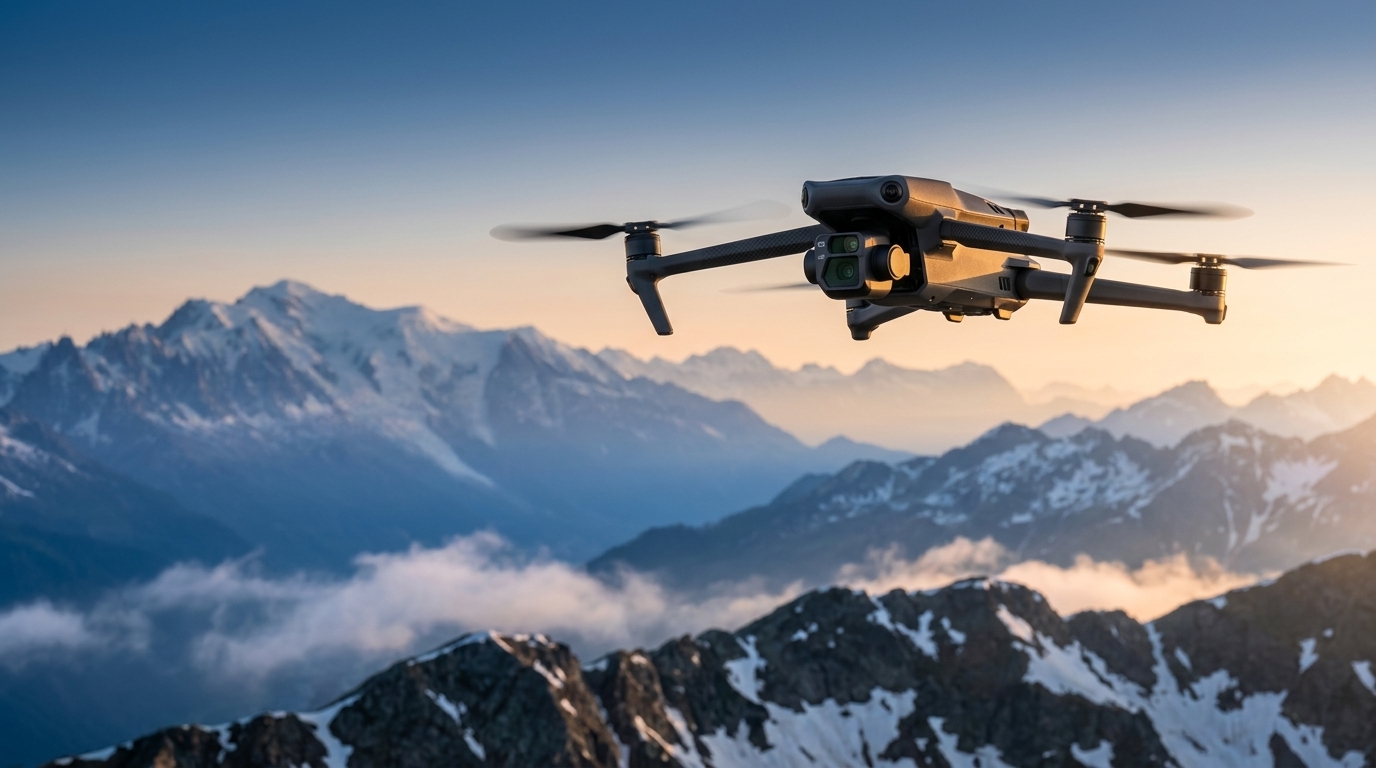
Quick Verdict: The best drone for photography in 2026 is the DJI Mavic 4 Pro for serious work, the DJI Air 3S for the price-to-quality sweet spot, and the DJI Mini 5 Pro for travel. The Autel EVO II Pro V3 covers the non-DJI option. The Potensic Atom 2 and DJI Neo handle budget and beginner buyers. The FCC Covered List ruling from December 2025 does not ban any of these. Every pick is currently available through B&H, Adorama, and Amazon third-party sellers. DJI does not ship direct to US buyers.
12 min read
In This Article
- Overview
- Quick Comparison Table
- The FCC Covered List in Plain English
- 1. DJI Mavic 4 Pro: Best Overall
- 2. DJI Air 3S: Best for Landscape
- 3. DJI Mini 5 Pro: Best Sub-249g Travel Drone
- 4. Autel EVO II Pro V3: Best Non-DJI Alternative
- 5. Potensic Atom 2: Best Budget Pick
- 6. DJI Neo: Best for Beginners
- Buyer’s Guide: Key Specs to Compare
- My Field Notes From Years of Flying Drones
- Final Thoughts
- Frequently Asked Questions
Overview
Picking the best drone for photography in 2026 is harder than it should be. Headlines about an FCC ban have spooked half the photographers I talk to. Meanwhile, DJI does not sell direct in the US anymore. On top of that, the sub-249g category quietly got a 1-inch sensor in September 2025. As a result, the drone you bought in 2022 is not the drone you would buy today.
This guide cuts through the noise. You get six picks, verified specs, real US prices from B&H and Amazon, and a plain-English explanation of what the FCC Covered List ruling means in practice. In addition, every drone on this list is currently shipping to US buyers. Every Amazon link points to a live listing as of May 12, 2026.
For starters, three things shifted the photography drone market in the last twelve months. The DJI Mavic 4 Pro launched in May 2025 with a 100-megapixel Hasselblad main camera and two tele lenses. It is the first true three-lens flagship in the consumer space. In September 2025, the DJI Mini 5 Pro landed with a 1-inch sensor in a sub-249g shell. Then on December 22, 2025, the FCC added DJI and Autel to the Covered List, and the internet promptly misreported what that means. We will fix that in a moment.
Quick Comparison Table
| Drone | Sensor | Max Video | Flight | Weight | Price (US) |
|---|---|---|---|---|---|
| DJI Mavic 4 Pro | 4/3″ + 1/1.3″ + 1/1.5″ | 6K/60fps HDR | 51 min | 1,063 g | ~$2,699 |
| DJI Air 3S | 1″ + 1/1.3″ | 4K/60 HDR, 4K/120 slow-mo | 45 min | 724 g | ~$1,099 |
| DJI Mini 5 Pro | 1″ CMOS, 50 MP | 4K/60 HDR, 4K/120 slow-mo | 36 min | <249 g | ~$999 |
| Autel EVO II Pro V3 | 1″ Sony, 20 MP | 6K/30fps | up to 40 min | ~1,191 g | ~$1,899 |
| Potensic Atom 2 | 1/2″ CMOS, 48 MP | 4K/30fps HDR | 32 min | 249 g | ~$329 |
| DJI Neo | 1/2″ CMOS, 12 MP | 4K/30fps | 18 min | 135 g | ~$199 |
The FCC Covered List in Plain English
On December 22, 2025, the FCC added DJI, Autel, and all foreign-produced uncrewed aircraft to its Covered List under the FY2025 NDAA. Specifically, Reuters ran the story as “US bars imports of new models.” However, that headline is technically accurate but reads like a ban to most people. In reality, it is not a ban.
In practice, the rule does two things. First, every drone with FCC equipment authorization granted before late 2025 remains legal to sell, import, and fly in the US indefinitely. That list includes the Mavic 4 Pro, Mini 5 Pro, Air 3S, Mini 4 Pro, Mavic 3 Pro, Neo, and every current Autel model. Second, future drone models from Covered List companies will not receive new FCC equipment authorization. A hypothetical Air 4 or Mini 6 will not enter the US through normal channels until policy changes.
For context, the practical headache is sourcing. DJI does not sell direct to US buyers anymore. You buy through B&H, Adorama, or Amazon, where US prices sit roughly $200 to $400 above DJI’s global MSRP. For a deeper read on related FCC enforcement, our piece on the DJI Osmo Pocket 4 US availability situation walks through how this plays out for non-drone DJI products.
1. DJI Mavic 4 Pro: Best Overall Photography Drone
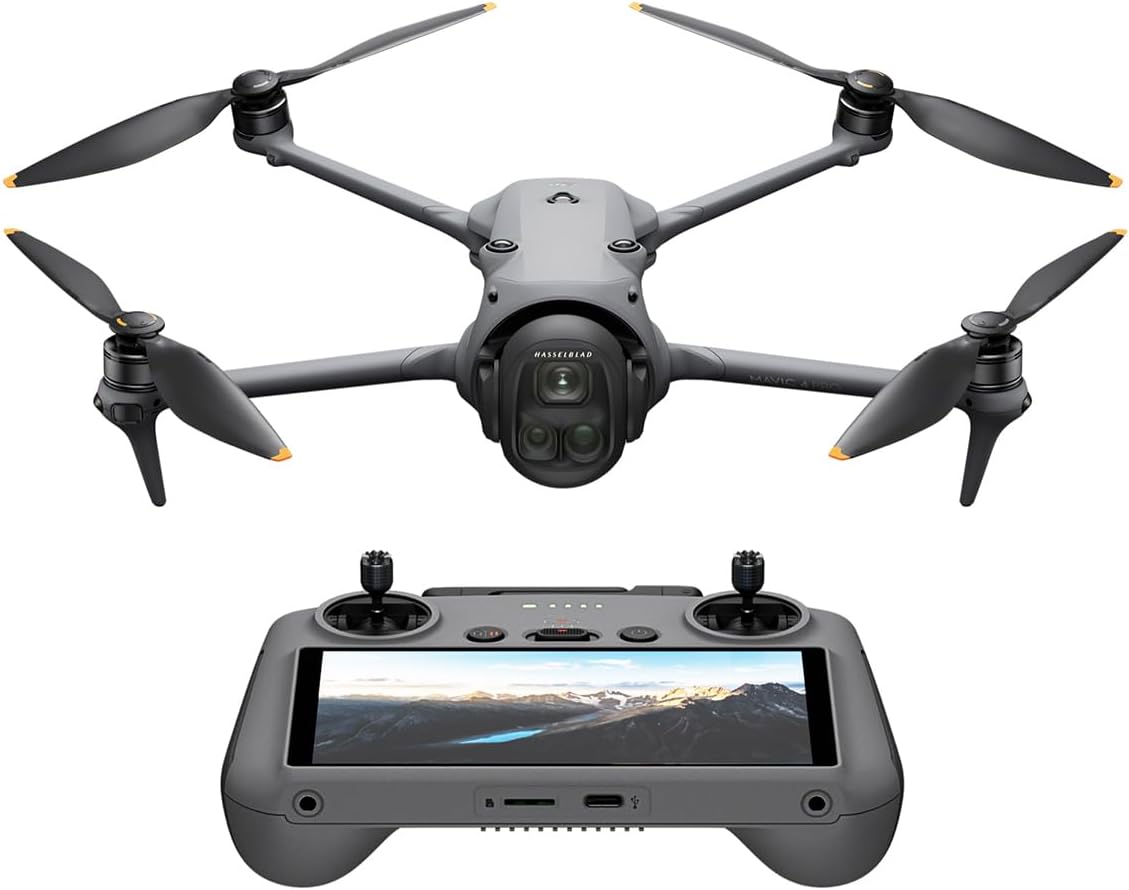
The DJI Mavic 4 Pro is the first consumer drone with a 100-megapixel main camera. Specifically, the Hasselblad-branded 4/3-inch sensor sits at the wide focal length. Meanwhile, a 1/1.3-inch sensor handles the 70mm medium tele. Additionally, a 1/1.5-inch sensor covers the 168mm telephoto. Together they give you three working focal lengths from a single airframe. As a result, for a working photographer shooting commercial, editorial, or real estate, the result matters. In fact, this is the single biggest jump in aerial capability since the original Mavic 2 Pro.
In practice, the 100-megapixel files behave like medium-format ground work. You crop hard for the second composition and still hold print-ready resolution. The infinity gimbal rotates 360 degrees. That sounds gimmicky until the first time you shoot a vertical aerial without re-framing the airframe. Flight time hits 51 minutes on a full battery. Transmission reaches 30 km on the FCC profile. The airframe carries the weight without feeling sluggish.
For instance, the trade-off is price. US retail at B&H sits at roughly $2,699 for the standard kit and $2,799 for the Fly More Combo. That is $200 to $400 above DJI’s global MSRP, and the Creator Combo runs north of $3,899. This is not a drone for the photographer who flies twice a year. Instead, it is the drone for the dedicated landscape enthusiast or licensed Part 107 commercial pilot who plans to fly often.
| Pros | Cons |
|---|---|
| Three-lens system with a true 4/3″ sensor on the wide 100 MP main camera 360-degree infinity gimbal 51-minute flight time | US pricing $200-$400 above global MSRP 1,063 g requires FAA registration Steep learning curve on the three-lens workflow |
Featured Gear on Amazon
DJI Mavic 4 Pro: Three-Lens Flagship for Working Pros
100 MP Hasselblad main, 70mm and 168mm tele options, 51-minute flight, 6K/60 HDR. The drone I’d reach for when I want the deepest aerial capability in my personal kit.
2. DJI Air 3S: Best for Landscape and Professional Aerial
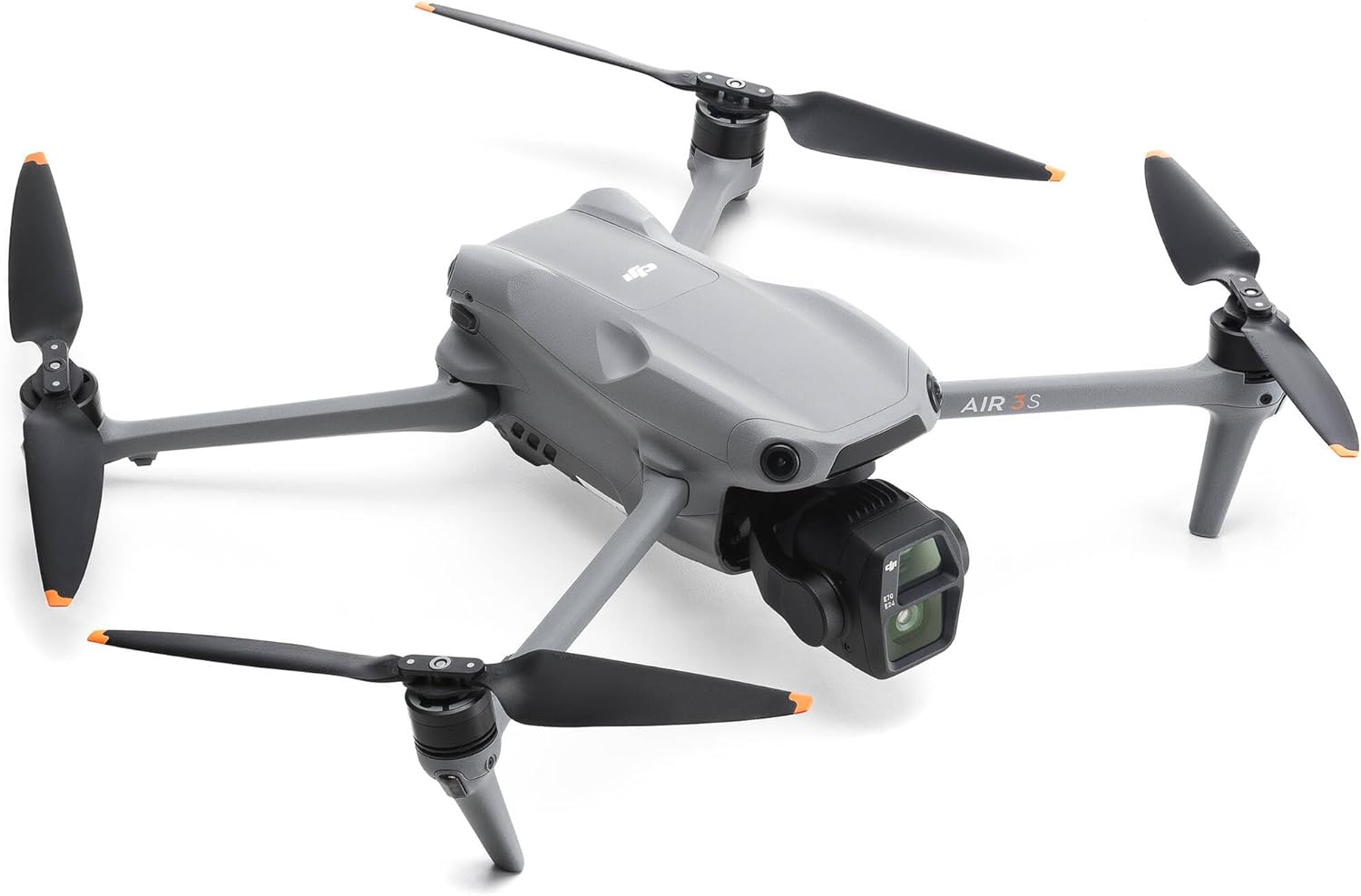
The DJI Air 3S is the price-to-quality sweet spot in the lineup. Specifically, a 1-inch CMOS sensor on the wide and a 1/1.3-inch sensor on the 70mm telephoto deliver 14 stops of dynamic range. Additionally, you get 4K/60fps HDR in 10-bit D-Log M with 4K/120fps slow-mo. Flight time hits 45 minutes. Meanwhile, the price sits at $1,099 with the RC-N3 controller. Alternatively, the Fly More Combo with the RC 2 screen-controller runs $1,599.
Notably, the 70mm telephoto is where the Air 3S earns its place in a landscape kit. You compress three ridges into one frame. The same lens isolates a single peak from a stack of them. Layered atmospheric haze pulls into a tonal composition the wide lens does not capture. Our piece on the best lens for landscape photography explains why short telephoto compression matters on the ground, and the same logic applies to aerial work.
On top of that, the Air 3S adds forward-facing LiDAR. The drone sees obstacles in zero light. So low-light flying for blue hour and astro work is finally usable on a sub-1,000g platform. For the landscape photographer who wants pro-grade aerial without paying for the Mavic 4 Pro’s commercial features, the Air 3S is the answer.
| Pros | Cons |
|---|---|
| 1-inch wide + 1/1.3″ 70mm tele 14 stops dynamic range 4K/60fps HDR, 4K/120fps slow-mo Forward LiDAR for low light | 724 g requires FAA registration No third lens option Smaller sensor than Mavic 4 Pro |
Featured Gear on Amazon
DJI Air 3S: The Landscape Photographer’s Sweet Spot
1-inch sensor, 70mm telephoto for compressed ridge shots, 45-minute flight time, LiDAR for low-light blue hour work. The aerial counterpart to a 24-70 plus a 70-200 on the ground.
3. DJI Mini 5 Pro: Best Sub-249g Travel Drone

The DJI Mini 5 Pro is the most important drone launch of the last two years. Specifically, it is the first sub-249g drone with a 1-inch sensor. Until September 2025, the sub-249g category meant compromise on image quality in exchange for skipping FAA registration. As a result, the Mini 5 Pro ended that trade-off.
In practice, the 1-inch sensor pulls the Mini 5 Pro into the same image-quality conversation as the Air 3S at half the weight. The f/1.8 aperture, 50-megapixel stills, 4K/60fps HDR with 4K/120fps slow-mo, and 36-minute flight time deliver what photographers used to need a 720g drone for. Recreational pilots do not register the airframe with the FAA. Travel photographers do not negotiate with airline weight limits.
By contrast, US Amazon stock has been intermittent through Q1 2026 according to DroneDJ. B&H and Adorama tend to have more consistent inventory. The Fly More Combo runs roughly $1,299 to $1,599 depending on the source. If the listing is out of stock when you check, the older Mini 4 Pro at roughly $759 remains a strong fallback with a smaller sensor.
| Pros | Cons |
|---|---|
| First sub-249g drone with a 1-inch sensor f/1.8 aperture and 50 MP stills No FAA registration needed for recreational use 4K/60fps HDR + 4K/120fps slow-mo | Intermittent US stock through early 2026 Single lens, no telephoto US prices well above global MSRP |
Featured Gear on Amazon
DJI Mini 5 Pro: 1-Inch Sensor in a Travel Shell
The travel photographer’s drone. Under 249g, 1-inch sensor, 50 MP stills, 36-minute flight. No FAA registration, no airline weight argument, no excuse to leave it home.
4. Autel EVO II Pro V3: Best Non-DJI Alternative
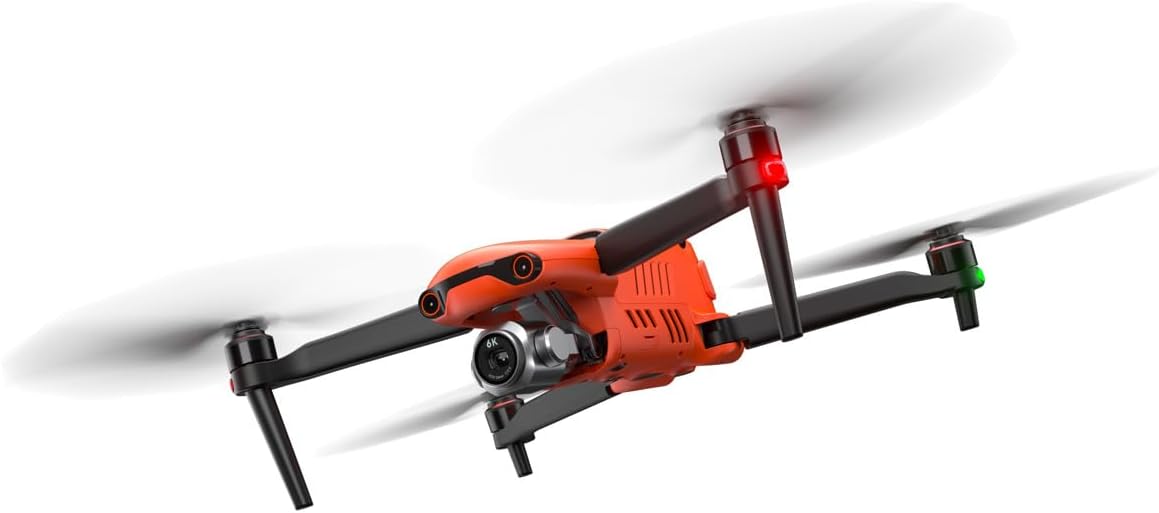
The Autel EVO II Pro V3 is the answer for photographers who will not fly DJI. For example, some reasons are practical, like federal contractor restrictions or geofence frustration. Meanwhile, others are principled, like data-privacy concerns or a preference for non-Chinese hardware where Autel has a US assembly footprint. Whatever the reason, the EVO II Pro V3 is the only mainstream non-DJI drone with a 1-inch Sony sensor in this price class.
Specifically, the 1-inch Sony CMOS offers an adjustable f/2.8 to f/11 aperture and 12-bit DNG RAW capture. The 6K (5472 by 3076) video at 30fps delivers image quality that competes directly with the Air 3S. The 40-minute flight time and 12 km SkyLink 2.0 transmission matter. So does the absence of forced geofencing for commercial pilots who keep getting stuck on DJI’s no-fly zones.
To be clear, the trade-offs are real. The EVO II Pro V3 weighs 1,191g compared to 724g for the Air 3S. The Autel ecosystem is smaller, software updates land slower, and US Amazon listings include both standard and RTK (mapping) variants. The standard Rugged Bundle runs roughly $1,899. Confirm the variant matches your needs before checkout.
| Pros | Cons |
|---|---|
| 1-inch Sony sensor with adjustable aperture 12-bit DNG RAW capture 6K video at 30fps No forced DJI-style geofencing | 1,191g requires FAA registration Smaller software ecosystem Aging UI compared to DJI Fly Two SKU variants on Amazon (standard vs RTK) |
Featured Gear on Amazon
Autel EVO II Pro V3: The Non-DJI Choice
1-inch Sony sensor, adjustable aperture, 12-bit DNG, 6K video, no DJI ecosystem. The choice for federal contractors, privacy-first shooters, and pilots tired of geofence hassles.
5. Potensic Atom 2: Best Budget Pick Under $500
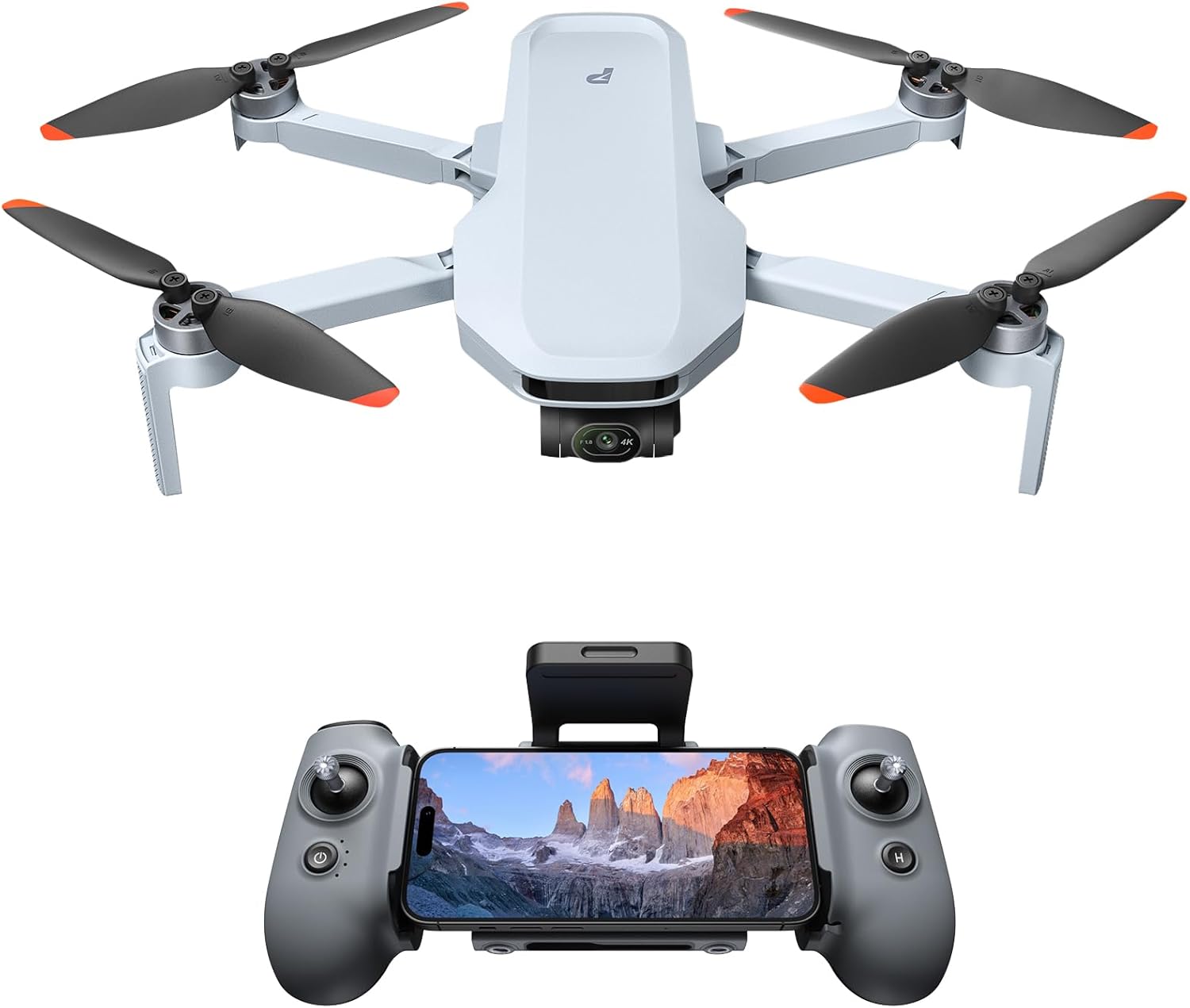
The Potensic Atom 2 is the drone you recommend when the reader balks at the $1,000 entry point on the DJI ladder. Specifically, a 1/2-inch CMOS at 48 megapixels, 4K/30fps HDR video, 32-minute flight time, and a sub-249g airframe arrive at the front door for $329 standard or $449 as the Fly More Combo. In short, that is honest hardware at a price point that used to mean toy-grade compromise.
In practice, the Atom 2 is not a Mini 5 Pro. The smaller sensor shows in low light. The 10 km transmission range is the theoretical maximum rather than the practical one. Gimbal stabilization sits one rung below DJI’s. None of that matters at this price. The photographer who is curious about aerial but unwilling to risk a $1,500 first drone gets a real working tool. The cost matches a decent tripod.
On the gear side, the sub-249g weight means no FAA registration for recreational use. The 48-megapixel stills crop usefully even with the smaller sensor. Pair the Atom 2 with a wide-angle ground kit and you have a complete travel rig for under $2,000 total.
| Pros | Cons |
|---|---|
| $329 standard / $449 Fly More entry price 48 MP stills, 4K/30 HDR video Sub-249g, no FAA registration 32-minute flight time | 1/2″ sensor struggles in low light 10 km transmission is optimistic Gimbal less refined than DJI Smaller third-party accessory ecosystem |
Featured Gear on Amazon
Potensic Atom 2: Honest 4K Under $450
48 MP stills, 4K HDR video, sub-249g, 32-minute flight time. The drone for the photographer who wants to test aerial without risking a four-figure investment.
6. DJI Neo: Best Drone for Beginners
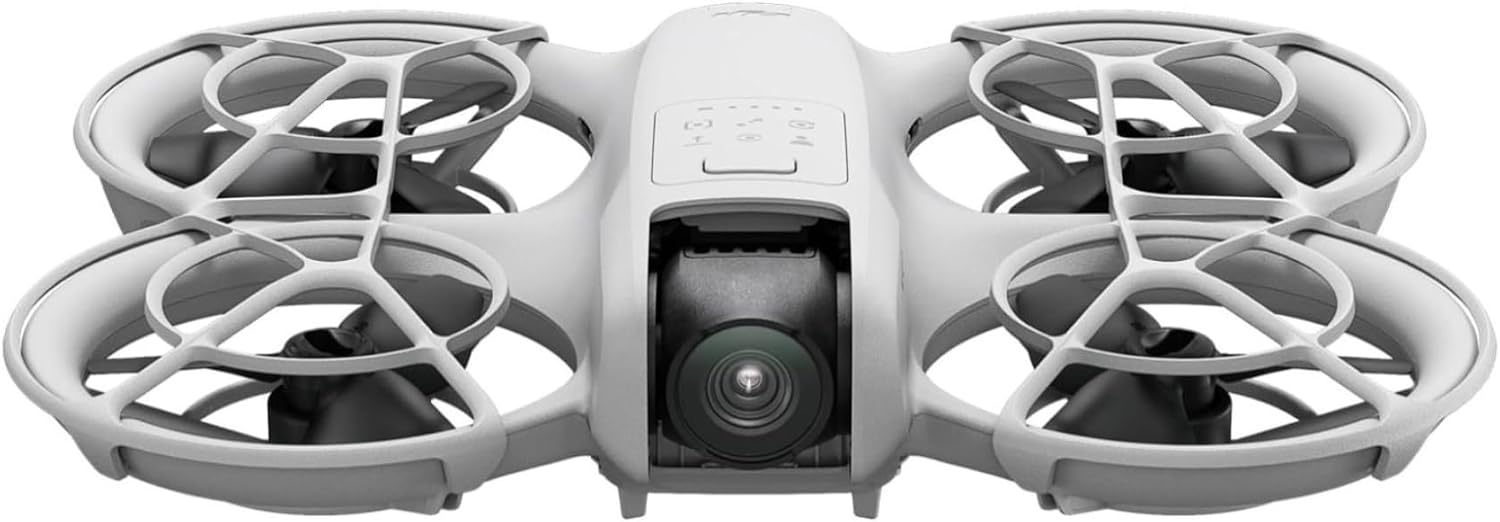
The DJI Neo is the cheapest way into the DJI ecosystem. At $199 in the controller-free configuration, the Neo is a palm-launch follow-me drone. It flies without a transmitter, captures 4K/30 footage, and weighs 135g. However, the Neo does not pretend to be a Mavic. Instead, this B-roll capture tool serves as a vlogger’s friend and the easiest first-drone recommendation in this lineup.
Specifically, the Neo handles QuickShots (Dronie, Circle, Rocket, Spotlight, Helix, Boomerang) without any pilot input. You launch it from your palm, point it at yourself or a subject, and let the drone fly the shot. For a photographer who wants aerial B-roll for client videos but does not want to learn drone piloting, the Neo answers the brief.
Of note, the 18-minute flight time, 1/2-inch sensor, and 4K/30 cap show the price. This is not a still-photography platform. It is a video capture device with stills as a side feature. Pair the Neo with a Mini 5 Pro or Air 3S as the photography platform, and the Neo handles the casual social-content layer.
| Pros | Cons |
|---|---|
| $199 entry price Palm launch, no controller needed 135 g, no FAA registration for recreational use 4K/30 video with QuickShots | 18-minute flight time 12 MP stills only Not a photography-first platform Smaller sensor than the Atom 2 |
Featured Gear on Amazon
DJI Neo: $199 Way Into DJI
Palm-launch follow-me drone, no controller required, 135g, 4K video with built-in QuickShots. The simplest first drone in the photography lineup.
Buyer’s Guide: Key Specs to Compare
Five specs determine whether a drone earns space in your kit. The rest is marketing.
Sensor Size Drives Image Quality
For starters, sensor size is the single biggest predictor of image quality. As a result, a 1-inch sensor pulls more dynamic range and cleaner low-light files than a 1/1.3-inch sensor. Similarly, the 1/1.3-inch sensor beats a 1/2-inch sensor for the same reason. Meanwhile, the Mavic 4 Pro’s 4/3-inch main sensor sits a class above all of them. Bigger sensor, better files, every time.
Transmission Range and Signal Reliability
Notably, transmission range matters more than people think. The 30 km the Mavic 4 Pro pushes on OcuSync 4+ rarely gets used in flight. However, a stronger signal in cluttered urban environments or near canyon walls means fewer dropouts. Therefore, anything advertising under 10 km is for line-of-sight recreational flying only.
Flight Time Governs Your Workflow
In practice, flight time governs your workflow. Forty-five minutes lets you scout, frame, shoot, and reposition without a battery swap. By contrast, eighteen minutes means one composition per battery and a hot trip back to the trailhead. Consequently, the Mavic 4 Pro at 51 minutes and the Air 3S at 45 minutes set the practical floor for working aerial.
Weight and FAA Registration
On the regulatory side, weight maps directly to FAA registration and TSA hassle. Sub-249g recreational flying needs no airframe registration with the FAA, although the TRUST certificate is still required for all recreational flyers. Additionally, anything heavier requires the same TRUST plus FAA registration for recreational use, and Part 107 for commercial work. As a result, the Mini 5 Pro at 249g, Atom 2 at 249g, and Neo at 135g all skip the airframe registration step.
Gimbal Stabilization Quality
Finally, gimbal axis count and stabilization quality dictate how usable the footage is. Three-axis mechanical gimbals on the Mavic 4 Pro, Air 3S, Mini 5 Pro, and Autel EVO II Pro V3 deliver cinema-grade smoothness. By contrast, lower-tier drones often rely on electronic stabilization that crops and softens the image. Always pay for the mechanical gimbal.
My Field Notes From Years of Flying Drones
I’ve shot landscape photography professionally for over twenty years. On the drone side, I am a recreational pilot. I do not hold a Part 107 certificate and have never flown drones commercially or for hire. That said, I have personally owned and flown a long list of drones since picking up a Phantom 2 Vision in 2014, and the drone has been a permanent fixture in my personal landscape kit since the Mavic Pro launched in 2016. Three lessons from that arc are worth passing on to other recreational flyers.
Lesson 1: Drones Replace Helicopters, Not Tripods
For context, the first lesson is that the drone replaces a helicopter rental rather than a tripod. The aerial frame is the one you cannot get on the ground, not a substitute for the one you can. Therefore, stand at the lake’s edge with a 24mm and shoot the foreground rock plus the peak. Then send the drone up to grab the top-down geometric pattern of the river meandering through a valley. Different tools, different jobs.
Lesson 2: Reach for a Longer Focal Length
Moreover, the second lesson is that aerial composition rewards a longer focal length than most photographers expect. The wide-angle aerial gets boring fast. By contrast, the 70mm tele on the Air 3S and the 168mm tele on the Mavic 4 Pro produce frames that feel intentional rather than touristy. The same compression rules from my ground-level landscape work apply double in the air. In addition, altitude gives you more atmospheric haze to work with.
Lesson 3: Wind Is the Real Limiter
To be clear, the third lesson is the one nobody mentions in spec sheets. Wind is the limiting factor, not battery life. For instance, the drone that says it tolerates 25 mph wind is usable up to about 18 mph and shaky above that. Mountain passes funnel wind in patterns that are not on any weather app. Therefore, add 10 mph to whatever the forecast says when you fly above ridges. Land before the gust takes the airframe.
Final Thoughts
Ultimately, picking the best drone for photography in 2026 comes down to three honest questions. What do you shoot? What is your budget? How often will you fly?
For starters, if you hold a Part 107 certificate and book paid aerial work, the Mavic 4 Pro pays for itself fast. Shoot personal landscape on weekends and want one drone that covers 90% of your needs? The Air 3S is the answer. Travel light and waiting for the sub-249g category to finally deliver image quality? The Mini 5 Pro is your moment.
On the budget side, the Autel EVO II Pro V3 picks up federal contractors and privacy-first buyers. The Potensic Atom 2 hands honest 4K to the photographer testing aerial without committing four figures. The DJI Neo answers the “I only want B-roll” brief at $199.
For a deeper read on the ground-camera side of a complete photography kit, our piece on the best cameras for landscape photography in 2025 covers the bodies that pair well with these drones. The same warm-light planning rules from our guide to golden hour photography apply to aerial work, and a strong foreground from the ground still anchors the wide aerial frame.
Frequently Asked Questions
What is the best drone for photography in 2026?
For working professionals, the DJI Mavic 4 Pro is the best drone for photography in 2026. Meanwhile, the DJI Air 3S wins the price-to-quality sweet spot. On the travel side, the DJI Mini 5 Pro leads. Additionally, the Autel EVO II Pro V3 is the top non-DJI alternative. Finally, the Potensic Atom 2 leads the budget category, and the DJI Neo is the easiest entry point at $199.
Did the FCC ban DJI drones in the US?
No. The FCC added DJI to the Covered List on December 22, 2025. That ruling blocks new DJI drone models from receiving FCC equipment authorization going forward. It does not affect drones already authorized, including the Mavic 4 Pro, Air 3S, Mini 5 Pro, Mini 4 Pro, Mavic 3 Pro, and Neo. Every drone in this guide is legal to buy and fly in the US as of May 2026.
What is the best DJI drone for photography under $1,500?
The DJI Air 3S at $1,099 with the RC-N3 controller is the best DJI drone for photography under $1,500. The 1-inch wide sensor, 70mm telephoto, 14 stops of dynamic range, and 45-minute flight time deliver pro-grade results at a working photographer’s price point.
Do I need to register a sub-249g drone with the FAA?
Recreational pilots flying drones under 249g do not need to register the airframe with the FAA. The TRUST certificate is still required for recreational flying. Part 107 licensing remains mandatory for any commercial use regardless of weight. The DJI Mini 5 Pro, Mini 4 Pro, Potensic Atom 2, and DJI Neo all skip the registration step for recreational use.
Is the DJI Mini 5 Pro worth the upgrade from the Mini 4 Pro?
For photographers, yes. The 1-inch sensor on the Mini 5 Pro is a generational leap from the 1/1.3-inch sensor on the Mini 4 Pro. The Mini 5 Pro pulls cleaner low-light files, holds more dynamic range, and produces 50 MP stills with crop room. For pure video work or budget-conscious buyers, the Mini 4 Pro at roughly $759 remains a strong value.
Is an Autel drone a viable alternative to DJI for federal contractors?
Generally yes, with caveats. Federal contractors and government agencies often face restrictions on DJI hardware under the FY2020 NDAA and subsequent rules. Autel is also on the FCC Covered List as of December 2025, so policies differ by agency. Always verify your specific contract or agency rules before purchase. The Autel EVO II Pro V3 covers the photographer who needs a 1-inch sensor outside the DJI ecosystem.
Sources: DJI official specs pages (Mavic 4 Pro, Air 3S, Mini 5 Pro, Neo). Autel Robotics product pages (EVO II Pro V3). Potensic product page (Atom 2). FCC Docket WC 25-216 Covered List ruling, December 22, 2025. Reuters and DroneDJ reporting on US drone import status, December 2025 through February 2026. B&H Photo and Amazon US pricing as of May 12, 2026. Personal field notes from twenty years of landscape photography and over a decade of recreational drone flying.

