


Costa Rica photography rewards anyone who arrives with a plan. Notably, it packs cloud forests, volcanoes, turquoise rivers, and hundreds of waterfalls into a land smaller than West Virginia. Few people understand this terrain better than Scott Setterberg, the award-winning landscape photographer behind ColorTexturePhotoTours. Scott has lived in Costa Rica for the last ten years, and he brings 35 years of landscape and commercial photography experience to every location he shoots.
Before founding his workshops, Scott spent two decades in Los Angeles producing high-end still photography, music videos, and television commercials. His images have appeared in Outdoor Photographer, Landscape Photography Magazine, and Nature Photographer. Meanwhile, his fine art prints hang in galleries across the United States, Central America, and Asia.
This guide draws on his field knowledge to map the locations, light, and timing behind the country’s most iconic shots. Therefore, you get a location-first plan instead of a generic travel checklist.
Quick Facts:
- Topic: Photographing Costa Rica’s iconic highland waterfall and volcano circuit
- Featured locations: Arenal, Bajos del Toro, Las Gemelas, Catarata Celestial, Sarapiquí, Rio Toro, Rio Celeste
- Best season: Dry season (Dec–April) for clear volcano views; green season (May–Nov) for lush, moody light
- Core gear: Tripod, circular polarizer, neutral density filter, weather protection
- Skill level: All levels
- Guided option: ColorTexturePhotoTours Iconic Costa Rica workshop
- Best for: Landscape and waterfall photographers building a portfolio
8 min read
In This Guide
- Why a Location-First Plan Wins
- Costa Rica Photography Locations at a Glance
- Arenal Volcano: The Iconic Anchor Shot
- Bajos del Toro: The Waterfall Capital
- Las Gemelas and Catarata Celestial
- Rio Toro and Rio Celeste: Turquoise Water
- Sarapiquí: Lowland Rainforest
- Dry Season vs. Green Season
- Costa Rica Photography: Rewards and Challenges
- Final Verdict
- Frequently Asked Questions
Photographing Costa Rica: Why a Location-First Plan Wins
Costa Rica photography works best when you treat the country as a circuit, not a checklist. The land holds more than 500,000 species and roughly 5% of life on Earth. As a result, the sheer density of subjects overwhelms first-time visitors who try to shoot everything. Instead, the strongest portfolios come from photographers who pick a tight region and work it slowly. This guide focuses on the northern highland loop, where volcanoes, cloud forests, and turquoise water sit within a few hours of each other.
Who is this for? Landscape and waterfall shooters gain the most here, although wildlife photographers will find sloths, frogs, and hundreds of bird species along the same trails. If you have shot dramatic scenery in places like the Pacific Northwest, the volume of moving water will still surprise you. For a broader country-wide overview of wildlife, culture, and coastlines, see this complete guide to Costa Rica photography. This article stays focused on the iconic highland locations.
The payoff of a plan shows up in your light. The country’s best conditions arrive early, when mist wraps the forest and the sun stays soft. Photographers who sleep in lose the window. Consequently, each location below pairs with the timing and technique behind its signature image, so you spend your mornings shooting rather than scouting.
Costa Rica Photography Locations at a Glance
Before the deep dives, here is the quick reference. Each row pairs a location with its headline subject and the technique behind its strongest frame.
| Location | What you shoot | Key technique |
|---|---|---|
| Arenal Volcano | Conical volcano, lake reflections, sunrise mist | Wide lens, strong foreground, blue-hour exposure |
| Bajos del Toro | 300-foot crater waterfall, cloud forest canyons | Tripod, half- to two-second shutter, polarizer |
| Las Gemelas | Side-by-side twin falls into colorful pools | Vertical framing, slow shutter for both falls |
| Catarata Celestial | Turquoise pool deep in remote jungle | Polarizer to hold color, bracketed exposures |
| Rio Toro | Jungle river and cascades through the valley | Neutral density filter, multi-second exposure |
| Rio Celeste | Famous turquoise river and waterfall, Tenorio | Polarizer, overcast light, half-second shutter |
| Sarapiquí | Lowland rainforest, Pozo Azul, wildlife | Fast shutter for wildlife, slow for water |
All-Inclusive Costa Rica Workshop
Shoot These Locations With a Pro
ColorTexturePhotoTours runs a small-group Iconic Costa Rica workshop through this exact highland circuit, with lodging, transport, and instruction handled.
Arenal Volcano: The Iconic Anchor Shot
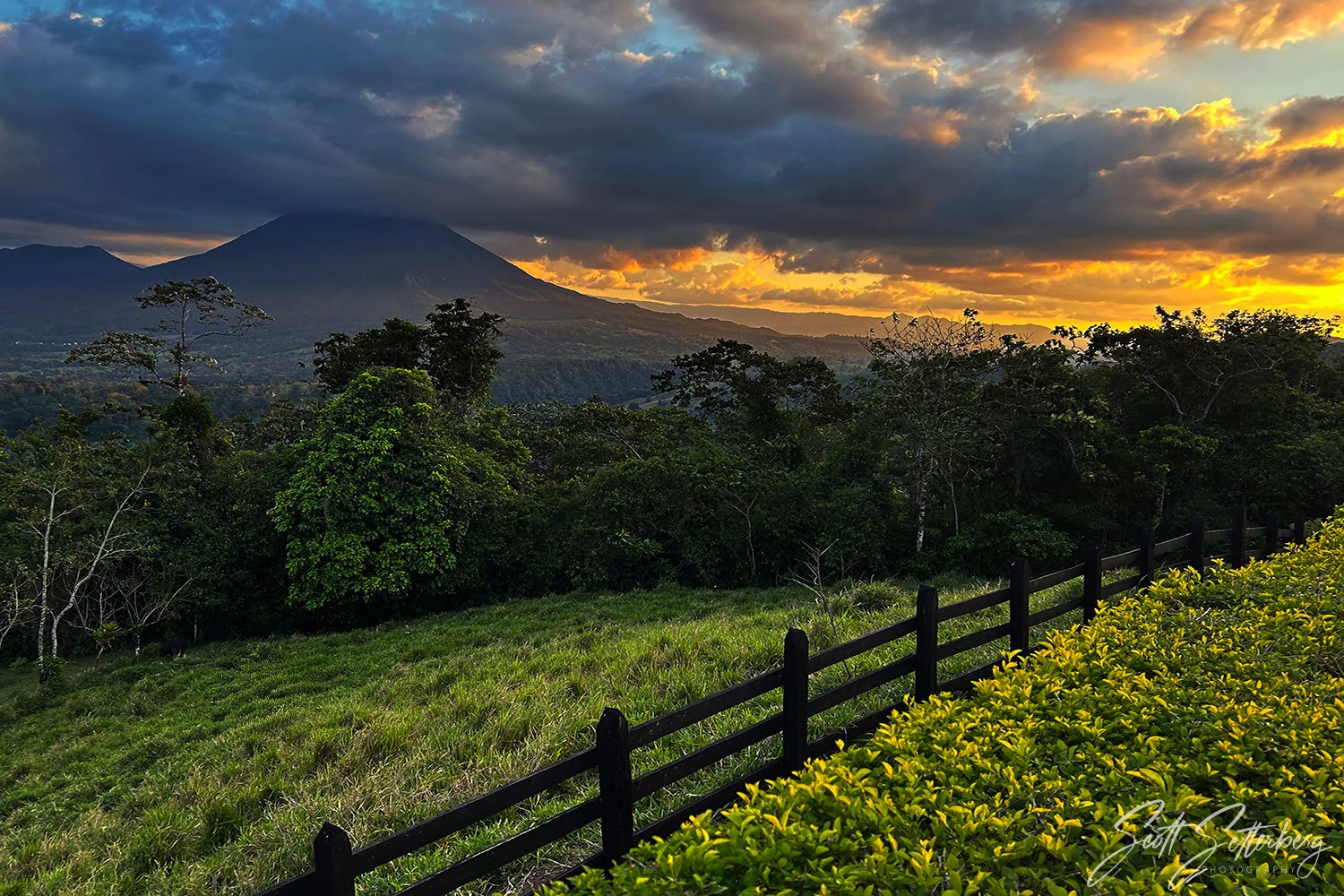
Arenal Volcano gives you the postcard frame of Costa Rica. The near-perfect cone rises above La Fortuna, and lava has flowed across its slopes since 1968. For photographers, the volcano works as a backdrop and a subject at once. Early morning offers your best odds, because clouds often clear from the summit at first light before they build again by mid-day.
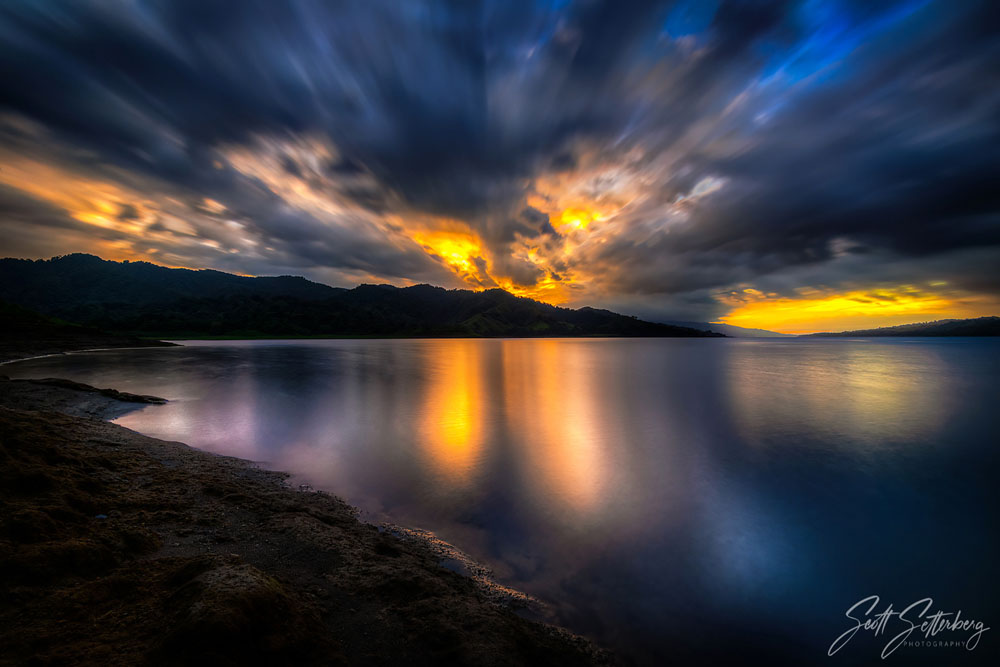
Shoot Arenal with a wide lens and a strong foreground. Lake Arenal delivers mirror reflections on calm mornings, while jungle streams and rust-colored grasses add layers near the base. A tripod lets you hold detail through blue hour, when the sky still carries color and the cone reads as a clean silhouette. If the summit hides, wait. Mist moving across the slope often makes a stronger image than a bare peak.
Hot springs sit at the volcano’s base, so you also gain steam and texture for atmosphere. Pack a rain cover, since showers arrive without warning. Your takeaway: treat Arenal as a sunrise-first location, and build your composition around water and foreground rather than the cone alone.
Bajos del Toro: Costa Rica’s Waterfall Capital
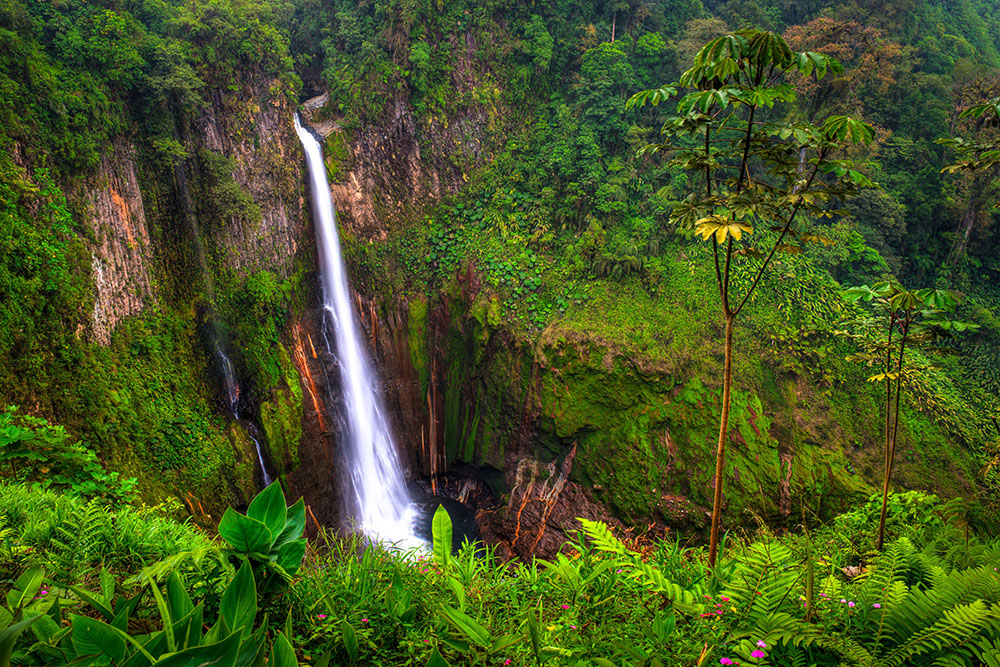
Bajos del Toro earns its nickname as Costa Rica’s waterfall capital. This small farming community sits in a high valley between the Poás and Viejo volcanoes, and dozens of cascades spill into its cloud forest canyons. The headline shot is Catarata Bajos del Toro, a roughly 300-foot waterfall plunging into an ancient mineral-stained crater. Red, orange, and yellow rock walls frame the drop, which gives you color you rarely find on a single fall.
Plan for cool, shifting weather here. The elevation brings relief from lowland heat, yet mist rolls in fast and light changes by the minute. Bring a tripod and a circular polarizer, then slow your shutter to between half a second and two seconds for a silk-water look without losing texture. Because the canyon stays shaded, you often hold highlight and shadow detail in one frame, though bracketing protects you when the sky opens up.
Hummingbirds and orchids line the trails, so keep a longer lens ready between waterfall photography sets. Your takeaway: budget more time here than you expect, since a single Bajos del Toro canyon holds several strong compositions.
Las Gemelas and Catarata Celestial: Twin Falls and Turquoise Pools

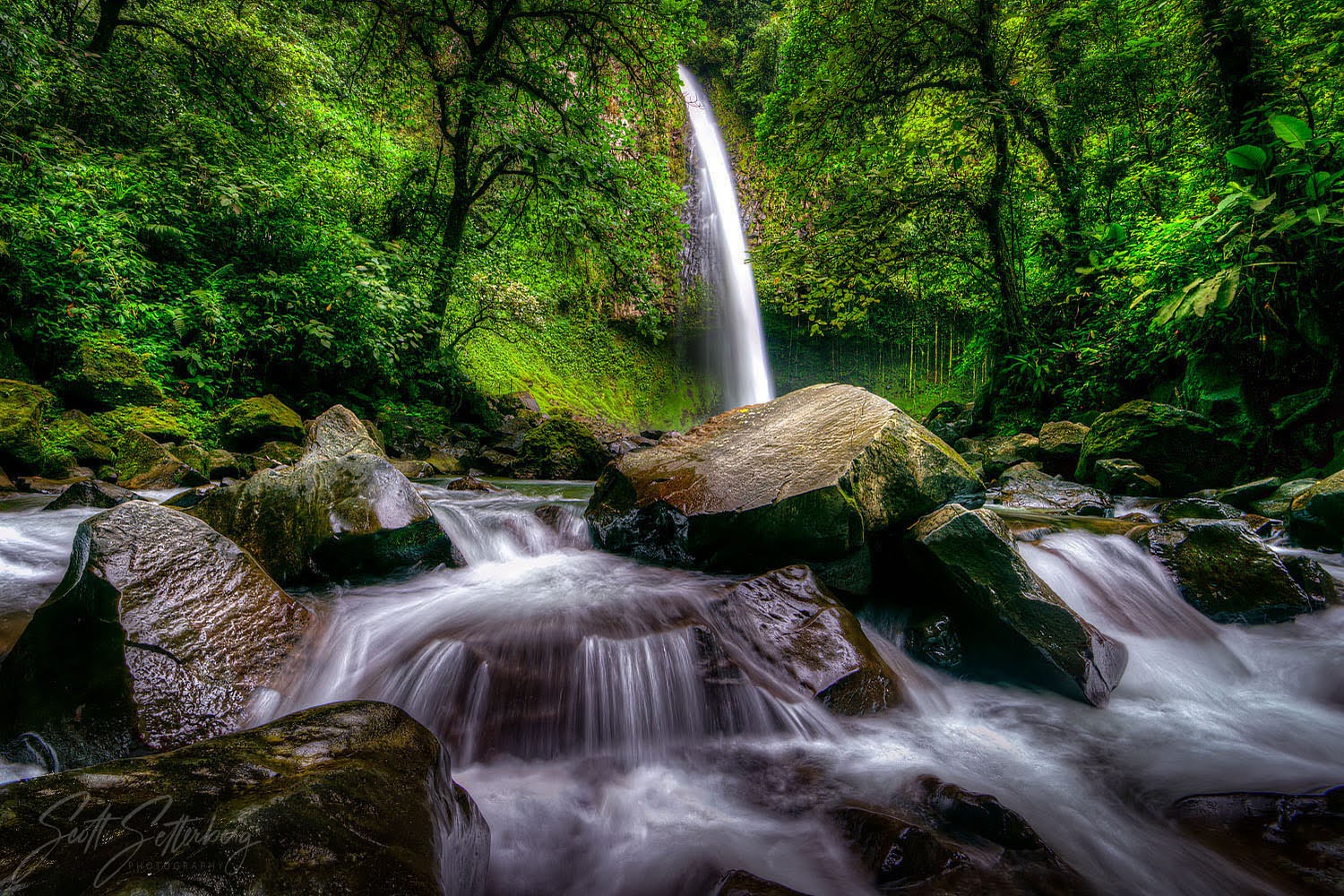
Two of the strongest images near Bajos del Toro come from Las Gemelas and Catarata Celestial. Las Gemelas, meaning the twins, drops as two parallel falls into a pool below, with a jungle stream running beneath them. Frame both falls vertically to keep their symmetry, and use a slow shutter so the paired ribbons of water read as one composition. A polarizer cuts glare off the wet rock and deepens the surrounding green.
Catarata Celestial lives up to its name with a turquoise pool tucked deep in untamed jungle. The color comes from minerals in the water, and it intensifies under soft, overcast light. Reach for your polarizer again here, because it holds the blue rather than letting reflections wash it out. Bracket your exposures, since the bright pool and dark jungle stretch the dynamic range past what one frame holds.
Both locations sit off the main tourist track, so you trade a longer approach for fewer people in your shots. Your takeaway: shoot these two under cloud cover, not full sun, and let the polarizer do the heavy lifting on color.
Rio Toro and Rio Celeste: Photographing Costa Rica’s Turquoise Water
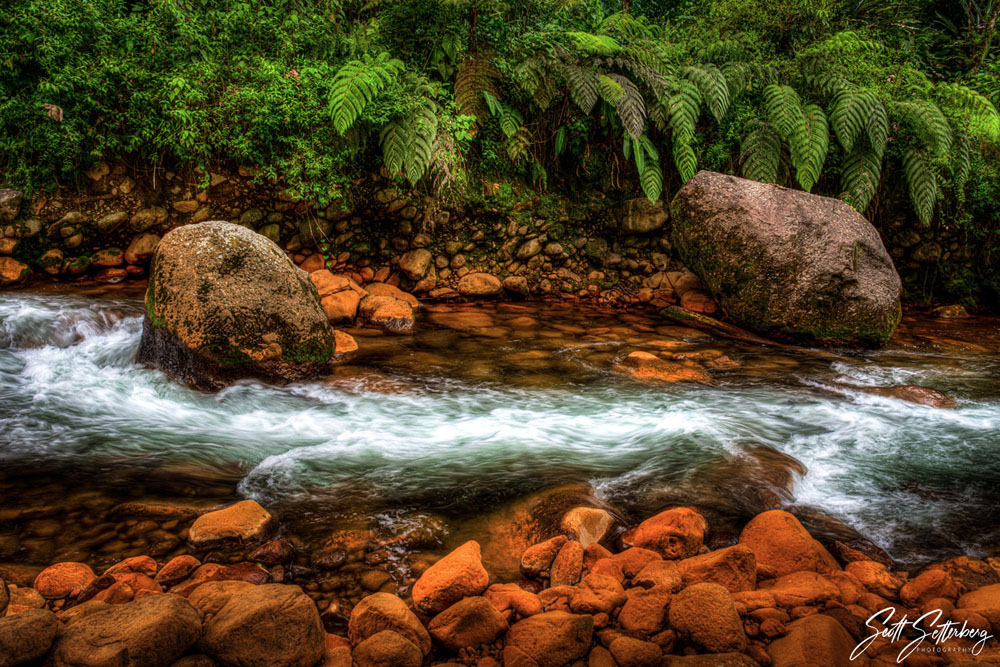
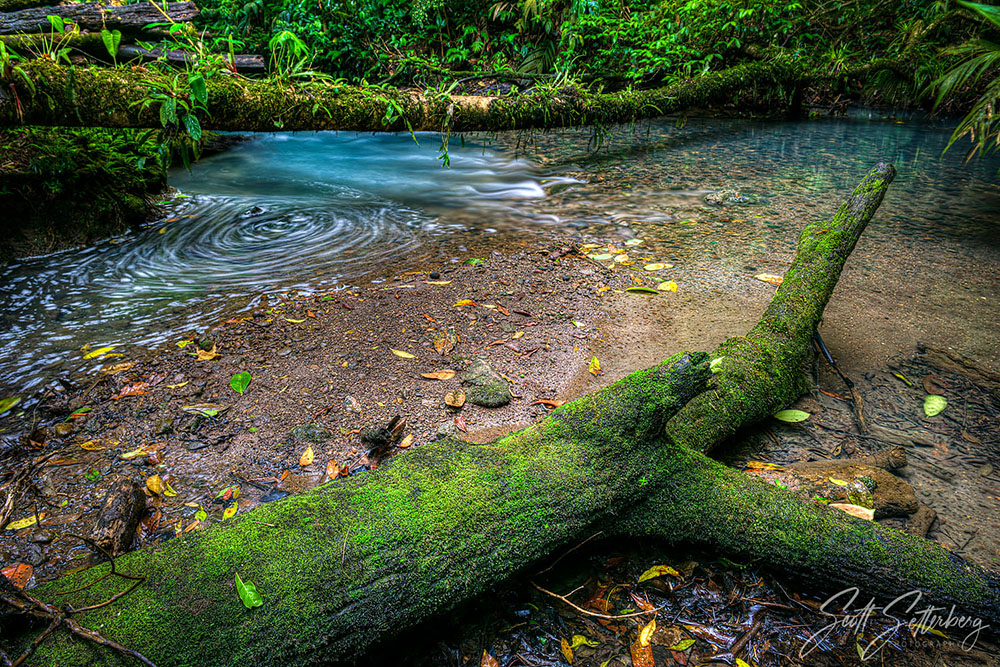
Turquoise water defines some of the most iconic frames in the country, and these two rivers take a slightly different approach than the waterfalls. Rio Toro carves through the Bajos del Toro valley, with cascades and jungle banks along its course. A neutral density filter lets you stretch your shutter into multi-second exposures in daylight, which smooths the current while the surrounding forest stays sharp.
Rio Celeste sits inside Tenorio Volcano National Park, and its surreal blue water ranks among the country’s most famous sights. A natural mineral reaction scatters light to create the color, so the river glows brightest where two clear streams meet. Reaching the waterfall takes roughly a 45-minute hike each way, therefore you start early to beat both crowds and harsh midday sun.
Overcast skies serve Rio Celeste well, because flat light keeps the turquoise saturated rather than blown out. Keep your polarizer on, and shoot at half a second to one second to blur the flow without erasing the blue. Your takeaway: protect the color first, since the turquoise water is the entire reason these rivers earn their fame.
Sarapiquí: Lowland Rainforest and Hidden Waterfalls

Sarapiquí shifts your photography from highland cool to lowland heat and dense rainforest. This northern region winds with rivers, rustic bridges, and waterfalls hidden inside primary jungle. Pozo Azul, a secluded blue pool, ranks among its signature spots, though finding it on your own proves difficult. The reward is layered green, moving water, and wildlife packed into a small area.
Two kinds of shooting happen here at once. For waterfalls and streams, you slow down with a tripod and a polarizer as you would in the highlands. For wildlife, you speed up, because sloths, poison dart frogs, and tropical birds reward a fast shutter and a longer lens. Switch your mindset along with your settings as you move between the two.
Humidity runs high in Sarapiquí, so condensation becomes a real threat as you move between air-conditioned vehicles and the forest. Let your gear adjust to outdoor temperature before you open a lens, and pack silica gel in your bag. Your takeaway: come ready for both slow water and fast wildlife, and guard your gear against moisture above all.
Save $500 With Early Bird Pricing
Skip the Scouting, Keep the Shooting
Scott Setterberg leads a small group through Arenal, Bajos del Toro, Rio Celeste, and more. Then you spend mornings in position rather than searching for access.
Dry Season vs. Green Season: When to Photograph Costa Rica
When to photograph Costa Rica comes down to a trade-off between clear access and lush color. The dry season runs from December through April. During these months, skies clear more often, roads stay passable, and volcano views open up. Therefore, dry season becomes the safer pick for Arenal and wide landscapes. Crowds and prices both climb, however, so popular trails fill earlier in the day.
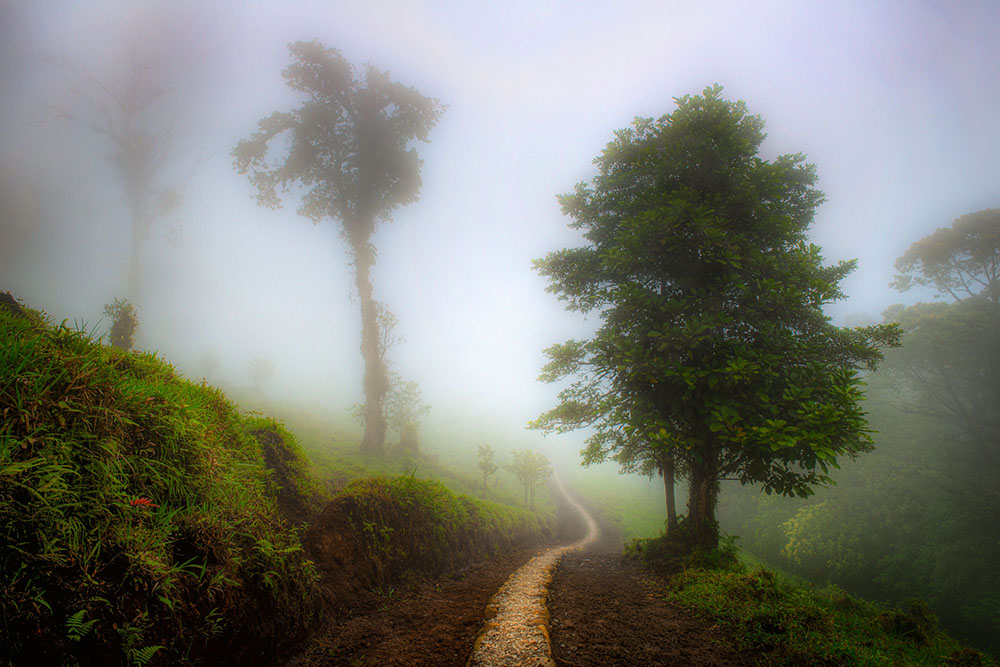
The green season runs from May through November. Afternoon rain saturates the forest, deepens the waterfalls, and thins the crowds, while prices drop. Many landscape photographers prefer this window for its moody light and full cascades, though muddy trails and washed-out afternoons stay a real risk. For turquoise rivers and cloud forest mood, the green season often wins.
A guided trip removes much of this gamble, because an experienced team reads the weather and reroutes around it. To see how a structured trip handles timing and access, read this look at a guided Costa Rica photography workshop. Your takeaway: choose dry season for reliable volcano views, and green season for saturated color, then build flexibility into either plan.
Costa Rica Photography: Rewards and Challenges
Rewards
- More than 500,000 species and hundreds of waterfalls in one compact country
- Turquoise water like Rio Celeste, found almost nowhere else on Earth
- The highland loop puts volcanoes, cloud forest, and falls within a few hours
- Soft early light and frequent overcast skies favor long-exposure water
- Wildlife and landscape subjects share the same trails
- Dry and green seasons each deliver a distinct, usable look
Challenges
- High humidity threatens gear with condensation and lens fogging
- Many top falls demand muddy, uneven hikes with elevation
- Harsh midday sun forces early starts for the best light
Final Verdict
Costa Rica photography rewards photographers who plan around light and location rather than chasing a long checklist. The northern highland loop, from Arenal through Bajos del Toro to Rio Celeste, delivers the country’s most iconic frames in a tight, shootable circuit. If you want volcanoes, turquoise water, and waterfall after waterfall in one trip, this region stands as your strongest single choice.
The challenges are real, however. Humidity, muddy trails, and fast-changing weather test both your gear and your patience. Photographers set on Pacific beaches, Caribbean wetlands, or pure wildlife safaris will want a different itinerary, since this loop leans toward landscapes and moving water.
The value comes from density. Few destinations pack this many distinct, portfolio-grade locations into so few driving hours, so your shutter count per day stays high. Early mornings, a tripod, a polarizer, and weather protection handle most of what the region asks of you.
For a self-guided trip, rent a high-clearance vehicle and budget extra days for Bajos del Toro alone. For a faster path to the same shots, a small-group workshop removes the logistics and the access problems. Either way, treat your Costa Rica photography as a location-first project, and the iconic images follow.
Ready to Go?
Join the Iconic Costa Rica Workshop
Lodging, meals, transport, and pro instruction are handled across a small-group route through Costa Rica’s iconic highland locations.
Frequently Asked Questions
What is the best time of year to photograph Costa Rica?
Dry season, December through April, gives you the clearest volcano views and the most reliable access. Green season, May through November, brings lusher forests, fuller waterfalls, and fewer crowds. For Rio Celeste and misty highland mood, many photographers prefer the green season’s soft light.
What camera gear do you need for Costa Rica photography?
A tripod, a circular polarizer, and a neutral density filter cover most landscape and waterfall photography work. Add a longer lens for wildlife, plus weather protection for sudden rain. Above all, pack silica gel and let your gear adjust to humidity before you open a lens.
Where is the turquoise water in Costa Rica?
Rio Celeste, inside Tenorio Volcano National Park, holds the country’s most famous turquoise river and waterfall. Catarata Celestial near Bajos del Toro offers a quieter turquoise pool deep in the jungle. A natural mineral reaction creates the color at both sites.
Is Bajos del Toro worth photographing?
Yes. Bajos del Toro is widely called Costa Rica’s waterfall capital, with dozens of cascades in one high valley. Its headline fall drops roughly 300 feet into a colorful volcanic crater, while nearby Las Gemelas and Catarata Celestial add more strong frames.
Do you need a guide to photograph Costa Rica’s waterfalls?
No, though a guide helps. Several top locations, including remote turquoise pools, take effort to find and reach safely. A guided workshop also reads the weather, secures access, and positions you for the best light, which raises your odds on a short trip.
How do you protect a camera from humidity in the rainforest?
Let your gear warm to outdoor temperature before opening it, so condensation does not form on a cold lens. Store silica gel packets in your bag, keep a rain cover handy, and seal your kit as you move between cool vehicles and humid forest.
Friendly disclaimer: Our articles may contain affiliate links that support us without costing you more, and sometimes we spice things up with sponsored content—but only for products we truly stand behind!

