


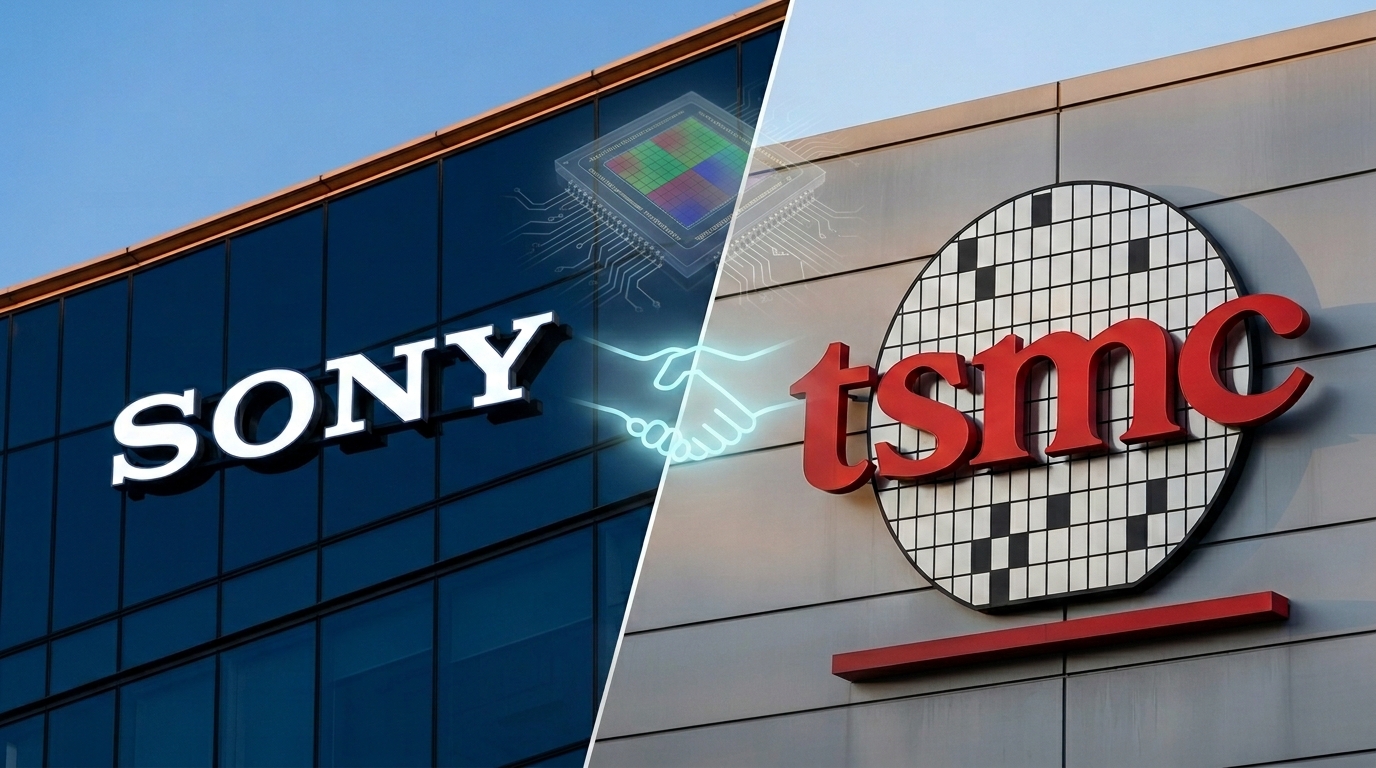
Quick Verdict: The Sony TSMC partnership signed on May 8, 2026, sets up a joint venture in Koshi City, Kumamoto Prefecture. The goal is to build next-generation image sensors. Sony holds the majority stake. TSMC brings process technology. The agreement remains non-binding until both parties sign a definitive contract. For photographers, the chips inside your next Sony Alpha, Nikon body, or iPhone will start borrowing tricks from TSMC’s logic chip playbook.
8 min read
In This Article
- Inside the Sony TSMC Partnership Announcement
- Key Facts at a Glance
- Inside the Memorandum of Understanding
- Why Sony Is Going Fab-Light
- The Kumamoto Fab and the Nagasaki Plant
- Beyond Cameras: Automotive and Robotics
- What the Sony TSMC Partnership Means for Photographers
- Confirmed vs Still Open
- Bottom Line
- Frequently Asked Questions
Inside the Sony TSMC Partnership Announcement
The Sony TSMC partnership broke cover on May 8, 2026. Sony Semiconductor Solutions Corporation and Taiwan Semiconductor Manufacturing Company Limited signed a non-binding memorandum of understanding. The MOU sets up an image sensor joint venture for next-generation CMOS image sensors. Sony will hold the majority and controlling stake. TSMC will contribute its process technology and foundry know-how. Sony brings decades of sensor design leadership.
This announcement matters to photographers because Sony already makes the image sensors inside most digital cameras on the market. Sony chips power bodies from Nikon, Fujifilm, and Hasselblad, plus Apple’s iPhone. When I bought the original Sony A7R back in late 2013, I learned its sensor was the same one Sony fabricated for my Nikon D800. The long supply-chain shadow is exactly why this deal is news.
But the agreement remains preliminary. Both companies say the final structure depends on capital decisions, market demand, and Japanese government support. As a result, neither company has published a production timeline. No specific camera or smartphone has been tied to the new fab yet.
Key Facts at a Glance
| Detail | Value |
|---|---|
| Announcement Date | May 8, 2026 |
| Agreement Type | Non-binding Memorandum of Understanding (MOU) |
| Structure | Joint venture with Sony as majority and controlling shareholder |
| Primary Site | Sony’s newly constructed fab in Koshi City, Kumamoto Prefecture, Japan |
| Additional Capital | Possible new investment in Sony’s existing Nagasaki plant |
| Government Support | Conditional support from the Japanese government expected |
| Product Focus | Next-generation CMOS image sensors plus future physical AI applications |
| Sony Executive Quote | Shinji Sashida, President and CEO, Sony Semiconductor Solutions Corporation |
| TSMC Executive Quote | Dr. Kevin Zhang, Senior Vice President and Deputy Co-COO, TSMC |
| Closing Conditions | Definitive legally binding agreement and customary closing conditions pending |
Inside the Memorandum of Understanding
The MOU is explicit about three things. First, the image sensor joint venture will operate inside Sony’s newly built fab in Kumamoto Prefecture. The plant sits on Kyushu, the southernmost main island of Japan. Second, Sony will be the majority and controlling shareholder. Design direction and product roadmap stay in Sony’s hands. Third, TSMC contributes process technology and manufacturing scale. Sony’s release calls this “manufacturing excellence.”
The language sounds firm, but both sides flag this MOU as non-binding. The joint venture only exists once both companies sign a definitive legally binding agreement. They must also clear customary closing conditions, including regulatory review in Japan and Taiwan. Until then, the partnership is a strong intent signal, not a finished deal.
The MOU also leaves room for additional investments. Sony has flagged new capital for its existing Nagasaki plant, alongside potential support from the Japanese government. Japan has spent the past three years subsidizing semiconductor capacity on home soil. The Kumamoto region already hosts a separate TSMC majority-owned fab known as JASM. As a result, the geography is not accidental.
Why Sony Is Going Fab-Light
Sony’s strategic shift is the most important part of this story. On the day of the announcement, Sony CEO Hiroki Totoki spoke to analysts. He said the joint venture marks the company’s “first step to becoming fab-light.” The phrase has a precise meaning in semiconductor strategy. A fab-light company keeps its design and intellectual property in-house. At the same time, it shares or outsources capital-intensive manufacturing.
For context, Sony has historically owned the entire image sensor stack. The company has run everything from R&D through wafer fabrication and packaging. As a result, Sony has carried billions of dollars in capex on its books. Every node shrink has demanded fresh investment. Partnering with TSMC instead drops Sony into a foundry already operating 305 distinct process technologies. The same foundry shipped 12,682 products to 534 customers in 2025 alone.
Totoki has used this playbook before. Sony partnered its Bravia television business with TCL to share manufacturing scale. He is now applying the same logic to Sony’s highest-margin semiconductor line. This move pulls some risk off Sony’s balance sheet. But critics will counter it loosens Sony’s grip on the proprietary process recipe holding Samsung and OmniVision a generation behind.
The Kumamoto Fab and the Nagasaki Plant
Site selection tells you almost as much as the deal itself. Sony’s newly constructed fab in Koshi City, Kumamoto Prefecture is where the new joint venture lands. This site sits on Kyushu. Kumamoto has become Japan’s most active semiconductor cluster over the past 24 months. TSMC opened its first majority-owned fab in the same prefecture in early 2024 under the JASM banner.
Sony’s existing Nagasaki plant sits on the same Kyushu island. It also features in the financial planning. Both companies say they are weighing new capital investment in Nagasaki alongside the image sensor joint venture. The plan calls for phased funding aligned with actual demand. For photographers worried about supply, Nagasaki has been Sony’s primary CMOS image sensor plant for the better part of two decades. Additional capex there is a stability signal.
The Japanese government has also been a public sponsor of semiconductor build-out on Kyushu. Tokyo also subsidized TSMC’s earlier Kumamoto fab. Government backing is part of the closing-conditions math here, not an afterthought. If Tokyo delays or trims its support, the joint venture timeline shifts with it.
Beyond Cameras: Automotive and Robotics
The press release flags a second, broader goal beyond conventional image sensors. Both companies say the partnership will explore “emerging opportunities in physical AI applications, such as automotive and robotics.” The phrase carries weight. Sensors built for cars and robots demand more from low light, dynamic range, and global shutter than your camera sensor does.
For automotive, the target is in-cabin and forward-facing driver assistance. Sony already ships the IMX490 family into many advanced driver assistance systems. Robotics customers want stacked sensors. They pair imaging pixels with onboard logic on the same die. As a result, the design needs the kind of hybrid stack TSMC’s advanced packaging lines support today. The robotics arm is also where Sony’s investments in time-of-flight depth sensing and event-based vision sensors line up cleanly with TSMC’s process portfolio.
Consumer cameras grab the headlines. But the auto and robotics revenue pool grows faster than the camera market. As a result, this side of the agreement is likely to be the larger financial bet in the long run. Sony has been quietly building a sensing portfolio reaching well beyond mirrorless bodies. TSMC’s process roadmap gives Sony a faster path to the smaller geometries those applications require.
What the Sony TSMC Partnership Means for Photographers
Your current camera does not change because of this announcement. But the deal has real implications for sensors landing in cameras from 2027 onward. Sony’s image sensors power the Alpha lineup, Nikon’s Z line, Fujifilm’s X and GFX bodies, and Hasselblad’s medium format cameras. As a result, improvements in Sony’s process node tend to ripple across the industry within two or three product cycles.
For example, the Sony A7R IV’s 61-megapixel BSI sensor debuted in 2019. It remains the basis of the A7R V’s imaging stack. Photographers have flagged the design as a readout-speed bottleneck. A new partnership with a leading foundry should accelerate the move to faster stacked sensors with on-chip logic. The change directly affects burst rate, rolling shutter, and video readout. If you want a refresher on why dynamic range depends so heavily on sensor architecture, the relationship is direct. Bigger pixels and better readout circuits yield more stops at every ISO setting.
For shoppers weighing a Sony body today, the deal is not a reason to delay a purchase. The Sony A1 and the rest of the current Alpha lineup will keep their current sensors for the next two to three years. Trade-in math has not changed. If you want a starting point for this comparison, our roundup of the best Sony cameras walks through the strongest bodies in the current lineup.
Even more interesting, the timing overlaps with Sony’s reveal of the next R series body on May 13, 2026. The new A7R will use sensors already in production today. Still, the TSMC deal sets the stage for whichever Alpha follows it.
Confirmed vs Still Open
Confirmed
- Non-binding MOU signed by Sony Semiconductor Solutions and TSMC on May 8, 2026
- Joint venture with Sony as majority and controlling shareholder
- Operations planned for Sony’s newly constructed fab in Koshi City, Kumamoto Prefecture
- Sony CEO Hiroki Totoki publicly framed the deal as “the first step to becoming fab-light”
- Future investment in Sony’s existing Nagasaki plant is also on the table
- The partnership covers next-generation image sensors plus automotive and robotics sensing
- Both parties named Shinji Sashida and Dr. Kevin Zhang as executive sponsors
Still Open
- Sony and TSMC have not signed a definitive legally binding agreement
- Neither company has disclosed capital commitment amounts
- Neither company has named a production start date, ramp schedule, or first-product reveal
- Sony and TSMC have not named the specific process nodes they will co-develop
- Tokyo and the partners are still negotiating subsidy amounts and an approval timeline
- Regulators in Japan, Taiwan, and customer jurisdictions have not finished their review
Bottom Line
Read the Sony TSMC partnership as a strategic signal more than a finished deal. The MOU confirms intent. Sony wants out of the heaviest capex burden. TSMC wants a deeper anchor in the sensor market. Both want a Japan-based fab close to existing Kumamoto capacity. Nothing about the agreement is binding yet. But the public framing from senior leadership at both companies leaves little room for either side to walk away quietly.
For photographers, the practical takeaway is patient optimism. Sony’s sensor edge over Samsung and OmniVision relies on staying one process generation ahead. Partnering with TSMC is one of the cleanest paths to do so without doubling Sony’s own fab footprint. Over the next three to five years, you should expect faster readout, lower read noise, and richer dynamic range. The wins will show up across Alpha bodies, Nikon Z cameras, and Fujifilm medium format systems.
If you shoot weddings, sports, or wildlife, watch for the joint venture’s first production milestone. Both companies are likely to confirm it at a later announcement. Until then, treat current Sony, Nikon, and Fujifilm bodies as safe purchases. The chips inside them are not changing this year. Realistically, the joint venture’s first products are a 2027 or 2028 story.
For anyone watching the broader semiconductor map, the deal underscores how much of the global imaging pipeline now routes through one prefecture in southern Japan. As a result, Kumamoto has quietly turned into ground zero for the silicon behind your photos.
Frequently Asked Questions
What did Sony and TSMC announce on May 8, 2026?
Sony Semiconductor Solutions and TSMC signed a non-binding MOU to form an image sensor joint venture for next-generation CMOS image sensors. Under the deal, Sony holds the majority stake, with production planned at the newly built Koshi City fab.
Will the Sony TSMC partnership change cameras I already own?
No. The joint venture has not signed a definitive agreement, so no new sensor has reached production. Sony Alpha, Nikon Z, and Fujifilm X and GFX bodies keep their current sensors.
When will new Sony TSMC sensors appear in cameras?
Neither company has published a production timeline. Based on typical semiconductor ramp schedules, photographers should expect first volume products in 2027 or 2028, with automotive customers usually taking delivery first.
Why is Sony partnering with TSMC instead of building alone?
Sony CEO Hiroki Totoki called the deal “the first step to becoming fab-light.” Sony wants to keep sensor design in-house while sharing the heavy capital expense of advanced fabrication with TSMC.
Does the Sony TSMC partnership affect Nikon or Fujifilm sensors?
Likely yes, over time. Sony fabricates many sensors used in Nikon Z, Fujifilm X and GFX, and Hasselblad bodies. Process improvements from the Kumamoto fab should reach those brands within two product cycles.
What does “fab-light” mean for Sony?
Fab-light means a company keeps chip design in-house while sharing capital-intensive manufacturing with a foundry partner like TSMC.

