



Quick Verdict: This Canon EOS R1 review lands on a simple conclusion. The R1 is the most focused, fastest, and most specialized flagship Canon has produced, built for sports, wildlife, and photojournalism pros who need 40fps RAW bursts, a 24MP stacked sensor, and a focusing system with a near 100% hit rate. New bodies sit at $6,299. Used examples on MPB have started dipping into the low $5,000 range. If resolution matters more than speed, step down to the R5 Mark II instead.
Last updated: April 2026 | 9 min read
In This Review
- Why the Canon R1 Arrived When It Did
- Key Specs at a Glance
- Autofocus: Canon’s New High Water Mark
- Burst, Buffer, and Shutter Performance
- Video: 6K RAW and Where It Falls Short
- Build, Ergonomics, and the EVF
- Image Quality at 24 Megapixels
- Canon R1 vs R5 Mark II: Which to Pick
- Pros and Cons
- Final Verdict
- Frequently Asked Questions
Canon EOS R1 Review: Why It Arrived When It Did
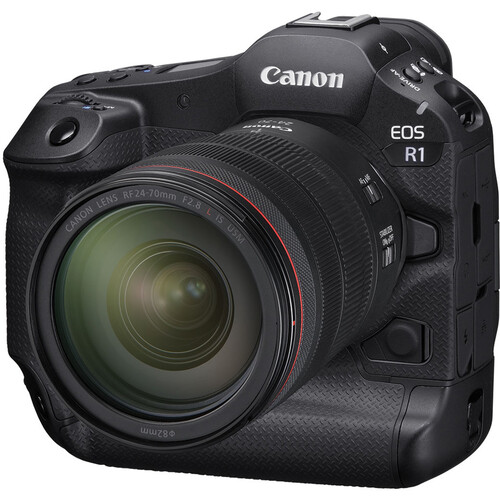
This Canon EOS R1 review starts with personal context. Back in 2020, when Canon announced the R5, I pulled the trigger on both the body and the RF 15-35mm f/2.8L on launch day and switched from my old system without looking back. For five years, Canon shooters like me kept wondering when the company would produce a true mirrorless flagship to sit at the top of the RF lineup. Finally, the R1 is the camera, announced in July 2024 and shipping that fall after the Paris Olympics wrapped.
Unlike the R5 Mark II, which tries to handle almost every discipline, the R1 is a specialist. Canon aimed it squarely at sports shooters, wildlife photographers, and photojournalists who need speed, tracking reliability, and file transfer throughput above everything else. For those buyers, the Canon R1 for sports and news work replaces the 1D X Mark III in the lineup and sits a step above the R3, which Canon had positioned as a pro-focused body while the flagship slot stayed empty.
Meanwhile, the price has drawn the loudest reaction. At $6,299 new, the R1 costs more than a Sony a1 II and significantly more than a Nikon Z9. However, used prices on MPB have started settling in the low $5,000 range for mint examples, which softens the entry point for working pros who know exactly how they’ll use it. For everyone else, the real question is whether the specialized feature set justifies stepping up from the R5 Mark II or an R3.
Canon R1 Specs at a Glance
| Specification | Details |
|---|---|
| Sensor | 24.2MP full-frame back-illuminated stacked CMOS |
| Processor | DIGIC Accelerator + DIGIC X |
| ISO Range | 100-102,400 native, expandable 50-409,600 |
| Max Burst | 40 fps electronic shutter, 12 fps mechanical |
| Buffer | 230 RAW frames at 40 fps, 500+ JPEG |
| Shutter Speed | 1/8,000 mechanical, 1/64,000 electronic |
| Flash Sync | 1/200 mechanical, 1/400 electronic |
| Autofocus | Dual Pixel Intelligent AF, cross-type, EV -7.5 sensitivity |
| IBIS | Up to 8.5 stops coordinated with RF lenses |
| EVF | 0.64-inch OLED, 9.44 million dots, 0.9x magnification |
| Rear LCD | 3.2-inch fully articulating, 2.1 million dots |
| Video | 6K 60p 12-bit RAW, 4K 120p 10-bit, Canon Log 2/3 |
| Storage | Dual CFexpress Type B |
| Connectivity | 2.5 GBASE-T Ethernet, Wi-Fi 6E, USB-C 3.2 Gen 2 |
| Battery | LP-E19, approx. 1,330 shots LCD / 700 EVF |
| Weight | 1,115g (2.46 lb) body with battery and card |
| Launch Price | $6,299 USD (body only) |
Featured on MPB
Used Canon EOS R1 In Stock
Shop verified used Canon R1 bodies with a six-month warranty, seven-day returns, and detailed condition reports from a trusted dealer.
Canon R1 Autofocus: Canon’s New High Water Mark
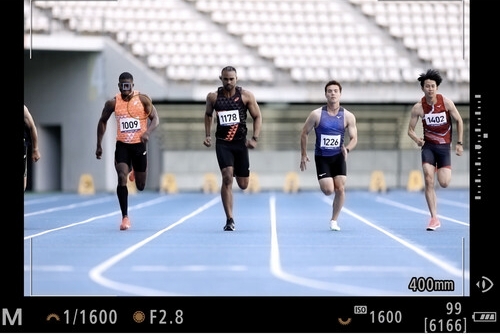
The Canon R1 autofocus system is the strongest argument for this Canon EOS R1 review landing on a positive note. Canon calls it Dual Pixel Intelligent AF, and it pairs the speed of the stacked sensor with a new DIGIC Accelerator chip dedicated to subject-recognition math. Focus points cover 100% of the frame both horizontally and vertically, while the lowest-light sensitivity drops to EV -7.5 with an f/1.2 lens, which means the system finds focus in conditions where most cameras hunt.
In practice, the tracking is sticky in a way the R5 Mark II does not quite match. Eye detection holds on human subjects through obstacles and partial occlusion. Similarly, animal detection handles dogs, cats, birds, and horses as expected, and the R1 extends vehicle detection to racing cars, motorbikes, airplanes, and trains. Canon also added a Register People Priority mode which lets you save up to 10 specific faces so the camera prioritizes them when multiple subjects appear in frame. Sports photographers who cover the same team repeatedly get a meaningful advantage here.
Action Priority is the other standout of the Canon R1 autofocus stack. Currently it supports football, basketball, and volleyball, and the R1 uses deep-learning models to predict where the action will happen next, shifting focus to the shooter, ball, or incoming player as appropriate. Even in sports the camera was not trained for, base tracking holds up. Testing with ice hockey, hit rates approached 100% across multi-hundred-frame bursts. Eye Control AF returns from the R3 with a wider tracking field, though calibration is less reliable than on the R3 and some glasses-wearing shooters find it hit or miss.
Burst, Buffer, and Shutter Performance

Speed is where this Canon EOS R1 review sees the body pull away from every other Canon model. The electronic shutter hits 40 fps while recording full 14-bit RAW files, while the buffer holds 230 RAW frames before slowing down. For context, the R5 Mark II tops out at 30 fps with a 93-frame RAW buffer. Notably, the R1 also offers customizable burst speeds at 30, 20, 15, 12, 10, 7.5, 5, 3, 2, and 1 fps, so you throttle the rate to match the moment and save card space.
Pre-continuous shooting buffers the 20 frames before you fully press the shutter, which has become the feature most Canon R1 for sports and wildlife shooters reach for first. Instead of anticipating the peak, you watch the moment unfold and commit when the action happens. The stacked sensor scans in roughly 1/350 of a second, so rolling shutter is essentially gone, while the electronic shutter flash sync reaches 1/400 with compatible Canon Speedlites. Mechanical shutter is still available at 12 fps with a 1/200 sync speed, although once you experience the electronic readout speed on a stacked sensor, there is little reason to go back.
Dual CFexpress Type B slots clear the massive buffer quickly, and the R1 writes to both simultaneously for automatic backups, which is non-negotiable for working pros covering live events. The built-in 2.5 GBASE-T Ethernet port also matters here. Wire editors pull files directly off the camera at speeds which smoke the USB-C connection on competing bodies.
Video: 6K RAW and Where It Falls Short
Video in our Canon EOS R1 review is significantly improved over the R3 but remains secondary to stills. The R1 records 6K DCI at up to 60p in Canon’s 12-bit CRM or CRM Light RAW codecs internally, and 4K UHD tops out at 120p with 10-bit 4:2:2 color. Oversampled 4K from 6K is clean and sharp through 60p, and Canon Log 2 is available for shooters who want maximum dynamic range to grade in post.
Connectivity-wise, the R1 ditches the micro-HDMI on the R3 for a full-size Type A port and adds a tally lamp for broadcast and directors’ workflows. Audio gets 24-bit 4-track recording, and the multifunction shoe supports Canon’s wireless microphone adapters. For video pros coming from the R5 C, the new full-size HDMI and tally lamp help with on-set use, though the R1 still lacks waveform monitoring, internal timecode, and a shutter-angle setting for frame rate adjustments. Those are firmware-fixable gaps which limit grading control in post.
Also worth flagging: 6K recording locks you into Canon’s RAW codec. For most sports and journalism video, 4K 60p oversampled with Canon Log 2 is the sweet spot, and the R1 produces files which hold up in Resolve or Premiere without fuss. If hybrid video is your primary need, the R5 Mark II offers 8K and a more flexible feature set for similar money.
Trade Up at MPB
Save on a Used R1 Body
Every used R1 from MPB ships with a six-month warranty, a seven-day return window, and a documented condition report, so you buy with confidence. Trade-in credit from your current body makes the step up even easier.
Build, Ergonomics, and the EVF

The R1 is the first mirrorless Canon flagship with an integrated vertical grip, and it feels considerably lighter than the 1D X Mark III it effectively replaces. Body weight comes in at 920g bare, or 1,115g with battery and CFexpress card. Side by side with a DSLR flagship, the R1 handles faster, balances big glass well, and fits in a smaller bag. Switching from vertical to horizontal orientation is seamless thanks to mirrored controls, and the grip texture gives a confident hold even in wet conditions.
Weather sealing is the strongest Canon has shipped to date. The hot shoe now uses a redesigned weather-resistant cover, and the magnesium alloy chassis handles rain, dust, and extreme-temperature shoots without complaint. Photojournalists working Olympic-caliber conditions have praised the build reliability in particular, while the LP-E19 battery delivers 1,330 shots per charge using the LCD or around 700 through the EVF, numbers which embarrass most mirrorless competition.
The 9.44 million-dot OLED EVF is the best Canon has ever shipped, with 0.9x magnification and zero blackout during high-speed bursts. For glasses wearers, the longer eyepoint and larger eye relief are welcome improvements. However, the rear LCD takes a resolution cut to 2.1 million dots, down from the 4.15 million on the R3, which feels like a curious step backward. The fully articulating design still helps with awkward angles, and touch responsiveness is quick.
Image Quality at 24 Megapixels
Canon’s decision to stick with 24.2 megapixels generated the most debate around this Canon EOS R1 review topic. For sports, journalism, and fast-action work, 24MP is exactly enough. Files transmit faster over wireless and cellular, processing pipelines handle them with less friction, and the lower pixel density keeps noise performance strong at high ISOs. For studio work, large prints, or landscape shooters who crop aggressively, however, the R5 Mark II’s 45 megapixels win.
Dynamic range holds around 14 stops at base ISO and stays usable above ISO 12,800. Color science is classic Canon, meaning skin tones render naturally out of camera and files grade well in Lightroom without aggressive correction. The stacked sensor delivers virtually identical dynamic range between mechanical and electronic shutter, which is not always the case on competing cameras. Canon does bake a small amount of noise reduction into RAW files, so if you want the cleanest possible starting point, run RAW processing through Digital Photo Professional or a third-party converter which bypasses Canon’s in-camera reduction.
For photographers who need more resolution occasionally, the R1 offers an in-camera Neural Network upscaling feature which lifts JPEGs to 96 megapixels using AI. Perceived detail does not grow proportionally, but if an editor demands a specific pixel count quickly, the tool works well enough in a pinch. Most shooters will still prefer handling upscaling in post.
Canon R1 vs R5 Mark II: Which to Pick
For Canon shooters already in the RF system, the honest decision comes down to the R1 versus the R5 Mark II. Both cameras use stacked sensors, both benefit from the DIGIC Accelerator, and both share nearly identical autofocus subject detection and Eye Control AF. Where they differ is the specialization and the ergonomics.
The R1 wins on speed (40 fps vs 30 fps), buffer depth (230 RAW vs 93), weather sealing, battery life, EVF resolution (9.44M vs 5.76M), integrated grip, and Ethernet connectivity. Meanwhile, the R5 Mark II wins on resolution (45MP vs 24MP), 8K video, portability, price (around $4,399 new), and versatility across disciplines. For sports, wildlife, and photojournalism pros who shoot thousands of frames per event and need reliable file transfer, the R1 earns its premium. Hybrid shooters, landscape photographers, event pros, and studio workers, by contrast, will find the R5 Mark II the smarter buy.
Price gap-wise, the difference is roughly $1,900 new, or closer to $1,200 on the used market via MPB. This math shifts depending on how much speed and build matter to your daily workflow. Working pros who bill out the R1’s capabilities recoup the premium quickly. Enthusiasts and hobbyists rarely will.
Pros and Cons
Pros
- 40 fps RAW burst with 230-frame buffer at full 14-bit depth
- Best-in-Canon autofocus with EV -7.5 sensitivity and Action Priority modes
- Pre-continuous shooting buffers 20 frames before full shutter press
- 9.44M-dot EVF with 0.9x magnification and zero blackout
- Stacked sensor readout of roughly 1/350 sec eliminates rolling shutter
- 2.5 GBASE-T Ethernet for wired file transfer speeds
- Weather sealing strongest in the Canon lineup to date
- 1,330-shot battery life and dual CFexpress Type B slots
Cons
- $6,299 launch price is the steepest in Canon’s current lineup
- 24.2 megapixels limits studio, landscape, and aggressive cropping
- Eye Control AF calibration feels less reliable than on the R3
- Rear LCD drops to 2.1M dots, down from the R3’s 4.15M
- 6K video locked to Canon’s RAW codec only
- Video still missing waveform and internal timecode at launch
Canon EOS R1 Review: The Final Verdict
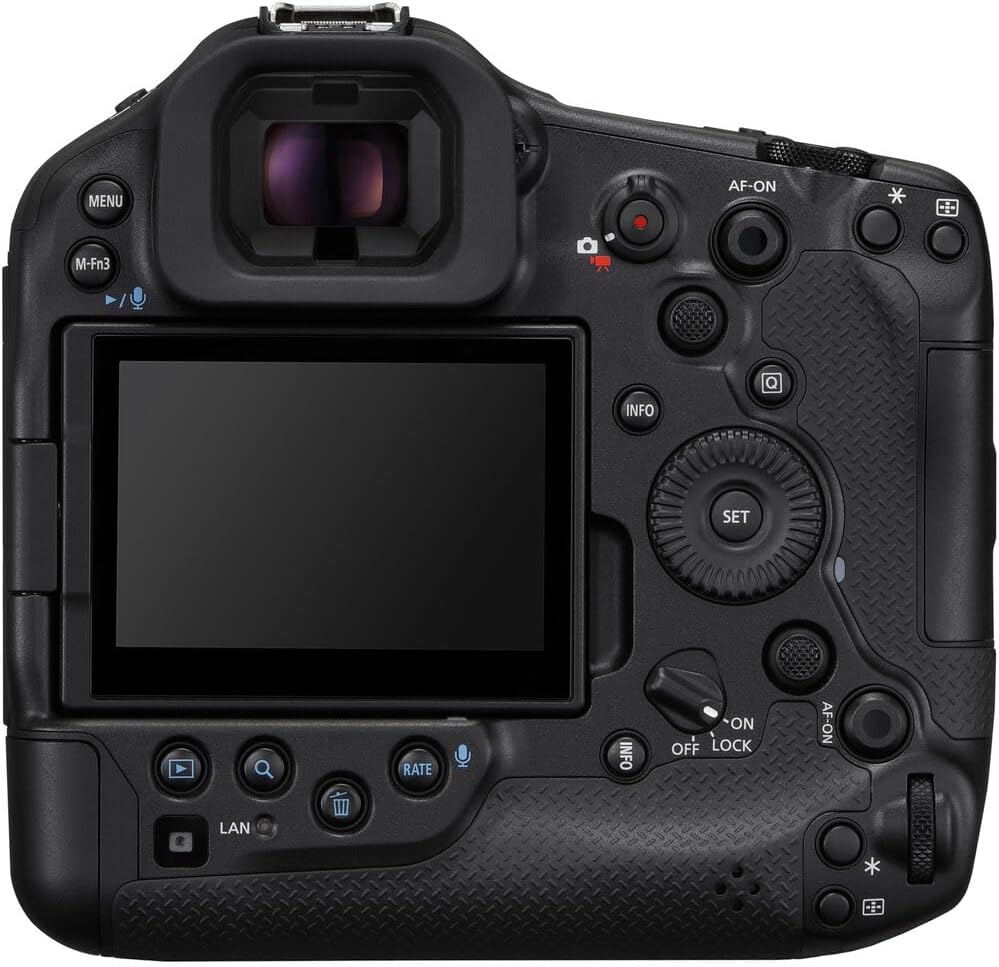
This Canon EOS R1 review ends with a recommendation which splits cleanly by use case. If you shoot professional sports, wildlife, or photojournalism and already live in the RF ecosystem, the R1 is the best tool Canon has ever built for your work. The combination of 40 fps bursts, a stacked sensor with no meaningful rolling shutter, Action Priority autofocus, Ethernet file transfer, and flagship-grade build quality makes it a camera which quietly gets out of the way while you do the job.
Studio photographers, landscape shooters, wedding pros who value resolution, and hybrid shooters who need 8K video will instead find the R5 Mark II a smarter purchase at nearly $1,900 less. The R1’s 24MP sensor is a deliberate design choice tuned for speed and file transmission, not a compromise. However, if resolution drives your workflow, specialization becomes a limitation rather than a feature.
Used pricing has begun to soften. Mint examples on MPB now appear in the low $5,000 range, which is still a serious investment but brings the R1 closer to reach for working pros who missed the launch window. Looking at my own experience, picking up the R5 and RF 15-35mm f/2.8L on launch day in 2020 meant buying into a maturing system. Five years later, the R1 completes the pro lineup in a way the R3 never fully did, and this Canon EOS R1 review lands on a clear recommendation for Canon shooters whose work demands speed above all else.
Ready to Buy?
Canon EOS R1 on MPB
Shop pro-grade used Canon R1 bodies with full warranty protection, condition transparency, and trade-in credit options. Save thousands versus buying new.
Frequently Asked Questions
Is the Canon EOS R1 worth it in 2026?
For sports, wildlife, and photojournalism pros already in the RF system, yes. The 40 fps burst, stacked-sensor AF, and built-in Ethernet deliver real workflow gains. Hobbyists and hybrid creators will prefer the R5 Mark II at almost $1,900 less.
How do the Canon R1 specs compare to the R5 Mark II for sports?
The R1 pulls ahead on speed (40 vs 30 fps), buffer depth (230 vs 93 RAW), battery life, and wired transfer speed. Both share nearly identical AF subject detection. For maximum frame rate, pick the R1. However, higher resolution makes the R5 Mark II the better choice.
Does the Canon R1 have in-body image stabilization?
Yes, up to 8.5 stops at center and 7.5 stops in the periphery with stabilized RF lenses. Some users report a faint IBIS hum in quiet environments, though it does not affect audio or stills.
What’s the battery life of the Canon EOS R1?
The LP-E19 delivers roughly 1,330 shots per charge on the rear LCD and 700 through the EVF, per CIPA testing. Real-world use with bursts and wireless transfer lands in the 1,500 to 2,500 frame range.
Does the Canon R1 record 6K video?
Yes. The R1 records 6K DCI up to 60p in 12-bit CRM or CRM Light RAW internally. 6K capture is locked to RAW, so your post workflow needs to handle those files.
How much does a used Canon R1 cost?
Used Canon R1 bodies on MPB start around $5,100 for well-maintained “Excellent” units, with mint examples approaching $5,400. New prices remain at $6,299, so a trusted dealer saves meaningful money versus a private-party purchase.
The R1 sits at the top of Canon’s current lineup, but most photographers are better served one or two tiers down. For a full look at where the R1 fits relative to the rest of the range, see our guide to the best Canon cameras in 2026.

