


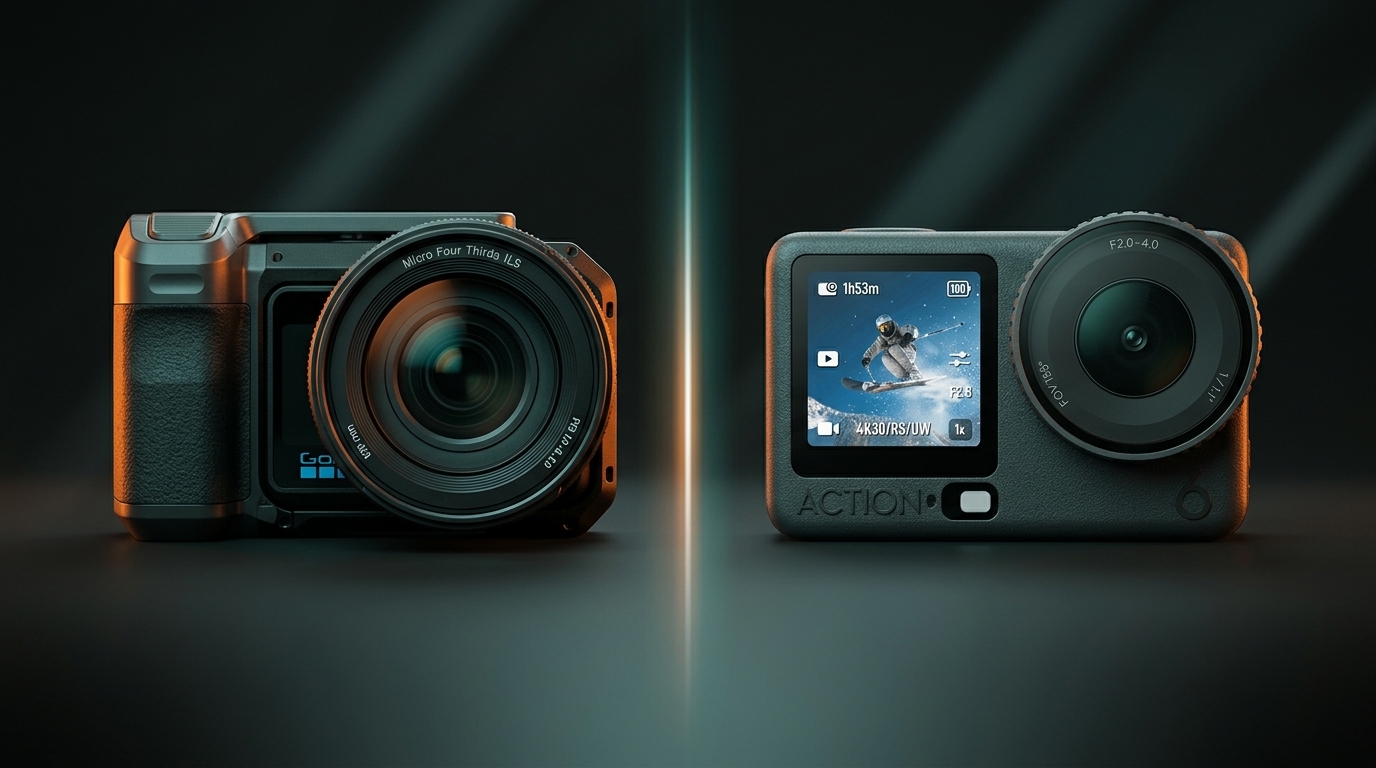
Quick Verdict: In the Mission 1 Pro vs Action 6 matchup, the GoPro Mission 1 Pro wins the spec sheet with a 1-inch 50MP sensor, 8K60 video, 14 stops of dynamic range, 32-bit float audio, and an interchangeable Micro Four Thirds mount at $699.99 MSRP. However, the DJI Osmo Action 6 counters with the world’s first variable aperture in an action camera, 8K30 video, a 240-minute battery, and a 149-gram body starting at $436 for the Standard Combo. Both ship in the US through Amazon and Best Buy. Different tools, different jobs. A full hands-on review of the Mission 1 Pro lands here in a few weeks.
Last updated: April 2026 | 9 min read
A Note to Our Readers
Many of you have been asking about the new GoPro Mission 1 and how it compares against other cameras. We are still waiting to get our hands on one. In the meantime, here are our first thoughts on the Mission 1 Pro vs Action 6 question and how these two flagship action cameras stack up on paper. Stay tuned for a full hands-on review and a proper field matchup once the Mission 1 Pro arrives in our hands.
In This Review
- Why This Matchup Matters Right Now
- Mission 1 Pro vs Action 6 Specs at a Glance
- Sensor and Image Quality
- The Micro Four Thirds Mount Changes Everything
- Variable Aperture vs Fixed Glass
- Video Resolution and Frame Rates
- Audio Recording and 32-Bit Float
- Battery Life and Form Factor
- Pricing and US Availability
- Mission 1 Pro vs Action 6: Which Should You Pick?
- Pros and Cons
- Mission 1 Pro vs Action 6: Final Verdict
- Frequently Asked Questions
Why This Matchup Matters Right Now

The GoPro Mission 1 Pro vs DJI Osmo Action 6 question is the most interesting action camera debate in a decade. I bought my first GoPro back in 2006, when the case was a plastic shell you wore on your wrist and the footage looked like a webcam taped to a surfboard. Since then, I have watched this brand climb to dominance, struggle under smartphone pressure, and look for a second act. The Mission 1 Pro is the boldest move GoPro has made in years, and I think it represents a meaningful leap forward for the brand. We covered the GP3 chip speculation before NAB 2026, then followed it with the official MISSION 1 Series announcement coverage when the cameras dropped.
Meanwhile, I have been shooting with DJI cameras for the past handful of years. Their Osmo Action line has steadily pulled market share from GoPro with stronger batteries, better front screens, and aggressive pricing. The compact line has earned its own dedicated following too, as our DJI Osmo Pocket 3 review outlined. Then in November 2025, DJI launched the Action 6 globally with the world’s first variable aperture in an action camera, raising the stakes again.
So which one looks better on paper? Below is a complete spec comparison, followed by detailed analysis of the eight areas where these two cameras diverge most. The full hands-on review of the Mission 1 Pro arrives after I get one in hand in the next few weeks.
Mission 1 Pro vs Action 6 Specs at a Glance
Use the table below to compare every published specification side by side, drawn from the official GoPro Mission 1 Series press release and the official DJI Osmo Action 6 spec sheet. Then read the analysis sections for context on which differences matter for your shooting style.
| Specification | GoPro Mission 1 Pro ILS | DJI Osmo Action 6 |
|---|---|---|
| Release | Q3 2026 (announced NAB 2026) | November 2025 (in US retail now) |
| Sensor | 1-inch CMOS, 50MP | 1/1.1-inch square CMOS |
| Processor | GP3 (new chipset) | DJI proprietary |
| Lens System | Micro Four Thirds interchangeable mount | Fixed lens, 155-degree FOV |
| Aperture | Depends on attached lens | Variable f/2.0 to f/4.0 (industry first) |
| Max Video Resolution | 8K30, 8K60 | 8K30 (16:9) |
| High Frame Rates | 4K240, 1080p960 | 1080p240 |
| Open Gate (4:3) Capture | Yes, 8K30 and 4K120 | No (square sensor allows reframing) |
| Photo Resolution | 50MP RAW, 60fps bursts | Approximately 38MP (7168 x 5376) |
| Dynamic Range | 14+ stops | Not officially published |
| Color and Log Profiles | 10-bit, HDR, GP-Log2, Timecode Sync | 10-bit D-Log M |
| ISO Range | Not yet published | Photo 100 to 25600, Video 100 to 51200 |
| Stabilization | HyperSmooth (next-gen) | RockSteady 3.0+, HorizonSteady |
| Audio | 4 microphones, 32-bit float recording | 3 microphones, 48kHz 16-bit AAC stereo |
| Audio Ports | 3.5mm mic, line-in, headset, micro-HDMI | USB-C only |
| Display | Larger OLED touchscreen | Dual touchscreen (front and rear) |
| Battery | Enduro 2, 2150mAh, improved thermal | 240 minutes runtime (best in class) |
| Waterproofing | 66 ft (20m) native | 20m native, 60m with case |
| Weight | Not yet published (heavier) | 149 grams |
| Dimensions | Larger body (TBD) | 72.8 x 47.2 x 33.1 mm |
| Price (US) | $699.99 MSRP ($599.99 for subscribers) | $436 Standard Combo, $536 Adventure Combo |
| US Availability | Yes, Q3 2026 (Amazon, GoPro.com) | Yes, in stock at Amazon and Best Buy |
| Best For | Documentary, commercial, hybrid creator work | Helmet, drone, chest mount, all-day outdoor action |
Specs Leader on Amazon
GoPro Mission 1 Pro ILS
First action camera with a 1-inch 50MP sensor and Micro Four Thirds mount. Pre-order pricing now live. Subscribers save $100 off MSRP.
Sensor and Image Quality
The sensor gap between these two action cameras is significant. Specifically, the Mission 1 Pro packs a 1-inch CMOS at 50MP, while the Action 6 uses a 1/1.1-inch square sensor. As a result, the Mission 1 Pro’s sensor surface area is roughly 2.3 times larger, which translates directly to better low-light performance, more shadow and highlight detail, and shallower depth of field potential. As the first 1-inch sensor action camera with an interchangeable mount, the Mission 1 Pro effectively defines a new product category.
For the Action 6, the square sensor format brings its own clever angle. You shoot once, then crop into vertical for TikTok and horizontal for YouTube without rotating the camera. For social-first creators, raw image quality shifts toward the Mission 1 Pro, but the Action 6 wins on workflow flexibility. Notably, the square frame also allows HorizonSteady to lock the horizon across full 360-degree rotations.
If your end use is mostly online video at 1080p, the sensor difference matters less. However, for stills work, color grading, or any client deliverable pulled into a larger production, the bigger sensor on the Mission 1 Pro is the more capable foundation. As an action camera comparison metric, sensor surface area is the single best predictor of low-light performance.
The Micro Four Thirds Mount Changes Everything
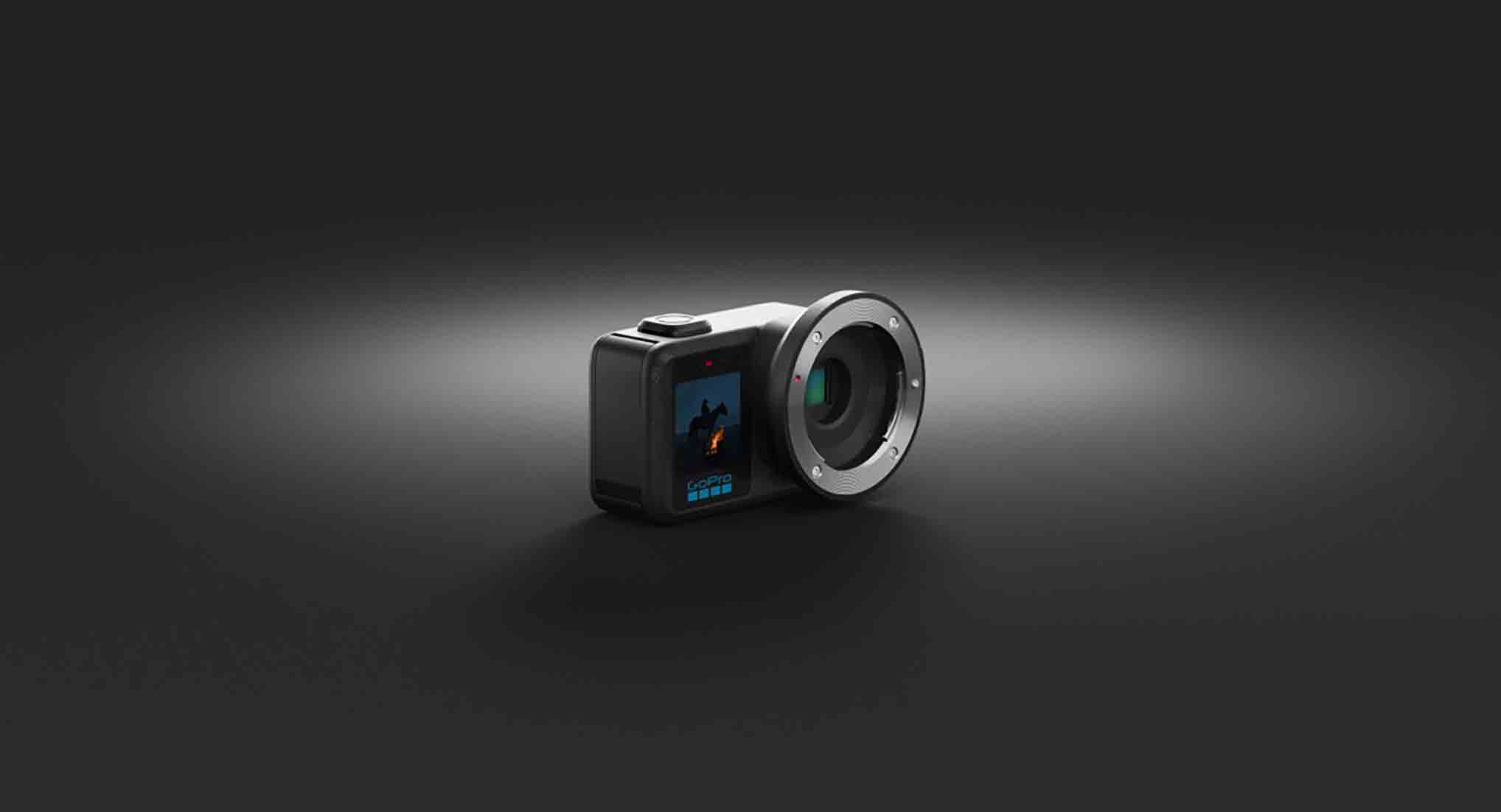
This is the headline of the entire Mission 1 Pro vs Action 6 conversation. No action camera before now has offered an interchangeable lens mount, let alone a standard like Micro Four Thirds with a deep ecosystem of glass from Panasonic, Olympus, Sirui, Voigtländer, and Laowa.
For example, you put an anamorphic lens on a GoPro now. Or, you shoot a wedding b-roll insert with a fast 25mm prime. Likewise, you mount a vintage adapted lens with a manual aperture ring. GoPro has effectively invented the Micro Four Thirds action camera category overnight. No other Micro Four Thirds action camera exists at any price.
The Action 6, by contrast, is locked to its variable-aperture fixed lens forever. Although the fixed lens is good, it is not interchangeable. Therefore, if creative lens control matters to your work, the Mission 1 Pro is the only choice in this comparison.
Variable Aperture vs Fixed Glass
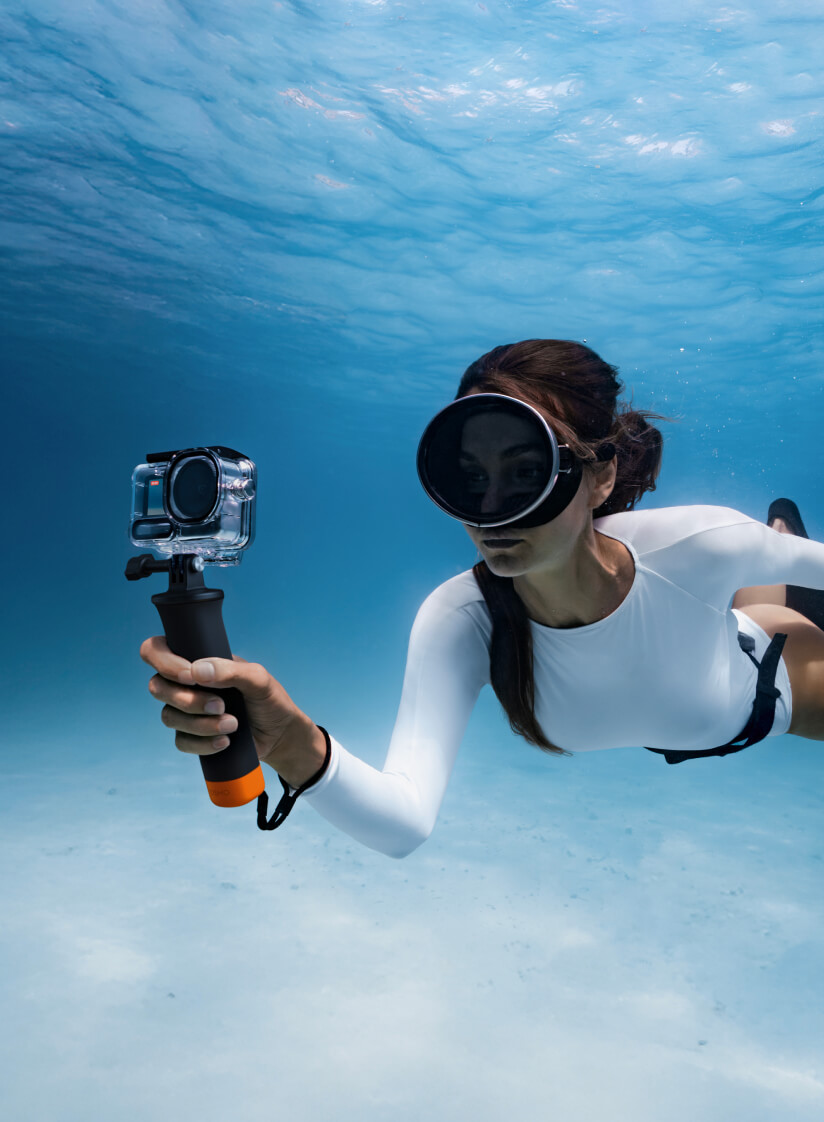
Action cameras have always been deep-focus boxes with no aperture control. However, the Action 6 breaks the pattern with a variable f/2.0 to f/4.0 lens. Why does this matter? Because in bright daylight, traditional action cams need ND filters to drop shutter speed for cinematic motion blur.
With the Action 6’s variable aperture action camera design, you get one stop of native ND control built in. Therefore, no filter swapping mid-action is needed. For surfers, mountain bikers, and skiers who use these cameras the way the marketing implies, the workflow improvement is meaningful.
Conversely, the Mission 1 Pro’s aperture depends on whichever MFT lens you mount. While the open mount means a fast f/0.95 prime opens up creative shallow depth of field, it also means there is no built-in ND solution. Consequently, you will be back to filters or electronic ND lens accessories in bright outdoor shoots. As a variable aperture action camera, the Action 6 is the only purpose-built option in the category.
Video Resolution and Frame Rates
Both cameras now shoot 8K, which is a meaningful update on the Action 6’s part. The Mission 1 Pro pushes 8K30 and 8K60 video, plus 4K at 240fps and 1080p at 960fps. By comparison, the Action 6 tops out at 8K30 in 16:9 with 1080p at 240fps for slow motion. The real video gap is at the high frame rate end, where the Mission 1 Pro doubles 8K to 60fps and adds 4K240 plus 1080p960 super slow motion.
Open-gate 4:3 capture at 8K30 and 4K120 is another Mission 1 Pro advantage. Because you record the full sensor area, you reframe vertical and horizontal from a single take in post, similar to the Panasonic GH7 workflow. Notably, no other 8K action camera currently does this.
However, the Action 6’s square sensor offers a related trick. While it does not shoot true open-gate, the square format makes vertical and horizontal cropping painless for social platforms. For example, a single trail-running clip from the Action 6 produces both a YouTube horizontal and an Instagram Reel vertical without re-shooting.
Audio Recording and 32-Bit Float
This is a bigger deal than it sounds, especially for serious creators. The Mission 1 Pro records 32-bit float audio across four onboard microphones. As a result, you cannot clip your audio. Ever.
For example, on a sudden loud sound, you pull the levels back in post and recover clean audio. Combined with four onboard mics and a real 3.5mm input plus a headset port, this is a spec professional documentary shooters care about. In contrast, the Action 6 captures audio through 3 onboard microphones in 48kHz 16-bit AAC stereo, which is fine for vlogs and basic shooting but lacks the headroom for serious audio capture.
Notably, no other action camera currently offers 32-bit float internal recording. Until now, you needed an external recorder like a Zoom F2 to capture this format. Therefore, on the audio front alone, the Mission 1 Pro changes the production workflow for run-and-gun content creators.
Battery Life and Form Factor
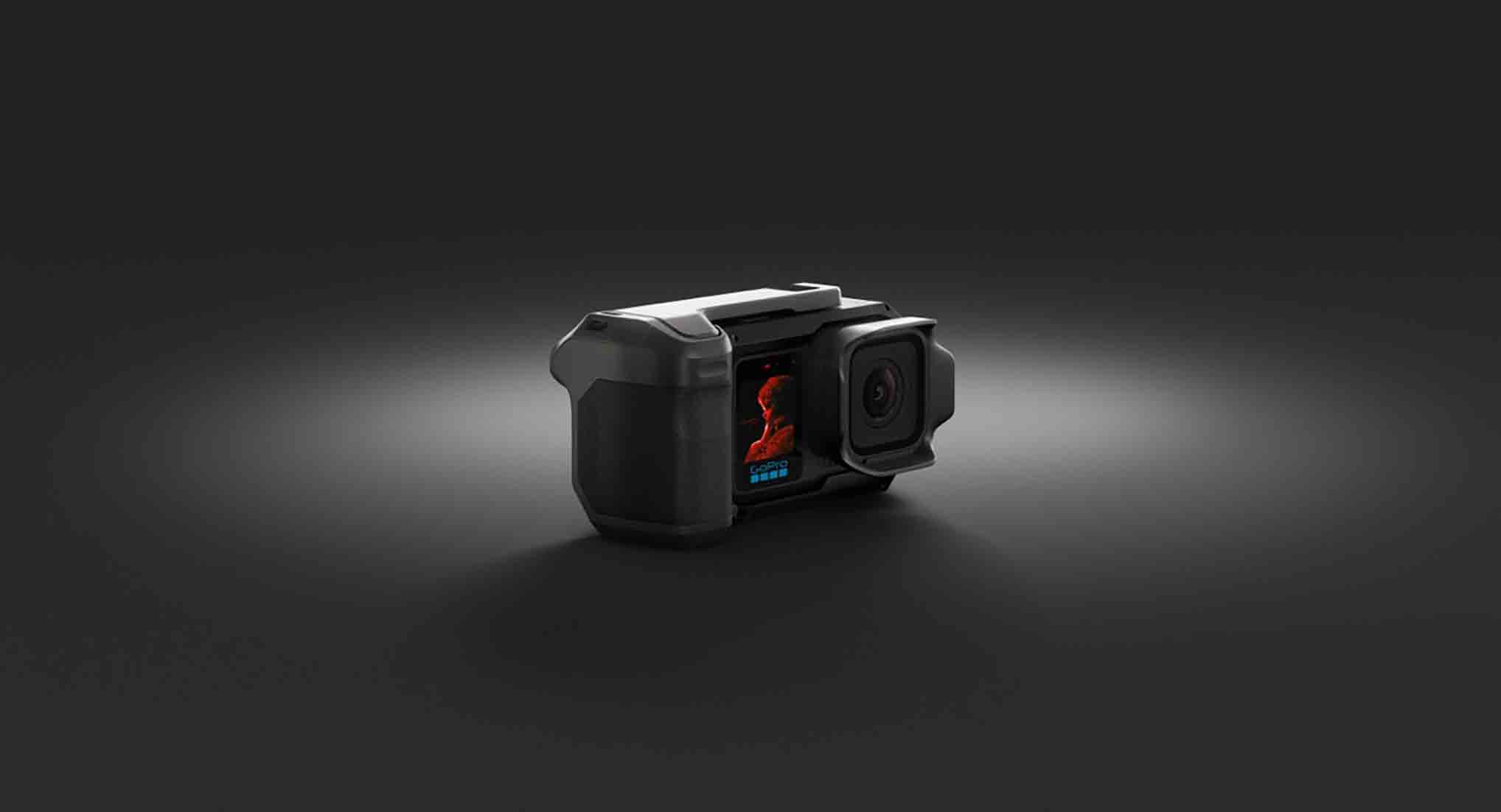
For raw runtime, DJI still wins. The Action 6 delivers 240 minutes of continuous recording, which remains class-leading. GoPro notes the Enduro 2 battery in the Mission 1 Pro adds active thermal management designed to reduce drain in cold conditions and extreme heat. However, exact runtime numbers have not yet been published, so the real-world advantage cannot yet be quantified against the Action 6.
Form factor is the other physical trade-off. For instance, the Action 6 weighs 149 grams and measures 72.8 x 47.2 x 33.1 mm. As a result, it fits in a back pocket and mounts on anything. Conversely, the Mission 1 Pro is bigger and heavier, since the 1-inch sensor and MFT mount require more housing.
For helmet, chest, drone, and gimbal mounts, weight and bulk still matter. Therefore, the Action 6 remains the better pure helmet-cam, while the Mission 1 Pro fits a creator backpack or a B-camera slot on a larger production.
Pricing and US Availability
The Mission 1 Pro ILS lands at $699.99 MSRP in Q3 2026, dropping to $599.99 for existing GoPro subscribers. By comparison, the Action 6 is in stock now at $436 for the Standard Combo and $536 for the Adventure Combo through both Amazon and Best Buy.
This is worth flagging clearly because there is widespread confusion about it. The broader DJI ban story has primarily affected drones and select cameras like the Osmo Pocket 4 (we broke down the DJI Osmo Pocket 4 FCC ban in detail). The Osmo Action 6 itself ships through normal US retail channels, including Best Buy stores and direct via DJI’s Amazon storefront. Therefore, US buyers get full warranty support, native accessory availability, and standard return policies.
On price alone, the Action 6 undercuts the Mission 1 Pro by roughly $164 to $264 depending on which DJI combo you choose. Therefore, anyone weighing pure value gets significantly more body for the dollar with the DJI. The Mission 1 Pro’s premium buys you the larger sensor, the MFT mount, and the 32-bit float audio chain.
Featured on Amazon
Save With a GoPro Subscription Bundle
Existing GoPro subscribers save $100 off MSRP. Bundle deals on accessories and storage are also available.
Mission 1 Pro vs Action 6: Which Should You Pick?
For the spec-driven shooter, the Mission 1 Pro is the more capable tool. Specifically, its 1-inch sensor, 8K resolution, 14+ stops of dynamic range, and 32-bit float audio put it in cinema territory. Notably, no other action camera offers a Micro Four Thirds mount, so any meaningful action camera comparison in this category effectively starts and ends with the Mission 1 Pro. As an 8K action camera with interchangeable glass, it stands alone.
However, the Action 6 wins for true action shooters. For example, it is half the weight, lasts twice as long on a single charge, and offers a built-in variable aperture for filter-free outdoor shooting. Because of its size and battery life, it remains the better choice for helmet mounts, drone payloads, and chest harnesses.
On price, the Action 6 undercuts the Mission 1 Pro by roughly $164 to $264 depending on combo. Both cameras are in stock for US buyers, so this is a real choice rather than a default. Therefore, the practical answer comes down to your shooting style: cinema-spec creator work points to the Mission 1 Pro, while pure action and value point to the Action 6.
Pros and Cons
GoPro Mission 1 Pro Pros
- 1-inch 50MP sensor with roughly 2.3x more surface area than the Action 6
- Interchangeable Micro Four Thirds mount, an action-camera first
- 8K30 and 8K60 video plus 4K240 high frame rate
- 14+ stops of dynamic range with GP-Log2 and HDR
- 32-bit float audio across 4 onboard microphones
- Real 3.5mm mic, line-in, headset, and micro-HDMI ports
- Open-gate 4:3 capture at 8K30 and 4K120
- Available in the US through normal retail channels
GoPro Mission 1 Pro Cons
- $699.99 MSRP, roughly $300 more than the Action 6
- Larger, heavier body limits true action mounting use
- No built-in variable aperture (depends on lens choice)
- Battery runtime not yet officially specified
- MFT lens system adds cost and bulk to the kit
DJI Osmo Action 6 Pros
- World-first variable aperture from f/2.0 to f/4.0 in an action camera
- 240-minute battery life, best in class
- 149-gram body for true helmet, chest, and drone mounting
- Square 1/1.1-inch sensor allows vertical and horizontal reframing
- Dual front-and-rear touchscreens for vlogging
- $436 Standard Combo or $536 Adventure Combo, undercutting the Mission 1 Pro by $164 to $264
- Waterproof to 20m without case, 60m with optional case
DJI Osmo Action 6 Cons
- Smaller 1/1.1-inch sensor compared to the Mission 1 Pro’s 1-inch CMOS
- 8K caps at 30fps with no 8K60 option, and high-frame-rate ceiling sits at 1080p240
- 3 microphones with 16-bit AAC stereo, no 32-bit float, and no 3.5mm port (USB-C audio only)
- Fixed lens, no interchangeable mount
- No GP-Log2 equivalent, log workflow limited to 10-bit D-Log M
Mission 1 Pro vs Action 6: Final Verdict
For documentary shooters, commercial creators, and prosumer videographers, the Mission 1 Pro vs Action 6 question leans toward the Mission 1 Pro on paper. The larger sensor, 8K60 capture, 32-bit float audio, and Micro Four Thirds mount make it the most capable spec sheet ever sold in this form factor. Above all, it is positioned as a compact cinema camera wearing a GoPro logo.
However, for true action shooters who need a helmet-mountable rig with all-day battery life, the Action 6 still wins. Because of its 149-gram weight, 240-minute runtime, and built-in variable aperture, it remains the more practical choice for surfing, biking, skiing, and any application where the camera goes through real abuse.
On value, the Action 6 looks dramatically better at $436 versus $699.99 MSRP. Both cameras are in stock through US retail, so this is a head-to-head purchase decision rather than an availability problem. As a result, US shooters get a real choice: spend less and get the practical action shooter, or spend more and get the prosumer creator tool.
If your work is mostly outdoor action and battery life matters most, the spec sheet points to the Action 6 as the safer buy. If your work is mixed-use creator content where image quality, lens flexibility, and audio matter as much as durability, the Mission 1 Pro looks like the right call on paper. As a 1-inch sensor action camera with an MFT mount, it has no current direct competitor. As an 8K action camera with 8K60 plus 32-bit float audio, it stands alone in the category on paper. We will reserve final verdicts until our hands-on review confirms whether the spec sheet holds up in the field.
Ready to Buy?
Pre-Order the GoPro Mission 1 Pro
Lock in launch pricing now. Subscribers save $100. Ships Q3 2026.
Frequently Asked Questions
Is the DJI Osmo Action 6 available in the United States?
Yes. The DJI Osmo Action 6 is in stock at Best Buy and through DJI’s Amazon storefront. Standard Combo runs $436 and the Adventure Combo $536, both with full US warranty and accessory support. The broader DJI ban story has affected drones and select cameras like the Osmo Pocket 4, but the Action 6 itself is sold through normal retail channels.
When does the GoPro Mission 1 Pro ILS ship?
Q3 2026 in the US. Specifically, MSRP is $699.99, dropping to $599.99 for existing GoPro subscribers through GoPro.com.
What lenses fit on the GoPro Mission 1 Pro?
The Mission 1 Pro ILS uses a standard Micro Four Thirds mount, so most MFT lenses from Panasonic, Olympus, Sirui, Voigtländer, Laowa, and other manufacturers should be compatible. However, confirm autofocus and electronic aperture support per lens before purchasing.
Does the DJI Osmo Action 6 shoot 8K video?
Yes. The Action 6 records 8K at 30fps in 16:9. However, the Mission 1 Pro pushes further with 8K60, 4K240, and 1080p960 super slow motion plus open-gate 4:3 capture, so the Mission 1 Pro is still the more flexible 8K action camera if frame rate matters.
Which action camera has better battery life?
The DJI Osmo Action 6 wins decisively with 240 minutes of continuous recording. While GoPro’s Enduro 2 battery in the Mission 1 Pro adds active thermal management, exact runtime numbers have not yet been published.
Is the GoPro Mission 1 Pro a replacement for the Hero 13?
No. GoPro positions the Mission 1 series as a sister line, not a replacement for the Hero. As a result, the Hero remains the choice for compact action mounting, while the Mission 1 targets shooters who need cinema specs in a small body. Read our full GoPro Hero 13 review for context on where the traditional Hero line stands today.

