


Quick Facts:
- Topic: Will AI replace photographers? VSCO’s May 14, 2026 brand campaign answer
- Campaign: “Photography Isn’t Dying. It’s Never Mattered More.”
- Launched: May 14, 2026 in the United States
- VSCO CEO: Eric Wittman, open letter to photographers
- Featured photographers: Jared Thomas Tapy and Ivana Cajina
- Tension: VSCO AI Lab launched October 2025, added prompt-based features January 2026
- Best for: Working photographers weighing whether AI will eat their business
8 min read
In This Article
- Will AI Replace Photographers? VSCO’s Answer
- Inside the VSCO “Photography Isn’t Dying” Campaign
- Eric Wittman’s Open Letter to Photographers
- The VSCO AI Lab Contradiction
- Will AI Replace Photographers? The Track Record Says No
- Will AI Replace Photographers in Every Category? Not Even Close
- VSCO vs Adobe: Two Roads for Photo Software
- Pros and Cons of the VSCO Stand
- Final Verdict: What VSCO’s Stand Means for Working Photographers
- Frequently Asked Questions
Will AI Replace Photographers? VSCO’s Answer
Will AI replace photographers? VSCO publicly answered no on May 14, 2026 with a U.S. brand campaign titled “Photography Isn’t Dying. It’s Never Mattered More.” Notably, the company paired the campaign with an open letter from CEO Eric Wittman and photographic work by Jared Thomas Tapy and Ivana Cajina, both VSCO community members. I have shot since the late 2000s, and the campaign is the clearest public commitment from any software brand on the question photographers have been asking since DALL-E 2 launched in 2022.
VSCO’s pitch is short. First, the photographer’s eye is irreplaceable. Second, the software, the prompts, and the algorithms are tools, not substitutes. For working photographers worried about AI eating their business, the campaign hands them a software brand to point clients toward.
However, the longer story under this is that the AI panic looks a lot like the digital panic hitting film photographers in the 2000s, and the smartphone panic that hit point-and-shoot owners in the 2010s. Specifically, industries shifted, specific products died, and photographers persisted. Similarly, the pattern repeats today. For the deeper arc of dying companies and persistent photographers, our history of photography timeline from start to present day walks through 200 years of that exact cycle.
Inside the VSCO “Photography Isn’t Dying” Campaign
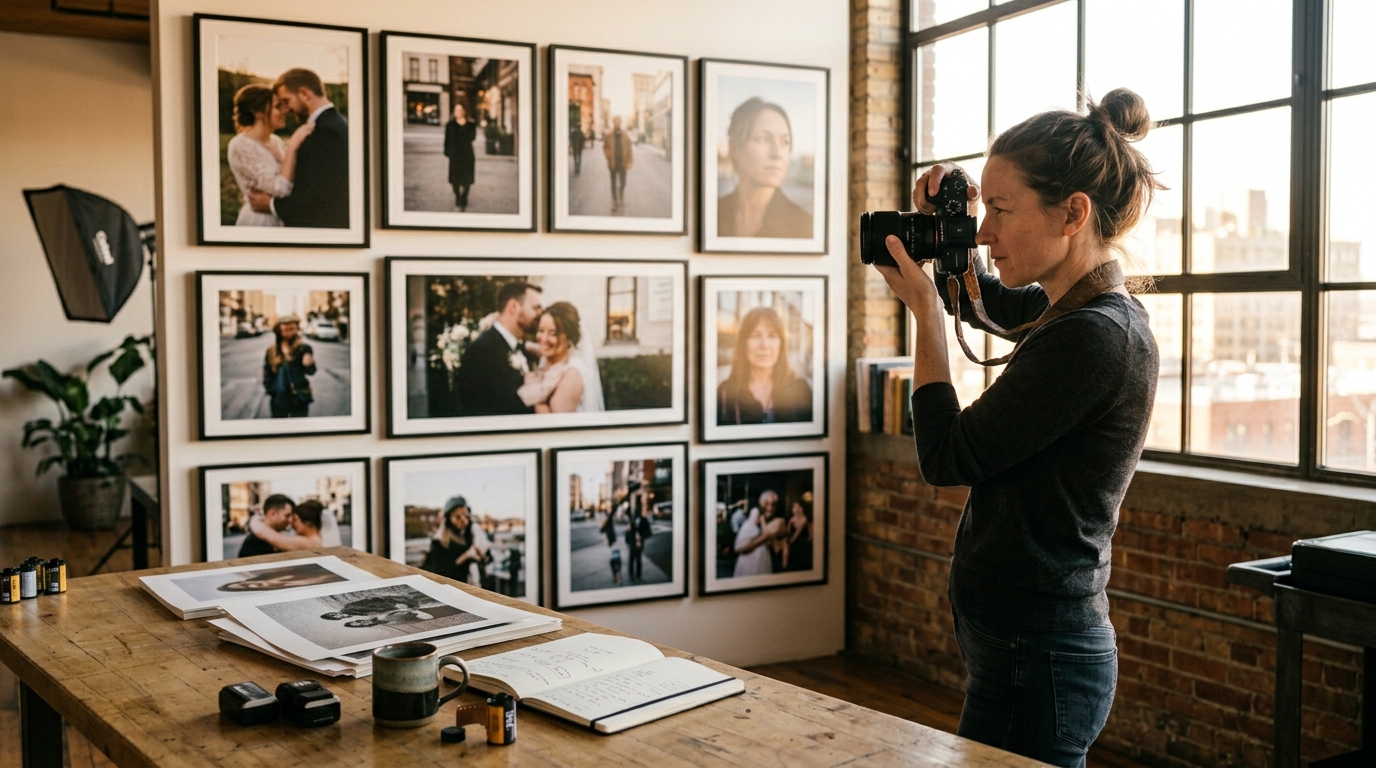
VSCO launched the U.S. brand campaign on May 14, 2026 with print and digital placements, a campaign film, and an open letter on the VSCO website. Specifically, VSCO selected two community photographers, Jared Thomas Tapy and Ivana Cajina, and asked each to document the other in their own creative element. As a result, the pair shot on a mix of digital and analog cameras.
The tagline runs two sentences: “Photography Isn’t Dying. It’s Never Mattered More.” Notably, the campaign visuals lean on hands holding cameras, eye-level portraits, and the kind of imperfect light AI generators still struggle with. For a software brand whose 14-year customer base sits on filter-driven mobile editing, the messaging marks a real positioning shift toward identifying with working photographers rather than with consumer trend chasing.
According to PetaPixel’s coverage of the launch, VSCO placed the campaign across U.S. out-of-home placements alongside the YouTube spot. For comparison, Adobe ran a 2024 campaign telling clients to “skip the photoshoot,” which drew significant backlash from working photographers. Both campaigns sit in the same product category and stake exactly opposite positions on AI in photography.
Eric Wittman’s Open Letter to Photographers
VSCO CEO Eric Wittman published the letter on the campaign landing page. The core line runs direct: the photographer’s eye, the way each individual sees the world, cannot be generated and cannot be prompted. Notably, Wittman also called out the specific pressures photographers have been feeling. For example, social platforms bury good work under trend reels. Similarly, software vendors tell clients to skip the shoot. Brands replace real photos with generated ones. Meanwhile, the doubting voices keep multiplying.
The letter closes with two commitments. First, VSCO champions photographers. Second, real work made by real people has never mattered more, and people feel the difference even when algorithms hide it. Notably, Wittman ends with the line “we’ve got your back,” which is the kind of language software vendors rarely use about the contractors paying their bills.
For me, the letter matters less for its prose and more for what it commits the company to publicly. Specifically, a CEO statement on a brand website becomes a reference point. As a result, when VSCO’s product roadmap drifts, contributors, employees, and customers gain real ground to hold the company to its own words.
The VSCO AI Lab Contradiction
VSCO is not an AI-free company. Specifically, the VSCO AI Lab launched in October 2025, then added prompt-based features in January 2026. As a result, asking whether AI will replace photographers from a company shipping prompt tools is, fairly, a contradiction. Notably, PetaPixel flagged the gap in its launch-day coverage, observing VSCO’s own product line includes the exact prompt capability the campaign argues photographers cannot be replaced by.
VSCO’s defense, written between the lines of the campaign, holds that AI tools belong inside the photographer’s workflow, not as a replacement for the photographer. There is a real distinction here. For example, AI culling tools from Aftershoot and Imagen reduce wedding editing time significantly per vendor case studies. Similarly, AI tagging speeds up archive work. Likewise, AI noise reduction in tools like Topaz extends the usable ISO range of older bodies. None of those replace the person making the picture. Instead, they expand what one photographer ships.
However, whether VSCO’s roadmap holds that line is the open question. The campaign creates accountability the company will face as competitors keep pushing prompt-first features into mainstream editors. For AI for photographers to remain a workflow tool rather than a replacement, the brand commitments need product discipline behind them.
Make Real Prints
An Epson SureColor Brings Photos Off Screens
Real work, made by real photographers, lands hardest on paper. The Epson SureColor P700 is the same body Hahnemühle and Canson list in their official ICC profiles.
Will AI Replace Photographers? The Track Record Says No
Every prior wave of photography technology disruption followed the same pattern. Specifically, hardware platforms died (film cameras, DSLRs, point-and-shoots). Similarly, middle-layer businesses died (one-hour photo labs, stock photography agencies, mass-market album printers). Brands died too (Kodak filed Chapter 11 in January 2012, Olympus signed away its camera business on September 30, 2020, original Polaroid Corporation filed Chapter 11 in 2001). However, photographers persisted through every one.
The reason runs structural. Photography is a skill rooted in human perception, judgment, and access. Specifically, a photographer reads a room, anticipates a moment, holds a relationship with a client, and delivers an image nobody else would have framed the same way. None of those have given way to any prior disruption. As a result, AI image generation so far follows the same pattern: it eats commodity output and leaves skilled work alone.
For wedding photographers I know, AI culling is now standard, and AI has not replaced a single Saturday booking. Meanwhile, editorial portrait shooters report steady demand because publications still need real faces on real assignment. For documentary work, the value is higher than ever because audiences increasingly need to know the image was witnessed. The track record consistently answers the question. Specific business models die, but the photographer compounds.
Will AI Replace Photographers in Every Category? Not Even Close
The honest answer on AI in photography is that AI eats some categories of image production while leaving others structurally intact. For example, stock photography is the clearest casualty. Working contributors who relied on Getty, Shutterstock, or iStock royalties saw revenue drop sharply when subscription pricing replaced per-image licensing. Then revenue dropped again when generative AI removed the need to license stock at all for many commercial use cases. Industry reports place Shutterstock contributor royalties for standard licenses as low as $0.10 to $0.25 per download under the subscription model. Our Adobe Stock review on how the contributor model used to work captures the pre-AI economics that no longer apply.
Meanwhile, mid-tier commercial photography for low-stakes catalog and editorial illustration is contracting. Conversely, premium commercial work, editorial portrait shoots, wedding photography, documentary projects, and any photography where authenticity matters are holding or growing. Notably, photographers I know shooting weddings and editorial have not lost work to AI in measurable volume. The categories surviving share three traits: human relationship, physical presence at the event, and verifiable authenticity.
Where AI Becomes a Workflow Multiplier
For the work AI does augment well, the right framing is workflow assistance. Specifically, tools culling thousands of frames, denoising high-ISO shots, or tagging archives all save hours without touching the creative decision. Our coverage of AI tools reshaping the photo workflow walks through what April 2026’s Photoshop release added on the editing side. None of those features replace a photographer. Instead, they expand what one photographer ships.
VSCO vs Adobe: Two Roads for Photo Software
VSCO’s campaign reads sharper when you set it beside Adobe’s 2024 “skip the photoshoot” messaging. Specifically, Adobe pitched its Firefly generative tools to clients as a substitute for hiring a photographer. The framing leaned on efficiency over authenticity, casting the photographer as a cost line rather than a creative partner. As a result, working photographers pushed back on the campaign hard, with PetaPixel and others publishing detailed coverage of the backlash.
VSCO’s May 2026 stand sits at the opposite end of the same product category. While Adobe positioned itself as a replacement for the shoot, VSCO positioned itself as a champion for the photographer. Similarly, Aftershoot took the same path in March 2026, promising to develop AI for photographers rather than AI working against them. Three positions are now visible across the major editing brands. First, Adobe leans toward generation. Second, VSCO and Aftershoot lean toward augmentation. Third, Capture One and Affinity Photo continue to occupy the workflow-only middle.
For buyers, the practical takeaway: read the marketing carefully before paying a subscription. Specifically, a brand publicly committed to photographers gives contributors leverage when product decisions go off course. Conversely, a brand publicly committed to AI image generation will likely keep pushing in that direction regardless of contributor pushback.
Read the Long Arc
On Photography by Susan Sontag
Sontag’s 1977 essays cover photography as power, art, and ethics. Every argument in her book has aged into the AI debate VSCO is now staking out.
Pros and Cons of the VSCO Stand
Pros
- Public position gives photographers a software brand to point clients toward
- CEO open letter creates accountability against the product roadmap
- Aligns with Aftershoot’s March 2026 commitment, signaling a market split forming
- Real photographers shot the campaign, not stock or AI-generated imagery
- Reinforces that authenticity carries a measurable premium in 2026
Cons
- The AI Lab still ships prompt-based features, undercutting the campaign rhetoric
- No commitment yet to training-data transparency or contributor opt-out
- Roadmap pressure from competitors keeps pushing AI features into mainstream editors
- Brand language is easier to publish than product discipline is to maintain
- Stock photographers already displaced will not be rehired by a campaign
Final Verdict
Will AI replace photographers? The answer VSCO gave on May 14, 2026 is no, and the track record of every prior disruption supports that answer. Specifically, business models die, hardware platforms retire, and software vendors come and go. However, photographers persist because the work depends on human perception, judgment, presence, and relationships. None of those have given way to any technology so far.
The VSCO campaign matters because a software brand committed in public. Even if VSCO’s roadmap stays imperfect on the AI Lab side, the company handed photographers, contributors, and clients a reference point. As a result, the company is now measurable against its own words. That is a stronger position than the silence most editing vendors keep on the question.
Three Assets to Build Right Now
For working photographers, the practical move is to keep investing in three durable assets that survive every disruption. First, direct client relationships hold. Second, print products hold. Third, editorial and documentary reputation holds. Those three have outlived every wave of technology change in the past 200 years and are positioned to outlive the AI chapter too. The future of photography belongs to people building those assets, not to people chasing the latest prompt feature. Our guide to the future of photography businesses and why prints still matter argues this case from the business side.
My recommendation: read the VSCO campaign, watch which software vendors back the same position, and back the brands committing in public. The work itself is yours, the eye is yours, and the relationships you build with clients are yours. Notably, AI does not have access to any of those three.
Get Behind the Lens
The Sony a7C II Is the Compact Full-Frame to Beat
If VSCO is right, the photographer is the part that compounds. A capable body is the cheapest part of the investment in your future work.
Frequently Asked Questions
Will AI replace photographers in the next 10 years?
No, based on the track record of every prior photography technology disruption. AI is reshaping commodity image production, including stock licensing and low-stakes catalog work. Skilled photography in weddings, editorial, documentary, fine art, and direct client work is holding or growing. VSCO’s May 14, 2026 campaign aligns with that read.
What did VSCO say in its “Photography Isn’t Dying” campaign?
VSCO launched the campaign on May 14, 2026. CEO Eric Wittman published an open letter arguing the photographer’s eye cannot be generated or prompted. The campaign included work by photographers Jared Thomas Tapy and Ivana Cajina shot on digital and analog cameras. VSCO positioned itself as a software company publicly siding with photographers.
Does VSCO use AI itself?
Yes. VSCO launched its AI Lab in October 2025, then added prompt-based features in January 2026. The campaign’s argument holds that AI tools belong inside the photographer’s workflow, not as a substitute for the photographer. PetaPixel and other outlets flagged the apparent contradiction during launch coverage.
Will AI replace wedding photographers?
No, based on current market evidence. Wedding photography depends on human presence at the event, relationship with the couple, and authenticity verifiable by the participants. AI culling tools (Aftershoot, Imagen) reduce editing time without replacing the shoot itself. Working wedding photographers report no measurable loss of bookings to AI.
Will AI replace stock photography?
Largely yes, and that displacement is already substantially complete. Stock contributor royalties under subscription pricing have dropped to as low as $0.10 to $0.25 per download per industry reports. Generative AI tools now satisfy many commercial use cases that previously required licensed stock. Photographers who built businesses outside the stock model on commissioned shoots, weddings, editorial work, and direct print sales were largely unaffected.
How is AI changing photography in 2026?
AI in photography in 2026 mostly shows up as workflow augmentation: culling, tagging, noise reduction, content-aware fill. Meanwhile, generative AI is reshaping the commodity edge of the market, including stock and low-stakes commercial illustration. Premium commercial, editorial, documentary, and direct-client photography continue to expand. The future of photography for working pros depends on which side of that divide a photographer’s business sits. VSCO’s May 14, 2026 campaign frames the divide explicitly, and AI for photographers as a workflow tool is the position the company committed to.

