


Quick Facts:
- Topic: Birds in flight photography (settings, autofocus, and field technique)
- Skill level: Advanced beginner to intermediate
- Time to learn: 2 to 3 weeks of focused practice
- Gear needed: Continuous-AF camera, 300mm or longer telephoto lens
- Difficulty: High (small, fast, unpredictable subjects)
- Used kit cost: $1,200 to $8,500 on MPB depending on body and lens
- Best for: Wildlife hobbyists ready to move beyond perched bird shots
9 min read
In This Guide
- Birds in Flight Photography Overview: Where Most Photographers Go Wrong
- Key Birds in Flight Settings at a Glance
- Shutter Speed for Birds in Flight
- Autofocus Modes and Subject Detection
- Drive Mode, Burst, and Buffer Management
- Lens Choice and Camera Body for Birds in Flight
- Field Technique: Panning, Anticipation, and Light
- Crop Sensor vs. Full Frame for Birds in Flight
- Pros and Cons of Mirrorless for Bird Flight Work
- Final Verdict
- Frequently Asked Questions
Birds in Flight Photography Overview: Where Most Photographers Go Wrong

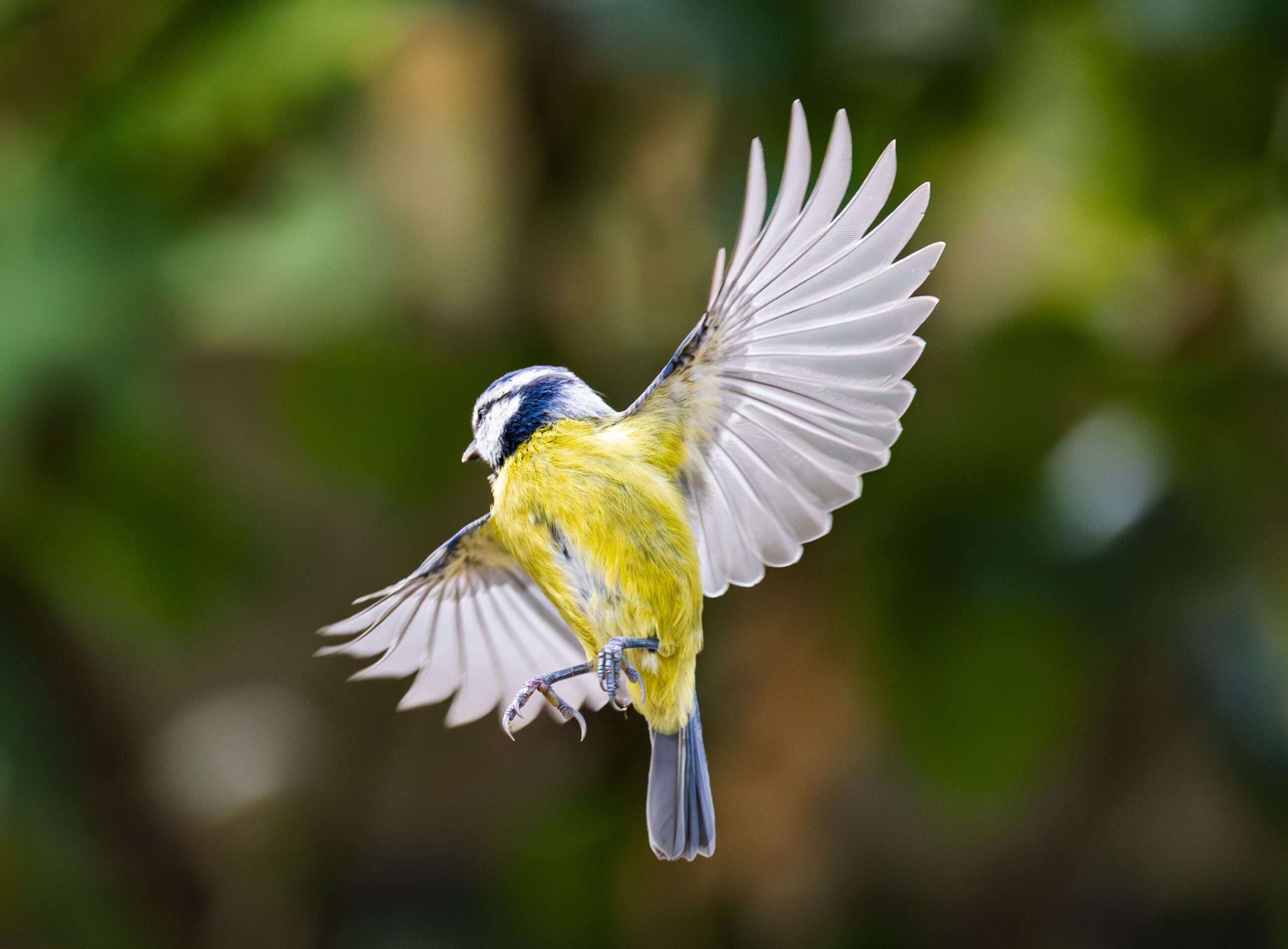
Picture a tern banking into the coastal wind, eye sharp, wingtip frozen mid-snap. Birds in flight photography rewards the photographer who shows up prepared for moments like that. Sharp wing detail, locked eyes, and clean separation from the background look simple in finished work. Every one of those frames, however, hides a settings decision and a practiced habit. This guide walks you through how to photograph birds in flight using the three settings carrying most of the weight, the autofocus mode winning on modern mirrorless bodies, and the five-minute warm-up drill raising your keeper rate before your subject ever arrives.
If you already shoot perched birds well, you are the target audience. Specifically, this guide assumes you own a continuous-AF camera, a telephoto lens of 300mm or longer, and a baseline understanding of exposure. Beginners new to the genre should start with our primer on beginner bird photography gear first.
Compare a backyard cardinal on a feeder to a peregrine falcon stooping at 200 mph. Both subjects sit inside the bird photography world. The technique gap, however, is enormous. Flight subjects move along three axes, change speed without warning, and stay in your frame for fractions of a second.
The Modern Gear Advantage for Flight Subjects
Bodies released after 2021 with dedicated bird-eye autofocus give you a massive head start. For example, the Sony a1, Sony a9 III, Nikon Z9, Canon R5 Mark II, and OM System OM-1 Mark II all support modern bird subject detection. Older bodies still work; however, they ask more of your shutter finger and your panning rhythm.
Used pro-tier bodies on MPB now sit roughly 35 to 50 percent below new retail. As a reference point, a Sony a1 body launched at $6,498 sells in excellent condition for around $3,000 to $3,500 in mid-2026 on the MPB used market. Stepping up to this pro tier dramatically improves your hit rate on small, fast birds. Photographing terns diving along a coastal jetty offers a clear example. Without bird-eye AF you will burn an afternoon to land three sharp frames. With it, you will fill a 256GB card with usable shots before lunch.
Key Bird Photography Settings for Flight Subjects at a Glance
Before the section-by-section breakdown, here is the at-a-glance reference for the core bird photography settings every flight shooter needs. Print it, screenshot it, or paste it into your phone notes. Then, after a few outings, you will recall the values from muscle memory.
| Setting | Recommended Value for Flight Subjects |
|---|---|
| Shutter speed | 1/2000s minimum, 1/3200s for small fast birds |
| Aperture | f/5.6 to f/8 (wide open on slow lenses) |
| ISO | Auto ISO with a cap at 6400 on modern bodies |
| Focus mode | AF-C / AI Servo / Continuous |
| AF area | Wide or Zone with subject detection enabled |
| Drive mode | High-speed continuous, 10 fps or faster |
| Metering | Matrix or Evaluative |
| File format | Compressed RAW (saves buffer space) |
| Stabilization | Pan mode (IS Mode 2 or Mode 3) |
Buy Pro AF Used
Sony a1: Bird-Eye AF at MPB Pricing
Excellent-condition Sony a1 bodies routinely list around $3,000 to $3,500 at MPB with a six-month warranty. Half the new price, all of the 30 fps speed.
Shutter Speed for Birds in Flight

Shutter speed is the single largest factor in birds in flight photography. A duck or pelican needs 1/1600s. Most songbirds and gulls demand 1/2000s. Hummingbirds with their 80 wingbeats per second cross into the 1/4000s territory for a frozen wingtip. If you take only one number away from this article, take 1/2000s as your default.
Why so fast? Wing-tip velocity. The body of a raven flying past at 25 mph moves slowly compared to its wingtip, which whips through the frame several times as fast on the upstroke. Consequently, a shutter speed sharp enough to freeze the body will still smear the wingtips at 1/640s. Pros default to 1/2500s and dial down only when an obvious creative motion blur is the goal.
Then pair the shutter speed with Auto ISO and a 6400 ceiling. Modern full-frame sensors handle ISO 6400 cleanly enough for editorial use. For a deeper foundation on the setting itself, our shutter speed basics article walks through the exposure triangle in plain terms.
Autofocus Modes and Subject Detection
Autofocus does the work no photographer is fast enough to do by hand. First, set your camera to AF-C (Sony), AI Servo (Canon), or Continuous AF (Nikon, Fujifilm, OM System). In contrast, single-shot AF will fail on flight subjects every time, because the moment focus locks, the bird has already moved.
Modern mirrorless bodies layer subject detection on top of continuous AF. On the Sony a1, the Bird recognition mode prioritizes the eye, then the head, then the body, switching automatically as the bird turns. On the Canon R5 Mark II, the Animal Detection setting handles birds reliably across nearly the entire frame. Similarly, the OM System OM-1 Mark II and Nikon Z9 deliver consistent results. The Canon R6 Mark II uses the same deep-learning AF foundation at a lower price point.
AF Area Choice and Back-Button Focus
For AF area, start with Wide or Zone. Single-point AF asks you to keep one tiny box on a moving eye, which is brutal practice when the bird fills less than 10 percent of the frame. Wide-area AF with bird detection lets the camera find the bird inside the active zone and lock on automatically.
Back-button focus is the optional upgrade. Separate the AF activation from the shutter button, and your camera holds focus the instant you stop pressing the AF button. In practice, this approach lets you pre-focus on a flight path and shoot through the moment without losing the lock. Most working wildlife photographers use this setup full time.
Drive Mode, Burst, and Buffer Management

Set your drive mode to high-speed continuous, 10 fps or faster, every time you shoot flight. Single frame catches one moment; bursts of 20 to 40 frames capture the wingbeat cycle and give you usable poses to choose from in post. Our explainer on burst mode for beginners covers the mechanics in detail.
Electronic shutter unlocks the fastest frame rates, with 20 fps to 120 fps available on top-tier bodies. There is one trade-off. Older electronic shutter sensors produce rolling shutter, a banana-shaped wing distortion appearing on fast pans. The Sony a9 III solved this with a global shutter sensor in 2024, while the Sony a1, Canon R3, and Nikon Z9 use stacked sensors fast enough to suppress most rolling artifacts.
Buffer matters as much as fps. A 30 fps body filling a 2-second burst writes 60 RAW files. If your card is slow or your buffer is small, frames stack up and the camera locks while writing. CFexpress Type A or Type B cards with sustained write speeds above 800 MB/s prevent this stall. For longer outings, shoot Compressed RAW to halve file sizes without visible quality loss.
Lens Choice and Camera Body for Birds in Flight
Reach is non-negotiable. Birds rarely cooperate by flying close enough for a 200mm lens. 400mm is the practical minimum for raptors, herons, and ducks. 500mm to 600mm becomes the sweet spot for songbirds, shorebirds, and warblers. The Sony FE 200-600mm G, the Nikkor Z 180-600mm, and the Canon RF 100-500mm L all deliver pro results at the $1,500 to $2,800 used range on MPB.
Primes win on sharpness and aperture. The 500mm f/4 and 600mm f/4 lenses from Sony, Canon, and Nikon are the gold standard, though they weigh 6 to 7 pounds and cost $13,000 to $15,500 new. Zoom lenses make more sense for the photographer hand-holding all day. A 100-500mm or 200-600mm zoom packs flexibility, image stabilization, and a manageable 3 to 5 pound weight depending on model.
Camera Body Picks for Flight Shooters
Body choice matters too. The Sony a9 III with its global shutter shoots 120 fps blackout-free, ideal for the unpredictable moments inside a flight sequence. Meanwhile, the Sony a1 delivers 30 fps with 50.1 megapixels for photographers wanting cropping headroom. Our full Sony a1 review breaks down the 759-point AF system and buffer performance in detail.
If your budget rules out flagship-tier bodies, the Sony a6700 and Canon R7 (both APS-C) plus the OM System OM-1 Mark II (Micro Four Thirds) all offer modern subject detection in smaller-sensor packages. They also extend your effective reach. A 400mm lens on an APS-C body frames like a 600mm on full-frame, while the same lens on the OM-1 II frames like an 800mm thanks to the 2.0x crop factor. The extra reach costs nothing in glass.
Save on Pro Speed
Sony a9 III: Global Shutter, Zero Rolling Distortion
120 fps blackout-free burst with no rolling shutter banding, ideal for unpredictable flight subjects. Used inventory at MPB starts around $4,700 with a six-month warranty.
Field Technique: Panning, Anticipation, and Light
Gear gets you to the starting line. Fieldwork wins the race. The single most overlooked variable in birds in flight photography is your panning rhythm. Practice with large slow subjects like herons and pelicans, then graduate to small fast subjects like swallows and warblers. Spend an afternoon on each before moving on.
Panning grip starts at the lens foot. Cradle the lens with your left hand, brace your right elbow against your ribs, and swivel from the hips. Your goal is one smooth motion, not three jerky corrections. The IS Mode 2 setting on most telephoto lenses (sometimes called Mode 3 or Pan Mode) suppresses vertical correction so the lens does not fight your horizontal arc.
Reading Bird Behavior and Light

Anticipation comes from knowing your subject. Herons launch with a deliberate crouch, hawks tense their shoulders before bursting from a perch, and ducks taxi across water for a full second before lifting off. Therefore, watching the bird teaches the moment. Field observations cataloged by the Cornell Lab of Ornithology document a consistent head-bob cue from raptors moments before launch. Read the cue and you photograph the takeoff with the lens already moving.
Light separates a documentary frame from a portfolio frame. As a rule, shoot with the sun behind your shoulder during the first 90 minutes after sunrise and the last 90 before sunset. Side light reveals feather texture, while back light produces dramatic rim glow on translucent wing feathers. Avoid overhead noon sun, because flat top-down light flattens everything and adds harsh shadows under the eye and beak.
Crop Sensor vs. Full Frame for Birds in Flight
The crop-versus-full-frame debate matters more for bird photography than for any other genre. Crop bodies extend your effective focal length by 1.5x (Nikon, Sony, Fujifilm) or 1.6x (Canon). A 500mm lens on a Canon R7 frames at 800mm-equivalent, which is a meaningful reach upgrade without buying a longer lens.
Full-frame bodies recover the ground crop sensors hand back. They deliver cleaner high-ISO files, better cropping flexibility from the larger sensor, and a faster, smarter AF system on the flagship tier. The Sony a1 and a9 III, for example, run their full AF performance across 90 percent of the frame. Most crop bodies cover 85 to 90 percent at slightly reduced detection accuracy.
For working photographers shooting commercial wildlife, full-frame wins on output flexibility. For hobbyists shooting birds for the joy of it, crop sensors deliver more reach per dollar. Either path produces strong birds in flight photography results in skilled hands.
Pros and Cons of Mirrorless for Bird Flight Work
Pros
- Bird-eye subject detection raises keeper rates 30 to 50 percent over DSLR phase-detect AF
- 20 to 120 fps burst speeds capture full wingbeat cycles
- Blackout-free viewfinders preserve subject tracking during the burst
- Smaller, lighter bodies reduce fatigue on 6-hour shoots
- In-body stabilization adds 5 to 8 stops on telephoto lenses
- Eye-controlled AF on the Canon R3 and R1 selects subjects with a glance
Cons
- Pro-tier mirrorless bodies still cost $4,000 to $6,500 new
- Electronic shutter rolling effects on older sensors distort fast pans
- Faster burst rates require CFexpress cards at $200 or more
Final Verdict
Birds in flight photography rewards practice and process, not gear alone. The settings cheat sheet at the top of this guide handles 80 percent of your decisions. After you bake 1/2000s, AF-C with bird detection, and high-speed burst into your default profile, you have already removed the three most common reasons flight shots fail.
The remaining 20 percent is fieldwork. Read your subject, position with the light behind your shoulder, and practice panning until your arc is smooth. A used Sony a1 or a9 III plus a 200-600mm zoom puts a professional kit in your hands for under $7,000 on the MPB used market, less than the price of the a1 body alone at retail.
If you are stretching a tight budget, the Canon R7 with the RF 100-500mm L delivers 80 to 85 percent of flagship performance at roughly half the price. Reading our piece on common wildlife photography mistakes first will save you weeks of trial and error in the field. Combine those bird photography tips with the settings and panning drills above for the fastest path to sharper results.
The single highest-leverage move you will make is upgrading the photographer, not the kit. Spend three weekends working the panning drill at a local pond before reaching for a new body. Once you bank those reps, the gear upgrade pays dividends because your technique already deserves it.
Ready to Buy?
Check Today’s Price on Sony a1 at MPB
MPB lists used Sony a1 bodies daily with a six-month warranty and free US shipping. Cheaper than new retail, same 759-point AF and 30 fps burst.
Frequently Asked Questions
Below are the questions readers ask most often when learning how to photograph birds in flight. Each answer covers the practical bird photography settings or technique behind the right choice.
What shutter speed should I use for birds in flight?
Specifically, set 1/2000s as your default for most flight subjects. Drop to 1/1600s for slow flappers like herons and pelicans. Push to 1/3200s or faster for small, fast songbirds and shorebirds. For hummingbird wing freeze, go to 1/4000s or faster.
Is 1/2000s fast enough for birds in flight?
Yes, for medium-sized birds in level flight. However, 1/2000s will smear wingtip detail on smaller, faster species like swifts, swallows, and warblers. For those subjects, jump to 1/3200s. Wing-tip velocity scales faster than body velocity, so the small bird shutter speed is always higher than the body speed suggests.
What is the best autofocus mode for birds in flight?
AF-C on Sony and Nikon, AI Servo on Canon, or Continuous AF on Fujifilm and OM System. Pair it with Wide-area or Zone AF and turn on Bird subject detection. Single-point AF and single-shot AF will both fail on flight subjects because the bird moves before the lock holds.
Do I need a full-frame camera for bird photography?
No. Crop-sensor bodies like the Canon R7, Sony a6700, and OM System OM-1 Mark II deliver excellent results and extend your effective reach by 1.5x to 1.6x. Full-frame wins on high-ISO performance and cropping flexibility, while crop sensors win on reach per dollar.
What focal length do I need for bird photography?
400mm is the practical minimum for raptors and waterfowl. 500mm to 600mm is the sweet spot for songbirds and shorebirds. A 200-600mm or 100-500mm zoom covers most field situations and weighs around 4 pounds, making it manageable for handheld panning over a long shoot.
Why are my birds in flight shots blurry?
Three causes account for nearly every blurry flight frame. First, shutter speed too slow (below 1/1600s). Second, AF mode set to single-shot instead of continuous. Third, panning motion too jerky, often from gripping the camera body instead of the lens foot. Fix those three and your keeper rate jumps significantly. Most online bird photography tips skip the panning grip detail, yet it carries more weight than any single setting.
How do I learn how to photograph birds in flight quickly?
Run the five-minute warm-up drill at a local pond once a week before each session. Start with herons or pelicans at 1/1600s, then move to gulls at 1/2000s, and finish with swallows at 1/3200s. Three weeks of focused practice with these bird photography settings will move you further than a month of casual shooting.

