


Quick Facts:
- Incident: Grandfather thrown 8 feet by a bull bison
- Location: Bridge Bay Campground, Yellowstone National Park
- Date: Friday, July 10, 2026
- Animal: Bull bison during rutting season
- Injury: Several broken bones, victim conscious
- NPS bison distance: 25 yards (23 m) minimum
- Recommended lens: 300mm or longer telephoto
- Best for: Anyone learning how to photograph wildlife safely in national parks
7 min read
In This Article
- What Happened at Bridge Bay Campground
- Safe Wildlife Distances at a Glance
- Why the Bison Attacked
- How to Photograph Wildlife Safely From a Distance
- Warning Signs a Bison Is About to Charge
- How to Photograph Wildlife Safely When an Animal Comes Closer
- Gear for Keeping Your Distance
- Final Thoughts
- Frequently Asked Questions
What Happened at Bridge Bay Campground
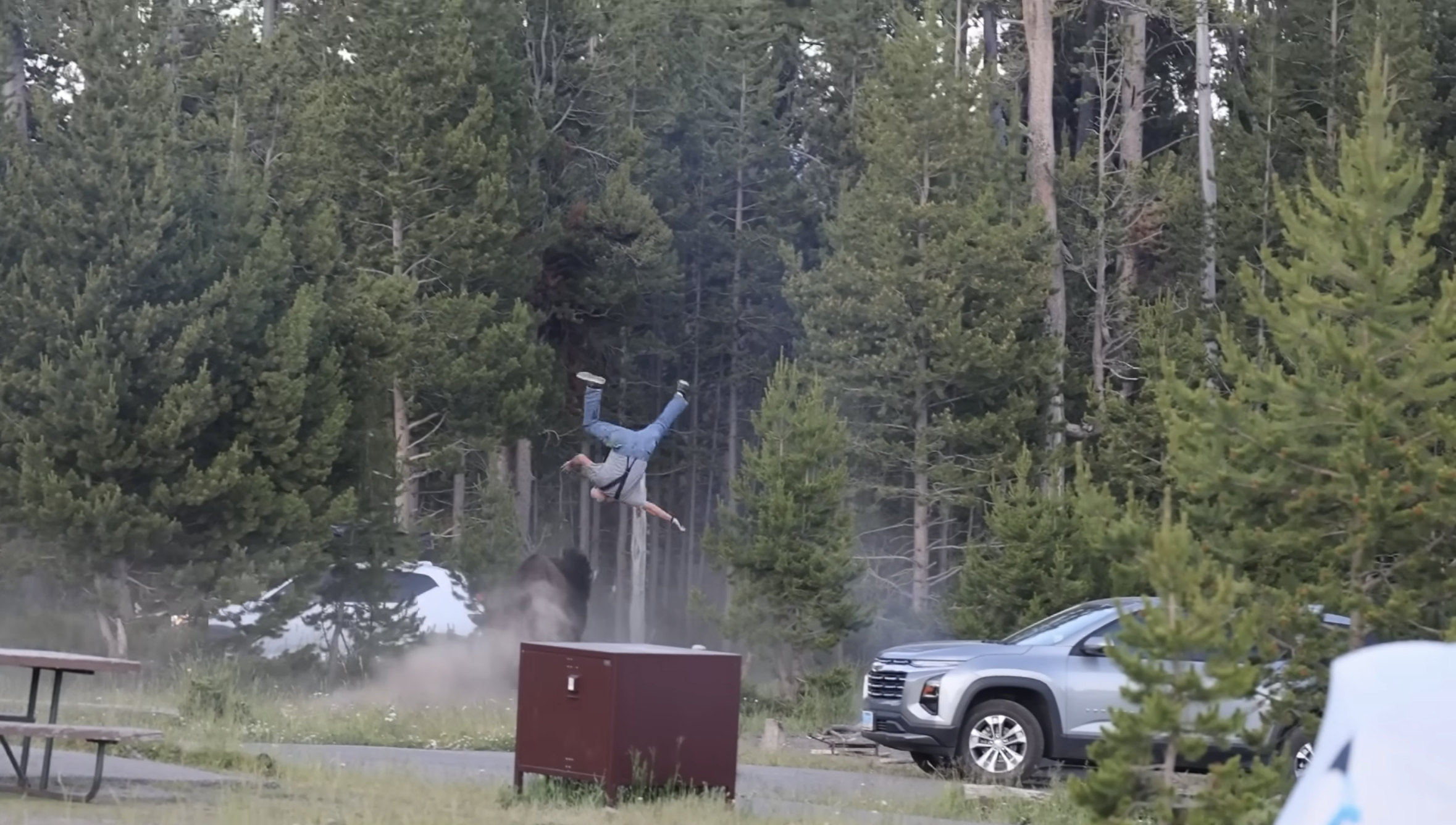
On Friday, July 10, 2026, a bull bison threw a grandfather eight feet into the air at Yellowstone National Park. This Yellowstone bison attack happened at Bridge Bay Campground, near Yellowstone Lake. Moments before, Carl McDaniel and his grandson had stopped to take smartphone photos of the animal. Their footage became a hard lesson in how to photograph wildlife safely.
Photographer Mike MacLeod filmed the encounter from a safe distance. He works out of Bozeman, Montana, and previously served as an Army combat photographer. According to MacLeod, who spoke to Cowboy State Daily, the bull was agitated well before the attack and had already charged a group of teenagers. Because so many people stood nearby, he expected the animal to move on. Instead, it fixed on McDaniel and his grandson.
In the video, the pair walk along the road, well over 100 yards from the bison. They pause for a few photos while the animal rolls in the dust. Then a white pickup drives past and sets the bull off again. After charging the truck, the bison turns toward the trees where the two had taken cover. The grandson escapes. His grandfather does not.
The bison hooked McDaniel with its left horn and flipped him high into the air. He landed hard on his side. The bull then stood over him, stomping and shaking its head. At this point, MacLeod put down his camera and ran at the animal, arms pumping and voice raised, to pull its attention away. Other bystanders followed his lead, and the bison finally bolted. McDaniel suffered several broken bones, though he stayed conscious and talkative.
Video: Mike MacLeod filmed the moment a bull bison charged and flipped a grandfather at Bridge Bay Campground.
Safe Wildlife Distances at a Glance
The National Park Service sets clear minimum distances for every animal in Yellowstone. These rules exist because wildlife behavior shifts fast. Bison look calm, yet they have injured more people in Yellowstone than any other animal. For strong bison safety, treat the numbers below as your baseline. Master them, and you master how to photograph wildlife safely.
| Situation | Rule or Fact |
|---|---|
| Bison and elk | Stay at least 25 yards (23 m) away |
| Bears, wolves, cougars | Stay at least 100 yards (91 m) away |
| Bison speed | Three times faster than a person |
| Recommended lens | 300mm or longer telephoto |
| If an animal approaches | Back away and hold the minimum distance |
| Reporting an incident | Call 911 or find a park ranger |
Notice the gap between 25 yards and a bison’s speed. A charging bull closes the ground in under two seconds. Therefore the distance protects you only when the animal never decides to charge. Reading behavior matters as much as the tape measure.
Why the Bison Attacked
Another video by Cowboy another video by Cowboy State Daily
Timing explains most of this Yellowstone bison attack. The bison rut, or mating season, runs from June through September. During the rut, bull bison surge with testosterone as they compete for dominance and females. As a result, they grow unpredictable and quick to charge. MacLeod described the bull as “angry, agitated and charging anything and everything.”
This was the park’s second human-bison incident of 2026. The first came on June 26, when a bison injured a 12-year-old near Mud Volcano. Are bison dangerous outside the rut? Yes. The summer breeding season sharpens the risk considerably, though even a resting bull shifts to a full charge within seconds.
What makes McDaniel’s case unusual is his behavior. He and his grandson kept well back and never crowded the animal. Witnesses agreed the pair did nothing to provoke the bull. Sometimes the danger finds you, which is why habit and distance matter more than luck.
History backs up the warning. In 2025, a bison gored a Florida man in Yellowstone after he approached one. Year after year, visitors crowd these animals for a photo and pay for it. Bison hurt more visitors in Yellowstone than any other animal in the park.
How to Photograph Wildlife Safely From a Distance
Learning how to photograph wildlife safely starts with reach, not courage. The park service recommends a telephoto lens of 300mm or longer for wildlife. With this focal length, you fill the frame while standing well back. Because you hold your distance, you avoid disturbing the animal and breaking park rules.
A long lens also improves your images. Compression from a 400mm or 600mm lens isolates your subject against a soft background. Meanwhile you stay outside the animal’s flight zone, the space where it feels threatened. For most park animals, a wildlife photography lens in the 100-400mm range covers both safety and image quality.
Skip the urge to step closer for a phone snapshot. The teenagers in the video and McDaniel both used smartphones, which pulled them nearer to the bison. A crop from a real telephoto beats a close approach every time. These wildlife photography tips keep the animal calm and keep you out of the hospital.
Your vehicle doubles as a mobile blind. The park service notes the safest view of wildlife often comes from inside a car. Roll down the window, rest your lens on a bean bag, and shoot without stepping into the open. On a crop-sensor body, a 300mm lens reaches like a 450mm or 480mm lens, thanks to the 1.5x or 1.6x crop factor, which stretches your safety margin even further.
Warning Signs a Bison Is About to Charge
A bison signals aggression before it charges. Watch for these behaviors, and treat each one as a command to leave:
- Bluff charging or short false rushes
- Head bobbing while staring at you
- Pawing the ground
- Bellowing or grunting loudly
- Raising or flicking the tail straight up
If you notice any of these signals, do not stand your ground. Walk or run away at once, and put a tree or vehicle between you and the animal. Should the bison follow, use bear spray while you move. Strong bison safety depends on acting at the first signal.
How to Photograph Wildlife Safely When an Animal Comes Closer
Sometimes an animal closes the gap on its own. Knowing how to photograph wildlife safely means surrendering the shot the moment this happens. Lower the camera and back away slowly while keeping the animal in view. Never turn the retreat into a standoff for one more frame.
McDaniel did the right thing here. He put his phone away and moved to leave with his grandson. Still, the bull had already picked its target. His story shows why early distance beats late reaction. Once a bison commits to a charge, you rarely outrun it.
Build the retreat into your routine before you travel. Scout an exit path as you set up, and note the nearest tree line or vehicle. Photographers who plan an escape react faster than those frozen by a great frame. This preparation keeps you at a safe distance.
Gear for Keeping Your Distance
The right kit lets you shoot from 25 yards or more without losing detail. Start with reach. A wildlife photography lens with a long focal length removes the temptation to move closer, which makes it your single most important safety tool. Choosing a proper telephoto lens is step one for any national park trip.
Pair the lens with a capable body. A fast autofocus system helps you track a moving animal from far away. For quick action, the right wildlife camera body makes the difference between a sharp frame and a blur.
Dial in your camera before the moment arrives. Use a fast shutter speed and continuous autofocus, the same settings for fast-moving wildlife pros trust for birds. Review our essential wildlife photography gear and this beginner wildlife gear guide to build a kit around distance and reach.
Final Thoughts
McDaniel and his grandson did little wrong. They kept their distance, and the bison still singled them out. Their experience reminds every photographer of one truth: wild animals set their own terms. The best wildlife photography tips come down to reach, awareness, and a willingness to walk away. Distance lowers your odds, yet it never drops them to zero. Your real margin is reading behavior and scouting an exit, not the tape measure alone.
For your next trip, pack a long lens and study the animals before you raise the camera. Hold 25 yards from bison and elk, and 100 yards from bears and wolves. Watch for warning signs, and treat every calm moment as temporary. A photo is never worth a hospital visit.
MacLeod’s footage is hard to watch, yet it teaches more than any classroom lecture. Respect the distance, trust your telephoto, and let the animal stay wild. This is how to photograph wildlife safely, and how you protect both your safety and your shot.
Frequently Asked Questions
How far should you stay from bison in Yellowstone?
The National Park Service requires at least 25 yards, about 23 meters, from bison and elk. For bears, wolves, and cougars, the minimum jumps to 100 yards. If an animal moves closer, back away to hold the required distance.
Are bison dangerous to photographers?
Yes. Bison have injured more people in Yellowstone than any other animal, and they run three times faster than a person. During the June-to-September rut, bulls grow especially aggressive and unpredictable.
What lens is best for photographing wildlife safely?
A telephoto lens of 300mm or longer lets you fill the frame from a safe distance. For most national park wildlife, a 100-400mm zoom works well. Longer primes like 500mm or 600mm add reach for skittish or dangerous animals. Add a 1.4x teleconverter to push a 400mm lens to 560mm without moving your feet.
What should you do if a bison charges?
Do not stand your ground. Walk or run away at once, and put a tree or vehicle between you and the bison. Use bear spray while moving if it follows, then report the incident to a ranger or call 911.
Why did the bison attack the grandfather at Bridge Bay?
The bull was in rut and already agitated after charging teenagers and a pickup truck. Witnesses say this Yellowstone bison attack was not the victim’s fault, since he stayed well beyond the required distance.
Where do you find official wildlife safety rules?
The National Park Service publishes distance rules and animal behavior guides on its Yellowstone safety page. Review them before every trip, and pack a telephoto lens so you never need to close the gap.

