


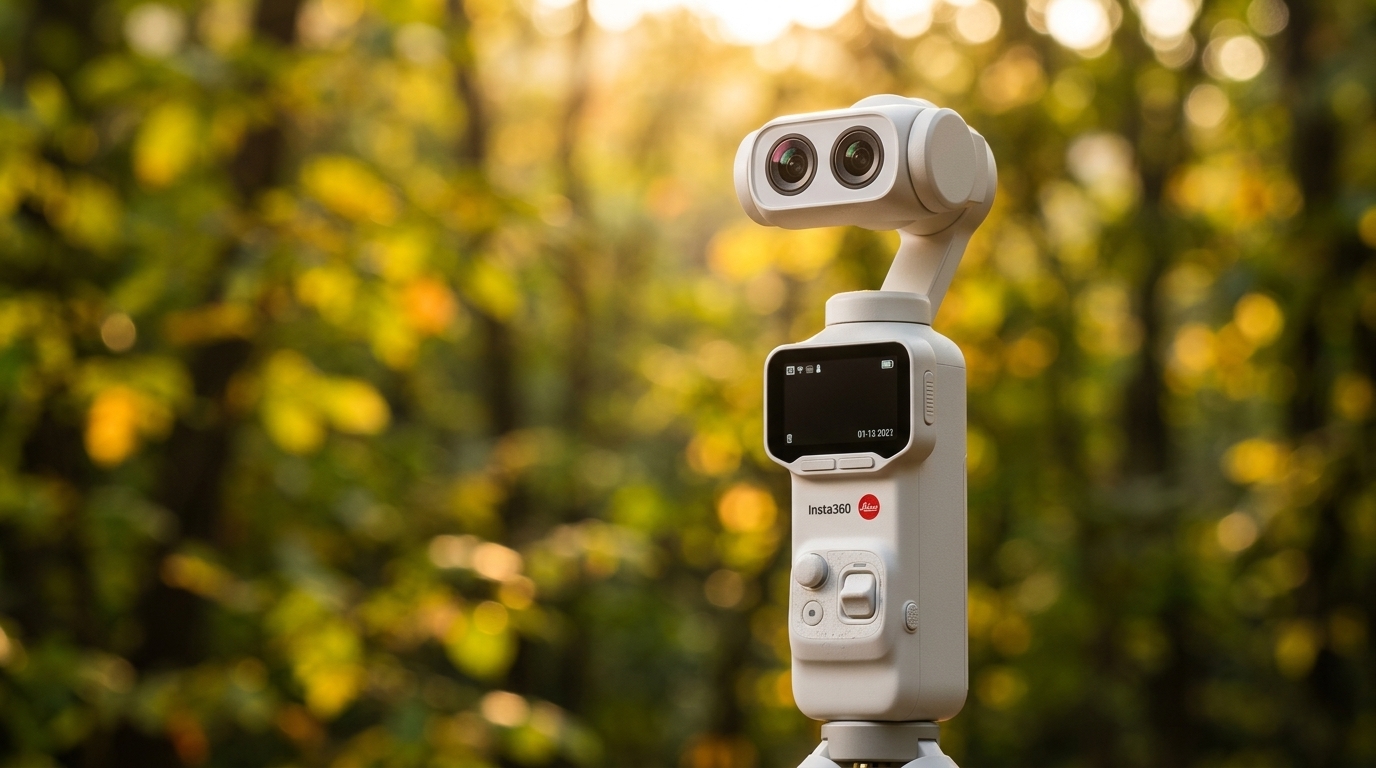
Quick Verdict: The Insta360 Luna Ultra leak landed on May 11, 2026. The headline feature is a fully detachable OLED handle that pulls off the gimbal body and works as a wireless remote with live view. Retail box shots, supplier listings, and the usual leak accounts on X all line up on the same spec sheet, which is when you start trusting a leak. Pre-sale pricing from Chinese B2B suppliers points to roughly $599 to $606. A June 2026 global launch looks likely.
7 min read
In This Article
Overview
Right now, the Insta360 Luna Ultra has been the worst-kept secret in the pocket camera world for weeks. In April, Insta360 teased the Luna series behind frosted glass at NAB 2026 in April. Select creators got hands-on time with pre-production units. Then on May 11, 2026, X account @djirumor posted clean product shots. Those shots confirm what spec-sheet leaks had been hinting at for a month.
In short, two pieces of news matter here. First, the Insta360 Luna Ultra packs a dual-lens system co-engineered with Leica. The whole rig fits into a pocket-sized 3-axis gimbal body. Second, the entire handle, including the OLED touchscreen, detaches from the gimbal head. It then works as a wireless remote with live view. Nothing on the shelf next to the DJI Pocket 4 or the Insta360 Ace Pro 2 does that today.
For starters, Insta360 has not posted official pricing or a launch date on its own site. However, retail box leaks, supplier pre-sale sheets, and a marketing tempo that lines up with the summer travel push all point to a June 2026 global release. The price will land in the $599 to $735 band, depending on which leak you trust.
Quick Facts
| Detail | Value |
|---|---|
| Main Sensor | 1-inch CMOS, ~18 to 20mm equivalent, f/1.8 to f/2.0 |
| Telephoto Sensor | 1/1.3-inch class CMOS, ~70 to 120mm equivalent (leaks differ), f/2.8 |
| Optics | Leica co-engineered, dual lenses (Summicron branding per TheNewCamera) |
| Zoom | ~3.9x optical, up to 6x lossless (some leaks cite 6x optical, 12x lossless) |
| Video | 4K 240fps, 10-bit iLog, Dolby Vision HDR, ~14 stops of dynamic range |
| Stabilization | 3-axis mechanical gimbal plus FlowState |
| Display | 2-inch rotatable OLED touchscreen, 1000 nits |
| Detachable Handle | Magnetic multi-pin connector, OLED screen, joystick, D-pad, red record button |
| AI Tracking | Deep Track subject tracking (next-gen engine) |
| Battery | 1500mAh, 150 to 180 minutes continuous recording |
| Weight | Under 150g |
| Colors | White, Black, Black “Panda” edition, Beige “Crema” |
| Pre-Sale Price (Leaked) | ~$599 to $606 USD from Chinese B2B suppliers |
| Expected Retail | $499 to $735 USD (range from multiple leaks) |
| Expected Launch | Late Q2 2026, June window |
The Detachable OLED Handle Explained
To begin with, the Insta360 Luna Ultra splits into two pieces. For a start, one side holds the 3-axis gimbal head with both lenses, the main battery, and the imaging stack. In addition, the other side is the handle, and Insta360 has crammed an entire control surface into it.
Specifically, on the handle you get the 2-inch OLED touchscreen, the red record button, a joystick, a D-pad, two customizable function buttons, and a status LED. A magnetic multi-pin connector locks it to the gimbal head. Snap them together and you have a pocket camera. Pop them apart and the handle becomes a wireless controller with live view.
Furthermore, once detached, the handle streams a 4K 30fps live view feed. On top of that, it also shows recording info, zoom level, and settings. I have shot the Ace Pro 2 from a hood mount with the screen six feet out of reach more times than I want to admit. As a result, watching the framing app on my phone stutter and time out is a familiar problem. In short, a handle that lives in your palm and shows the actual sensor feed fixes the exact issue that nags me on every shoot.
How the Detachable Handle Compares to Rivals
By comparison, DJI’s FrameTap controller on the Osmo Mobile 8P is the nearest thing on the market. However, it is a separate puck that pairs with a different camera. Insta360 baked the controller into the camera itself, which is a cleaner answer if the magnetic connector holds up under field use. Even better, retail packaging images first reported by Notebookcheck describe a “detachable magnetic remote with an integrated OLED display, joystick, and 8K video support.” That report moved the feature from rumor to confirmed.
Featured Gear on Amazon
Want a Similar AI-Driven Insta360 in Your Kit Today?
The Insta360 Ace Pro 2 is my daily action camera. It shoots 8K video on a 1/1.3-inch sensor, ships with a Leica Summarit lens, and runs a dual AI chip. The chip handles low-light and tracking better than anything else I have shot with.
Dual Leica-Tuned Lens System
Notably, the Luna Ultra is the first pocket gimbal camera with a true dual-lens system. Leica co-engineered the optics, with TheNewCamera citing Summicron branding on both lenses. First, the main lens sits behind a 1-inch CMOS sensor at roughly 18 to 20mm equivalent. Then, the aperture runs from f/1.8 to f/2.0. Next, the telephoto lens sits behind a smaller 1/1.3-inch class sensor at f/2.8, with leak sources splitting between a 70mm equivalent and a 120mm equivalent focal length.
In practice, that 1/1.3-inch sensor is the same class of glass I have been shooting with on the Ace Pro 2 since launch. As such, it punches above its weight in bright daylight. In turn, pair that with a 1-inch sensor on the main lens. As a result, Insta360 then has a wide that should hold up after dusk and a telephoto that has already proven itself on the action side.
Meanwhile, the zoom numbers are where the leaks contradict each other. Early reports from Notebookcheck pointed to a 3.9x optical zoom with a 6x lossless reach via in-sensor cropping. Later reports floated a 6x optical to 12x lossless system. However, that claim has not held up in retail packaging shots. For now, the cleanest read is 3.9x optical with up to 6x lossless.
Video, Color, and AI Tracking
On the imaging side, video specs read like a flagship action camera squeezed into a gimbal body. In particular, both lenses record 4K at 240fps for slow motion. On top of that, they capture 10-bit color in iLog and support Dolby Vision HDR. Hands-on previews put the dynamic range near 14 stops, which is the same neighborhood as a Sony FX3. In other words, from a body that fits in a jacket pocket, that is a number worth checking once production units ship.
Additionally, Leica color profiles bake into the file at capture. The Leica Vibrant and Natural looks on my Ace Pro 2 footage usually need a tiny exposure nudge and nothing else before posting. In effect, the Luna Ultra inherits that pipeline. For a travel creator who posts the same night, that color tuning is the difference between editing in a hotel room and going to dinner.
Beyond that, on the AI side, Insta360 is rolling out a next-generation Deep Track engine for subject tracking. In practice, the system locks onto a face, body, or object. It keeps the gimbal head pointed even when the subject ducks behind a tree or crosses a busy frame. For example, Deep Track on the Ace Pro 2 already holds tracking on my kids in a crowded soccer sideline. If the new version tightens that grip, solo creators stop needing a second operator.
Pricing and Release Date
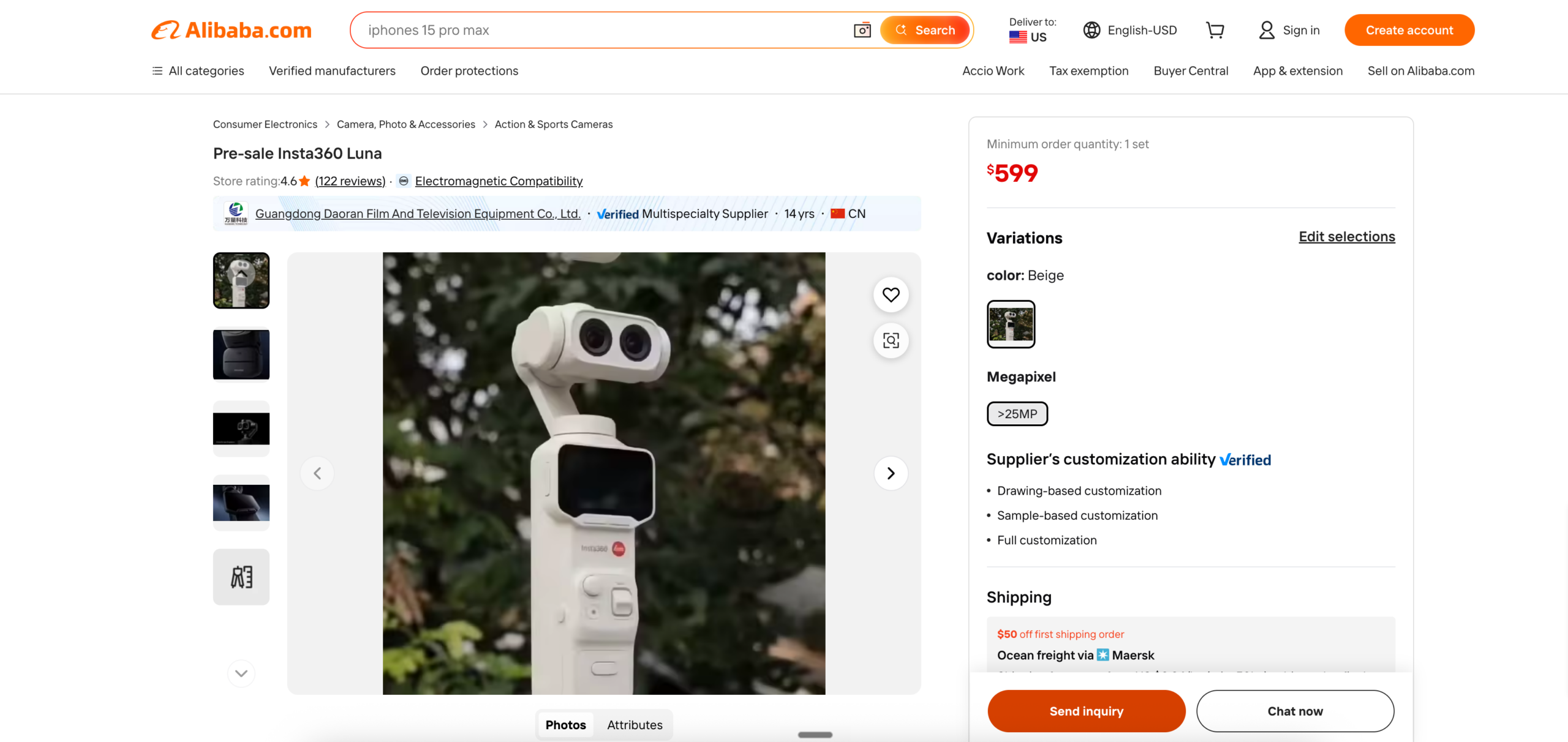
At this stage, two pricing data points exist right now. First, Chinese B2B suppliers have listed the Beige Crema Luna Ultra at roughly €516 to €517. That converts to about $599 to $606 USD. Second, the Imaging Resource leak floated a $735 retail figure. That price puts the Ultra alongside the DJI Osmo Pocket 4.
Meanwhile, TheNewCamera.com pegged pre-sale pricing at roughly $599 to $617 per unit for the Ultra model. Insta360 has not opened official pre-orders or confirmed pricing on its own site as of May 11, 2026. Treat every number above as a leak until that page goes live.
On the timing side, launch timing is firmer. On balance, multiple credible sources point to a late Q2 2026 global launch in the June window. Insta360 picked NAB 2026 in April for the soft tease. The marketing materials look polished enough to ship within a few weeks of an official announcement. A June ship date also catches creators packing for Europe trips, national park runs, and the start of surf season, which is when this category sells.
Luna Ultra vs DJI Osmo Pocket 4 and Pocket 4P
From a competitive angle, the Luna Ultra is gunning for the DJI Osmo Pocket lineup. Our take on the DJI Osmo Pocket 3 review covered why DJI’s pocket gimbal has owned this category for two years. Meanwhile, the Pocket 4 builds on that lead. However, the Luna Ultra goes after that lead on three fronts.
First, the Luna Ultra ships with two lenses on day one, which the standard Pocket 4 does not. DJI’s answer to that gap is the DJI Osmo Pocket 4P with a bolt-on telephoto module. However, Insta360 looks set to hit retail first. Second, the detachable handle is a feature DJI does not match anywhere in its current pocket lineup. Third, Insta360 walks into US retail without the FCC Covered List friction that has tangled some of DJI’s newer SKUs since December 2025. That matters if you are buying through B&H or Adorama and not waiting six weeks for stock.
By contrast, on the action camera side, our GoPro Hero 13 review covers the top single-body action cam. Our GoPro Mission 1 Pro vs DJI Osmo Action 6 comparison covers the head-to-head. The Luna Ultra is not a direct competitor to those bodies. Instead, it sits in the gimbal-camera category where DJI and Insta360 are now trading blows. For most creators the choice comes down to one thing. Do you want a sealed single-lens body from DJI that you trust to stay in one piece, or a modular dual-lens body from Insta360 with more range and more parts to break?
My Field Take From the Ace Pro 2
For context, I have shot 360 cameras for years. The Insta360 Ace Pro 2 has been on my hip for every assignment since launch. I have pulled frames out of dusk light at ISO 6400 that I would have bet money on a Sony body to deliver. The dual AI chip is the reason. Subject tracking holds on my dog through tall grass. The Leica Vibrant color profile usually needs a one-stop exposure tweak and nothing else.
Moreover, that track record matters because the Luna Ultra inherits the same AI engine philosophy. The Ace Pro 2 set the bar with one sensor and one Leica Summarit lens. Now, Insta360 is doubling the lens count, adding a 1-inch sensor, and bolting on a detachable controller. If the Luna Ultra holds the Ace Pro 2’s image floor while adding a second lens and a controller that pops off in your hand, it is the launch I would clear shelf space for this year.
On the downside, the risk is the one every modular product carries. A handle that pops off will also pop off when you do not want it to. A magnetic multi-pin connector that takes a wet sleeve or a sandy pocket is the kind of part that ends a shoot. I have had magnetic mounts fail on a chest harness mid-trail. Watch the connector hard in the first round of long-term reviews.
Featured Gear on Amazon
Not Ready to Wait for the Luna Ultra?
The Insta360 Ace Pro 2 ships today. It shoots 8K video on a 1/1.3-inch sensor, runs the same dual AI chip philosophy, and ships with a Leica Summarit lens. It is the action camera I shoot with on every field trip.
Final Thoughts
To wrap up, the Insta360 Luna Ultra leak gives us the cleanest look yet at where pocket cameras are heading in 2026. A modular body, two Leica-tuned lenses, 4K 240fps recording, and a detachable OLED handle add up to a real swing at the DJI Osmo Pocket category. For a solo creator who has ever framed a shot off a phone screen and watched the connection drop, the remote-with-live-view design is reason enough to wait for production units.
Of course, pricing in the $599 to $735 band keeps the Luna Ultra in the same neighborhood as DJI’s flagship pocket cameras. Yet it offers a feature set DJI does not yet match. If Insta360 holds the June 2026 ship date, this is the body that will end up in carry-ons heading to Iceland, Patagonia, and the Pacific Northwest this summer. For anyone who wants a similar AI-driven Insta360 today, the Insta360 Ace Pro 2 fits. It covers the action camera side of the lineup.
Finally, we will update this piece the moment Insta360 posts official specs and pricing. The leaks line up tightly enough that planning your summer kit around a June ship date is a safe call.
Frequently Asked Questions
When does the Insta360 Luna Ultra launch?
Insta360 has not posted an official launch date. However, multiple credible leaks point to a late Q2 2026 global launch, most likely in June 2026. Notably, Insta360 ran a soft tease at NAB 2026 in April. In addition, retail box images have already leaked. That pattern matches the one Insta360 followed before the Ace Pro 2 launch.
How much does the Insta360 Luna Ultra cost?
Pre-sale listings from Chinese B2B suppliers show the Beige Crema model at roughly $599 to $606 USD. Meanwhile, other leaks point to an official retail range of $499 to $735. In summary, the most cited expected price sits near $599 for the entry configuration, with higher-end options closer to $735.
Does the Insta360 Luna Ultra screen really detach?
Yes. The entire handle detaches from the gimbal head via a magnetic multi-pin connector. Specifically, the handle includes the OLED touchscreen, joystick, directional pad, and red record button. From there, it works as a wireless remote. In particular, it shows a 4K 30fps live view feed of what the camera sees.
How does the Luna Ultra compare to the DJI Osmo Pocket 4?
The Luna Ultra ships with two Leica-tuned lenses, while the standard Pocket 4 ships with one. Beyond that, the Luna Ultra also has the detachable controller, which DJI does not match in any current pocket camera. In response, DJI is countering with the Osmo Pocket 4P. Specifically, it adds a telephoto module. However, release timing favors Insta360 hitting retail first.
Is the Insta360 Luna Ultra a 360-degree camera?
No, despite the brand name. The Luna Ultra is a handheld 3-axis gimbal camera with two forward-facing lenses, not a 360-degree camera. Of course, Insta360 still sells dedicated 360 bodies such as the X4 and X5 for immersive work. Separately, the Ace Pro 2 covers the action camera side of the lineup.
Will the Luna Ultra replace my action camera?
For most travel and vlog work, yes, and the dual-lens system gives it more reach than any action cam at the price. On the other hand, for helmet mounts, chest rigs, and anything you would strap to a surfboard, no. In other words, a 3-axis gimbal head is the wrong tool for high-impact work. Instead, the Ace Pro 2 or a GoPro Hero 13 still owns that side of the kit bag. Specifically, that is the camera I bolt to my chest when the shoot gets rough.
Sources: Insta360 NAB 2026 preview. Retail packaging images shared on X by @D2Help and @MauroTandoi. Supplier pre-sale listings out of China. Corroborating leak coverage from Notebookcheck, The New Camera, and Imaging Resource.

