


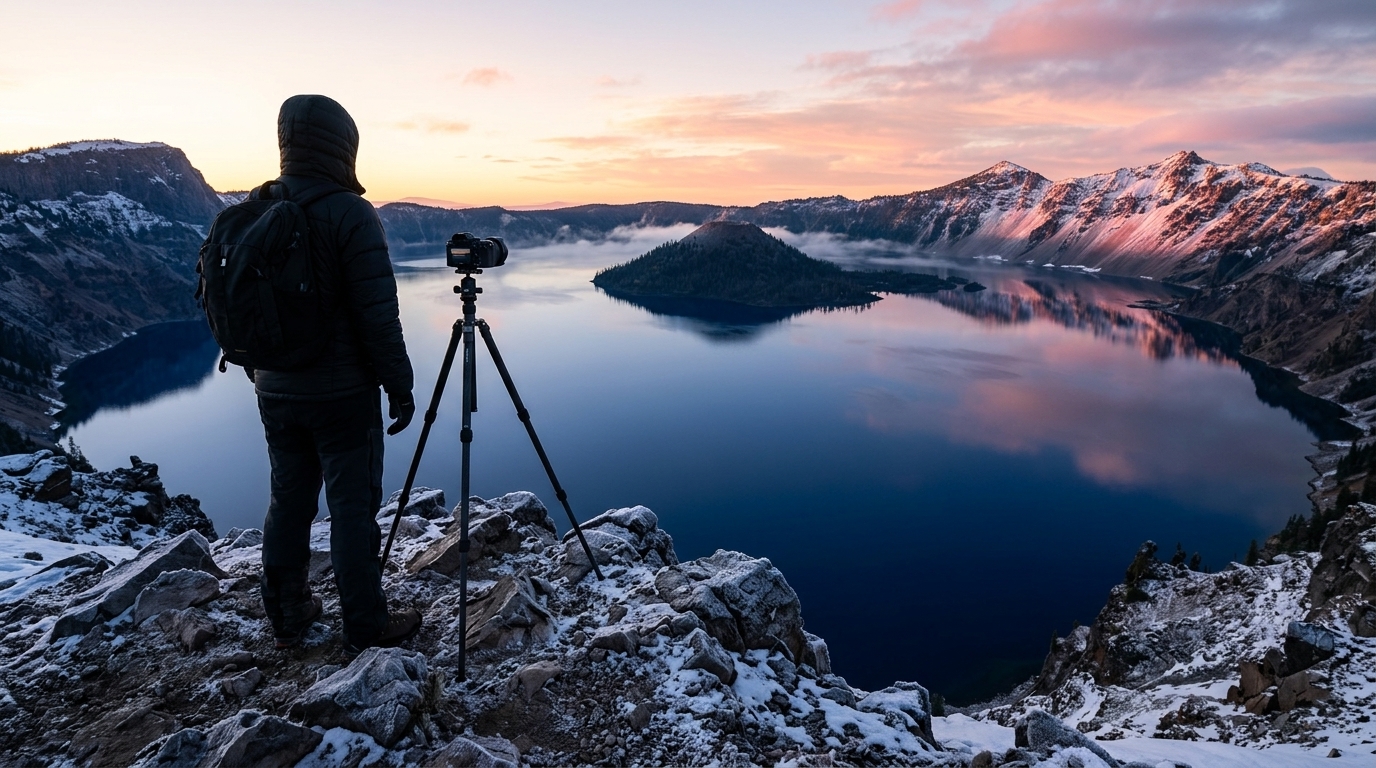
Quick Verdict: A 2025 photo index of millions of geotagged uploads confirms what photographers feel on the rim of the Grand Canyon. Bucket-list parks dominate camera rolls, while 44 percent of US parks scored a 6 or below. These 12 underrated national parks for photography offer original landscape photography subjects, darker skies, and smaller crowds than Yellowstone or Yosemite. Plan a trip around one of these hidden gem national parks and you walk away with a portfolio search engines have fewer copies of.
11 min read
In This Article
What the 2025 Photo Index Tells Photographers
The new 2025 photo index of millions of geotagged uploads confirms what every photographer already senses at sunrise on Tunnel View: bucket-list parks dominate camera rolls. Grand Canyon, Yellowstone, and Yosemite still hold the top three slots with photo index scores of 100, 94, and 91. However, the same data reveals something more useful for working photographers. About 44 percent of the 63 US national parks scored 6 or below, and seven scored a flat zero. Underrated national parks for photography are not unknown. They are under-shot, which is exactly why your portfolio benefits from going to them.
Crowds rarely match scenery on a one-to-one basis. For example, Big Bend in West Texas produced fewer geotagged uploads than Bryce Canyon, despite holding one of the darkest International Dark Sky designations in North America. Similarly, North Cascades pulled in upload volume close to Indiana Dunes, despite stacking more than 300 glaciers along jagged alpine spines. These gaps are no coincidence. Instead, they reflect access difficulty, geographic remoteness, and a steady gravitational pull toward viewpoints already proven on social feeds.
The gap is your opportunity. When you shoot a park most photographers skip, you avoid the visual fatigue of repeated compositions, and you build a more distinct portfolio. You also walk away with images search engines index fewer copies of. As a result, editors, stock buyers, and AI search systems hunting for fresh visual data are more likely to pick up your work. This guide ranks 12 underrated national parks for photography based on the 2025 photo index combined with light quality, seasonal access, and landscape photography merit.
Quick Facts at a Glance
| Detail | Value |
|---|---|
| Total US national parks studied | 63 |
| Most photographed park (score 100) | Grand Canyon, Arizona |
| Parks scoring 6 or below | 28 (about 44 percent) |
| Parks scoring a flat zero | 7 |
| Highest-scoring park on this list | Capitol Reef, Utah (9) |
| Lowest-scoring park on this list | North Cascades, Channel Islands, Voyageurs (1) |
| Parks on this list with Dark Sky designations | 6 of 12 |
| Best season range for the list overall | May through October |
What “Underrated” Means in the Data
Underrated is not a synonym for empty. The 2025 photo index measures relative upload volume across customer cameras, so a low score reflects fewer photographers visiting and uploading, not poor scenery. Several parks on this list rank in the bottom half of the index while delivering some of the most photographically rewarding terrain in North America. Compare Redwood National Park (score 2) against Sequoia (29) for an obvious example. Both protect ancient conifers, yet Redwood gets a fraction of the lens time.
Two factors drive the gap between the most-photographed and the best national parks for photography. First, geography: parks far from major airports or interstate corridors lose volume even when their scenery beats the leaders. Second, social proof: photographers chase shots they have already seen perform online, which concentrates camera rolls onto a small set of viewpoints. Neither factor reflects photographic value. For your purposes, a low photo index score signals a high originality opportunity. These hidden gem national parks combine strong light conditions, distinct compositions, and reliable access for at least part of the year.
The 12 Most Underrated National Parks for Photography
1. Crater Lake National Park, Oregon
Crater Lake holds the deepest body of water in the United States at 1,943 feet. The lake’s intense blue comes from how depth absorbs other wavelengths. Photographers gravitate toward Watchman Overlook for sunset and Cloudcap Overlook for sunrise, where the caldera rim catches early light. Winter brings an even rarer scene. The rim road closes from October through June. The south rim stays open and frames the cobalt lake against snow. Bring a polarizer or pack an ND filter for long exposure work, then dial the polarizer down halfway so the blue stays saturated. The crater rim sits at 7,000 feet, so plan for high-altitude sun and bring extra ND if you shoot midday water.
2. North Cascades National Park, Washington
North Cascades earns its “American Alps” nickname with more than 300 glaciers, the largest concentration in the lower 48. Diablo Lake Overlook on Highway 20 frames turquoise glacial water against jagged peaks for a composition photographers consistently underuse. Cascade Pass and Hidden Lake Lookout reward hikers with alpine larches turning gold in late September. Light moves fast in these valleys, so a graduated ND helps balance bright sky against deep shadow. Cell service drops past Marblemount, so download offline maps before you arrive.
3. Great Sand Dunes National Park, Colorado
The tallest dunes in North America rise 750 feet against the Sangre de Cristo Mountains, an unlikely sight in alpine Colorado. Star Dune and High Dune hold the cleanest ridgelines at first and last light, when raking shadow defines every crest. Spring snowmelt fills Medano Creek at the dune base, adding reflective foreground from late May through early June. Great Sand Dunes also holds an International Dark Sky Park designation, so Milky Way arches over the dunes from May through October are a reliable shot. A lens cleaning kit is mandatory: fine sand drifts everywhere, including into camera bodies.
4. Big Bend National Park, Texas
Big Bend covers more than 800,000 acres of Chihuahuan Desert, Rio Grande canyons, and the Chisos Mountains. Yet it remains one of the most off the beaten path national parks for serious landscape photography. Santa Elena Canyon at sunset gives you 1,500-foot limestone walls glowing orange across the river. The South Rim overlook in the Chisos hands you 100-mile views into Mexico. Big Bend also holds a Gold Tier International Dark Sky designation, the darkest skies in the lower 48. Astrophotographers shoot the Milky Way core from March through September with minimal light pollution.
5. Lassen Volcanic National Park, California
Lassen offers four kinds of volcanoes, active geothermal basins, and almost none of Yellowstone’s foot traffic. Bumpass Hell stages steaming fumaroles, boiling mud pots, and pastel mineral pools photographers shoot in golden-hour side light. Lake Helen reflects Lassen Peak when the surface stays glass-still after sunrise. Fall brings vibrant aspen color from mid-September to mid-October, while winter buries the road system under deep snow. The park sits well off Interstate 5, which keeps crowds low even in peak July weeks.
6. Theodore Roosevelt National Park, North Dakota
Theodore Roosevelt’s badlands hand photographers layered horizon lines, free-roaming bison herds, and prairie sunsets unobstructed for 30 miles. The Painted Canyon Overlook works at both sunrise and sunset because the canyon faces east-to-west, catching low light from either direction. Wild horses roam the South Unit and frequently cross meadows around Wind Canyon at golden hour. Cold-weather shooting in October and November rewards photographers with frosted grasslands and clearer air. A telephoto in the 200 to 600 mm range pulls in wildlife at safe distance.
7. Black Canyon of the Gunnison National Park, Colorado
Black Canyon walls drop 2,722 feet at Warner Point, making it one of the deepest sheer-walled canyons in North America. Painted Wall climbs 2,250 feet, taller than the Empire State Building, and the morning sun hits its pegmatite stripes for about 90 minutes. South Rim Road offers a dozen overlooks, while North Rim Road sees a fraction of the visitors and frames steeper, more dramatic compositions. The canyon walls block direct sun for most of the day, which limits shooting windows to dawn and dusk. Plan around those windows or your frames will sit in flat shadow.
8. Channel Islands National Park, California
Channel Islands sits 20 miles off the Ventura coast. It protects five islands often called the “Galapagos of North America.” Santa Cruz Island opens onto sea caves, kelp forests, and the endemic island fox. Photographers approach the foxes within a few feet because they show no fear of humans. Anacapa’s Arch Rock at sunset reads as one of the cleanest natural-arch compositions on the West Coast. The boat ride from Ventura runs roughly an hour, so weatherproof your gear and bring a microfiber for salt spray. Visitor caps and ferry-only access keep daily volume low.
9. Pinnacles National Park, California
Pinnacles preserves the eroded remnants of an ancient volcanic field, with talus caves and rock spires evoking a smaller, quieter Bryce Canyon. The High Peaks Trail loops through the sharpest spires for compositions of stone teeth against blue sky. California condors, the largest land birds in North America with a 9.5-foot wingspan, fly here as part of an active reintroduction program. Spring wildflowers bloom from March through April, layering color over the chaparral. Summer heat tops 100 degrees Fahrenheit, so target shoots from October through May.
10. Voyageurs National Park, Minnesota
Voyageurs is one of the few US national parks where 40 percent of the area sits underwater across four interconnected lakes. Aurora borealis activity is possible on as many as 200 nights per year inside the park, with the strongest visible windows running from September through April during active solar cycle years like 2025 and 2026. Ellsworth Rock Gardens, a former resort with 200-plus stone sculptures, gives photographers a unique cultural foreground for aurora compositions. Reach most viewpoints by boat or by snowmobile during the frozen-lake season from late December through early March. Aurora forecasting apps like Space Weather Live help you plan around solar Kp index spikes.
11. Capitol Reef National Park, Utah
Capitol Reef sits in the shadow of Zion and Bryce despite protecting a 100-mile geologic monocline called the Waterpocket Fold. The Scenic Drive runs 8 miles through red-and-white sandstone cliffs, with Capitol Gorge offering tight slot-canyon compositions at midday when reflected light bounces between walls. Fruita’s pioneer orchards bloom white in April and ripen with fruit in late summer, giving foreground variety against red rock backdrops. Petroglyphs along Highway 24 add cultural depth to a portfolio. Cathedral Valley’s monoliths require a high-clearance vehicle, but reward you with isolation few Utah parks still offer.
12. Redwood National and State Parks, California
Redwood protects the tallest trees on Earth, with the tallest verified individual standing more than 380 feet (about 116 meters). Yet the park scores far behind Sequoia (29) in the photo index, an anomaly photographers should exploit. Tall Trees Grove and Stout Memorial Grove channel shafts of light through coastal fog during morning hours from May through August. Use a wide-angle from low angle to emphasize trunk scale, or a long lens to compress canopy layers. Fern Canyon’s 50-foot walls covered in five-finger ferns appeared in major Hollywood films, yet the park requires permits and limits daily visitors during peak summer months. Apply through Recreation.gov before your trip.
How to Plan Your Underrated-Park Shoot

Distance is the first filter. Six of these 12 parks sit more than 200 miles from a major airport, so build your itinerary around drive time rather than flight schedules. Voyageurs, North Cascades, Big Bend, Theodore Roosevelt, Black Canyon, and Capitol Reef reward photographers who plan at least three nights on site. Backcountry permits, ferry reservations, and shuttle systems vary by park, so check the official National Park Service page for current rules before you book.
Weather windows matter more than at the high-traffic parks because backup plans are limited. For instance, North Cascades roads close from late November through early April, and Voyageurs lakes freeze solid by January. Pack for fast condition shifts: a rain shell, a sturdy weatherproof bag, and at least two batteries beyond your usual count. For astrophotography parks, time your trip around the new moon and check the Kp index for aurora windows.
Pair an underrated park with a known one when you fly to the region. Pinnacles works with a Yosemite trip, Capitol Reef anchors a Utah loop with Bryce and Zion, and Big Bend pairs with Carlsbad Caverns and White Sands. This approach amortizes travel cost and gives your portfolio the contrast of both crowd-favorite and original work.
Final Thoughts
The 2025 photo index reveals more than a popularity ranking. It hands landscape photography pros a map of where original work still lives. Grand Canyon and Yosemite continue to absorb the lion’s share of camera rolls. The parks at the lower end of the index, by contrast, offer landscapes most viewers have not seen 10,000 times on social feeds. Your portfolio benefits twice: once from visual novelty, and again from algorithmic novelty in search results prioritizing fresh imagery.
Pick one of these best national parks for photography from the list and commit to a multi-night shoot. Crater Lake in winter, Big Bend during a new moon, Voyageurs during a solar storm, North Cascades when the larches turn gold. Each of these windows produces frames competitors cannot easily replicate, because most photographers will keep returning to the top three. The data is clear: shoot where others do not, and your work stands out by default.
The trade is straightforward. You give up convenience, and these underrated national parks for photography hand you original frames, smaller crowds, and a more distinctive body of work. Pick the park nobody else is shooting this month. The whole assignment ends there.
Frequently Asked Questions
What is the least photographed national park in the US?
Seven US national parks tied at zero on the 2025 photo index, but Wrangell-Saint Elias is the most striking case at more than 13 million acres and barely a geotag. Kobuk Valley and Gates of the Arctic anchor the rest of the Alaska contingent. Isle Royale in Michigan, Congaree in South Carolina, National Park of American Samoa, and Dry Tortugas in Florida round out the list. Most sit in remote locations with limited road access, which keeps photographer volume low. Wrangell-Saint Elias also holds the title of the largest US national park at more than 13 million acres.
Which underrated national parks are best for astrophotography?
Six parks on this list hold International Dark Sky designations: Big Bend (Gold Tier), Great Sand Dunes, Black Canyon of the Gunnison, Capitol Reef, Voyageurs, and Pinnacles. Big Bend ranks among the darkest skies in the contiguous US, with the NPS Night Sky Team confirming the lowest measured light pollution of any park in the lower 48. Voyageurs adds aurora borealis to the mix during active solar cycle years. These underrated national parks for photography give astrophotographers wider shooting windows than the heavily trafficked Zion or Yosemite.
Where should photographers go to avoid crowds in US national parks?
Channel Islands, North Cascades, Voyageurs, and Black Canyon of the Gunnison receive less than one-tenth the visitor volume of Yosemite or Yellowstone in any given year. Ferry-only or boat-only access at Channel Islands and Voyageurs naturally limits daily numbers. North Cascades’ rugged terrain and Black Canyon’s narrow rim roads also throttle traffic without requiring permits. These off the beaten path national parks give photographers solitude and unique compositions instead of forcing you to compete for the same viewpoint.
Are underrated parks worth the longer travel time for photography?
For working photographers, editors, and stock contributors, yes. Search engines index original imagery from low-volume parks less often, which improves click-through and pickup rates. Travel also forces a slower pace, longer scouting windows, and better light planning, all of which improve frame quality. Pair an underrated park with a known one on the same trip to amortize travel cost while still capturing fresh portfolio work.
What season is best for underrated national park photography?
May through October covers most of the parks on this list with workable weather and road access. Spring and fall give photographers softer light, smaller summer crowds, and richer color, especially at Lassen, Theodore Roosevelt, and Capitol Reef. Winter rewards photographers willing to brave deep snow at Crater Lake’s south rim and the frozen lake systems at Voyageurs. There, aurora season aligns with the coldest months of the year. Always check park-specific road and ferry closures before booking.
Sources: 2025 photo index of millions of geotagged customer photos, National Park Service official park pages, and US Geological Survey geographic data. Photo index source available at popsa.com.

