


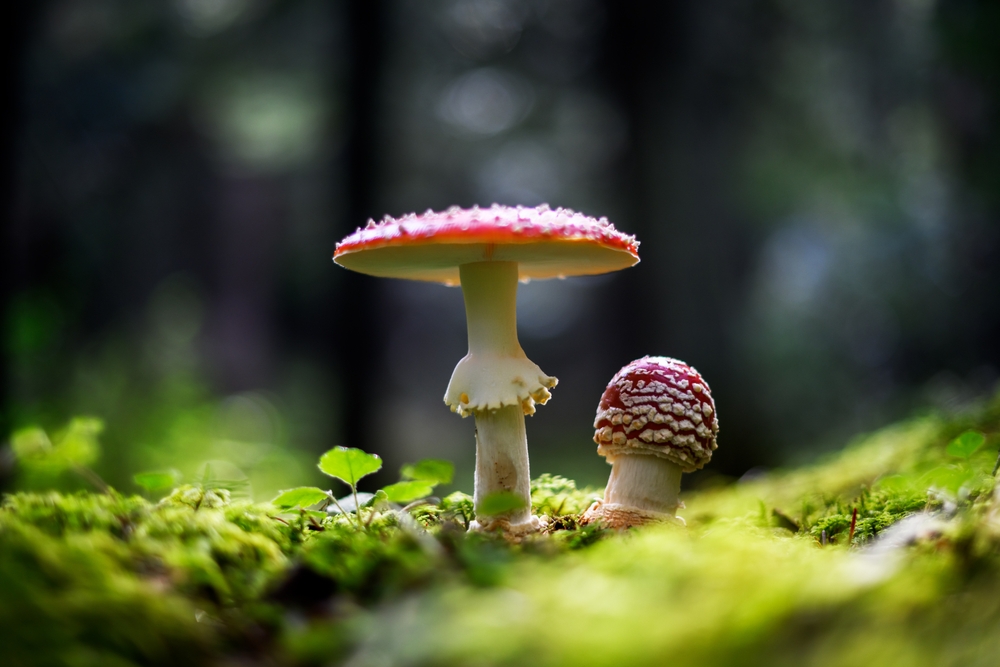
Quick Facts:
- Topic: Woodland fungi and mushroom photography
- Skill level: Beginner to intermediate
- Time required: 1 to 3 hours per outing
- Core gear: Macro lens or extension tubes, a low tripod, a diffuser
- Best season: Autumn after rain, though fungi fruit year-round
- Best light: Soft, overcast, or shaded
- Aperture range: f/5.6 to f/10 when stacking frames
- Best for: Patient shooters who enjoy slow, detail-driven nature work
8 min read
In This Guide
- Mushroom Photography Overview: Why the Forest Floor Rewards Patience
- Gear and Settings for Mushroom Photography
- Ground-Level Support and Positioning
- Focus Stacking for Front-to-Back Sharpness
- Light and Diffusion on the Forest Floor
- Seasonal Timing and Where to Look
- Identification and Field Ethics
- Stacking vs. Single-Frame Macro
- Final Thoughts
- Frequently Asked Questions
Mushroom Photography Overview: Why the Forest Floor Rewards Patience
Mushroom photography turns your attention away from sweeping vistas and down to the few inches of ground where fungi live. Because the subjects sit low, grow in shade, and hold fine detail in their caps and gills, they reward a slow and deliberate approach. This guide walks you through gear, ground-level support, stacking frames, diffusion, seasonal timing, and field ethics. Follow it, and you leave the woods with sharp, story-rich frames.
The appeal is partly practical. Fungi appear in nearly every park, garden, and patch of woodland, so you rarely travel far to find subjects. Moreover, they hold still, which removes the chase of wildlife shooting. As a result, the genre suits anyone who prefers methodical work over fast reflexes.
Interest in fungi has grown alongside the foraging boom, and photographers have followed this wave into the woods. Even so, mushroom photography stays uncrowded compared with popular landscape overlooks, so you often shoot in quiet solitude.

Gear and Settings for Mushroom Photography
A dedicated macro lens gives the cleanest results because it focuses close without losing detail. Lenses in the 90mm, 100mm, and 105mm class stay popular for fungi. Their working distance keeps the front element away from the cap. If dedicated macro glass sits outside your budget, extension tubes shorten the close-focus distance of a lens you already own. Our roundup of close-up lenses for nature work breaks down the strongest options across brands.
Before each outing, check the minimum focusing distance of your lens. Every lens has a limit, and this number sets how near you approach before focus fails. A zoom such as a 24-105mm also works well within its focusing range, so you need not buy new glass to start.
For settings, aperture deserves the most thought. Wide openings near f/2.8 produce dreamy background blur yet leave most of the cap soft. Narrow openings past f/16 invite diffraction, which dulls fine detail. Therefore most fungi shooters land between f/5.6 and f/10, where sharpness and depth balance well. Keep ISO low on a tripod, then let shutter speed fall as needed.
| Setting or Tool | Recommended Starting Point |
|---|---|
| Lens | 90 to 105mm macro, or extension tubes on a kit lens |
| Aperture | f/5.6 to f/10 for stacking, f/2.8 for single-frame blur |
| ISO | 100 to 400, lowest the light allows on a tripod |
| Focus | Manual focus with magnified live view |
| Shutter release | Remote or 2-second timer, image stabilization off |
| Support | Low tripod with removable or invertible center column |
Ground-Level Support and Positioning

Fungi photography works best when the lens sits at the same height as the subject. Shooting down from standing height flattens the cap and hides the gills, so the shape loses character. Instead, drop the camera to the level of the stem. From there, you reveal the curve of the cap and the texture underneath.
Getting this low takes the right support. Many tripods let you splay the legs flat or remove the center column entirely, which drops the camera within an inch of the soil. Some models invert the column so the camera hangs upside down near the ground. A beanbag or a folded towel also steadies the body when a tripod feels like too much to carry.
Comfort matters more than beginners expect. You will spend long stretches lying on damp ground, so a kneeling pad or a trash bag keeps you dry and patient. A flip-out or tilting rear screen saves your neck because you compose without pressing your face to the dirt. Clear stray grass, leaves, and twigs from the line between your lens and the subject, since a small haircut around the base sharpens the whole frame.
Focus Stacking for Front-to-Back Sharpness
Even at f/16, a single frame rarely holds the entire mushroom sharp from cap to stem. The front edge lands in focus while the back falls soft, which leaves the image feeling unfinished. Focus stacking solves the problem by blending several frames, each focused slightly deeper, into one fully sharp result.
The method stays simple in the field. Take a series of frames while nudging the focus a few millimeters deeper between each one. Most mushrooms need between five and ten frames, though larger subjects shot up close sometimes need more. Many recent cameras include focus bracketing, which automates the steps. Still, manual focus keeps you aware of where each slice falls. Solid manual focusing technique makes the difference between a clean stack and a wasted set.
Back at the computer, software merges the frames. Adobe Photoshop aligns the layers and blends only the sharp zones through its Auto-Blend Layers command, while dedicated tools such as Helicon Focus and Zerene Stacker give finer control. Whichever route you pick, dial in aperture and ISO consistently across the set so the slices match. A stack falls apart when the wind shifts a stem mid-sequence, so wait for still air before you start.
Light and Diffusion on the Forest Floor
Soft, even light flatters fungi more than any other condition. Overcast skies act like a giant diffuser, which brings out natural color without harsh shadows under the cap. For this reason, many shooters head out on grey, drizzly days when landscape photographers stay home.
When sunlight breaks through the canopy, the contrast often turns ugly. A small collapsible diffuser held between the sun and the mushroom restores the soft look. A folding reflector, or even a sheet of white paper, bounces a little light back into the shadowed gills. These tools weigh almost nothing, so they earn their place in the bag.
Backlight opens a more creative path. Position yourself so light passes through a thin cap, and the gills glow with translucent color. A handheld LED panel, set low and warm, mimics the effect on dark days. It lets you paint light exactly where the frame needs it. Foreground elements such as moss or a fallen leaf, placed close to the lens, add a soft wash of color and frame the subject.
Seasonal Timing and Where to Look
Autumn earns its reputation as peak season because warm soil plus steady rain triggers heavy fruiting. A day or two after a soaking rain tends to produce the best flushes. However, fungi appear across the whole calendar. Some species favor winter, others spring, and only a long dry summer truly slows them down.
Location follows decay. Fungi are nature’s recyclers, so they cluster on fallen logs, leaf litter, tree bases, and old stumps. Damp, shaded woodland holds more than open sun-baked ground. Walk slowly and scan low, because the prettiest specimens often hide in plain sight until your eye adjusts to their scale.
Citizen-science records help you plan. The community platform iNaturalist logs millions of fungal observations with dates and locations. Those records reveal what fruits near you and when. If cold weather draws you toward other tiny subjects, the same low-light, diffused approach still works. It carries over to winter macro photography of frost and snowflakes.
Identification and Field Ethics

You need not identify a mushroom to photograph it well, yet learning names deepens the work and keeps you safe. Scientists have formally described over 155,000 fungal species, a sliver of the millions thought to exist. A trusted regional field guide remains the most reliable reference for putting a name to a find.
Lean on apps with caution. A 2026 study in npj Science of Food tested popular AI identification tools against real-world photos and found error rates high enough to endanger foragers. So treat any app result as a starting hint, never as proof, and never eat a wild mushroom based on a phone scan alone.
Ethics protect both the scene and the species. Move a distracting twig if you must, yet leave the fungi and their surroundings intact. Avoid trampling nearby growth, stay on durable ground, and resist picking a specimen purely for a photo. Because many fungi play a quiet role in forest health, the responsible habit is to shoot, log your sighting, and walk on without a trace.
Stacking vs. Single-Frame Macro: Which Should You Use?
Both approaches earn a place, and the right pick depends on your subject and the air. Focus stacking wins when you want the whole mushroom sharp and the scene sits perfectly still. The payoff is detail from cap to stem, while the cost is time in the field and minutes at the computer blending frames.
Single-frame macro wins when the wind stirs, the moment is fleeting, or you want a dreamy look. A wide aperture near f/2.8 throws the background into smooth blur and isolates one small subject against soft color. The trade is depth, since only a sliver of the cap stays crisp.
For most outings, a mixed plan works best. Shoot a quick single frame first to lock a usable image, then build a stack when conditions allow. This order protects you against a gust ruining the only attempt and still leaves room for the higher-detail result.
Final Thoughts

Mushroom photography suits the shooter who values quiet observation over spectacle. The barrier to entry stays low, since a macro lens or a set of extension tubes, a tripod able to drop near the soil, and a small diffuser cover nearly every situation. Patience and a low vantage point matter more than expensive gear.
The technical core comes down to a few habits. Get level with the subject, work between f/5.6 and f/10, and stack frames when the air holds still. Soft overcast light does most of the heavy lifting, so plan outings around grey skies and the days after rain.
Field ethics complete the picture. Identify what you find when you are able, protect the scene, and lean on a trusted guide rather than an app for anything you intend to touch. Approach the woodland floor with care, and even the smallest fungi reward you with frames full of detail and quiet character.
Frequently Asked Questions
What camera settings work best for mushroom photography?
Start at f/5.6 to f/10 when you plan to focus stack, since this range balances sharpness against diffraction. Keep ISO between 100 and 400 on a tripod, use manual focus with magnified live view, and trigger the shutter with a remote or a 2-second timer.
What lens do you need for fungi photography?
A macro lens in the 90 to 105mm range gives the cleanest detail and a comfortable working distance. If a dedicated macro optic sits outside your budget, extension tubes on a standard zoom or prime bring the close-focus distance down enough for strong results.
How many frames does a focus stack of a mushroom need?
Most mushrooms need between five and ten frames, each focused a few millimeters deeper than the last. Larger subjects shot at close range sometimes need more. Built-in focus bracketing automates the sequence, though manual focus keeps you aware of every slice.
When is the best season to photograph mushrooms?
Autumn is the peak because warm soil and steady rain trigger heavy fruiting, especially a day or two after a soaking. Even so, fungi fruit year-round, with some species favoring winter or spring, so the woodland floor rarely runs empty.
Is it safe to touch mushrooms while photographing them?
Touching a mushroom to photograph it poses little risk, since toxins harm you through eating, not handling. A few species irritate sensitive skin, so wash your hands afterward as a sensible habit. Never taste a wild mushroom based on an app, because AI identification tools still misjudge dangerous species.

