


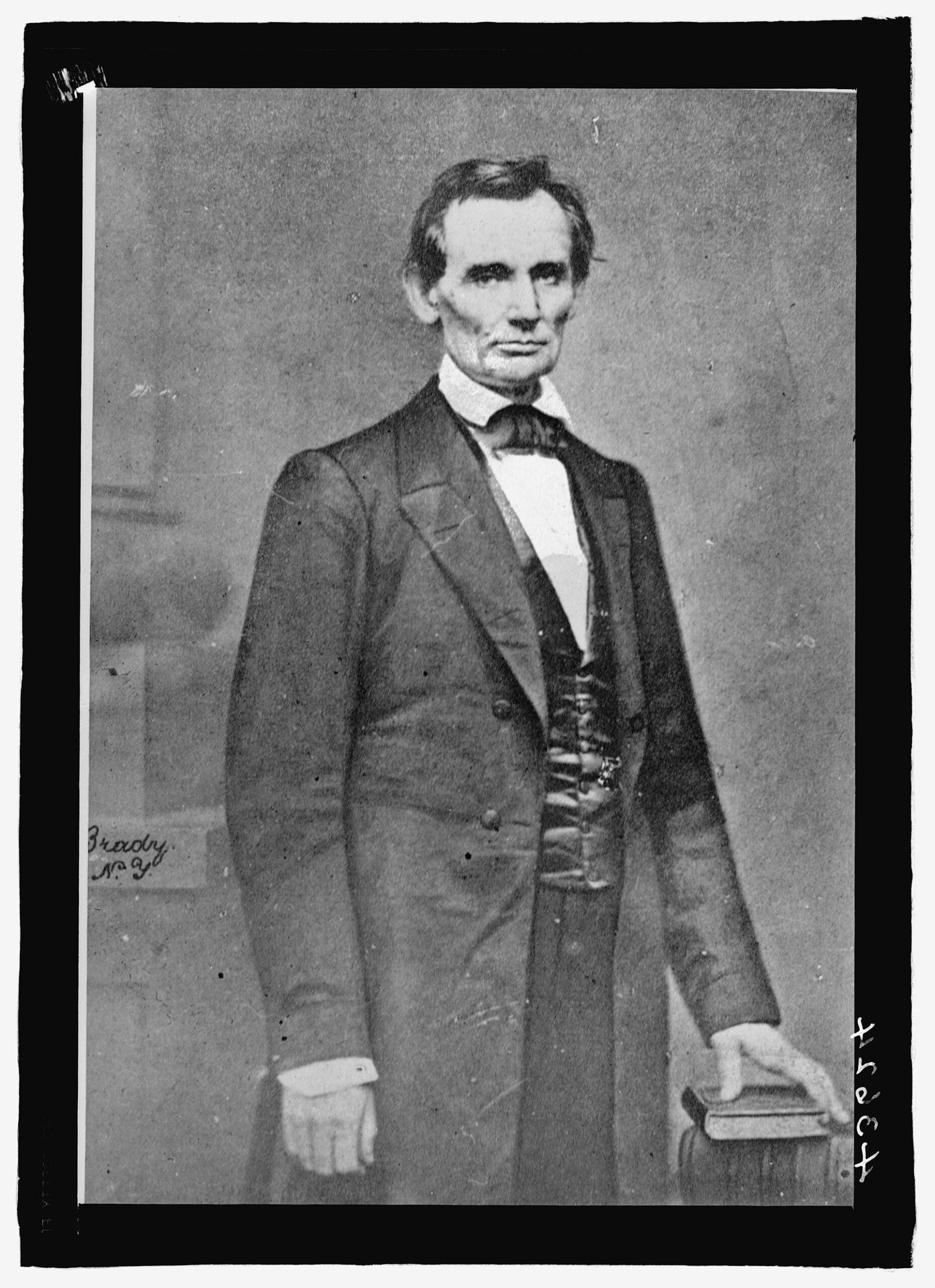
Quick Facts:
- Image: Cooper Union portrait of Abraham Lincoln
- Photographer: Mathew Brady (c. 1823-1896)
- Date: February 27, 1860
- Location: Brady’s gallery, Broadway and Tenth Street, New York
- Process: Wet-plate collodion, black and white
- First mass use: Woodcuts in Harper’s Weekly and Frank Leslie’s
- Why it matters: One of the first photos to shape a national election
- Where to see it: Library of Congress, the Met, National Portrait Gallery
7 min read
In This Article
The Cooper Union Portrait Behind a Presidency
On February 27, 1860, a little-known prairie lawyer sat for a photograph in a New York studio. The Cooper Union portrait, made by Mathew Brady hours before Lincoln spoke, became one of the first photographs to shape a national election. You likely know the image already: a dignified, beardless Lincoln in a dark suit, one hand resting on a stack of books. Brady built this picture with intent, and it soon traveled farther than any printed speech of the season.
Lincoln arrived in New York as a regional figure with a thin national profile. Most voters had never seen his face. Therefore the way he looked in print mattered as much as the words he delivered. After the sitting and the speech, both spread together across the country. As a result, millions met Lincoln first through Brady’s lens.
Photography itself was young in 1860. Many Americans had rarely sat for a portrait, if ever. A clear, dignified photograph therefore carried unusual weight. It told voters something a printed page left out. Brady understood this power, and he used it with care.
This piece belongs to our series on photographs which changed history. For photographers, the lesson runs deep. A single frame, lit and posed with care, carries a message to audiences no stump speech reaches. This picture remains a clear early example of such power.
Key Facts at a Glance
| Detail | Information |
|---|---|
| Subject | Abraham Lincoln, presidential candidate |
| Photographer | Mathew Brady |
| Date and place | February 27, 1860, New York City |
| Process | Wet-plate collodion, monochrome |
| Mass formats | Woodcuts, speech covers, carte de visite cards |
| Legacy | TIME 100 most influential images of all time |
Inside Brady’s Studio: How the Portrait Was Made
Brady ran the most famous portrait gallery in America. His studio stood at Broadway and Tenth Street, only blocks from Cooper Union. Lincoln walked in on the morning of the speech, tired from a long train route east. Brady posed him standing, one hand on a stack of books, the other resting at his side.
The studio used the wet-plate collodion process, the standard of 1860. Exposures ran long, so Brady steadied his subject with hidden braces and patient posing. In addition, Brady framed him from the knees up, a three-quarter view common for public figures of the day. Notably, the soft and even studio light smoothed the lines of a weary face. These same principles still guide modern black and white portrait photography today.
Lincoln came east at the invitation of the Young Men’s Central Republican Union. He had traveled far and arrived rumpled, with deep lines around the eyes. Brady worked patiently to set him at ease before the exposure. Because the camera recorded every flaw, the photographer’s calm guidance mattered as much as the lens.
The Quiet Edits Brady Made to Lincoln
Brady solved a problem most viewers never noticed. Lincoln had a long neck and sharp features, both awkward in a tight frame. Therefore Brady drew the collar up high to shorten the neck and balance the face. The fix looks invisible, yet it shaped how the public read Lincoln’s character.
Later reproductions pushed the edits further. Engravers smoothed his hair, softened his jaw, and refined his features for woodcuts and prints. Each pass nudged the rough frontier lawyer toward a calmer, statesmanlike figure. The takeaway holds up well today. Thoughtful posing and retouching steer perception, a core idea in modern portrait photography. Brady understood this in 1860.
This practice raises a fair question about honesty. Brady did not fake the man; he refined the presentation. The line between flattering and misleading stayed thin even in 1860. The same tension shadows every retouching choice photographers make today. A light touch builds trust, while a heavy hand erodes it.
The Speech and the Image Arrived Together
The address itself carried real weight. Lincoln argued against the spread of slavery into the territories, citing the Founding Fathers with lawyerly precision. He closed with a line still quoted today: “right makes might.” The historian Harold Holzer later called the night the moment Lincoln turned from a regional leader into a national figure.
The timing made the pairing powerful. On the same day, voters gained a clear face and a clear argument. Newspapers printed the speech, while engravers copied the photograph beside it. Therefore the words and the image reinforced each other in the public mind. For a candidate few had seen, both halves mattered.
Reporters spread the news fast. Within days, papers across the North reprinted the address. The image followed close behind in illustrated weeklies. As a result, a candidate barely known in February gained national standing by spring.
How the Portrait Reached Millions
Photographs in 1860 did not print directly in newspapers. Instead, engravers copied them by hand into woodcuts. Harper’s Weekly turned the Brady image into a full-page woodcut, while Frank Leslie’s Illustrated ran its own version in October 1860. Through these pages, the picture reached a national audience during the 1860 election.
Brady also reproduced the photo as a carte de visite, a small card print new to America at the time. The format made copies cheap, so thousands circulated through homes, shops, and campaign offices. Voters pinned Lincoln to their walls and tucked him into albums. For many people, the carte de visite delivered their first real look at the candidate.
The image even became the cover of the published Cooper Union speech, which sold widely. Some woodcut versions strayed from the original. A few engravings reversed the image or reworked the background entirely. Still, the core likeness held, and the Brady pose defined Lincoln for the press.
The image soon spread beyond newspapers into everyday objects. Currier and Ives, the nation’s top printmaking firm, sold lithograph versions in color and in black and white. Campaign buttons, posters, and ferrotype badges carried the same face to rallies and parlors. Across these formats, one Brady sitting shaped how a nation pictured its candidate.
Edward Anthony, a leading New York publisher, helped distribute Brady’s Lincoln cards. The small-card craze was sweeping America at exactly this moment. Collectors traded portrait cards of statesmen, generals, and actors by the album. Shops sold them by the thousand, while families filled parlor books with famous faces. Lincoln’s likeness entered this flow and never left it.
What the Sitting Meant for Brady
Brady already ran famous galleries in New York and Washington. Still, the Lincoln connection lifted his name to a new level. Over the next five years, his studios produced the defining images of the Civil War era. The Cooper Union sitting stands near the start of this arc. From a single winter morning, both a career and a lasting national image took shape.
Brady invested a fortune documenting the war, funding teams of field photographers across the battle lines. Their thousands of glass plates became the core visual record of the conflict. Because of this work, many historians call Brady the father of photojournalism. The war later ruined him, yet his Lincoln portraits still anchor his name. It all traces back to quiet sittings like the one at Cooper Union.
Why the Cooper Union Portrait Still Matters
Lincoln won the presidency in November 1860. Looking back, he gave the photograph real credit. He reportedly said, “Brady and the Cooper Union speech made me President.” Whether or not he spoke those precise words, the pairing of image and message clearly moved voters.
The Cooper Union portrait marks an early case of a photograph steering a national vote. Before this moment, candidates leaned on speeches, pamphlets, and partisan papers. After it, a controlled photographic image became a campaign tool. Political handlers took note, and the modern visual campaign was born.
The story holds a practical lesson for anyone behind a camera. Light, pose, and a single honest frame still move an audience. The portrait also shows why a strong monochrome image endures, a point we explore in the timeless elegance of black and white photography. You will find the original today through the Library of Congress and a detailed account at the Smithsonian.
The precedent outlasted the 1860 election. Later campaigns embraced photography, film, and television, each amplifying a candidate’s image. The pattern traces back to moments like this one. Every modern photo opportunity borrows from this early playbook. A controlled portrait, placed in front of millions, shapes opinion before a single word lands.
For your own work, the takeaway is concrete. Study your subject before you shoot. Control the light, the pose, and the crop deliberately. One honest, well-made frame outlasts a hundred rushed snapshots, exactly as Brady’s single sitting did.
Frequently Asked Questions
Who took the Cooper Union photograph of Abraham Lincoln?
Mathew Brady made the Cooper Union photograph at his New York gallery on February 27, 1860. Brady was the most prominent American portrait photographer of the era. His studio sat at Broadway and Tenth Street, near the lecture hall.
When was the Cooper Union portrait taken?
Brady photographed Lincoln on February 27, 1860, hours before the Cooper Union address. The two events spread together afterward, so the date links a famous speech with a famous image.
Why is the Cooper Union portrait famous?
The portrait helped introduce Lincoln to voters during the 1860 election. Newspapers, speech covers, and card prints carried it nationwide. TIME later named it among the 100 most influential images of all time.
Did Lincoln say Brady made him president?
Lincoln is widely quoted as saying, “Brady and the Cooper Union speech made me President.” The wording varies across secondhand accounts. Still, the quote reflects how strongly the image and the speech worked together.
How was the portrait reproduced?
Engravers copied the photo into woodcuts for Harper’s Weekly and Frank Leslie’s Illustrated. It also appeared on the cover of the printed speech. Brady sold carte de visite cards, which placed the image in thousands of homes.
Where is the Cooper Union portrait today?
Prints and copies survive in major collections. The Library of Congress, the Metropolitan Museum of Art, and the National Portrait Gallery all hold versions. You will also find the image across many published histories of Lincoln.

