


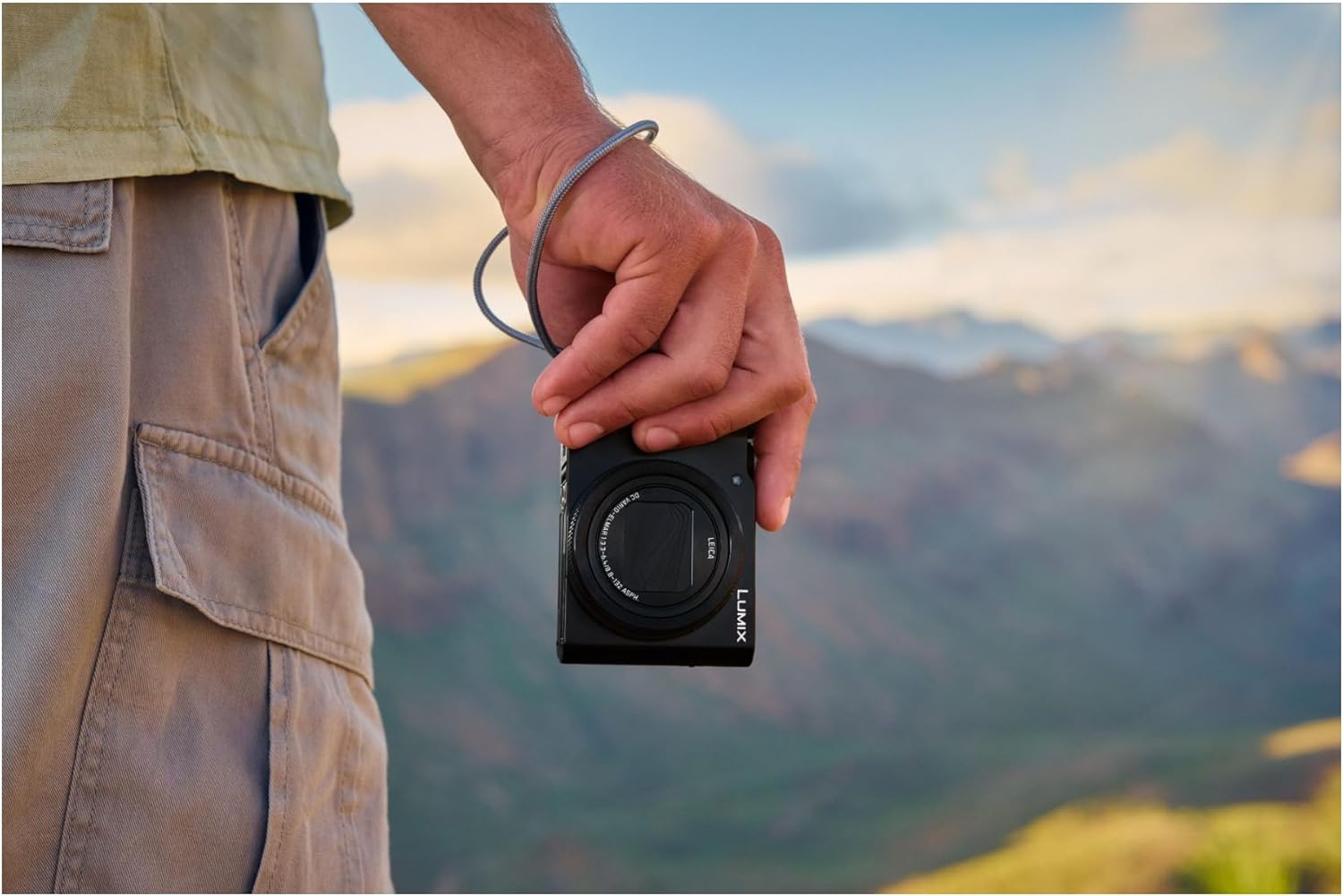
Quick Facts:
- Product: Panasonic Lumix ZS300 / TZ300 (TX3 in Japan)
- Sensor: 20.1MP 1-inch BSI CMOS
- Lens: Leica-certified 24-360mm equivalent, 15x optical zoom
- Video: 4K UHD at 30fps
- Weight: 295g with battery and card
- Viewfinder: None, rear touchscreen only
- Price: $897.99 (US)
- Best for: Travelers who want one pocket camera with long reach
8 min read
In This Article
- Panasonic Lumix ZS300 Overview
- Key Specs at a Glance
- Why the Panasonic Lumix ZS300 Took Japan’s Top Spot
- What the 24-360mm Leica Zoom Gives You
- The 1-Inch Sensor and 4K Video
- Half of Japan’s Top 10 Compacts Are Backordered
- Lumix ZS300 vs. Sony RX100 VII
- Who Should Buy the Lumix ZS300
- Final Verdict
- Frequently Asked Questions
Panasonic Lumix ZS300 Overview: Built for Travelers Who Want Reach
The Panasonic Lumix ZS300 reached the No.1 spot in Japan’s compact camera sales charts within weeks of release, according to Yodobashi’s rankings for the second half of May 2026. For US buyers, this travel zoom camera pairs a 15x Leica-certified lens with a large 1-inch chip in a body small enough for a jacket pocket. It beat trendy favorites such as the Fujifilm X100VI and the Canon PowerShot G7 X Mark III. So why are shoppers choosing long reach over the large-sensor, fixed-lens compacts filling social feeds?
This camera suits travelers, parents at sporting events, and casual wildlife shooters who want one pocket body for every scene. Its 24-360mm equivalent zoom covers wide landscapes and distant subjects without a single lens swap. At roughly $898 in the US, it sits below the premium compacts while offering far more focal range. Because the zoom does the heavy lifting, you carry less gear and still frame tight shots from across a field.
Demand for compact cameras has climbed to its highest level in years. Younger buyers, in particular, want a dedicated camera with a distinct look, separate from their phones. This camera answers a narrow question: which pocket camera reaches the farthest while keeping image quality high? For many shoppers in 2026, the answer now points to Panasonic.
Key Specs at a Glance
| Specification | Details |
|---|---|
| Sensor | 20.1MP 1-inch BSI CMOS |
| Lens | Leica DC Vario-Elmar, 24-360mm equivalent, f/3.3-6.4 |
| Optical zoom | 15x |
| Video | 4K UHD 30fps, Full HD 60fps, 4K Photo mode |
| Stabilization | 5-axis Hybrid O.I.S. |
| ISO range | 80-6400 native |
| Battery life | About 360 shots per charge |
| Weight | 295g with battery and card |
| Dimensions | 111 x 66 x 45mm |
| Connectivity | Wi-Fi, Bluetooth 5.0, USB-C charging |
| Price | $897.99 (US), about €999 (EU) |
Why the Panasonic Lumix ZS300 Took Japan’s Top Spot
The Panasonic Lumix ZS300 climbed to No.1 at Yodobashi, one of Japan’s largest electronics retailers, in the ranking covering the second half of May 2026. It overtook the Fujifilm X100VI and the Canon PowerShot G7 X Mark III, both cult favorites among creators. Several factors explain the result. First, Panasonic kept the camera on shelves while rivals sold out. Second, the 15x zoom hands buyers something fixed-lens compacts do not offer: long reach in a pocket body. Third, the price undercuts the premium large-sensor crowd by a wide margin.
Smartphone fatigue also drives the trend. Many buyers want a device built only for photos, with a grip and controls a phone lacks. For them, a long optical zoom feels like a true upgrade over a triple-camera phone. As a result, the travel zoom format has found fresh life among younger shooters in Japan, even as large-sensor compacts grab most of the headlines.
What the 24-360mm Leica Zoom Gives You
The headline feature is reach. The Leica-certified lens covers a 24-360mm equivalent range, so one camera handles wide landscapes, street scenes, portraits, and distant wildlife. Most premium compacts stop near 70mm or 200mm. Therefore the ZS300 frames distant subjects its rivals leave out of range. Buyers who liked the older pocketable travel-zoom compact formula will feel at home with this layout.
The aperture runs f/3.3 at the wide end and f/6.4 at full zoom. In bright daylight, this poses no problem. In dim light, however, the narrower long-end aperture asks for higher ISO or a steadier hand. Panasonic’s 5-axis stabilization helps here, smoothing handheld shots at 360mm. For travel and daytime work, the trade feels fair. You give up some low-light speed, yet you gain a focal range a phone or fixed-lens compact will never reach.
The 1-Inch Sensor and 4K Video
Behind the lens sits a 20.1MP 1-inch sensor, far larger than a typical phone sensor. This size lifts image quality, dynamic range, and low-light output above smaller point-and-shoots. RAW capture also gives editors room to recover highlights and shadows. Video, meanwhile, tops out at 4K UHD 30fps, with Full HD at 60fps for smoother motion.
Panasonic’s 4K Photo mode pulls 8MP stills from video at 30 frames per second, useful for fast action with kids or pets. Against a phone or a small-sensor superzoom, the larger chip holds detail in shadows and keeps noise lower as the light fades. For travel snapshots, group portraits, and prints up to A3, the results look clean and sharp. Most buyers stepping up from a smartphone will notice the jump right away.
Half of Japan’s Top 10 Compacts Are Backordered
Supply shortages shape these rankings as much as demand does. Five of the ten cameras in Yodobashi’s Top 10 sit on backorder, including both Ricoh GR IV models and other sell-out favorites. Stock arrives in limited batches, sells out quickly, and leaves waiting lists behind. The ZS300 benefits from steadier availability, so shoppers who want a camera today, not in three months, reach for the model on the shelf.
The same squeeze hits the US and UK. Buyers there face waiting lists and thin stock, with several popular models scarce for weeks at a time. An enthusiast compact like the Ricoh GR III shows the pattern clearly, since popular fixed-lens models often vanish from stock for weeks. If Panasonic keeps production steady, its travel zoom holds a real edge over rivals stuck in backorder.
Lumix ZS300 vs. Sony RX100 VII
The closest rival is Sony’s RX100 VII, another 1-inch compact with a flexible zoom. Sony reaches 24-200mm, while the Lumix ZS300 stretches to 360mm. For wildlife and sports, the extra reach matters. Sony counters with quicker autofocus and a built-in viewfinder, two features the ZS300 drops. On price, the Sony often runs higher, near or above $1,200.
So the choice splits along priorities. Pick the Sony for speed, eye-detection autofocus, and a pop-up viewfinder. Pick the Panasonic for longer reach and a lower price. The decision rarely comes down to image quality, since both share the same sensor class. Instead, it rests on whether you value a viewfinder and fast tracking or the extra 160mm of zoom for distant subjects.
Who Should Buy the Lumix ZS300

This camera fits travelers who want one grab-and-go body for varied scenes. It suits parents shooting recitals and games from the back row. Casual wildlife and street shooters who value reach over a large sensor will also like the result. If you want one of the best affordable compact cameras with real optical zoom, the ZS300 belongs on your shortlist.
Look elsewhere if low-light performance ranks first for you. A larger-sensor fixed-lens compact, or a Fujifilm X100VI, will pull ahead after dark. Skip it too if you need a viewfinder, since the ZS300 relies on its rear screen alone. Vloggers who want a flip screen and quick autofocus might prefer a dedicated content camera instead; our Sony ZV-1F review covers one strong option for this purpose.
Final Verdict
The Panasonic Lumix ZS300 earns its No.1 ranking through versatility. Its 15x Leica zoom and pocketable body solve a real problem: one camera for landscapes, portraits, and distant action, without a bag of lenses. For travelers and everyday shooters, the appeal lands immediately.
The trade-offs stay clear, though. You give up a viewfinder, and the f/6.4 long end slows down in dim light. Low-light specialists and street shooters who crave a large sensor will look at other compacts first. Autofocus also trails the quickest rivals on the market.
On value, the camera performs well. At roughly $898, it costs less than the Sony RX100 VII and far less than a Fujifilm X100VI, while reaching focal lengths neither matches. For buyers weighing reach against speed, the math favors Panasonic.
If long zoom and pocket size top your list, this Panasonic deserves a serious look. If you shoot mostly indoors or at night, consider a larger-sensor compact or a fast prime body instead. For most travelers, though, this travel zoom camera covers more ground than any rival in its class.
Frequently Asked Questions
Is the Lumix ZS300 worth it in 2026?
Yes, for travelers and casual shooters who want long zoom in a pocket camera. The 15x Leica lens and 1-inch chip outclass any phone, and the price sits below premium compacts. Low-light and viewfinder fans should weigh other options first.
How much does the Lumix ZS300 cost in the US?
The Lumix ZS300 lists at $897.99 in the US, in black or silver. Retailers such as B&H and Sweetwater have shown street prices near $800 to $900. European pricing runs about €999.
Does the Lumix ZS300 have a viewfinder?
No. Panasonic dropped the electronic viewfinder found on the older TZ200, so you compose using the rear touchscreen. Buyers who rely on a viewfinder in bright sun should note this change before ordering.
Lumix ZS300 vs Sony RX100 VII: which is better?
The ZS300 reaches 360mm against 200mm on the Sony, so it wins on zoom. The Sony offers faster autofocus and a built-in viewfinder. Pick the Panasonic for reach and price; pick the Sony for speed and tracking.
Why is the Lumix ZS300 No.1 in Japan?
Steady stock, a long 15x zoom, and a fair price pushed it to the top at Yodobashi. Several rivals sold out, while smartphone fatigue moved buyers toward dedicated travel cameras with real controls.
Does the Lumix ZS300 shoot 4K video?
Yes. The camera records 4K UHD at 30fps and Full HD at 60fps. Its 4K Photo mode also extracts 8MP stills from video at 30 frames per second, handy for fast-moving subjects.

