


Quick Facts:
- Photographer: Jacob August Riis (1849 to 1914)
- Book: How the Other Half Lives: Studies Among the Tenements of New York
- Published: 1890, Charles Scribner’s Sons
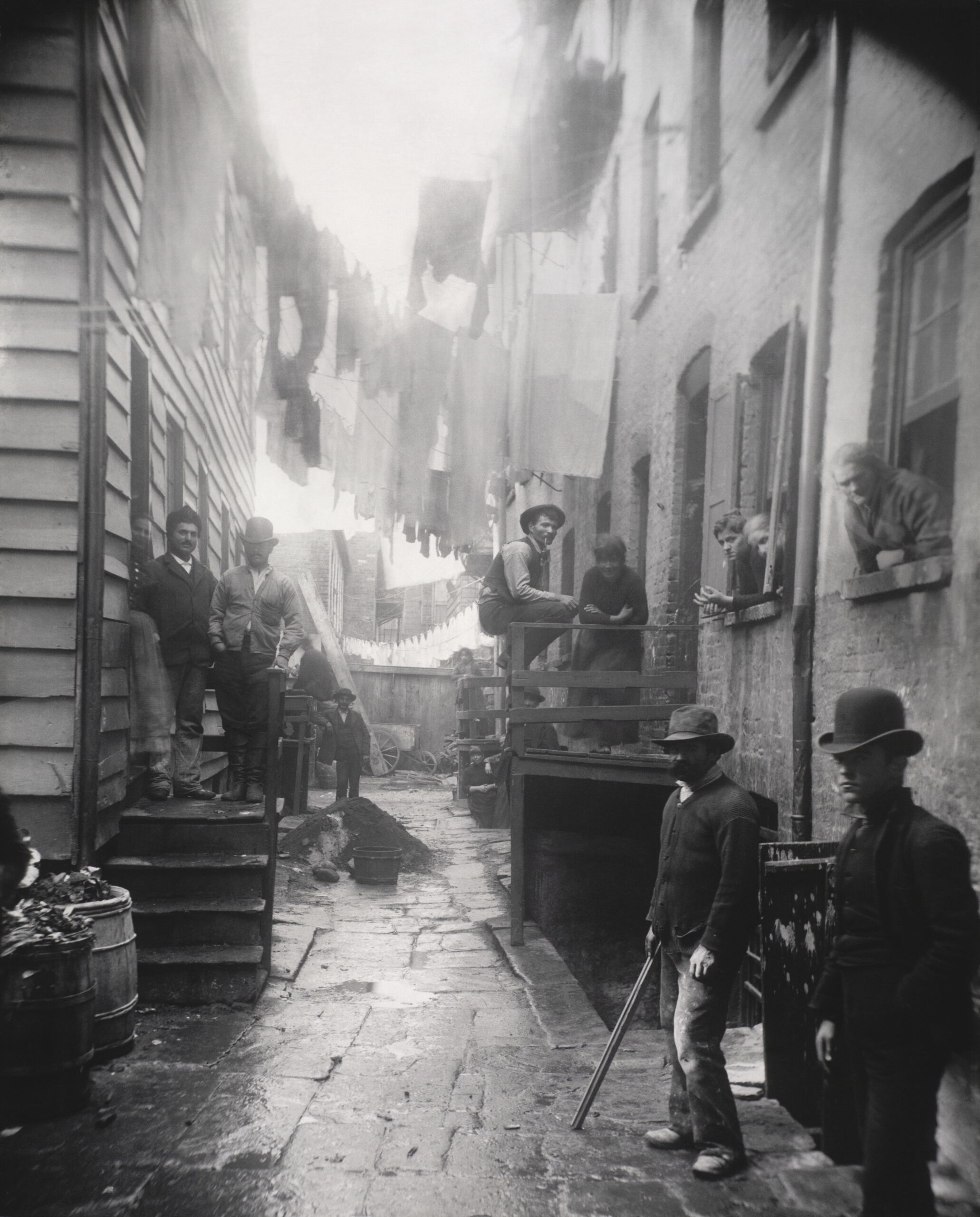
- Signature image: Bandits’ Roost, 59½ Mulberry Street (1888)
- Technique: Magnesium flash (Blitzlichtpulver), introduced 1887
- Subjects: New York tenements, lodging houses, and slum streets
- Frequent collaborators: Henry G. Piffard, Richard Hoe Lawrence, Dr. John T. Nagle
- Main archive: Museum of the City of New York (more than 1,000 photographs)
- Rights: Public domain (Riis died 1914; images published before 1929)
- Best for: Readers interested in documentary photography and social reform
9 min read
In This Article
- Overview
- At a Glance
- How Riis Made the Photographs with Flash Powder
- Jacob Riis: From Danish Immigrant to Police Reporter
- How the Other Half Lives: The 1890 Book
- Bandits’ Roost and the Other Iconic Images
- Were Jacob Riis Photographs Staged?
- Reform, Legacy, and the Documentary Tradition
- Why Jacob Riis Photographs Still Matter
- Frequently Asked Questions
Jacob Riis Photographs Overview: Exposing How the Other Half Lives
Jacob Riis photographs turned New York’s hidden tenements into evidence the public would not ignore. Between 1888 and 1890, Riis carried a box camera and a tray of magnesium powder into the darkest lodging rooms of Lower Manhattan. He photographed families packed into airless cellars, children asleep in alleys, and gangs loitering in the squalor of Mulberry Bend. Then he gathered the pictures into his 1890 book, How the Other Half Lives, and changed how Americans saw poverty.
These images belong on the photography history timeline as the first great work of American photojournalism. Riis worked as a newspaper reporter, not a trained artist. Still, his rough flash exposures did something no written report had achieved. They forced middle-class readers to look directly at slums a short walk from their own parlors. As a result, the book sparked the first serious tenement reform in New York.
The full story runs from a Danish immigrant’s brutal first decade in America to the desk of the White House. Theodore Roosevelt read the book, sought Riis out, and later called him “the most useful citizen of New York.” For a photography audience, the work means more than a reform document. It marks the moment the camera became a tool of social argument.
At a Glance
Here are the core details. The table below sets out the photographer, the book, the technique, and the holdings before the full story.
| Detail | Information |
|---|---|
| Photographer | Jacob August Riis (1849 to 1914) |
| Born | Ribe, Denmark; emigrated to the United States in 1870 |
| Day job | Newspaper reporter, New York Tribune and Evening Sun, from 1877 |
| Book | How the Other Half Lives (1890), Charles Scribner’s Sons |
| Origin | An 1888 lecture, then an 1889 Scribner’s Magazine article |
| Technique | Magnesium flash, glass-plate negatives, box camera |
| Signature image | Bandits’ Roost, 59½ Mulberry Street (1888) |
| Collaborators | Henry G. Piffard, Richard Hoe Lawrence, Dr. John T. Nagle |
| Main archive | Museum of the City of New York |
| Died | May 26, 1914, Barre, Massachusetts |
| Rights | Public domain (published before 1929) |
How Riis Made the Photographs with Flash Powder

The slums stayed dark, and the darkness had protected them from the camera. Before 1887, no practical way existed to photograph a windowless cellar or a midnight lodging room. Then German chemists Adolf Miethe and Johannes Gaedicke introduced Blitzlichtpulver, a flash powder of magnesium, potassium chlorate, and antimony sulfide. Riis read about the invention in early 1887, and he saw its purpose at once. Now the darkest corner of New York would face a lens.
At first Riis hired amateur photographers to operate the equipment. Henry G. Piffard and Richard Hoe Lawrence joined his late-night expeditions, and Dr. John T. Nagle of the city health department helped as well. The men fired the powder from a pistol-like device, which startled sleeping families awake in a burst of white light and smoke. Because the results stunned editors and audiences, Riis soon bought his own box camera in January 1888 and learned to shoot himself.
The method was crude and dangerous. Riis set rooms on fire twice, and once he set his own clothes alight. Each exposure meant a single glass plate, a cloud of acrid smoke, and subjects who had no warning. Yet the flash captured what daylight never reached. For the first time, a viewer in a comfortable home saw the inside of a five-cent lodging house exactly as its residents endured it.
The Box Camera and Glass Plates
Riis worked with a simple 4×5 box camera of the type sold as a detective camera. It held one glass plate at a time, so every frame demanded fresh setup. He developed the negatives with help from his collaborators, then turned many into lantern slides for his lectures. Compared to the polished studio portraits of the era, his exposures looked raw. Specifically, harsh shadows, blown highlights, and startled faces gave the pictures their documentary force.
Jacob Riis: From Danish Immigrant to Police Reporter
Jacob August Riis was born in Ribe, Denmark, on May 3, 1849, the third of fifteen children. He trained as a carpenter, then emigrated to the United States in 1870 at age twenty-one. His first years were desperate. He drifted between odd jobs, slept in police lodging houses, and once nearly starved on the streets of New York. Such firsthand experience of poverty later shaped every frame he exposed.
By 1877, Riis had found steady work as a police reporter, first for the New York Tribune and later for the Evening Sun. His beat was Mulberry Street, the heart of the worst Lower East Side slums. Day after day, he walked through tenements where immigrant families crowded ten and twelve to a room. Although he wrote vivid copy about the conditions, words alone moved few readers. He needed proof his audience would not dismiss.
His path crossed the wider art world of the period only at a distance. While Riis chased crime and reform, photographers like Alfred Stieglitz argued the medium deserved standing as fine art. Stieglitz’s 1907 photograph The Steerage framed immigrant passengers as composition and form. Riis, by contrast, framed the immigrant slum as an indictment. The same tool served two opposite ends within a single generation.
How the Other Half Lives: The 1890 Book
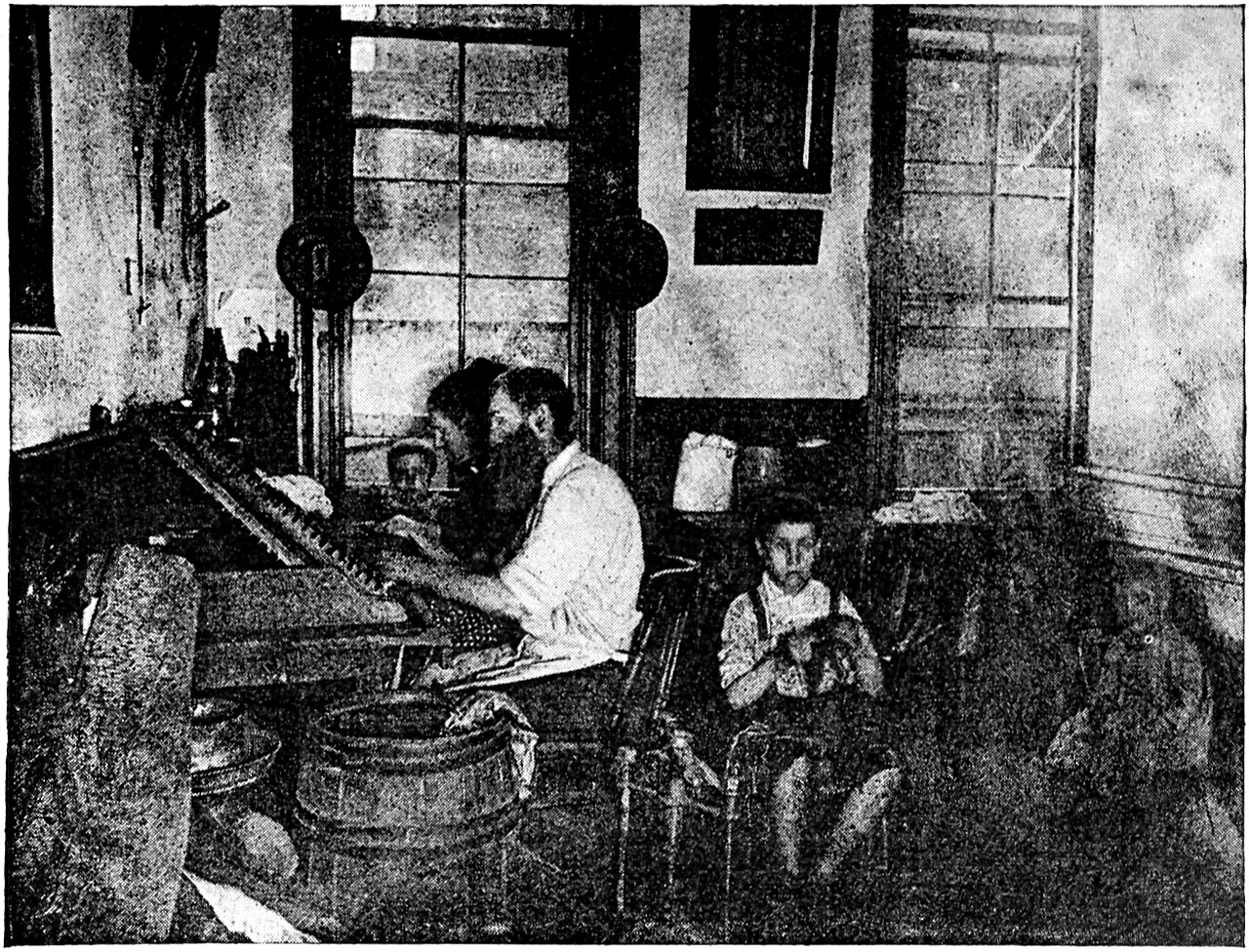
The project grew from the lecture hall, not the gallery. On January 28, 1888, Riis presented a magic-lantern talk titled “The Other Half: How It Lives and Dies in New York.” He projected his flash images on a screen and narrated the journey through the slums. Newspapers covered the lectures, and demand spread quickly through New York churches and civic halls.
In December 1889, Scribner’s Magazine published a long illustrated article drawn from those talks. Readers responded with shock and interest. So Riis spent the next year expanding the piece into a full book. Charles Scribner’s Sons released How the Other Half Lives in 1890, with the subtitle Studies Among the Tenements of New York. The volume paired blunt reporting with line drawings and the new halftone reproductions of his photographs.
The text hit hard because the numbers were appalling. Riis reported tenement districts where population density ran among the highest on earth, with families paying steep rents for rooms without light or air. He named the worst blocks, traced disease and infant death to the buildings themselves, and refused to blame the people with low-income for their own misery. Above all, he insisted the camera was telling the truth his readers had avoided.
Bandits’ Roost and the Other Iconic Images

One photograph stands above the rest. Bandits’ Roost, made in 1888 at 59½ Mulberry Street, shows a narrow alley crowded with men who stare back at the camera with open menace. The cramped walls, the hanging laundry, and the cocked hats turned the image into the defining picture of the Mulberry Bend slum. It later inspired set designs in films about old New York, including Martin Scorsese’s Gangs of New York.
Authorship carries one important caveat. Several scholars credit Bandits’ Roost to Riis’s assistants, the amateur photographers Henry G. Piffard or Richard Hoe Lawrence, rather than to Riis himself. The Museum of the City of New York records joint credit for several images from the expeditions. The copyright status stays clear regardless, since every frame entered the public domain long ago.
Other pictures carry the same weight. “Five Cents a Spot” shows lodgers jammed into a Bayard Street tenement at night. “Street Arabs in Sleeping Quarters” frames homeless boys curled together in a doorway. His 1896 view of Mulberry Bend records the block shortly before the city demolished it. Together these Jacob Riis photographs built a visual argument no editorial would match.
Were Jacob Riis Photographs Staged?
The honest answer is sometimes, and the question matters. Riis was a reporter with a thesis, not a neutral observer. He posed some subjects, asked others to hold still through the long flash setup, and arranged scenes for maximum effect. Because the flash demanded cooperation, full spontaneity was rarely possible. Critics have asked ever since whether the pictures record reality or perform it.
This tension runs through early documentary work. Alexander Gardner’s 1863 Gettysburg photograph famously moved a dead soldier’s body for composition, raising the same problem a generation earlier. Riis never claimed the detachment later photographers prized. Instead, he used the camera as a weapon, and he aimed it deliberately. For him, the goal was reform, not aesthetic purity.
Most historians now hold both truths at once. The conditions Riis documented were real, severe, and widespread. Yet his framing, captions, and selection pushed a clear moral case. Serious study of Jacob Riis photography has to weigh the documentary value against the persuasive intent rather than choose one and ignore the other.
Reform, Legacy, and the Documentary Tradition
Whatever its staging, the book moved a legislature. Soon after publication, New York opened investigations into tenement conditions and tightened its housing codes. Riis pushed personally for the demolition of Mulberry Bend, and the city cleared the block in 1897 to build a park. The 1901 Tenement House Act, the strongest housing reform of the era, outlawed the worst windowless rooms Riis had photographed. Theodore Roosevelt, then a police commissioner, joined Riis on night walks through the slums and adopted many of his causes.
The influence reached far beyond one decade. Riis helped invent the template later social documentarians would follow. Dorothea Lange’s Migrant Mother used the same logic during the Great Depression, turning a single face into a national argument for relief. Likewise, Edward Curtis’s documentary project showed how powerfully, and how selectively, the camera would shape public memory.
Riis kept writing and lecturing for the rest of his life. He published an autobiography, The Making of an American, in 1901. He died on May 26, 1914, in Barre, Massachusetts. The Museum of the City of New York later acquired his negatives and prints, and it remains the primary archive of his work today.
Why Jacob Riis Photographs Still Matter
Jacob Riis photographs sit at the origin point of photojournalism as a force for change. Before Riis, the camera mostly flattered or recorded. After him, photographers understood the lens would indict an entire social system. Every modern photo essay about poverty, war, or injustice traces part of its method back to those flash-lit New York alleys.
For working photographers, the lesson runs deeper than technique. Riis proved a picture’s power depends on access, timing, and intent as much as on skill. His images were technically rough, yet they moved a legislature. The gap between polish and impact still rewards study for anyone making documentary work today.
The pictures also remain free to use and share. Because Riis died in 1914 and his work appeared before 1929, every image is public domain in the United States. High-resolution scans stay available through the Library of Congress online exhibition and the Museum of the City of New York collections portal. More than a century later, his slums still stare back.
Frequently Asked Questions
Who was Jacob Riis?
Jacob Riis was a Danish-American journalist, photographer, and social reformer who lived from 1849 to 1914. He emigrated from Denmark in 1870 and worked as a New York police reporter from 1877. His 1890 book How the Other Half Lives used photographs to expose slum conditions and drive housing reform.
What did Jacob Riis expose?
Riis exposed the brutal living conditions inside New York’s tenements, lodging houses, and slum streets during the 1880s. His articles and the Jacob Riis photographs documented overcrowding, child homelessness, disease, and dangerous housing. The work pushed New York toward its first significant tenement reform laws.
Were Jacob Riis photographs staged?
Some were. Riis posed certain subjects and arranged scenes for effect, partly because the flash demanded cooperation. The conditions he documented were real and widespread. Still, his framing and selection pushed a deliberate reform argument, so historians weigh both the documentary value and the persuasive intent.
What camera and flash did Jacob Riis use?
Riis used a simple 4×5 box camera holding one glass plate at a time. For light, he relied on magnesium powder called Blitzlichtpulver, introduced in Germany in 1887. He fired the powder from a pistol-like device, producing a bright burst, though it set rooms on fire twice.
What was the name of Jacob Riis’s book?
His most famous book is How the Other Half Lives: Studies Among the Tenements of New York, published by Charles Scribner’s Sons in 1890. It grew from an 1888 lantern-slide lecture and an 1889 Scribner’s Magazine article. He later wrote an autobiography, The Making of an American, in 1901.
Are Jacob Riis photographs in the public domain?
Yes. Riis died in 1914, and his photographs appeared in print well before 1929, so every image is public domain in the United States. High-resolution scans are freely available from the Library of Congress and the Museum of the City of New York. Anyone is free to study, share, and reproduce them without permission.

