


Quick Facts:
- Topic: Photographing waterfalls in Olympic National Park
- Region: Olympic Peninsula, Washington
- Waterfalls covered: Marymere, Madison, Sol Duc, Merriman, Bunch Creek
- Best season: April through June for peak flow
- Skill level: Beginner to advanced
- Trail difficulty: Paved access up to 1.8 miles round trip
- Key gear: Tripod, circular polarizer, neutral density filter
- Best for: Landscape photographers planning an Olympic trip
10 min read
In This Guide
- Why Photograph Waterfalls in Olympic National Park
- The Five Waterfalls at a Glance
- Camera Settings and Gear for Waterfall Photography
- How to Photograph the 5 Best Waterfalls
- Best Time to Photograph Olympic National Park Waterfalls
- Composition Tips for Rainforest Waterfalls
- Guided Workshop vs. Planning Your Own Trip
- Final Thoughts for Your Olympic Waterfall Trip
- Frequently Asked Questions
Why Photograph Waterfalls in Olympic National Park
Photographing waterfalls in Olympic National Park gives you something rare: soft rainforest light, deep green foreground, and cascades within a short walk of the road. The park sits on Washington’s Olympic Peninsula, where a temperate rainforest feeds dozens of falls through snowmelt and heavy winter rain. For landscape photographers especially, the mix of even light and easy access makes the park a strong target.
First, this guide works for any skill level. These falls sit in temperate rainforest, where conditions differ from the open canyons of Yosemite or Zion. Bright sun and dry rock define those parks. Here, overcast skies and shaded forest are the norm instead, and soft light suits moving water.
Before a trip, read our photographer’s guide to Olympic National Park for the wider picture on the coast, the mountains, and the rainforest. In contrast, this article narrows the focus to five waterfalls: Marymere Falls, Madison Falls, Sol Duc Falls, Merriman Falls, and Bunch Creek Falls. Because each one sits on an established visitor route, a photographer with two or three days has time to shoot all five.
Picture a typical morning. You leave Port Angeles after breakfast, reach a trailhead in early light, and work a fall for an hour before other visitors arrive. By midday you have moved to the next location. Olympic makes this rhythm simple, since the falls cluster along a few main roads.
The Five Waterfalls at a Glance
The table below sums up the best waterfalls in Olympic National Park for photography, with trail length, difficulty, and the light each one favors. Then use it to plan a route and match every fall to the conditions you want.
| Waterfall | Round-trip trail | Difficulty | Best light | Photo highlight |
|---|---|---|---|---|
| Marymere Falls | 1.8 miles | Easy | Overcast midday | Tall, slender drop framed by old growth |
| Madison Falls | 0.1 mile, paved | Accessible | Diffused overcast | Fern-draped fall on a wheelchair-friendly path |
| Sol Duc Falls | 1.6 miles | Easy | Morning shade | Multi-channel drop into a rock canyon |
| Merriman Falls | Roadside | None | Shaded all day | Moss-walled cascade beside the road |
| Bunch Creek Falls | Roadside | None | Shaded all day | Mossy ledges near the park boundary |
Shoot All Five With a Guide
A Led Workshop for Olympic’s Waterfalls
ColorTexturePhotoTours runs a small-group Olympic National Park workshop covering all five of these falls, led by a Pacific Northwest native with decades of experience.
Camera Settings and Gear for Waterfall Photography
Above all, a tripod is the one piece of gear you should not leave behind. Waterfall photography depends on slow shutter speeds, and no hand holds a camera steady for a full second. Set the camera on a tripod, lower the ISO to 100, and you remove the main source of soft images.
Settings for Silky or Textured Water
Shutter speed controls the look of the water. For a smooth, silky flow, set a shutter speed between half a second and two seconds. For water with visible texture and motion, stay faster, around 1/15 to 1/4 of a second. Meanwhile, an aperture between f/8 and f/13 keeps the scene sharp front to back. Trigger the shutter with a remote release or the two-second timer, so your finger never shakes the frame. Our guide to the best camera settings for landscapes covers focus and exposure in more depth.
Gear for a Wet Rainforest
A circular polarizer is the highest-value filter for this work. It cuts glare on wet rock and leaves, and it deepens the green of the moss. A neutral density filter of three to six stops then lets you reach long shutter speeds even in daylight. Also pack a rain cover and two microfiber cloths, because mist drifts off every fall and settles on the front element. For lens choice, a wide zoom near 16-35mm captures the full scene, while a 24-70mm handles tighter framing. Our breakdown of choosing a landscape photography lens helps you decide. Weather-sealed bodies hold up well in the park’s damp air.
How to Photograph the 5 Best Waterfalls
Photographing waterfalls in Olympic National Park works best with a route. These five sit within roughly a two-hour drive of one another. Below, each entry covers access, the trail, and a composition worth your time.
Marymere Falls
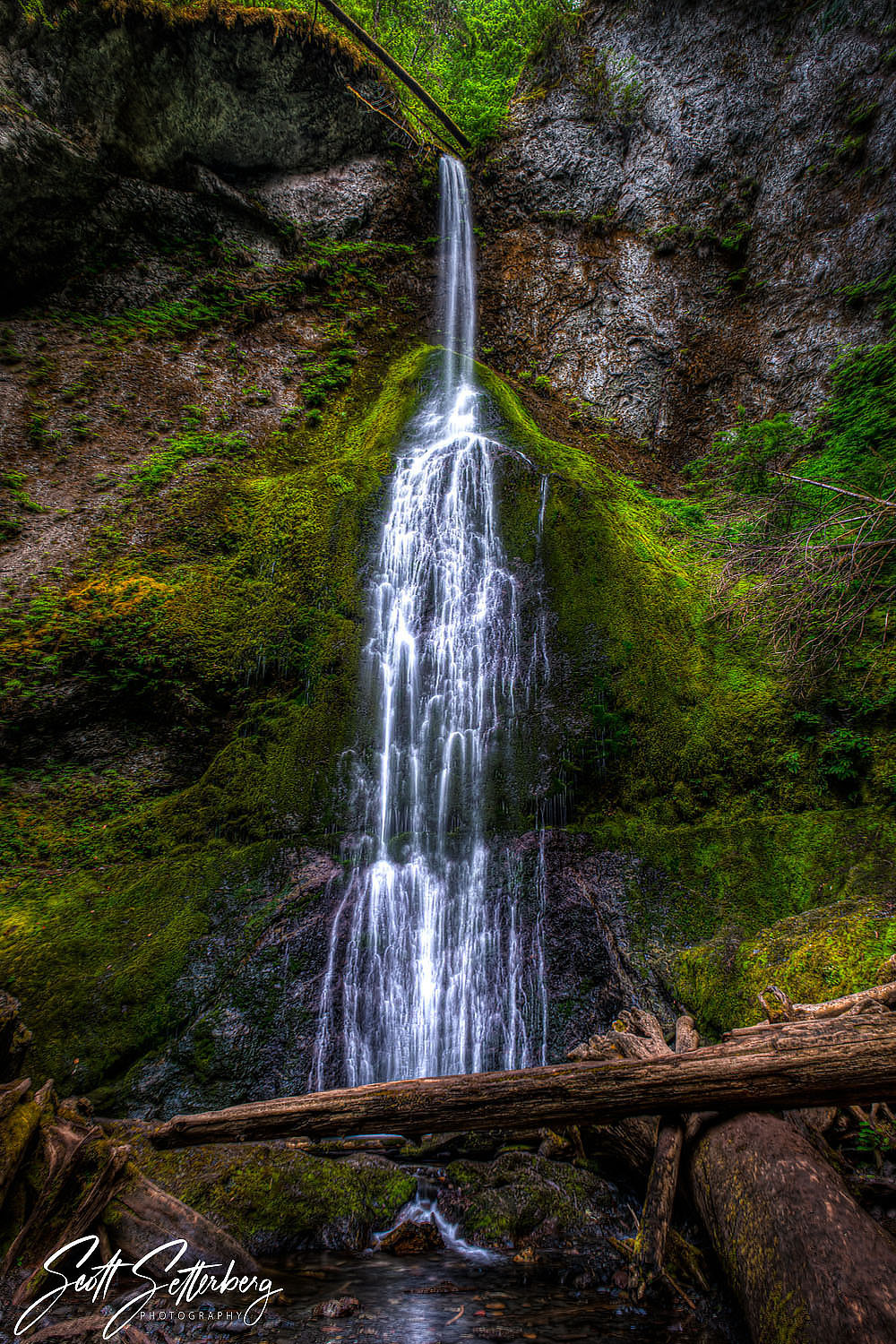
Marymere Falls sits in the Lake Crescent area, about 20 miles west of Port Angeles. The Marymere Falls trail runs roughly 1.8 miles round trip from the Storm King Ranger Station. It stays gentle through old-growth forest, then climbs a short set of switchbacks near the falls. The cascade slips down a tall, moss-streaked rock face. Shoot it on an overcast day, when soft light holds detail in both the white water and the dark stone. A viewing platform sets your position, so bring a mid-range zoom to frame the drop cleanly.
Madison Falls
Madison Falls offers the easiest access of the five. A paved path of 0.1 miles leads to Madison Falls, and the gentle slope makes it wheelchair accessible. The fall pours through a curtain of ferns near the Elwha entrance. Because the path is short and flat, Madison Falls works well for a quick session or for photographers carrying heavy gear. Finally, frame the ferns in the foreground to add depth, and use a polarizer to control the sheen on wet leaves.
Sol Duc Falls

Sol Duc Falls ranks among the most photographed cascades in the park. The Sol Duc Falls trail covers 1.6 miles round trip from the trailhead at the end of Sol Duc Road. Specifically, the water splits into as many as four channels and drops into a narrow rock canyon. A wooden footbridge crosses below the falls and gives a strong shooting angle. Arrive early, since the bridge fills with visitors by late morning. Morning shade also keeps the exposure even, so this fall suits a first stop on a busy day.
Merriman Falls
Merriman Falls rewards photographers who want results without a hike. It sits directly beside the South Shore Road in the Quinault rainforest, viewable from a roadside pullout. The compact cascade pours over a moss-covered wall. Because heavy tree cover shades the fall through most of the day, the light stays soft and even. Set up low, and use the wet rocks and ferns as foreground. Merriman Falls also makes a reliable stop in steady rain, when open locations turn flat.
Bunch Creek Falls

You will find Bunch Creek Falls near the Olympic National Park boundary, along the South Shore Quinault River Road. Like Merriman, it stands within steps of the road, so no trail is involved. The water slips over a series of mossy ledges in a tight, green setting. A telephoto lens isolates the cleanest section, while a wide lens takes in the surrounding rainforest. Check current road conditions before the drive, because storm damage sometimes closes sections of the Quinault roads. The official Olympic National Park site posts updates.
Best Time to Photograph Olympic National Park Waterfalls
Timing shapes both the flow of the water and the quality of the light. The best season for photographing waterfalls in Olympic National Park runs from April through June. During those months, snowmelt and rain push heavy water over every fall, and the rainforest reaches its deepest green.
Summer drops the flow as the snowpack runs out, although trails dry out and access gets easier. Fall adds color in late October, when big-leaf maples turn gold against the cascades. Winter delivers dramatic water, yet road closures and ice limit access during those months.
Overcast days outperform sunny ones for waterfall work. A bright sky throws harsh highlights on the water and deep shade on the rock, a contrast range no sensor handles well. Thin cloud cover instead spreads even light across the whole scene. On clear days, shoot early or late, or pick a fall in deep shade like Merriman. Our comparison of golden hour vs blue hour for landscapes explains how light shifts through the day.
Composition Tips for Rainforest Waterfalls
Strong waterfall images share a few habits. Start with a clear foreground. Specifically, moss, ferns, fallen logs, and wet stone anchor the lower frame and lead the eye toward the water.
Next, look for a natural frame. Overhanging branches and tree trunks wrap the falls and add depth. Also treat shutter speed as a creative choice, never a default. A two-second exposure turns a small fall into a smooth ribbon, while a quarter-second keeps the energy of the splash.
Finally, work the scene from several distances. A wide shot sets the fall in its forest. A tighter frame isolates one channel of water and the texture around it. Shoot both, and you leave with range from a single location.
Skip the Trip Planning
Five Waterfalls on One Itinerary
The six-day August itinerary handles lodging, transport, and park fees, so you focus on light and composition.
Guided Workshop vs. Planning Your Own Trip
Two paths lead to strong results when photographing waterfalls in Olympic National Park. You plan the trip yourself, or you join a guided workshop. Each path, however, suits a different photographer.
A self-planned trip gives you full control. You set the pace, choose the falls, and shoot on your own schedule. It also asks more of you: research, lodging, transport, park fees, and reading road conditions. For photographers near Washington, or those comfortable with logistics, this route works well and costs less.
A guided workshop instead removes the planning. ColorTexturePhotoTours runs a six-day Olympic National Park workshop each August, covering all five of these falls plus Hurricane Ridge, the Hoh Rainforest, and Ruby Beach. August flow runs lower than the spring peak, although the summer window brings dry trails, settled weather, and open roads. Merriman, Bunch Creek, and other shaded rainforest falls still carry steady water through the season. The all-inclusive price of $4,875 covers lodging, meals, private transport, and park fees, and a Pacific Northwest native with 35 years of experience leads the instruction. For a photographer flying in, or one who wants teaching on filters and composition at every stop, the workshop trades a higher cost for a planned, low-effort trip.

Final Thoughts for Your Olympic Waterfall Trip
Olympic National Park stands out for waterfall photography because it removes the usual barriers. The falls sit close to the roads, the rainforest light stays soft, and a short trip covers five strong locations. As a result, a photographer of any level leaves with portfolio-grade frames.
The park does ask for preparation. Rain falls often, trails turn muddy, and the Quinault roads close after storms. A photographer who wants guaranteed sun and dry trails should instead look at a drier region or a summer visit. Still, the wet conditions are the reason the moss glows and the water runs full.
For the cost of a tripod, a polarizer, and a three-stop neutral density filter, you hold the full kit for this work. The rest is timing and patience. Plan around overcast days and spring flow, and the park does the heavy lifting.
Start with Sol Duc Falls and Marymere Falls when your time is short, because both deliver the most reward for the walk. Then add Merriman Falls and Bunch Creek Falls once you reach the Quinault side. For a deeper trip with instruction at every stop, a guided workshop with ColorTexturePhotoTours covers the same ground without the planning load. Once Olympic is in your portfolio, our roundup of underrated national parks for photography points toward the next trip.
Ready to Book?
Join the August Olympic Workshop
A six-day, small-group workshop led by a Pacific Northwest native with 35 years of experience.
Frequently Asked Questions
How many waterfalls are in Olympic National Park?
Olympic National Park holds dozens of named waterfalls across its rainforest valleys and mountain slopes. For example, Sol Duc Falls, Marymere Falls, and Madison Falls rank among the most accessible. Many smaller falls also sit roadside in the Quinault area.
What are the best waterfalls in Olympic National Park to photograph?
The best waterfalls in Olympic National Park for photography combine easy access with strong surroundings. Sol Duc Falls, Marymere Falls, Madison Falls, Merriman Falls, and Bunch Creek Falls all deliver, and a two- or three-day trip covers all five.
How long is the hike to Sol Duc Falls?
The Sol Duc Falls trail runs 1.6 miles round trip from the trailhead at the end of Sol Duc Road. Notably, the path stays easy, with about 200 feet of elevation gain. Most photographers reach the falls in 30 to 40 minutes.
When is the best time to photograph Olympic National Park waterfalls?
Spring, from April through June, brings the strongest flow from snowmelt. Overcast days suit waterfall photography best, since soft light holds detail in the water and the rock. Early morning also keeps crowds low at popular falls.
Where is Marymere Falls and how do you reach it?
Marymere Falls sits in the Lake Crescent area, about 20 miles west of Port Angeles. The Marymere Falls trail runs 1.8 miles round trip from the Storm King Ranger Station. The route stays easy through old-growth forest before a short final climb.
Is Madison Falls wheelchair accessible?
Yes. A paved path of 0.1 miles leads from the parking area to Madison Falls on a gentle slope. The short, flat route also helps photographers who carry heavy gear.

