


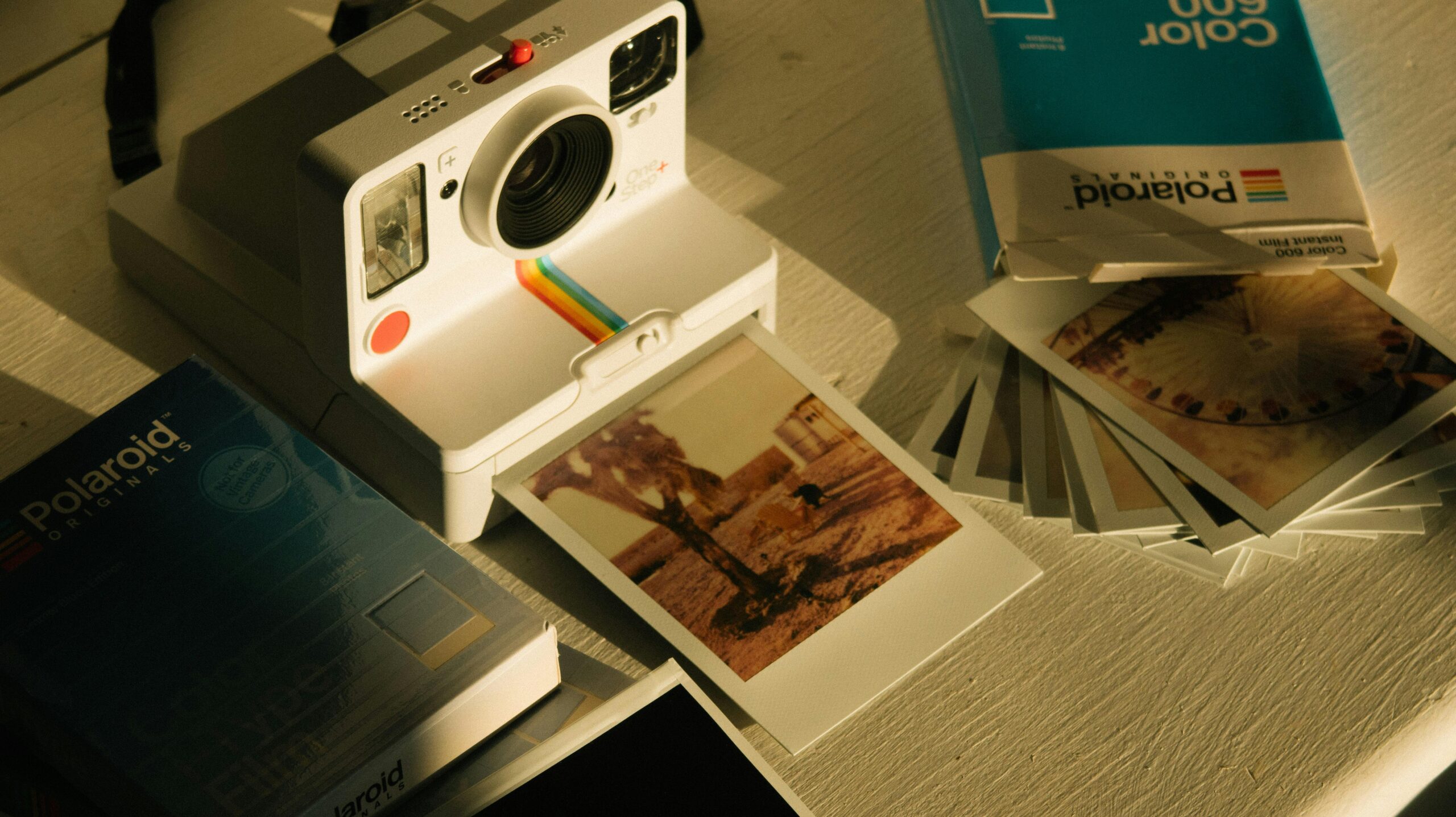
Quick Verdict: The Polaroid instant camera revival is one of the more improbable comebacks in photography history. From Edwin Land’s 1937 founding through the SX-70 peak, the 2008 collapse, and a decade of obituary headlines, Polaroid is now riding a global market projected to grow at 8.3% CAGR through 2033. Gen Z drives most of that growth, while new bodies like the Polaroid Now+ 2 Advanced bridge analog feel with manual controls and Bluetooth. This is the full story.
Last updated: May 2026 | 7 min read
In This Article
- Overview: A Polaroid Instant Camera Revival Worth Watching
- Quick Facts on Polaroid Today
- The Rise: 1937 to the SX-70 Era
- The Fall: Digital, Bankruptcy, and the End of Film
- The Impossible Project Saves the Film
- The Rise Again: Gen Z, Bluetooth, and Manual Controls
- Final Thoughts
- Frequently Asked Questions
Overview: A Polaroid Instant Camera Revival Worth Watching
The Polaroid instant camera revival is no longer a niche story. The global market sits at roughly $2.93 billion in 2024 and is projected to reach $5.72 billion by 2033, a compound annual growth rate of 8.3%. That growth runs ahead of the broader camera industry, which has spent most of the past decade shrinking.
The buyers driving the revival are not who you might expect. Millennials and Gen Z account for over 60% of demand in North America and Europe. Specifically, Gen Z usage of instant cameras has climbed 45% in the past few years. The audience grew up entirely in the smartphone era, yet they are paying real money for a chemistry-based imaging format their parents abandoned.
The brand itself has come back from the dead. Polaroid Corporation declared bankruptcy in 2001 and discontinued instant film production in 2008. The film was rescued. The bodies returned. The Polaroid Now+ 2 Advanced shipped in December 2024 with autofocus, manual exposure, and Bluetooth. The Polaroid instant camera revival is now a documented commercial fact.
Quick Facts on Polaroid Today
| Detail | Value |
|---|---|
| Founded | 1937, by Edwin Land |
| First instant camera | Land Camera Model 95 (1948) |
| Iconic peak product | SX-70 (1972) |
| Bankruptcy | 2001 |
| Instant film production ends | 2008 |
| Impossible Project founded | 2008 |
| Rebranded Polaroid Originals | 2017 |
| Renamed back to Polaroid | 2020 |
| Latest flagship | Polaroid Now+ 2 Advanced (Dec 2024, $299) |
| 2024 market size | $2.93 billion |
| 2033 projection | $5.72 billion (8.3% CAGR) |
The Rise: 1937 to the SX-70 Era

Edwin Land founded Polaroid Corporation in 1937 in Cambridge, Massachusetts. The company started in polarizing filters for lenses and windows. Then Land’s daughter asked why she did not see a photograph immediately after he took one. The question reportedly drove Land to start work on instant photography. By 1948, the Land Camera Model 95 was on shelves, and the format the company would define for the next half-century was born.
Polaroid grew through the 1950s and 1960s on a stream of new cameras and film stocks. However, the inflection point came in 1972 with the SX-70. The folding single-lens reflex was a piece of industrial design that still appears in textbooks. As a result, Polaroid became a cultural brand as much as a technology company. Andy Warhol used one. Ansel Adams advised the company. Time magazine put Land on its cover.
At peak in the 1980s, Polaroid revenue topped $3 billion. The company employed thousands at its Massachusetts factories. Specifically, the instant film business carried higher margins than most consumer electronics, since customers came back to buy more chemistry every time they shot a roll. The model looked unbeatable. For more on photography’s iconic eras, our photography news feed covers historical and contemporary moments.
The Fall: Digital, Bankruptcy, and the End of Film
The fall started slowly. Digital cameras arrived in the 1990s as expensive professional curiosities. By 2000, however, the price-performance curve had flipped. Consumer digital cameras delivered immediate review on an LCD, free storage, and no per-shot cost. Polaroid’s core promise, instant gratification, no longer required Polaroid.
Polaroid Corporation declared bankruptcy in 2001. The brand limped through licensing deals and ownership changes for the next several years. By 2008, the company announced it would stop producing instant film entirely. The decision should have ended the format. Specifically, without Polaroid film, every Polaroid body ever made was on track to become a paperweight.
The cultural loss registered immediately. Photographers who had built bodies of work in Polaroid film, including Patti Smith, Andy Warhol’s estate, and countless wedding shooters, faced a future without their medium. The brand itself appeared dead. For deeper coverage of analog camera systems, see our learn section.
The Impossible Project Saves the Film
The rescue came from an unlikely place. In 2008, a small group of Polaroid film fans led by Florian Kaps and Andre Bosman bought the last Polaroid film factory in Enschede, Netherlands, along with the manufacturing equipment. They founded The Impossible Project with the goal of reverse-engineering and resuming production of integral instant film for existing Polaroid cameras.
The early years were rough. Specifically, the first new films had short development windows, unstable color, and unpredictable behavior. However, the team kept iterating. By 2013, the film had become reliable enough for working photographers to use in serial production. Meanwhile, vintage Polaroid bodies started appearing again on online marketplaces, with prices climbing as the format came back.
The Impossible Project acquired the Polaroid brand and intellectual property in 2017 and renamed itself Polaroid Originals. In 2020, the company dropped the Originals modifier and went back to the original Polaroid name. The Polaroid instant camera revival had its founders, its film, and now its brand back.
The Rise Again: Gen Z, Bluetooth, and Manual Controls

The modern revival looks different from the original era. Specifically, the Polaroid I-2 launched in 2023 as a manual-control body aimed at serious photographers. It offered shutter priority, aperture priority, and full manual exposure for the first time on a current-production instant camera. The price, $599, signaled Polaroid was no longer pursuing only the impulse-buy market.
Polaroid then doubled down with the Polaroid Now+ 2 Advanced in December 2024 at $299. The body added autofocus, a dual-lens system covering 35-40mm equivalent, full manual exposure control, and built-in Bluetooth for the new Polaroid mobile app. The rechargeable battery shoots roughly 15 packs of film per charge with USB-C charging. Additionally, Polaroid introduced a new HDR film stock alongside the Now+ 2 launch, delivering deeper color and contrast.
Beyond hardware, the cultural pull is what drives the Polaroid instant camera revival. Gen Z buyers, raised inside Instagram and TikTok feeds, prize the “perfectly imperfect” physical print as a counter to algorithm-curated digital identity. Specifically, the limited frames per pack force intentional shooting, the print exists once in physical space, and the imperfections are part of the value rather than a defect to fix. Meanwhile, modern bodies bridge the gap with smartphone integration, letting users print phone photos through the camera body or remote-trigger the shutter.
Final Thoughts

The Polaroid instant camera revival is the rare comeback story where the second act is structurally healthier than the first. Specifically, Polaroid in 2026 is no longer a single-product company facing existential digital threat. Instead, it sits inside a broader analog renaissance covering instant film, vinyl records, and 35mm SLR sales. The category as a whole is growing, and Polaroid is the household name inside it.
For photographers, the revival means something practical. New Polaroid bodies offer real manual control, modern features like autofocus and Bluetooth, and an ecosystem of fresh film stocks. As a result, the format is no longer trapped in nostalgia. It functions as a creative medium with its own technical demands, costs, and rewards.
For PhotographyTalk readers curious about the format, the Polaroid Now+ 2 Advanced at $299 is the friendliest entry. The Polaroid I-2 at $599 rewards shooters who want manual control. Both bodies pull from the same Polaroid integral film stock The Impossible Project rescued in 2008. Specifically, every shot you take in 2026 traces back to a small Dutch factory and a group of believers who refused to let the format die. That is the Polaroid instant camera revival in one sentence. The brand survives because the film survived.
Frequently Asked Questions
When did the Polaroid instant camera revival start?
The revival started in 2008, when The Impossible Project bought the last Polaroid film factory in Enschede, Netherlands. Reliable film production resumed by around 2013. The Impossible Project acquired the Polaroid brand in 2017 and renamed itself Polaroid Originals, then went back to plain Polaroid in 2020.
What is the latest Polaroid camera in 2025-2026?
The Polaroid Now+ 2 Advanced launched on December 15, 2024 at $299. The body adds autofocus, a dual-lens system covering roughly 35 to 40mm equivalent, manual exposure control, Bluetooth, USB-C charging, and roughly 15 packs of film per battery charge. Polaroid also introduced a new HDR film stock alongside the launch.
Who is buying instant cameras in 2026?
Millennials and Gen Z account for over 60% of the Polaroid market in North America and Europe. Specifically, Gen Z usage of instant cameras has climbed 45% in recent years. Most buyers grew up entirely in the smartphone era and treat instant film as a counter to algorithm-driven digital photography.
How big is the Polaroid market now?
The global Polaroid and instant photography market reached roughly $2.93 billion in 2024. Industry analysts project growth to $5.72 billion by 2033, a compound annual growth rate of 8.3%. That growth pace runs ahead of the broader camera industry.
What is the difference between the Polaroid I-2 and the Now+ 2 Advanced?
The Polaroid I-2 launched in 2023 at $599 and targets serious photographers with shutter priority, aperture priority, and manual exposure. By contrast, the Polaroid Now+ 2 Advanced launched in December 2024 at $299 with autofocus, Bluetooth, and a more approachable feature set for casual to enthusiast shooters.
Is Polaroid film still made in the original factory?
Yes. The Polaroid film factory in Enschede, Netherlands, has produced integral instant film continuously since The Impossible Project resumed production after the 2008 acquisition. Today’s film is a chemically updated version of the original Polaroid integral format, refined over more than a decade of iteration.
Sources: Polaroid official site, industry market reports on Polaroid CAGR and demographics, The Impossible Project archive.

