


Quick Facts:
- The verdict: The 35mm wins the community vote for the one lens beginners should own
- Full-frame focal length: 35mm
- On an APS-C camera, buy: roughly 22mm to 24mm for the same view
- On Micro Four Thirds, buy: roughly 17mm to 18mm
- Runner-up: the 50mm nifty fifty
- Typical used price: $150 to $400 depending on brand and aperture
- Best for: beginners who want one lens for street, portraits, travel and everyday life
8 min read
In This Guide
- Best 35mm Lens for Beginners: Why the Crowd Crowned One Focal Length
- The 35mm at a Glance
- Why One Focal Length Beats a Bag of Lenses
- What a Single 35mm Shoots
- Best 35mm Lens for Beginners: Top Picks by Brand
- Crop Sensor? Here Is the Focal Length to Buy
- 35mm vs 50mm: Which Should You Pick?
- 35mm Strengths and Trade-offs
- Final Verdict
- Frequently Asked Questions
Best 35mm Lens for Beginners: Why the Crowd Crowned One Focal Length
Ask a room of photographers one question. If you keep a single lens and sell the rest, which focal length stays? The answer comes back loud and consistent. The 35mm wins. Across the biggest one-lens threads on Reddit, forums and photography groups, the 35mm draws the most recommendations, so the best 35mm lens for beginners earns its title by popular demand. The 50mm runs a close second, while the 28mm trails as a wide-angle favorite.
I have shot for more than 17 years across Nikon, Sony, Panasonic and Canon bodies. Still, if someone forced me to keep one focal length forever, I would keep the 35mm. The community lands in the same place, though the race with the 50mm stays genuinely close.
This guide speaks to beginners first. You want one lens, a clear reason to trust it, and a simple way to buy it without overspending. Below, you get the vote tally, the use cases, brand-by-brand picks, and the crop-sensor math, so you buy the right glass the first time. For broader context, our primer on the basics of camera lenses walks a new shooter through how focal length shapes a photo.
The 35mm at a Glance
Before the argument, here are the numbers a beginner needs. These figures frame why this focal length suits one-lens shooting and how it lands on different sensor sizes.
| Specification | Details |
|---|---|
| Full-frame focal length | 35mm |
| Angle of view (full frame) | roughly 63 degrees diagonal |
| APS-C lens for the same view | roughly 22mm to 24mm |
| Micro Four Thirds lens for the same view | roughly 17mm to 18mm |
| Common apertures | f/1.4, f/1.8, f/2 |
| Typical used price range | $150 to $400 |
| Best use cases | street, environmental portraits, travel, food, documentary |
Start With One Great Lens
Find Your 35mm Used and Save
MPB lists thousands of inspected used lenses, each graded by hand and backed by a six-month warranty. Filter to your camera mount and grab a 35mm for less.
Why One Focal Length Beats a Bag of Lenses

New photographers often buy three lenses and learn none of them. A single prime fixes this. Because the field of view never changes, you start to see the world in 35mm before you raise the camera. Instead of twisting a zoom ring, you move your feet, and your composition sharpens fast.
A 35mm prime lens also forces useful limits. For example, you frame with intent, you step closer for a tighter shot, and you back up for context. As a result, this discipline builds skill faster than a do-everything zoom. The prime lens vs zoom lens question has a clear beginner answer, and our guide on prime vs zoom for your first lens makes the case with sample setups.
Money matters too. One quality 35mm costs less than a shelf of half-used glass. A fast 35mm prime lens also gathers light for dim rooms and evening streets, so you skip a flash and keep shooting. For the deeper argument, read why every photographer needs a 35mm, which lays out the case point by point.
What a Single 35mm Shoots

People doubt one lens until they see the range. In contrast to a tighter prime, the 35mm covers more genres than any other single focal length, which is exactly why the community keeps voting for it. Here is what a beginner shoots with one body and one 35mm.
On the street and in everyday life, the 35mm sits close to natural eye perspective, so scenes look honest and unforced. Many street shooters never change focal length. For instance, a modest 35mm kit carries everyday shooters through entire projects without a swap.
For environmental portraits, the 35mm at f/1.8 separates a person from the background while keeping enough room to show place and mood. Step back for a full-body frame, or move in for a relaxed waist-up shot. Either way, one lens handles the whole session.
For travel and food, one light prime fits a jacket pocket, so you carry the camera every day. The wider view captures markets, interiors and tight cafe tables, where a 50mm feels cramped. Therefore your travel set never needs a second lens.
Best 35mm Lens for Beginners: Top Picks by Brand
Every major system offers an affordable 35mm. Below are beginner-friendly options by mount. Prices reflect typical used listings, which run well under new retail. Buying used through a graded marketplace keeps the risk low and the savings high.
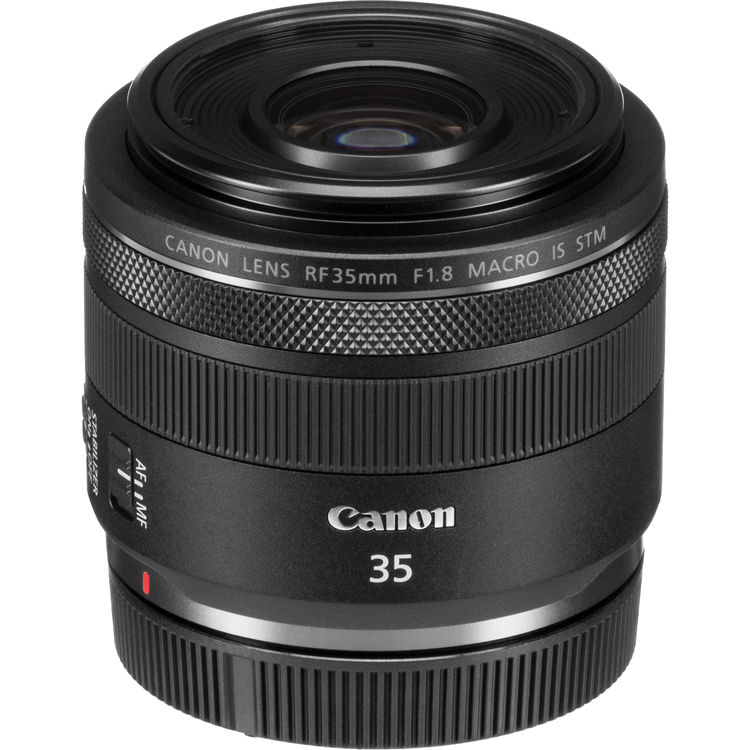
Canon shooters have two easy paths. The EF 35mm f/2 IS suits DSLR bodies and adapts to RF mirrorless, while the native RF 35mm f/1.8 Macro adds close focus and stabilization. Sony owners get the E 35mm f/1.8 OSS for APS-C bodies like the a6000 series, and full-frame shooters reach for the FE 35mm f/1.8.
On Nikon, the Z 35mm f/1.8 S serves mirrorless Z bodies, whereas the older AF-S 35mm f/1.8G DX remains a budget star for crop-sensor DSLRs. Fujifilm fans pick the XF 35mm f/2, which gives X-mount shooters a 53mm-equivalent view, slightly tighter than full-frame 35mm yet still a superb one-lens choice.
Save on Your First Prime
Used 35mm Primes, Inspected and Warrantied
Skip the new-gear markup. MPB grades every lens by condition and ships it with a six-month warranty, so your first 35mm costs less without the guesswork.
Crop Sensor? Here Is the Focal Length to Buy
This step trips up most beginners, so read it twice. The community vote names 35mm as a full-frame number. However, on a crop-sensor body, a physical 35mm shows a tighter view, closer to a 50mm look. To match the classic 35mm field of view on APS-C, buy a lens near 22mm to 24mm, since Canon crop bodies use a 1.6x factor and most others use 1.5x. On Micro Four Thirds, aim for 17mm or 18mm.
For example, a Sony a6400 owner picks the 23mm-equivalent option, while a full-frame a7 owner buys an actual 35mm. Get this right, and your photos match the look the crowd voted for. Our explainer on full-frame equivalent focal length shows the simple crop-factor math behind these numbers.
35mm vs 50mm: Which Should You Pick?
The 35mm vs 50mm debate decides most one-lens votes, and both lenses are excellent. The 50mm runs cheaper at the entry level and renders a flattering, tighter frame for portraits. However, it feels confining indoors and on busy streets, where you struggle to step back far enough.
By contrast, the 35mm gives more room and more flexibility. You shoot a portrait, then turn and capture the whole scene without swapping glass. For a true one-lens kit, the wider view wins more often, which is why the crowd leans 35mm. Still, if you mostly shoot headshots, the 50mm earns a serious look.
| Factor | 35mm | 50mm |
|---|---|---|
| One-lens versatility | Best pick | Good |
| Indoor and street | Roomier framing | Tighter, often cramped |
| Tight portraits | Strong | Best pick |
| Entry used price | Low | Lowest |
Prefer the tighter look after reading this? Then our piece on the case for a 50mm instead covers the runner-up in full.
35mm Strengths and Trade-offs
Pros
- Covers street, portraits, travel and food with one lens
- Field of view near natural eye perspective, so scenes look honest
- Fast apertures of f/1.4 to f/2 handle low light without a flash
- Small and light, so you carry the camera every day
- Strong used value, often $150 to $400
- Builds composition skill by fixing the frame
Cons
- Tighter headshots need you to move in close
- Too wide for distant wildlife or stage sports
- Mild edge distortion appears on close faces
- Crop-sensor buyers must size down to about 23mm
Final Verdict
The best 35mm lens for beginners is the one lens I would keep if I sold everything else, and the community vote backs the choice. It shoots street, portraits, travel and everyday life from one light, affordable prime. For most new photographers, therefore, the 35mm is the clearest answer to the question of where to start.
Who should look elsewhere? If you shoot mostly tight portraits, weigh the 50mm. If you chase wildlife or field sports, you need a telephoto, not a one-lens kit. For everyone else, however, the wider and more flexible 35mm carries the day.
On value, a used 35mm prime delivers more skill-building per dollar than any zoom in the same price band. You buy it graded and warrantied, learn it for a year, and let it teach you to see. As the best camera lens for beginners, the 35mm sets a foundation you keep long after your first body retires.
My recommendation stays simple. Start with a 35mm, master it, and add a 50mm later only if your work pulls you toward tighter frames.
Ready to Buy?
Check Today’s Price on a Used 35mm
Browse inspected used 35mm primes for Canon, Sony, Nikon and Fujifilm, each backed by MPB’s six-month warranty and graded condition.
Frequently Asked Questions
Why is the 35mm lens so popular?
The 35mm sits near natural eye perspective, so it handles street, portraits, travel and food from one prime. Because the view feels familiar, scenes look honest. As a result, community votes keep crowning it the one lens to own.
What is a 35mm lens good for?
A 35mm covers everyday life, environmental portraits, travel, documentary and food photography. The wide-yet-natural frame shows a subject with context. For a beginner who wants one lens, a 35mm prime lens handles most situations without a swap.
Is a 35mm or 50mm better for a first lens?
The 35mm vs 50mm choice depends on your subjects. The 35mm offers more flexibility for one-lens shooting, while the 50mm renders tighter portraits and costs a little less. For most beginners, therefore, the wider 35mm wins as the everyday pick.
What 35mm lens should I buy for a crop-sensor camera?
On APS-C, buy a lens near 22mm to 24mm to match the full-frame 35mm view. On Micro Four Thirds, choose 17mm or 18mm. A physical 35mm on a crop body looks closer to a 50mm, so size down for the classic look.
Should I buy a 35mm lens new or used?
Used makes strong sense for a first prime. Because a graded marketplace inspects each lens and adds a warranty, you save money with low risk. For instance, many beginners find a used 35mm for $150 to $400, well under new retail.
Do I need only one lens to start?
Yes for most beginners. A single prime trains your eye faster than a bag of lenses, because the fixed frame forces real composition choices. In the prime lens vs zoom lens debate, one fast prime wins for learning. So the best camera lens for beginners is a 35mm you keep on the body. Add more glass later, once your style points the way.

