


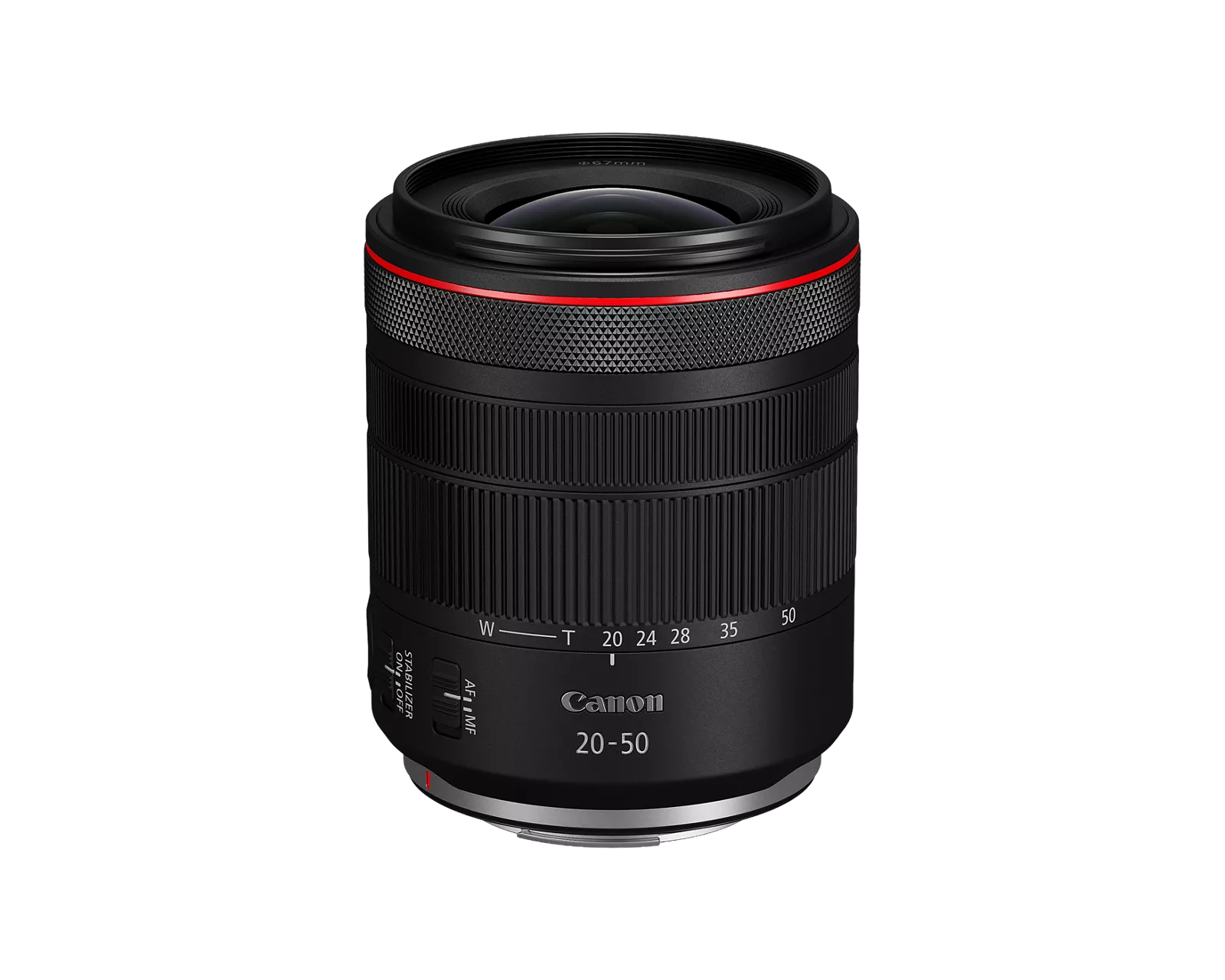
Quick Facts:
- Product: Canon RF 20-50mm f/4 L IS USM PZ
- Type: Canon’s first L-series RF power zoom lens
- Focal length: 20-50mm full-frame
- Aperture: Constant f/4 across the zoom range
- Weight: 420 g (0.9 lb)
- Length: 98.4 mm (3.9 in)
- Filter thread: 67 mm
- Stabilization: 6 stops in-lens, 8 stops paired with IBIS
- Minimum focus: 0.24 m (9.5 in), 0.33x maximum magnification
- Zoom drive: Three Nano USM motors (two zoom, one focus)
- Price: $1,399 standalone, $3,699 with the EOS R6 V kit
- Availability: Late June 2026
- Best for: Hybrid creators and gimbal-based video work
8 min read
In This Article
Canon RF 20-50mm f/4 L IS USM PZ Overview: First L-Series Power Zoom
The Canon RF 20-50mm f/4 L IS USM PZ launched today as Canon’s first L-series lens with a built-in power zoom. Announced alongside the new EOS R6 V hybrid body, the lens brings smooth, motorized zoom control to the professional L-series for the first time. As a result, hybrid creators gain a wide-to-standard zoom built for video workflows without sacrificing L-series optics or build quality.
Power zoom on RF mount is not entirely new. Canon launched the RF-S 14-30mm f/4-6.3 IS STM PZ in 2025 for APS-C bodies. However, the new 20-50mm is the first full-frame RF lens with built-in PZ, and it carries L-series glass and weather sealing. Canon’s RF “Z”-suffix L zooms (such as the RF 24-105mm f/2.8 L IS USM Z) require the PZ-E2 power zoom adapter. By contrast, the new lens handles motorized zoom internally.
For pricing, the standalone Canon RF 20-50mm price lands at $1,399 with late-June 2026 availability. Buyers picking up the R6 V get a kit version at $3,699, which saves $200 versus buying the body and lens separately. Therefore, the kit makes strong sense for creators jumping into the V series fresh.
The focal length covers 20mm at the wide end for self-facing video and walking shots, then stretches to 50mm for tighter framing and standard portraits. Combined with the lens’s 420 g weight and internal zoom design, the package handles gimbal, run-and-gun, and tripod-based work. One piece of glass covers the whole creator workflow.
Canon RF 20-50mm f/4 L IS USM PZ Specs at a Glance
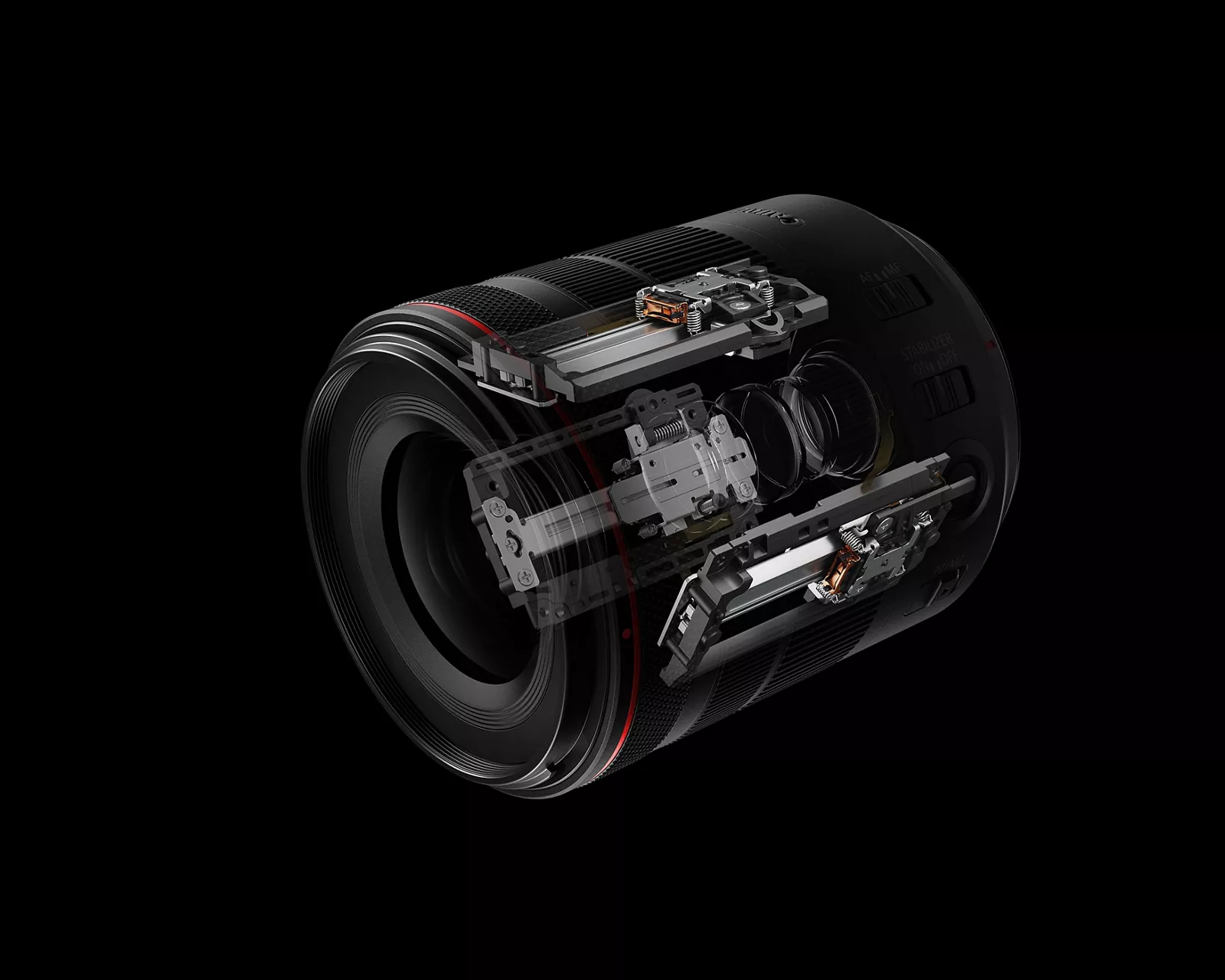
Here is the high-level rundown of every key spec on Canon’s first L-series power zoom.
| Specification | Details |
|---|---|
| Mount | Canon RF (full-frame) |
| Focal length | 20-50mm |
| Aperture | Constant f/4 |
| Optical design | 13 elements in 11 groups, including 3 UD and 2 aspherical elements |
| Coatings | Super Spectra, Air Sphere, fluorine front element |
| Stabilization | Up to 6 stops alone, up to 8 stops with IBIS |
| Motors | Three Nano USM (two zoom, one focus) |
| Minimum focus distance | 0.24 m (9.5 in) |
| Maximum magnification | 0.33x |
| Weight | 420 g (0.9 lb) |
| Length | 98.4 mm (3.9 in), internal zoom |
| Filter thread | 67 mm |
| Body-only price | $1,399 |
| R6 V kit price | $3,699 (saves $200 versus separate) |
| Release date | Late June 2026 |
Fund Your Upgrade
Sell Your Older RF Glass to MPB
Free shipping, transparent quotes, and fast payouts. Turn the RF zooms collecting dust into cash toward Canon’s first L-series power zoom.
Why Power Zoom on an L Lens Matters
Power zoom solves a problem manual zoom rings cannot. While a manual ring delivers control for stills, it introduces hand jitter and inconsistent speed during video recording. As a result, professional videographers historically relied on external PZ adapters or full cinema lenses to capture clean, motorized zoom moves on hybrid bodies.
Canon power zoom now arrives in a full-frame L-series package without the external accessory tax. Two of the lens’s three Nano USM motors drive zoom action, while the third handles focus. Because the zoom is fully internal, the lens length stays constant, and balance on a gimbal does not shift mid-shot. For solo creators and small teams, this combination removes a real friction point from the workflow.
The L-series designation matters here too. L-series lenses include weather sealing, premium coatings, and tighter quality control compared to Canon’s RF-S consumer line. The RF-S 14-30mm PZ targeted entry-level APS-C shooters. By contrast, the 20-50mm PZ targets working hybrid creators who need L-series optics behind the convenience of motorized zoom. Therefore, the lens fills a gap Canon’s lineup has carried since RF launched in 2018.
Power Zoom Controls and How They Work
Five different methods drive the new lens’s motorized zoom. First, the lens itself offers a smooth zoom ring with motor-assist behavior under the touch of a fingertip. Second, the EOS R6 V includes a dedicated zoom lever (a rocker switch) which controls the lens directly from the body grip. Third, Canon’s new BR-E2 Wireless Remote Control operates the zoom remotely for solo creators working in front of the camera.
The fourth option puts zoom control on a phone. Canon’s Camera Connect app supports remote zoom commands over Wi-Fi or Bluetooth, which suits livestream operators and interview setups where the talent stays in frame. Finally, compatible gimbals drive the power zoom directly, so operators get smooth zoom moves while keeping hands on the gimbal grip.
Zoom speed is adjustable across all five control methods. Slower speeds suit cinematic zooms during dialogue or product reveals, while faster speeds work for run-and-gun B-roll. Importantly, the speed setting persists across control inputs, so a gimbal operator and a remote operator dial in the same look.
Trade In, Trade Up
Cash In Old RF Zooms at MPB
MPB pays competitive market rates for used Canon RF zooms. Stack the payout against the new 20-50mm power zoom and pre-order before late-June stock thins.
RF 20-50mm vs RF 24-70mm f/2.8 L: Which Standard Zoom Should You Pick?

For RF shooters weighing the new 20-50mm against the existing RF 24-70mm f/2.8 L, the decision splits along three axes: aperture, weight, and use case. Both lenses share L-series build quality and weather sealing, so the choice comes down to what you shoot most.
The RF 24-70mm f/2.8 L wins for low light and shallow depth of field. Its f/2.8 aperture gathers a full stop more light, which matters for indoor portraits, weddings, and event coverage. However, the lens weighs roughly 900 g, more than twice the new 20-50mm PZ at 420 g. For hand-held shoots or gimbal work, the weight tax is real. Our detailed Canon RF 24-70mm f/2.8 L IS USM review covers the older sibling in depth.
The RF 20-50mm PZ wins for hybrid video. Power zoom, lighter weight, and a wider 20mm starting focal length suit creator workflows where 24mm feels a touch tight. Constant f/4 keeps exposure consistent across the zoom range, while 8-stop combined IS handles handheld video at slow shutter speeds. Therefore, video-first shooters and gimbal operators should reach for the 20-50mm.
Stills-first shooters and event pros should stay with the 24-70mm f/2.8 or step up to the RF 28-70mm f/2 L. The 20-50mm covers wide and standard, while the 24-70mm stretches into short telephoto. For broader Canon RF lens context, our guide to the best Canon RF lenses for landscape covers wide-angle options across the lineup.
Who the RF 20-50mm PZ Is For
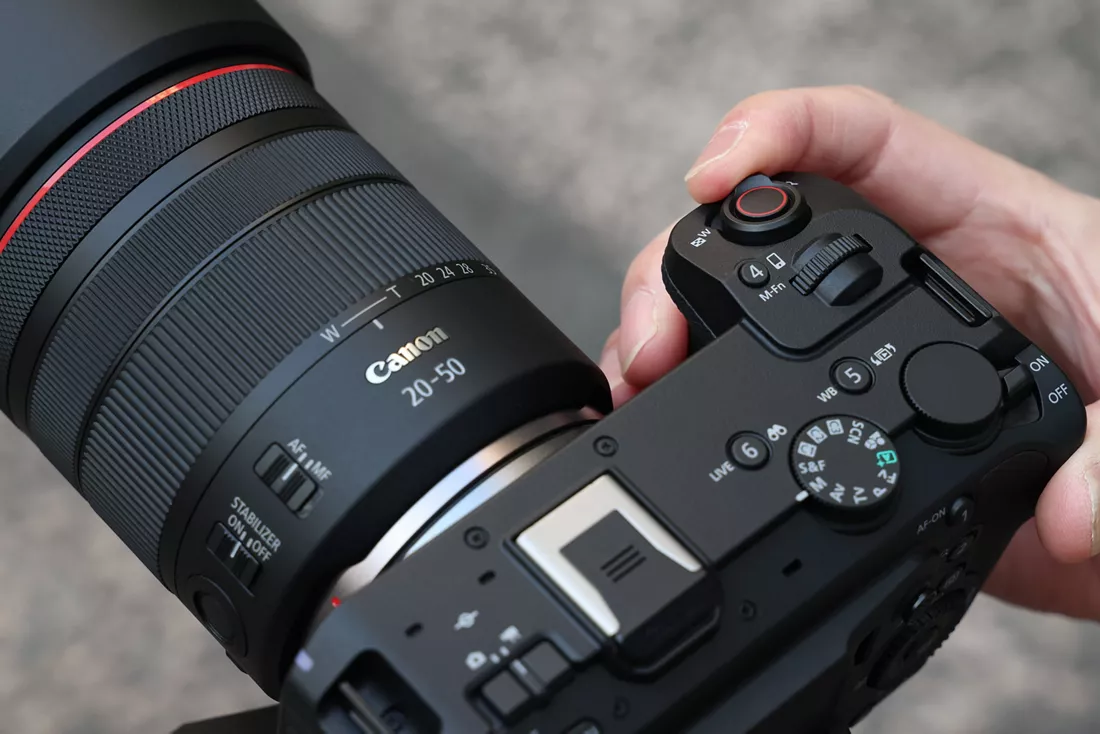
The Canon RF 20-50mm PZ earns its keep with specific audiences. Hybrid creators top the list, since the power zoom, light weight, and 20mm wide end serve content workflows where the camera moves between handheld, gimbal, and tripod constantly. YouTubers, wedding cinematographers, and solo brand creators benefit immediately.
Gimbal operators gain the most operational improvement. The internal zoom design preserves balance, while direct gimbal-based zoom control replaces external PZ adapters. Shoots which previously needed parfocal cinema lenses or PZ rigs now work with a single L-series zoom. As a result, small-team shoots which once needed two operators (one on gimbal, one on focus and zoom) compress to a single operator.
Solo creators and event shooters running R6 V kits should consider the lens kit pricing seriously. At $3,699 for the body plus lens, the package undercuts buying separately by $200, and it ships at launch in late June. For broader Canon body context, our roundup of the best Canon cameras in 2026 places every R-series model in the lineup.
Stills-first photographers, however, should look elsewhere. The f/4 aperture trails the RF 24-70mm f/2.8 L for low-light work, and 50mm caps short of the portrait-friendly 70-85mm zone. Wedding photographers, sports shooters, and wildlife photographers will find better fits in the f/2.8 zooms or the L-series primes.
Pros and Cons of the Canon RF 20-50mm PZ
Pros
- First L-series RF lens with fully built-in power zoom (no external accessory required)
- 8 stops of combined image stabilization when paired with IBIS, 6 stops in the lens alone
- Lightweight at 420 g, less than half the weight of the RF 24-70mm f/2.8 L
- Constant f/4 aperture maintains exposure across the 20-50mm range
- Wide 20mm starting focal length suits self-facing video and walking shots
- Internal zoom design preserves gimbal balance and lens length
- Five different zoom control methods, including R6 V lever, BR-E2 remote, and Camera Connect app
- Three Nano USM motors deliver quiet, fast autofocus and zoom action
- L-series build with Super Spectra, Air Sphere, and fluorine coatings plus weather sealing
- $200 savings in the R6 V kit pairing at $3,699
Cons
- f/4 maximum aperture trails the RF 24-70mm f/2.8 L for low-light and shallow depth of field
- 50mm long end caps short of portrait-friendly 70-85mm focal lengths
- $1,399 price runs about $300 higher than the RF 24-105mm f/4 L IS, which offers more focal range
- Late-June 2026 availability puts the lens about six weeks out from announcement
- Power zoom motors add complexity versus a pure mechanical zoom design
Final Verdict on the Canon RF 20-50mm PZ
The Canon RF 20-50mm f/4 L IS USM PZ earns a clear recommendation for hybrid creators and gimbal-based videographers. Canon power zoom on an L-series lens fills a real gap in the RF lineup. Prior PZ options either lived on RF-S APS-C bodies or required the PZ-E2 adapter mounted to Canon’s RF “Z”-suffix L zooms. As a result, the new lens stands alone in its category at launch.
The optical package supports the price tag. Three UD elements, two aspherical elements, Super Spectra and Air Sphere coatings, plus a fluorine front coating add up to L-series performance. Combined with three Nano USM motors and the 8-stop IS partnership with IBIS, the lens delivers a complete kit for solo video creators and small teams. Compared to the RF 24-70mm f/2.8 L, the weight savings alone (420 g versus 900 g) reshape handheld and gimbal shoot days.
Stills-first photographers should look elsewhere. The f/4 aperture and 50mm long end limit utility for portraits, weddings, and low-light events. For those workflows, the RF 24-70mm f/2.8 L, the RF 24-105mm f/4 L, or the RF 28-70mm f/2 L all serve better. The 20-50mm PZ is a video-led tool first, and a serviceable photo lens second.
My Take on the RF 20-50mm PZ
Canon power zoom on an L lens is a real innovation for hybrid creators, and Canon appears to have nailed the execution. Smooth zooms during recording used to be a friction point on every gimbal-based shoot. I had to choose between handheld zoom jitter and rebalancing the gimbal mid-shoot. This lens solves it. For solo creator work where one operator does everything, the five zoom control methods and the internal balance design feel built around how I shoot. I am ordering the R6 V kit at launch and putting older RF zooms up for trade.
Ready to Upgrade?
Sell Your RF Glass and Lock in the Launch Kit
MPB makes the upgrade painless with instant online quotes, free insured shipping, and a six-month warranty on every used purchase. Sell now and pre-order before late-June stock thins.
Frequently Asked Questions
What is the Canon RF 20-50mm f/4 L IS USM PZ?
The Canon RF 20-50mm f/4 L IS USM PZ is Canon’s first L-series full-frame RF lens with built-in power zoom. Announced today alongside the EOS R6 V, the lens covers a 20-50mm focal length range at constant f/4 aperture and weighs 420 g. Motorized zoom comes from five sources: the lens itself, the R6 V zoom lever, the BR-E2 remote, the Camera Connect app, and compatible gimbals.
How much does the RF 20-50mm PZ cost?
The RF 20-50mm price is $1,399 standalone. A kit version with the new EOS R6 V lists at $3,699, which saves about $200 versus purchasing the body and lens separately.
When does the RF 20-50mm PZ release?
Canon listed late June 2026 availability for both the standalone lens and the R6 V kit. Pre-order details from major retailers will follow as Canon authorizes them.
Is the RF 20-50mm PZ good for video?
Yes. The lens was built primarily for hybrid creators and video workflows. Power zoom, internal zoom design, 8-stop combined image stabilization with IBIS, and five different zoom control methods position the lens as a dedicated hybrid creator tool. Stills shooters might prefer the RF 24-70mm f/2.8 L for its faster aperture and longer reach.
How does the RF 20-50mm PZ compare to the RF 24-70mm f/2.8 L?
Both lenses serve different workflows. The 20-50mm wins on weight (420 g versus 900 g), power zoom, and wider 20mm starting focal length. In contrast, the 24-70mm wins on aperture (f/2.8 versus f/4), longer 70mm reach, and shallower depth of field for portraits. Hybrid video shooters favor the 20-50mm, while stills and event pros favor the 24-70mm.
How many stops of stabilization does the RF 20-50mm PZ offer?
Canon rates the lens for up to 6 stops of in-lens stabilization. Paired specifically with the EOS R6 V’s IBIS, combined stabilization rises to 8 stops across the full frame. Our Canon EOS R6 Mark II review covers IBIS performance on an earlier R6 generation if you need a baseline for older bodies.

