


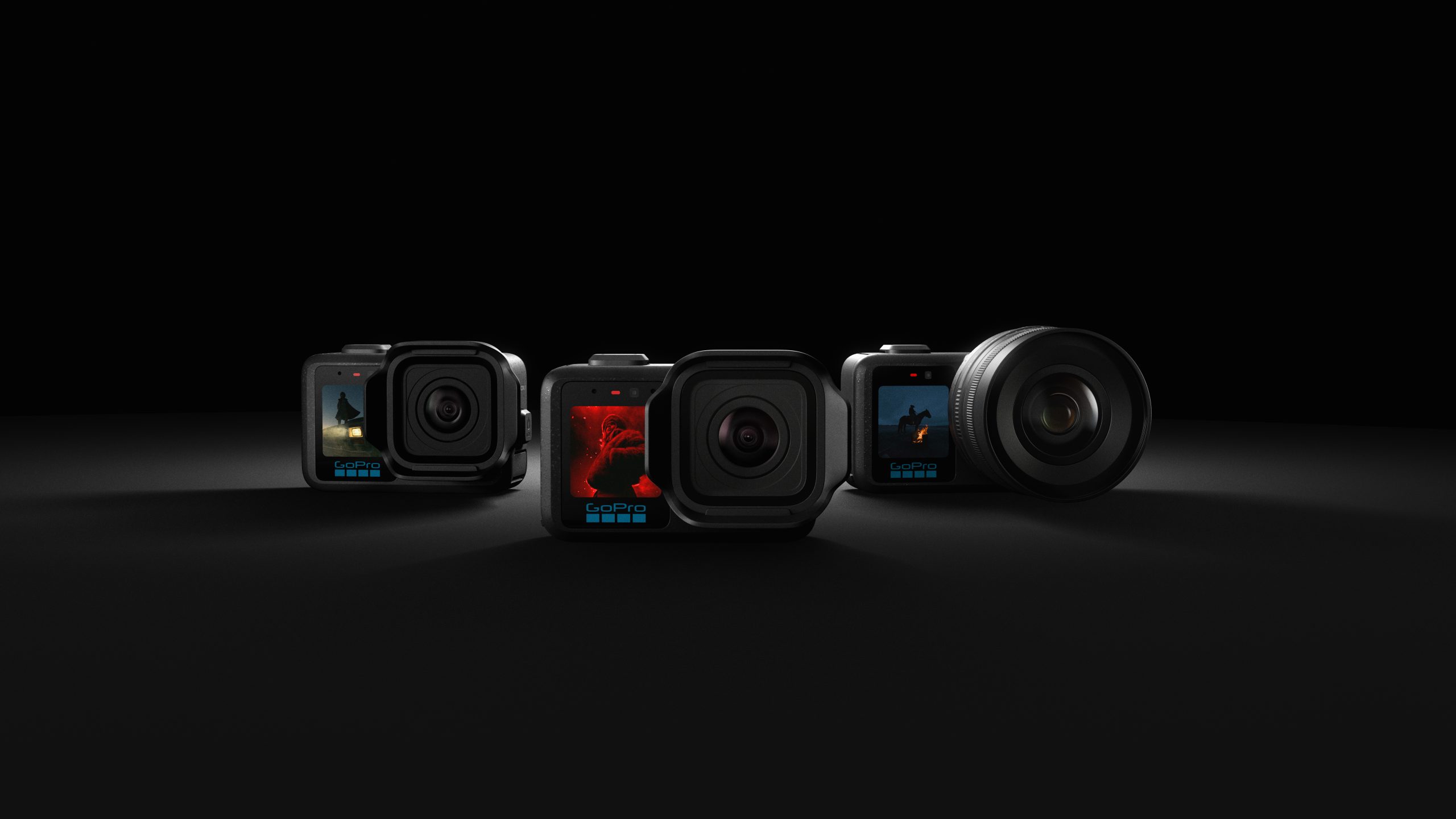
Quick Verdict: GoPro MISSION 1 is not an action camera. It is the world’s smallest 8K cinema camera system, built around a new 50MP 1 inch sensor and a 5nm chip. The flagship PRO model shoots 8K at 60fps, 4K at 240fps, and 1080p at 960fps. A separate model introduces an interchangeable Micro Four Thirds lens mount for the first time. Preorders open on the 21st of next month, with global availability starting the 28th.
Last updated: April 2026 | 12 min read
In This Article
- MISSION 1: The Name Says Everything
- Key Specs: Three Models Compared
- What I Got Right (and What GoPro Topped)
- GP3 Processor and 1 Inch Sensor: The Technical Foundation
- 8K60, 4K240, and 960fps: Frame Rates Redefined
- MISSION 1 PRO ILS: Interchangeable Lenses on a GoPro
- The Accessory Ecosystem
- GoPro MISSION 1 vs. DJI vs. Insta360: Different League
- Pros and Cons
- Final Verdict
- Frequently Asked Questions
GoPro MISSION 1: The Name Says Everything
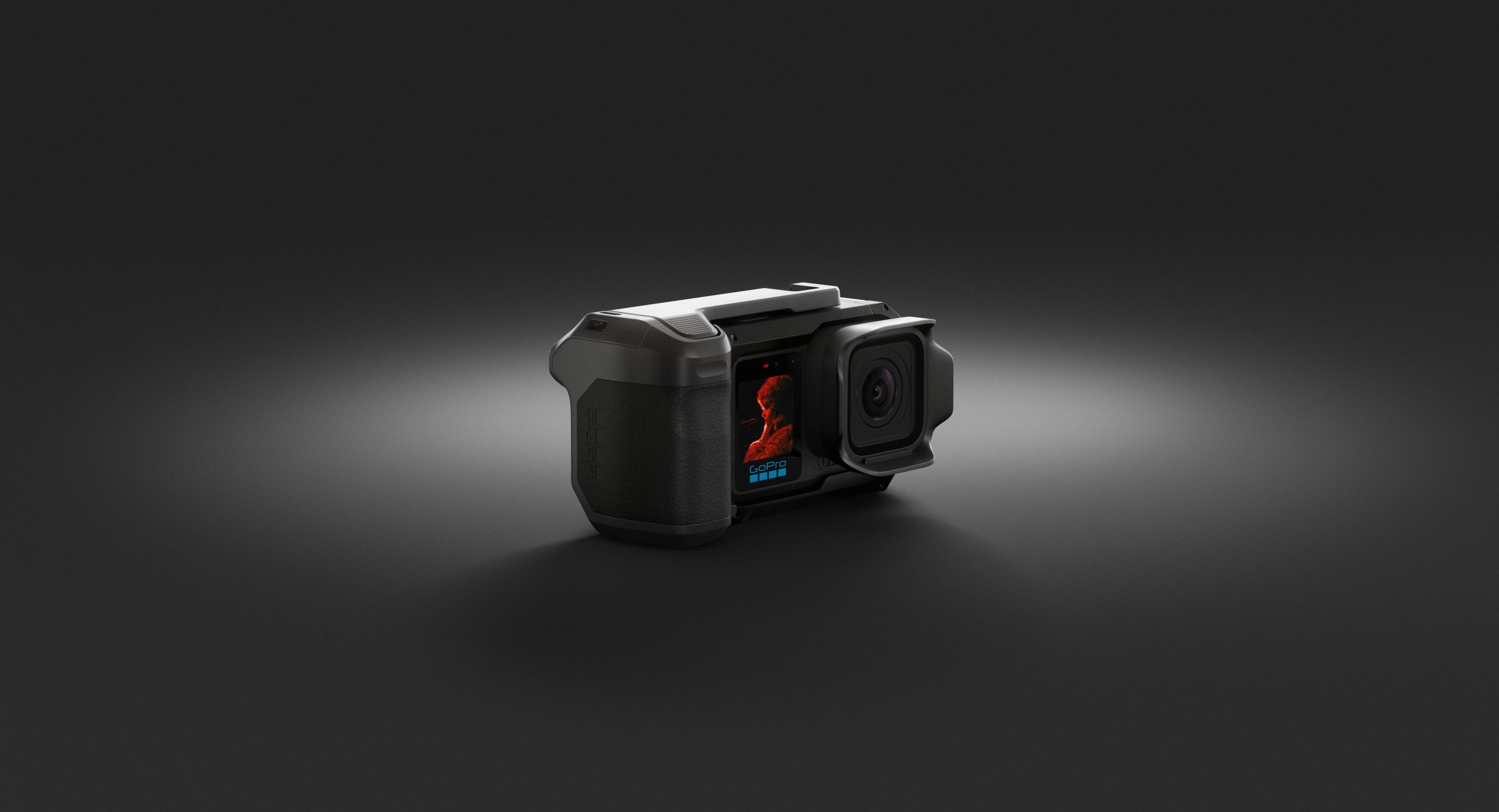
GoPro went above the Hero line. Today, the company announced GoPro MISSION 1, a brand new product family positioned above Hero as a premium cinema camera tier. Most of the specs I predicted in my article last week landed within range. Instead, the surprise is the scope. GoPro did not iterate on the Hero 13 or release a Hero 14. The company built an entirely new product line above it, and I believe the decision is brilliant.
I strapped my first GoPro to a Corvette roll cage in 2006. For 20 years, I have watched this company define, defend, and reinvent the compact camera category it created. However, “action camera” never quite described what GoPro cameras became. Filmmakers used them on Hollywood sets. Similarly, scientists mounted them on research drones and war correspondents carried them into conflict zones. Because these devices outgrew the label years ago, calling them “action cameras” always felt reductive. GoPro finally agrees.
The MISSION 1 name therefore signals GoPro is playing a bigger game than action cameras. With a 50MP GoPro 1 inch sensor, the new 5nm chip, GoPro 8K video at 60fps, and a model with a Micro Four Thirds lens mount, the company is now competing in the compact cinema camera space. Specifically, they are building the world’s smallest, lightest, and most rugged cinema cameras. As a result, the price tag and full reveal come at NAB 2026, April 19 through 22 in Las Vegas, Booth C5519.
After two decades of using every flagship model released, I am telling you: launch of this new GoPro camera is the biggest in company history. I had an opportunity to speak with GoPro’s team directly last week, and the enthusiasm behind this product is palpable. Here is everything the press release confirms, how it connects to my predictions, and why this changes the competitive landscape entirely.
Key Specs: GoPro MISSION 1 Series at a Glance
| Specification | MISSION 1 PRO | MISSION 1 PRO ILS | MISSION 1 |
|---|---|---|---|
| Sensor | 50MP 1 inch (1.6µm native / 3.2µm fused) | 50MP 1 inch (same sensor) | 50MP 1 inch (same sensor) |
| Processor | GP3 (5nm, AI NPU) | GP3 (5nm, AI NPU) | GP3 (5nm, AI NPU) |
| Max 16:9 Video | 8K60 / 4K240 / 1080p960 | 8K60 / 4K240 / 1080p960 | 8K30 / 4K120 / 1080p240 |
| Open Gate (4:3) | 8K30 / 4K120 | 8K30 / 4K120 | 4K120 |
| Dynamic Range | Up to 14 stops at sensor | Up to 14 stops at sensor | Up to 14 stops at sensor |
| Lens System | Fixed (159° FOV) | Interchangeable MFT mount | Fixed (159° FOV) |
| Photo Resolution | 50MP (RAW + SuperPhoto) | 50MP (RAW + SuperPhoto) | 50MP (RAW + SuperPhoto) |
| Waterproof | 66ft (20m) without housing | Weatherproof | 66ft (20m) without housing |
| Battery Runtime | 5+ hrs at 1080p30 / 3+ hrs at 4K30 | 5+ hrs at 1080p30 / 3+ hrs at 4K30 | 5+ hrs at 1080p30 / 3+ hrs at 4K30 |
| Audio | 4 mics, 32-bit float, BT 5.3 | 4 mics, 32-bit float, BT 5.3 | 4 mics, 32-bit float, BT 5.3 |
| Max Bitrate | 240 Mbps | 240 Mbps | 240 Mbps |
| Color/Log | HLG-HDR, 10-bit, GP-Log2 | HLG-HDR, 10-bit, GP-Log2 | HLG-HDR, 10-bit, GP-Log2 |
| Availability | Preorder starts late spring / Ships late spring | Q3 2026 | Preorder starts late spring / Ships late spring |
Official Announcement
GoPro MISSION 1 Series
Sign up at GoPro.com to be notified when preorders open. Full pricing and specs are revealed at NAB April 19.
What I Got Right (and What GoPro Topped)
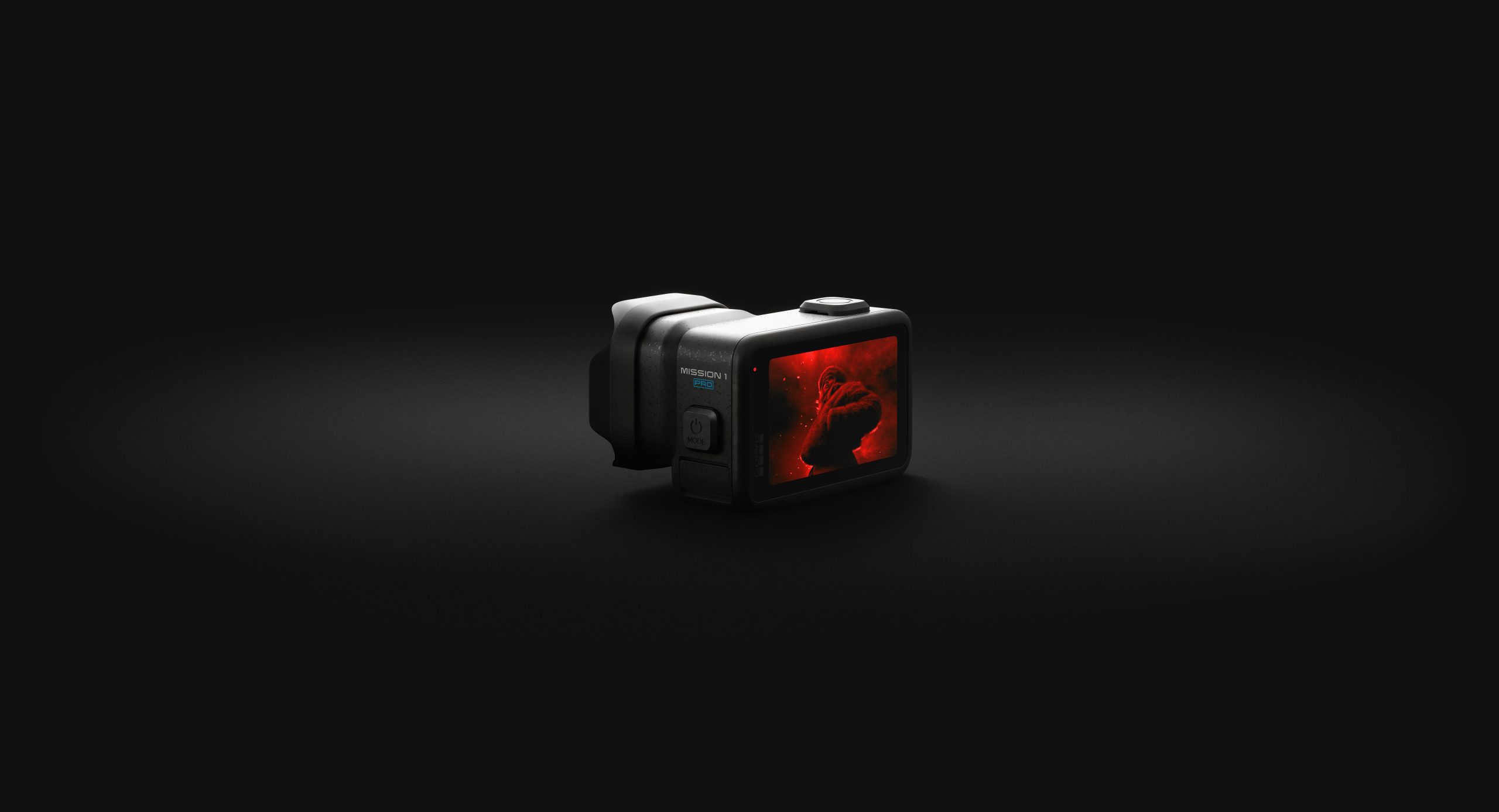
Last week, I published a detailed speculation piece on this GoPro new camera launch based on teaser videos, confirmed statements from CEO Nicholas Woodman, and 20 years of watching this company operate. Here is the scorecard, because the results speak for themselves.
I went to bat for a GoPro 1 inch sensor. GoPro delivered a 50MP version with native 1.6-micron pixels and 3.2-micron fused pixels in Quad Bayer mode. I predicted GoPro 8K at 30fps minimum, possibly 60fps. The PRO shoots 8K at 60fps. Bluetooth audio integration was on my list. Every model now ships with Bluetooth 5.3 and Super Wideband speech support. Thermal performance, the issue I have personally fought with for years, is also addressed: 5+ hours of recording at 1080p30 and 3+ hours at 4K30 on a single charge.
However, GoPro topped expectations in several areas. For instance, I never predicted 4K at 240fps or 1080p at 960fps (32X slow motion). Although I speculated about telephoto lens capability, I did not anticipate a full GoPro interchangeable lens mount using Micro Four Thirds. Additionally, the 14 stops of dynamic range at the sensor exceeds what I expected from a camera this size. The 159-degree native field of view is also the widest in the category, and 50MP photo resolution was not on my radar at all.
Where I missed: I expected a Hero 14, a Max 3, and a Cinema Cam. Instead, GoPro created an entirely new product family above the Hero line. Consequently, the MISSION 1 name sits as a premium tier, while Hero continues as GoPro’s core product. Given the specs below, a separate brand identity makes sense.
GP3 Processor and GoPro 1 Inch Sensor: The Technical Foundation

With the naming and predictions out of the way, here is what powers this new lineup. The GP3 processor is a custom chip built on a 5-nanometer architecture with a dedicated AI Neural Processing Unit. Compared to the GP2 in the Hero 13, it therefore delivers more than double the pixel processing power while drawing less energy. Because of this efficiency gain, GoPro achieves a 5+ hour runtime at 1080p30, which is the longest battery life the company has ever shipped in a flagship product.
Paired with the new 50MP 1 inch sensor, the new chip handles significantly more image data per frame than any previous model. Specifically, the sensor’s native 1.6-micron pixels capture detailed, high-resolution footage in good light. In low-light conditions, however, Quad Bayer pixel fusion combines four pixels into one 3.2-micron superpixel, dramatically increasing light sensitivity. GoPro claims this combination consequently delivers up to 14 stops of dynamic range at the sensor level.
For practical shooting, 14 stops means you hold detail in bright highlights and deep shadows simultaneously. For example, sunrise and sunset footage, mixed interior/exterior scenes, and nighttime shooting all benefit directly from this expanded range. Meanwhile, the onboard AI NPU handles real-time scene recognition and subject detection, automatically optimizing exposure and tone mapping across 13 distinct capture modes.
GoPro 8K at 60fps, 4K240, and 960fps: Frame Rates Redefined
The frame rate specifications on the PRO model read like a spec sheet from a camera costing $10,000 or more. At the top end, you get GoPro 8K at 60fps in 16:9, which is 2X slow motion at a resolution most cameras struggle to achieve at 30fps. Step down to 4K, and the PRO consequently shoots at 240fps for 8X slow motion with full detail retention.
The headline number, however, is 960fps at 1080p in burst mode, producing 32X slow motion for up to 10 seconds. For sports, wildlife, and scientific applications specifically, this frame rate captures motion invisible to the naked eye. GoPro also supports non-burst 1080p at 480fps (16X slow motion) for continuous recording.
Open Gate capture is equally notable. The PRO records full-sensor 4:3 footage at 8K30 and 4K120, giving editors maximum flexibility for reframing into 16:9, 9:16, 1:1, or any other aspect ratio in post-production. Because creators now publish across YouTube, Instagram, TikTok, and broadcast simultaneously, Open Gate eliminates the need to shoot multiple takes for different platforms.
Even the base model still delivers 8K30, 4K120, and 1080p240 in 16:9, along with 4K120 Open Gate. Consequently, these are specifications no competitor in this size class offers at any price point.
NAB 2026 Reveal
Full Pricing and Hands-On at NAB
GoPro will show the complete Series at NAB April 19-22, Booth C5519 in Las Vegas. Pricing will be announced during the show.
GoPro MISSION 1 PRO ILS: Interchangeable Lenses on a GoPro

The PRO ILS is the model nobody saw coming. It pairs the same 5nm chip and 50MP 1 inch sensor with a Micro Four Thirds (MFT) lens mount, making it compatible with hundreds of existing MFT lenses. Through adapters, the lens options expand to include virtually any mount system on the market.
This GoPro interchangeable lens system changes what a GoPro is. For instance, a telephoto lens on a weatherproof, stabilized body this small opens up wildlife, sports, and documentary work previously impossible without carrying a full mirrorless kit. In-camera HyperSmooth stabilization also works with any rectilinear prime lens, so handheld telephoto shooting remains usable in run-and-gun situations.
For cinematographers specifically, the ILS model provides the full codec support (240Mbps bitrate, 10-bit color, GP-Log2, timecode sync) with the lens flexibility of a traditional cinema camera. Compared to a RED Komodo or Blackmagic Pocket Cinema Camera, the PRO ILS fits into tight spaces, mounts to drones and gimbals, and survives weather conditions those cameras cannot tolerate. It achieves this at a fraction of the size and cost.
One trade-off, however: the ILS model is weatherproof, not waterproof to 66ft like the fixed-lens models. This is expected given the open lens mount design. Availability is slated for Q3 2026, later than the other models.
The Accessory Ecosystem for this GoPro New Camera Line

GoPro launched an extensive accessory lineup alongside the cameras. Notably, the standout is the new Wireless Mic System, featuring 10-gram magnetic transmitters delivering 24-bit/48kHz audio with Dynamic Noise Reduction. Each mic runs for 6.5 hours, and the charging case provides two additional full charges. Wireless range reaches 150 meters, while a Safety Track mode records a backup at -6dB to prevent clipping.
The redesigned Media Mod for the Series adds I/O expansion with three 3.5mm ports (external mic, line-in for timecode, headset monitoring), a micro-HDMI output supporting 4K60 for external monitors, and a built-in multi-pattern microphone with eight pickup pattern options. As a result, this turns the camera into a full production-ready system.
Additional accessories include the Point-and-Shoot Grip (an ergonomic grip converting to a metal cage with cold shoe mounts), the Volta 2 battery grip with 5,800mAh capacity enabling up to 9 hours of 4K30 recording, M-Series ND Filters (4-pack: ND8/ND16/ND32/ND64 with auto-detection), the Enduro 2 Battery at 2,150mAh with fast charging, and a protective housing rated to 196ft (60m). Accessories therefore roll out on a staggered schedule from spring through Q3 2026.
GoPro MISSION 1 vs. DJI vs. Insta360: Different League

In my previous article, I noted GoPro’s revenue dropped 19% to $652 million in 2025. I also pointed out DJI’s Osmo Action 6 shoots 8K at 30fps and the Insta360 Ace Pro 3 features a 1/1.3-inch sensor. Those specs looked strong a week ago. Today, however, the PRO model makes them look like entry-level products.
For example, DJI offers 8K30 while GoPro delivers 8K at 60fps. DJI has no interchangeable lens option; GoPro now has one. Insta360’s 1/1.3-inch sensor is good, but GoPro’s full 1 inch sensor with 3.2-micron fused pixels and 14 stops of dynamic range operates in a different performance tier. Neither DJI nor Insta360 offers 4K240 or 960fps burst slow motion.
The strategic shift, however, matters more than individual specs. GoPro is not trying to win the action camera price war. CEO Woodman stated it directly: GoPro is entering the premium end of the digital imaging market. Consequently, the Series competes less against action cameras and more against compact cinema cameras from Blackmagic, RED, and Sony. GoPro brings something none of those companies offer: a body this small, this rugged, and this waterproof.
GoPro also remains the only major American camera company in this market segment. The competitive advantage is not price; it is form factor. No competitor ships 8K at 60fps in a body this small, this rugged, and this waterproof. Whether GoPro’s financials recover depends on market adoption, which remains uncertain until preorders open and pricing is revealed at NAB.
Pros and Cons
Pros
- 50MP 1 inch sensor with 14 stops of dynamic range at sensor level
- 5nm chip delivers 5+ hours at 1080p30 on a single Enduro 2 charge
- 8K60 and 4K240 frame rates exceed every competitor in this size class
- 960fps burst slow motion at 1080p (32X) rivals cameras costing tens of thousands
- Interchangeable MFT lens system on the PRO ILS model opens telephoto, macro, and zoom options
- Bluetooth 5.3 with Super Wideband speech and 32-bit float audio recording
- 66ft (20m) waterproof without housing on fixed-lens models
- Open Gate 4:3 capture enables single-shot multi-platform delivery
- 240Mbps bitrate, 10-bit color, GP-Log2, and timecode sync for multi-camera production
- Complete wireless mic system with 6.5-hour runtime and 150m range
Cons
- Pricing not announced yet; expect higher price points than any previous GoPro
- PRO ILS and Creator/Ultimate editions delayed to Q3 2026
- 960fps burst mode limited to 10-second captures, not continuous recording
Final Verdict
Last week I wrote I was betting the farm on GoPro. Today I feel vindicated, and then some. GoPro MISSION 1 is not an incremental update. Instead, it is a complete reinvention of what a compact camera does, who it serves, and where the company positions itself in the imaging industry. After 20 years and every flagship model, I have never been more confident about a GoPro product launch.
The risks from my previous article still exist, however. GoPro cut 23% of its workforce. Revenue dropped significantly. Entering the premium imaging market puts the company against Sony, Canon, Blackmagic, and RED simultaneously. Pricing will consequently determine whether the Series attracts new professional customers or alienates the adventure enthusiasts who built this brand.
Still, the confirmed specifications speak for themselves. No camera this small has ever delivered 8K at 60fps, 4K240, and 960fps slow motion combined with a 50MP 1 inch sensor and 14 stops of dynamic range. The interchangeable lens system on the PRO ILS creates an entirely new product category. For filmmakers, vloggers, and creators who need cinema-grade output in a body small enough to mount anywhere, this camera series delivers on a promise the company has been building toward since 2004.
If you are currently shooting on a Hero 13 or older, the sensor and GP3 processor upgrade alone justify the move. Similarly, if you are a filmmaker considering the Blackmagic Pocket Cinema Camera or a DJI Osmo Action user looking for more, the PRO and PRO ILS deserve your attention the moment preorders open.
Preorder Opens Soon
Be First to Get the New GoPro
Sign up at GoPro.com for preorder notifications. Global shipping starts late spring 2026.
Frequently Asked Questions
When is this GoPro new camera available for preorder?
The PRO, PRO Grip Edition, and the base model open for preorder on the 21st of next month. Global on-shelf availability starts the 28th. The PRO ILS, Creator Edition, and Ultimate Creator Edition ship in Q3 2026.
What sensor does the GoPro MISSION 1 use?
All three models use the same new 50MP GoPro 1 inch sensor with 1.6-micron native pixels and 3.2-micron fused pixels in Quad Bayer mode. The sensor therefore delivers up to 14 stops of dynamic range when paired with the 5nm chip.
Does this camera shoot 8K video?
Yes. The PRO and PRO ILS record 8K at 60fps in 16:9 and 8K at 30fps in Open Gate (4:3). The base model records 8K at 30fps in 16:9 and 4K120 in Open Gate.
What lenses work with the PRO ILS?
The PRO ILS uses a Micro Four Thirds (MFT) lens mount, making it compatible with the entire MFT lens ecosystem. Through adapters, it supports lenses from virtually any mount system. In-camera HyperSmooth stabilization also works with any rectilinear prime focal length lens.
How long does the battery last?
With the new Enduro 2 battery (2,150mAh), the Series records for 5+ hours at 1080p30 and 3+ hours at 4K30 on a single charge. The Volta 2 battery grip extends recording to up to 9 hours at 4K30. Notably, the Enduro 2 is also compatible with the Hero 13 Black.
Is the GoPro MISSION 1 waterproof?
The base model and the PRO are waterproof to 66ft (20m) without a housing. The optional protective housing extends depth rating to 196ft (60m). However, the PRO ILS is weatherproof only, because of its open interchangeable lens mount design.

